All ages
Dinosaurs and Ancient Life
How fast could a T. rex run, and how can a fossil hint at a dinosaur's colour? What really killed the dinosaurs, and why did some birds survive? Work it out with your tutor, clue by clue, from fossil feathers and the Chicxulub crater to frozen mammoths, the first animals and the rocks that record when oxygen first lasted in Earth's air.
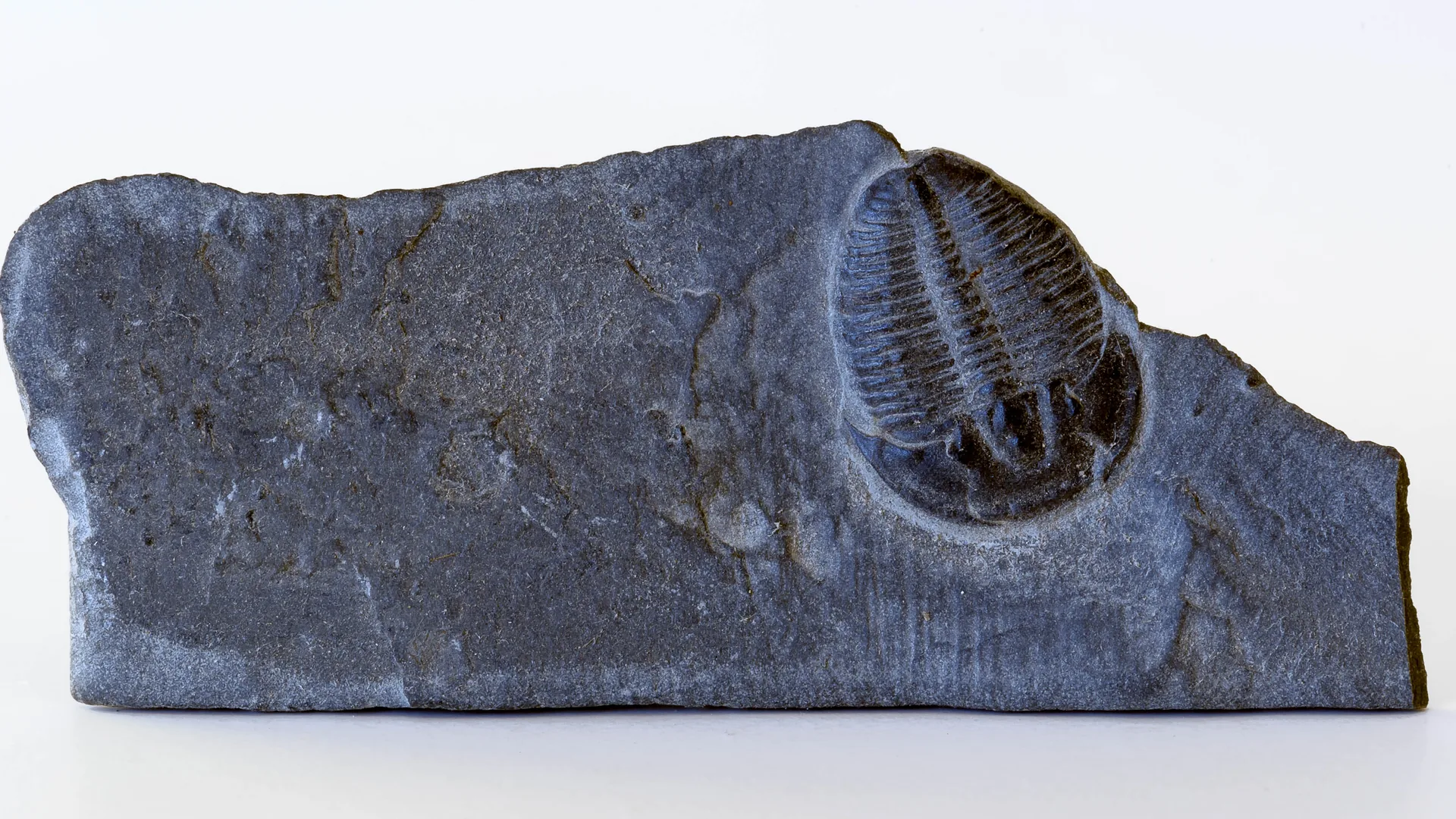
A trilobite fossil preserved in rock.
Joe deSousa · CC0
Science
5 courses
- Before and After the Dinosaurs What can a frozen mammoth calf, a tar pit or a slab of shale tell us about life before and after the dinosaurs? Find out what may have preserved the calf Lyuba, how DNA from mammoth teeth up to 1.2 million years old showed the Columbian mammoth was a hybrid, and what Mary Anning found at Lyme Regis. Piece together the scattered parts of strange Burgess Shale animals, and meet South America's terror birds. Then weigh the clues on who killed the megafauna: in Australia researchers blamed humans, while in Patagonia the giants vanished soon after a rapid warming.
- Dinosaurs: What They Were Really Like How fast could a T. rex really run, and did it have lips? Work out how growth lines in bone give T. rex an age, how tooth marks and fossil dung show it crunched bone, and how tiny pigment capsules hint at a feathered dinosaur's colours. Follow the clues linking birds to dinosaurs, from Archaeopteryx and Huxley's hunch to wishbones and air sacs, and find out why many experts now count Brontosaurus as its own dinosaur again. Then weigh a question argued in real time: did Spinosaurus dive to hunt, or hunt from the water's edge?
- How Dinosaurs Worked: Bodies, Senses and Ecosystems How do you take a dinosaur's temperature, and can a bone show a female about to lay? Work out how thin slices of bone record growth, how atoms in teeth and eggshell act as a thermometer, and how hollow vertebrae point to bird-like air sacs. Find out what a scanned brain cast says about a dinosaur's sense of smell, how healed bone shows a bite was made in life, and why one armoured dinosaur's stomach held mostly ferns. Then weigh a question still argued: were dinosaurs warm-blooded, cold-blooded or something in between?
- Oxygen, Trilobites and the First Feet: The Long Road to the Dinosaurs When did Earth's air first gain oxygen, and how can rocks still tell? Follow a sulphur fingerprint and grains of fool's gold to one date for oxygen's lasting arrival, then see how trilobites saw through lenses of stone and how jaws may have been remodelled from gill arches. Find out why Acanthostega's limbs, with more than five digits, hint that limbs came before the move to land, and why footprints in Poland may be older than any known tetrapod bones. Then weigh a question still debated: why did oxygen stay so low through the Boring Billion?
- The Asteroid and Life's Great Extinctions What really killed the dinosaurs, and why did some birds survive? Follow drill cores into the Chicxulub crater, the fish at Tanis that may record the first hour, and why many geologists at first rejected an impact from space. Weigh the rival suspect, India's lava floods, find out why freshwater crocodile relatives and turtles came through, and see mammal diversity double in the first million years after. Then take on a question still argued: was it soot, sulfur or dust that did the killing?
Ready to start learning?
Start for free