All ages
Koreansk filosofi
Korean thought from Buddhism's arrival in the 4th century to today: Buddhist philosophy and Son meditation, Neo-Confucian debate, the Sirhak reformers' practical learning, the Donghak revolution, and contemporary feminist and minjung (people's) philosophy. Explore how Korea adapted, challenged and transformed the great traditions it encountered, from Buddhism and Confucianism to Catholicism and Western philosophy. Ask what it means when peasants arm themselves with a philosophical idea, why the Joseon dynasty fell, and whether its reformers could have saved it.
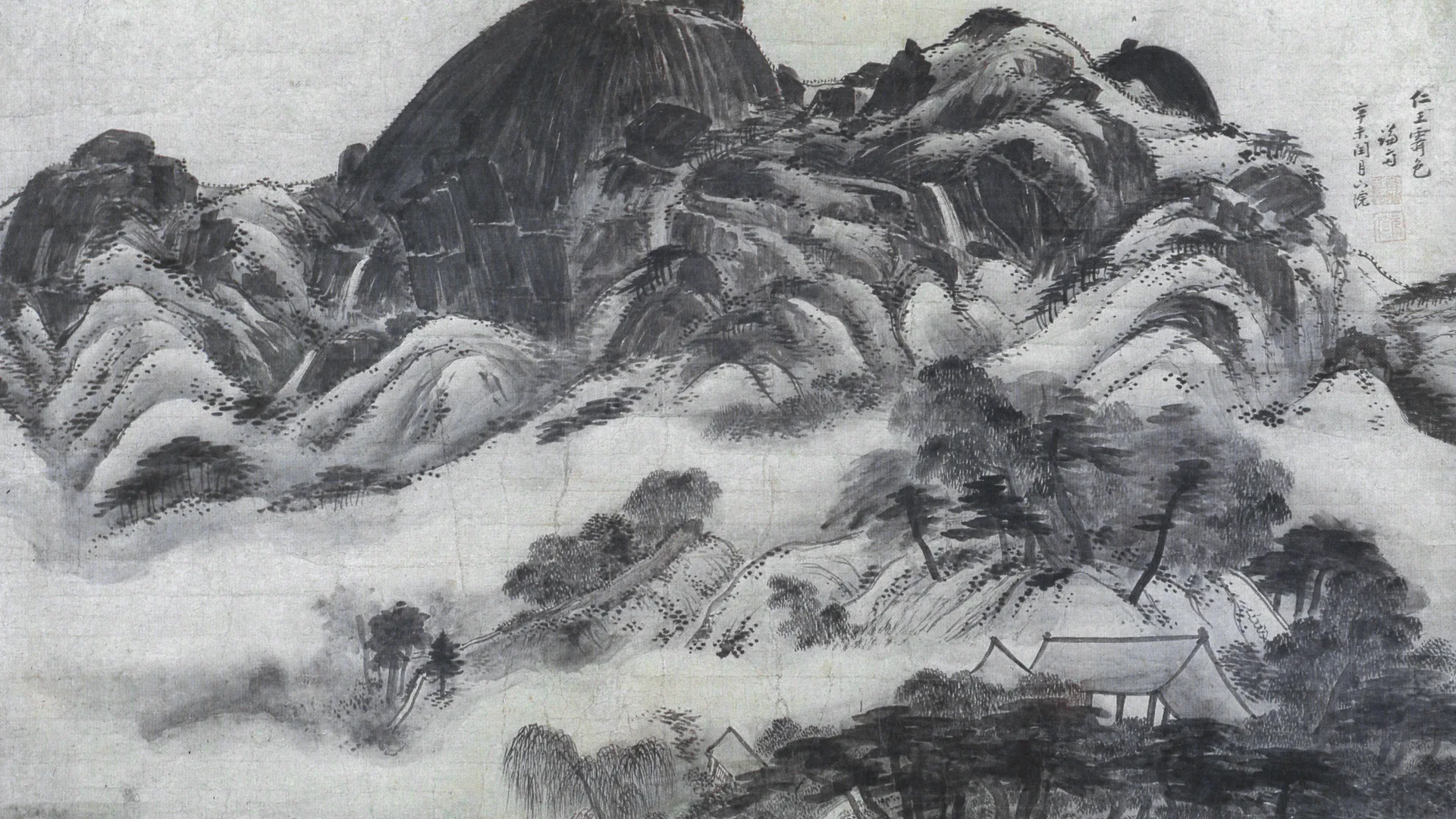
Clearing After Rain on Mount Inwang, by the Joseon painter Jeong Seon, 1751.
Jeong Seon · Allmän egendom
Filosofi
5 kurser
- Donghak, moderniteten och samtida koreanskt tänkande — Årskurs 5 Explore how Korean thinkers answered colonialism, war and modernity, starting with Donghak, a 19th-century movement that blended Confucianism, Buddhism, Daoism and shamanism around the idea that the divine dwells within every person. Its philosophy joined peasant grievances in the 1894 uprising; from there you'll follow Sin Chaeho's colonial-era nationalism, Ham Seok-heon's post-war thought and the Minjung theology of the 1970s, along with feminist philosophy and today's debate over whether there is a distinctly Korean philosophy and what it offers global ethics.
- Joseon-nykonfucianism — Årskurs 3 Explore how Neo-Confucianism became the philosophical foundation of the Joseon dynasty, from the 1392 revolution and Jeong Do-jeon's vision of governance to an examination system that formed a new scholarly elite. You'll meet Toegye and Yulgok and follow the celebrated Four-Seven Debate over principle (li), material force (gi) and human emotion. Then discover the seowon academies, the Horak Debate, Buddhism's survival in the mountains, and women philosophers such as Im Yunjidang.
- Koreanska buddhistiska grunder — Årskurs 1 Discover how Buddhism transformed Korean civilization after arriving from China in the fourth century, reshaping royal politics, spirituality and daily life. You'll meet the martyr Ichadon and the thinkers Wonhyo, Uisang and Woncheuk, explore their ideas about the mind and the interdependence of all things, and see how Silla carried this inheritance into art, temples and national identity.
- Koreansk Seon-buddhism och Goryeo-syntes — Årskurs 2 Explore how Korean Son, the meditation school of Buddhism, found its own voice, from the Nine Mountain Schools to the monk Chinul, who joined sudden enlightenment with gradual cultivation and reconciled meditation with doctrinal study. You'll follow the tradition through the Tripitaka Koreana, Goryeo's royal and popular faith, and the Neo-Confucian challenge of 1392, on to today's Jogye Order and a comparison with Japanese Zen.
- Praktiskt lärande och utmaningen mot ortodoxin — Årskurs 4 Sirhak philosophers challenged Korea's orthodox Neo-Confucianism by grounding ideas in practical observation and real-world problems, from land reform to commerce and governance. You'll explore how thinkers like Yu Hyeongwon, Yi Ik, Park Jiwon and Dasan (Jeong Yagyong) questioned inherited privilege and what they saw as empty speculation, and how their encounter with Catholicism and Western science reshaped Korean philosophy. You'll also see why their ideas outlasted a dynasty in decline and still matter to modern Korea.
Redo att börja lära dig?
Börja gratis