All ages
Korean Philosophy
Three thousand years of Korean thought — from ancient shamanic roots through Buddhist scholasticism, Neo-Confucian debate, and Donghak revolution to contemporary feminist and minjung philosophy. Explores how Korea adapted, challenged, and transformed every major intellectual tradition it encountered. What does it mean when peasants arm themselves with a philosophical idea? When a dynasty collapses because it ran out of ideas? This curriculum answers those questions.
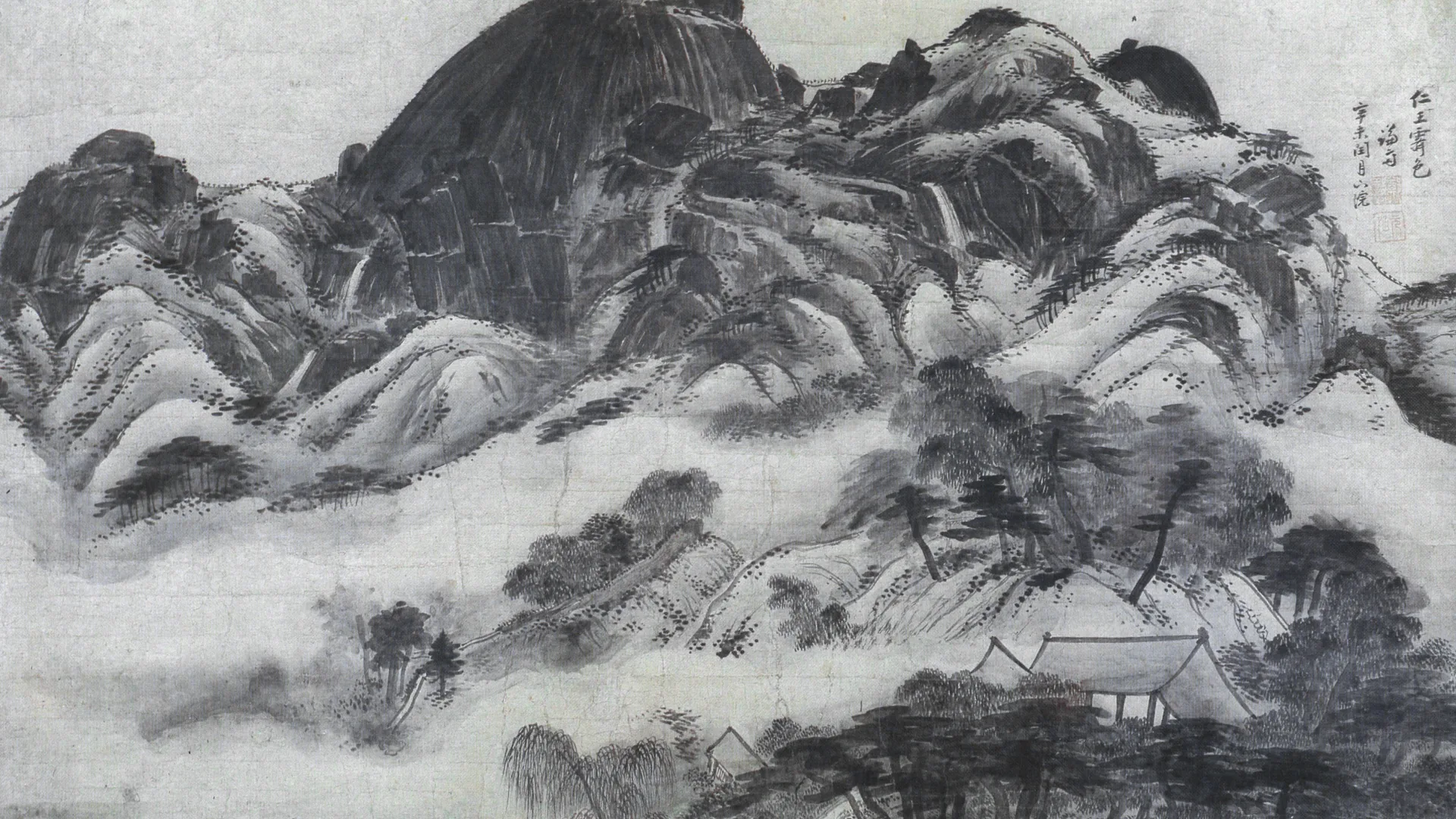
Clearing After Rain on Mount Inwang, by the Joseon painter Jeong Seon, 1751.
Jeong Seon · Public domain
Philosophy
- Donghak, Modernity, and Contemporary Korean Thought Grade 5 Explore how a 19th-century Korean spiritual movement synthesized Confucianism, Buddhism, Daoism, and shamanism into a radical philosophy that sparked peasant uprisings and shaped modern Korean independence.From Donghak's founding through its evolution into Cheondogyo, trace how the principle of Innaecheon—that divinity dwells within every person—transformed Korean thought and social movements.
- Joseon Neo-Confucianism Grade 3 Explore how Neo-Confucianism became the philosophical foundation of the Joseon dynasty, from the 1392 revolution through the development of a distinctive Korean intellectual tradition.You'll examine key thinkers like Jeong Do-jeon and early scholars who adapted Zhu Xi's ideas about principle and material force, and discover how the state examination system created a new ruling class shaped by these philosophical ideals.
- Korean Buddhist Foundations Grade 1 Discover how Buddhism transformed Korean civilization after arriving in the fourth century, reshaping politics, spirituality, and daily life.You'll trace the faith's journey from China through royal courts and shamanic traditions, meeting the scholars and martyrs who shaped Korean Buddhist thought.
- Korean Son Buddhism and Goryeo Synthesis Grade 2 Explore how Korean Buddhism developed its own identity through the Nine Mountain Schools, where masters debated whether enlightenment arrives suddenly or gradually and refined the practice of kong-an meditation to suit their unique philosophical vision.You'll trace this synthesis from its origins in Tang China through the Goryeo period, examining how Korean Son navigated the creative tension between doctrinal study and meditative practice.
- Practical Learning and the Challenge to Orthodoxy Grade 4 Sirhak philosophers challenged Korea's orthodox Neo-Confucianism by grounding ideas in practical observation and real-world problems—from land reform to economic systems.You'll explore how thinkers like Yu Hyeongwon and Yi Ik built a movement that questioned inherited privilege and useless speculation, and how their encounter with Western thought reshaped Korean philosophy.
Ready to start learning?
Start for free