Why Epivo
Learn through engaging dialogue. Not through lectures.
Gain deeper understanding and stay capable in a changing world.

Epivo is an Android app — point your phone's camera at the code.
Create a free accountAn AI tutor you actually talk to — free forever. Epivo asks the questions, challenges your thinking, and guides you to understanding — not answers.
Why Epivo
Gain deeper understanding and stay capable in a changing world.
Epivo is an Android app — point your phone's camera at the code.
Create a free account45 seconds from a real session on Socrates. The tutor asks; the learner works it out; the tutor takes it further.

0:00 / 0:45
One exchange from the middle of a longer session. The tutor's voice is the one learners hear; the learner's words are read by a stand-in voice.
Just talk. Epivo listens and responds in real time — hands-free, on your phone.
Epivo doesn't lecture — it asks questions, challenges assumptions, and helps you reason through ideas yourself.
Curated courses from philosophy and world history to national school curricula — each with clear progression and mastery tracking.
Epivo tracks your mastery across sessions — what you know, what needs work, and even your personal interests and learning style.
What makes Epivo different
A voice-first AI tutor that combines the engagement of a real conversation with the accountability of knowing what you've actually learned — across every subject, for every age, available anywhere.
Choose the voice you want to learn with. While you have Premium voice time, you can switch to another tutor in the app.
With a Premium voice, a storyteller may take over topics with a good story. These are our Premium voices. When your Premium voice minutes run out, lessons continue with a free voice on your device.
With a Premium voice, a storyteller may take over topics with a good story. These are our Premium voices. When your Premium voice minutes run out, lessons continue with a free voice on your device.
With a Premium voice, a storyteller may take over topics with a good story. These are our Premium voices. When your Premium voice minutes run out, lessons continue with a free voice on your device.
With a Premium voice, a storyteller may take over topics with a good story. These are our Premium voices. When your Premium voice minutes run out, lessons continue with a free voice on your device.
With a Premium voice, a storyteller may take over topics with a good story. These are our Premium voices. When your Premium voice minutes run out, lessons continue with a free voice on your device.
With a Premium voice, a storyteller may take over topics with a good story. These are our Premium voices. When your Premium voice minutes run out, lessons continue with a free voice on your device.
With a Premium voice, a storyteller may take over topics with a good story. These are our Premium voices. When your Premium voice minutes run out, lessons continue with a free voice on your device.
With a Premium voice, a storyteller may take over topics with a good story. These are our Premium voices. When your Premium voice minutes run out, lessons continue with a free voice on your device.
With a Premium voice, a storyteller may take over topics with a good story. These are our Premium voices. When your Premium voice minutes run out, lessons continue with a free voice on your device.
With a Premium voice, a storyteller may take over topics with a good story. These are our Premium voices. When your Premium voice minutes run out, lessons continue with a free voice on your device.
With a Premium voice, a storyteller may take over topics with a good story. These are our Premium voices. When your Premium voice minutes run out, lessons continue with a free voice on your device.
With a Premium voice, a storyteller may take over topics with a good story. These are our Premium voices. When your Premium voice minutes run out, lessons continue with a free voice on your device.
With a Premium voice, a storyteller may take over topics with a good story. These are our Premium voices. When your Premium voice minutes run out, lessons continue with a free voice on your device.
With a Premium voice, a storyteller may take over topics with a good story. These are our Premium voices. When your Premium voice minutes run out, lessons continue with a free voice on your device.
With a Premium voice, a storyteller may take over topics with a good story. These are our Premium voices. When your Premium voice minutes run out, lessons continue with a free voice on your device.
With a Premium voice, a storyteller may take over topics with a good story. These are our Premium voices. When your Premium voice minutes run out, lessons continue with a free voice on your device.
With a Premium voice, a storyteller may take over topics with a good story. These are our Premium voices. When your Premium voice minutes run out, lessons continue with a free voice on your device.
With a Premium voice, a storyteller may take over topics with a good story. These are our Premium voices. When your Premium voice minutes run out, lessons continue with a free voice on your device.
With a Premium voice, a storyteller may take over topics with a good story. These are our Premium voices. When your Premium voice minutes run out, lessons continue with a free voice on your device.
With a Premium voice, a storyteller may take over topics with a good story. These are our Premium voices. When your Premium voice minutes run out, lessons continue with a free voice on your device.
With a Premium voice, a storyteller may take over topics with a good story. These are our Premium voices. When your Premium voice minutes run out, lessons continue with a free voice on your device.
With a Premium voice, a storyteller may take over topics with a good story. These are our Premium voices. When your Premium voice minutes run out, lessons continue with a free voice on your device.
With a Premium voice, a storyteller may take over topics with a good story. These are our Premium voices. When your Premium voice minutes run out, lessons continue with a free voice on your device.
With a Premium voice, a storyteller may take over topics with a good story. These are our Premium voices. When your Premium voice minutes run out, lessons continue with a free voice on your device.
With a Premium voice, a storyteller may take over topics with a good story. These are our Premium voices. When your Premium voice minutes run out, lessons continue with a free voice on your device.
These are our Premium voices. When your Premium voice minutes run out, lessons continue with a free voice on your device.
With a Premium voice, a storyteller may take over topics with a good story. These are our Premium voices. When your Premium voice minutes run out, lessons continue with a free voice on your device.
 Hai Phung · Unsplash
What actually makes people thrive? Dive into the science behind happiness, habits, and behaviour change — from positive psychology and cognitive science to relationships, meaning-making, and mind-body practices. Practical, evidence-based, and designed for anyone curious about living better.
 Matheus Bertelli · Pexels
From pattern recognition to deepfakes, this curriculum gives you a real understanding of artificial intelligence — what it is, how it learns, how to use it, and what it means for work and society. You can explore all of it without writing a line of code.
 Vitaly Gariev · Unsplash
Discover how to build and run real software with AI, without writing the code yourself. You'll learn how AI models work, how to plan, review and test changes, the technical basics (APIs, Git, databases, the terminal), and putting your project live on a real server. You'll explore questions like: How do you check quality without reading code? How much of a whole product can one person build and run?
 Elias Derksen · Unsplash
From spotting logical fallacies and the mental shortcuts that trip us up to weighing evidence, reading misleading statistics and seeing through media manipulation, you'll build practical reasoning skills anyone can use, including how to disagree well. Along the way you'll explore why smart people fall for bad arguments, how a graph can tell the truth and lie at the same time, and what should make you change your mind.
 Fredric Lee Phillips · Pexels
Applied psychological science for everyday life, from how you make decisions and navigate difficult conversations to why groups behave the way they do. You'll explore decision science, communication skills, social influence, human development across the lifespan, and workplace psychology.
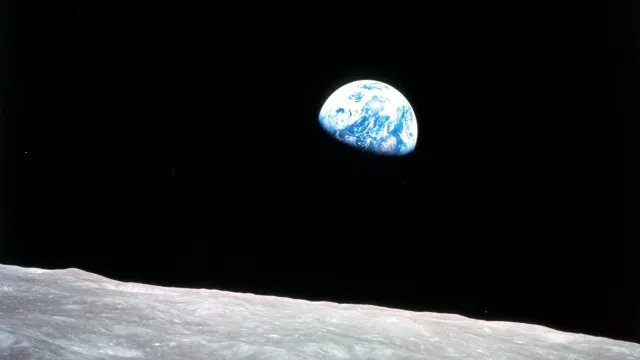 Bill Anders, NASA · Public domain
From the Big Bang to black holes, from DNA to dinosaurs — explore the biggest questions in science without needing a science degree. Covers cosmology, evolution, the human body, everyday physics, our planet, and the scientific frontiers reshaping our future. Like having a fascinating conversation with a scientist friend who makes everything click.
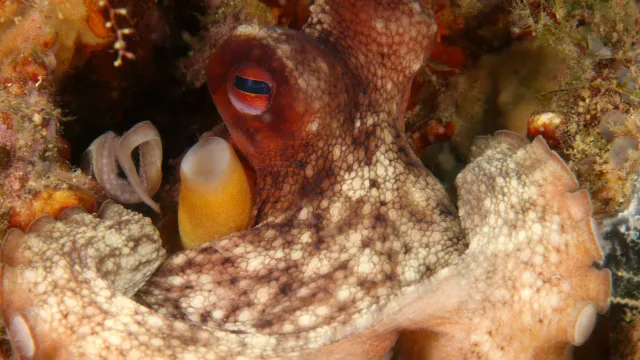 National Marine Sanctuaries (NOAA) · Public domain
What is it like inside the head of an octopus, a crow or a bee, and how could anyone find out? Work it out with your tutor, one clue at a time: meet animals that make tools, plan ahead, play and seem to call each other by name, and learn how scientists test a mind fairly without fooling themselves. From whale song and chimpanzee cultures to who can feel pain, how animals find their way home and what cats, pigs and parrots understand, find out what scientists know, what they suspect and what is still open. No science background needed.
 NASA, ESA, CSA, STScI · Public domain
What is a black hole, and how did we photograph something that swallows light? What is the invisible matter holding galaxies together, and what came before the stars? Work it out with your tutor, one clue at a time, from black holes and exploding stars to the planets in tonight's sky and the first moments of the universe. Then go deeper: the arguments over how fast the universe is expanding, exploding and ringing stars, how planets are born, the map of our own galaxy, and what the space probes found. No maths or science background needed.
 NASA Goddard Space Flight Center from Greenbelt, MD, USA · Public domain
Is the planet really warming, and how do scientists know it is us? Work it out with your tutor, one clue at a time — from Eunice Foote's 1856 discovery that carbon dioxide absorbs heat to ancient air sealed in ice, satellites that weigh ice sheets from space and alligators that once lived in the Arctic. Then follow the science further: what could tip, what warming does to heat, water, food and fire, where the uncertainty is still wide, and what taking carbon back or dimming the sun could and could not do. No maths or science background needed.
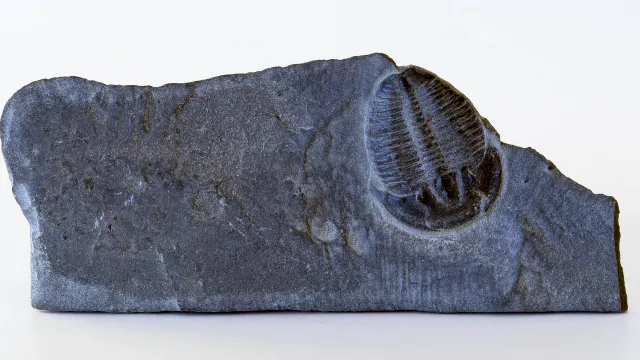 Joe deSousa · CC0
How fast could a T. rex run, and how can a fossil hint at a dinosaur's colour? What really killed the dinosaurs, and why did some birds survive? Work it out with your tutor, clue by clue, from fossil feathers and the Chicxulub crater to frozen mammoths, the first animals and the rocks that record when oxygen first lasted in Earth's air.
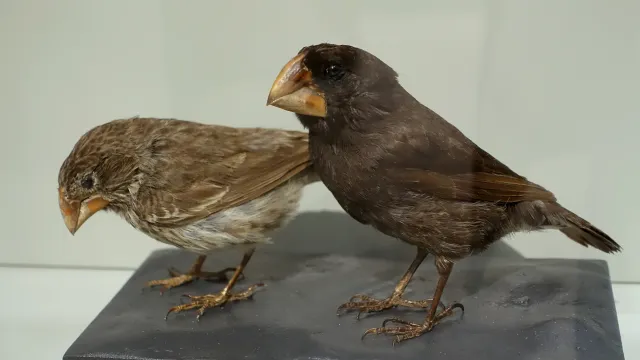 Daderot · CC0
Can we watch evolution happen? How did whales' ancestors walk on land, and why do mammals with no teeth still carry a broken gene for tooth enamel? Work it out with your tutor, one clue at a time, from finches in a drought and bacteria in a flask to the tree of all life and the questions biologists still argue about. Go deeper into where new genes come from, fungi that steer ants, snakes that lost their legs and the mystery of the first flowers. You can start with no biology background.
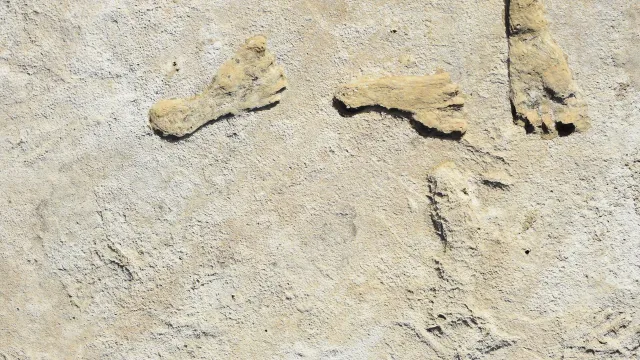 National Park Service · Public domain
Fifty thousand years ago we were not alone. Who were the Neanderthals and Denisovans, how did their DNA end up in people alive today, and why are we the only humans left? Work it out with your tutor, from the first upright walkers in Africa to footprints left by some of the first Americans. Then go deeper into how our bodies and cultures evolved, our primate roots, and who moved and mixed in the last 10,000 years. No science background needed.
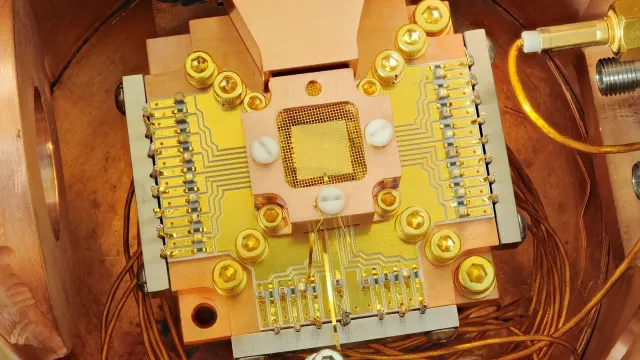 National Institute of Standards and Technology (NIST) · Public domain
Quantum physics without the maths or the mysticism. Start with the experiments that broke common sense: one particle through two slits, entanglement, and particles that tunnel through barriers they should not be able to cross. Then see the machines being built on them and what they can really do. Finish with where the ideas came from, where they already work for you, and the question physicists still argue about: what is actually going on. Along the way you learn which ideas are settled, which are likely and which are still open. Then go deeper if you want more: the quantum physics of materials, how a quantum computer really works and how to judge the race to build a useful one, and the famous puzzle experiments re-examined.
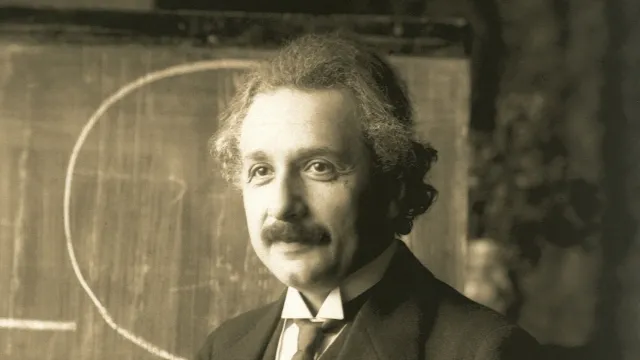 Ferdinand Schmutzer · Public domain
Why does time run slower for a moving clock, and faster at the top of a tower? Why can nothing outrun light, and what does E = mc² really say? Work out Einstein's ideas with your tutor, one thought experiment at a time, from trains and falling lifts to the clock correction that keeps GPS working and the question of whether the past can ever be visited. Then go further: draw space and time on paper, meet horizons, ask whether black holes destroy information, and join the search for what comes after Einstein. No maths or physics background needed.
 Buzz Andersen ldandersen · CC0
Why does the ground shake, why do some volcanoes explode while others ooze, and how can anyone know the Earth is 4.5 billion years old? Work it out with your tutor, one clue at a time — from earthquakes, eruptions and tsunamis to the solid metal ball at the planet's centre, crystals that still keep time, and the canyons, coasts, caves and ores of the surface. No maths or science background needed.
 NASA/Roscosmos · Public domain
How do we actually leave Earth, survive out there and get around the Solar System? Work it out with your tutor, from why a rocket is almost all fuel to what months without weight do to a body, how we are going back to the Moon, and why low orbit is filling up with junk. Then go deeper: inside the engines and the routes, and into what it would take to live out there for years. No maths or science background needed.
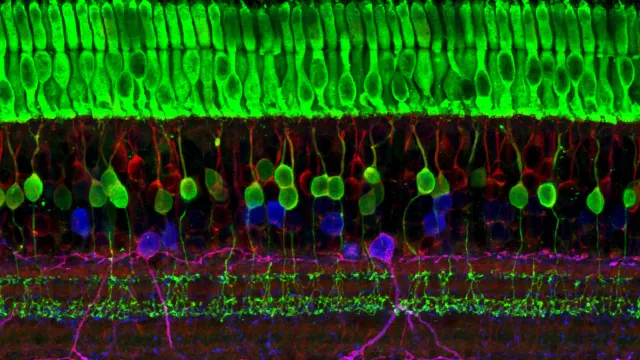 National Institutes of Health · Public domain
Your brain guesses at what the world looks like, and a memory can change when you recall it. Work out how scientists caught the brain in the act, from optical illusions and planted memories to sleep, dreams and consciousness. Then see what the brain is made of, how it moves us, decides and reads, what brain disorders reveal, where brain implants and other neurotechnology are heading, and how the brain changes from before birth to old age. No science background needed.
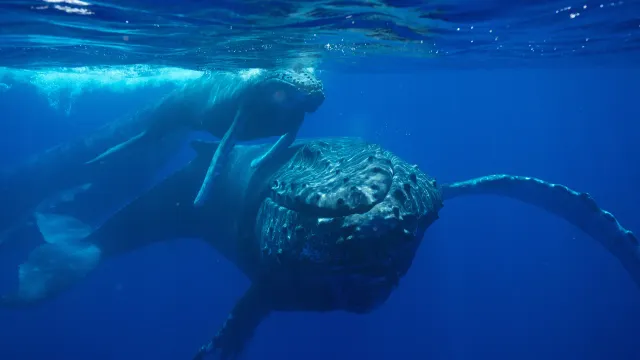 NOAA · Public domain
Why is the deep sea harder to reach than the Moon? Dive with your tutor to the deepest trench and meet the life of the sea: animals that glow in the dark, a whale that dives almost three kilometres on one breath and a shark that lives for centuries. Work out how the ocean moves heat and carbon around the planet, meet the microbes that recycle its food and follow that food up to the fish the world catches and farms. Then weigh the evidence on the ocean's newest frontiers, from polar seas and coastal wetlands to deep-sea mining. No maths or science background needed.
 Le Barbier · Public domain
Explore the big questions that have shaped human thought — from Plato's cave and Aristotle's ethics to Descartes' radical doubt, Kant's moral law, and existentialism. Follow the ideas that challenged authority, redefined justice, and still influence how we think about knowledge, freedom, and the good life.
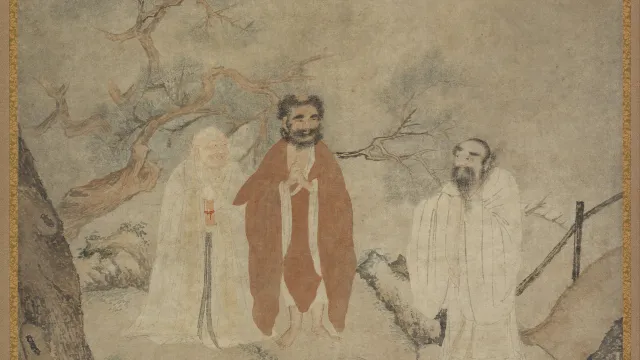 Freer Gallery of Art · Public domain
Follow Chinese philosophy from Confucius and Laozi, through the rival schools, Buddhism in China and Wang Yangming, to Mao and contemporary thinkers. You'll explore the questions it asks: Is human nature good? What is the Way? Can universal love be a political programme? Along the way, you'll weigh each school's arguments alongside the critiques it drew, and make up your own mind.
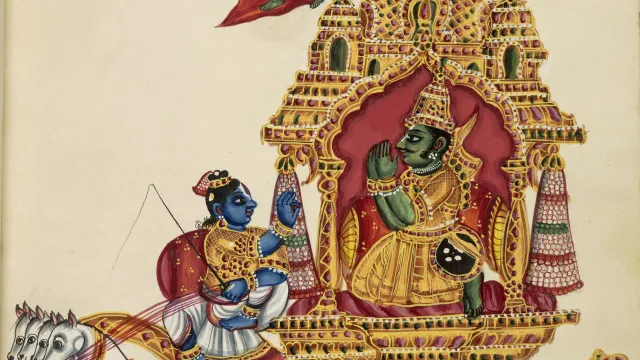 British Museum · Public domain
From the Vedic hymns to Ambedkar's critique of caste, follow Indian philosophical thought from its earliest texts to the modern day. You'll explore Brahman and Atman, the heterodox challengers (Buddhism, Jainism), the six orthodox schools, the Vedanta debates of Shankara, Ramanuja and Madhva, the devotional poetry of Mirabai and Kabir, and the modern thinkers who brought Indian philosophy into dialogue with the world.
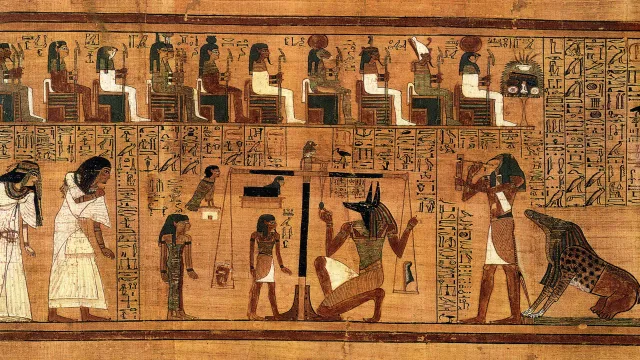 British Museum · Public domain
From Ma'at and Ifa divination to Fanon and today's decolonial thinkers: African philosophical thought from ancient Egypt to the present. You'll explore Ubuntu ethics, Yoruba and Akan metaphysics, Pan-African political philosophy, African feminist thought, and the decolonial critique of knowledge and power. It is a continent's philosophy, on its own terms.
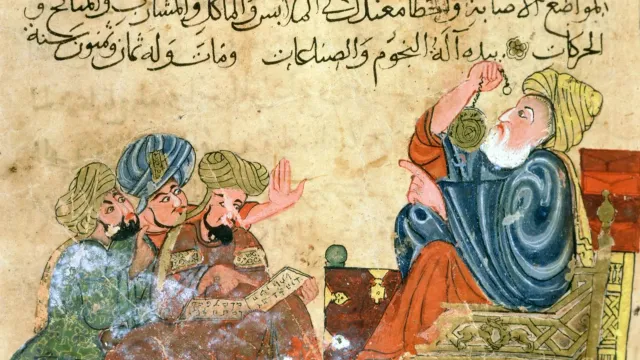 Topkapı Palace Library · Public domain
Islamic philosophy from the Quran and early theology to today's feminist and decolonial thought, through its great debates: can reason show that God exists, does al-Ghazali's Incoherence of the Philosophers refute Aristotelian philosophy (and how did Averroes answer him), and what does Avicenna's Flying Man reveal about self-awareness? You'll meet Sufi and illuminationist mystics, Mulla Sadra, and Ibn Khaldun's new science of civilization, follow Averroes into medieval Europe, and explore political philosophy and dialogue with other traditions. The thinkers range across the Arab world, Persia, al-Andalus, the Ottoman lands, South Asia and West Africa.
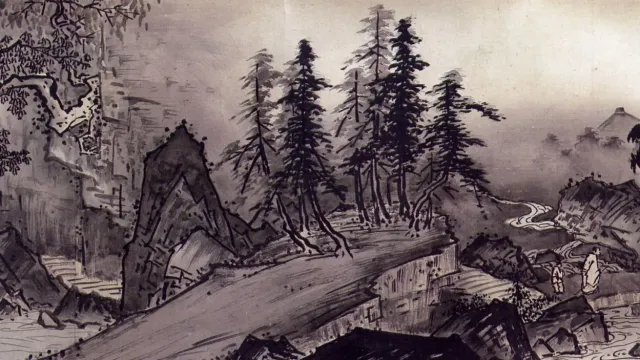 Sesshū Tōyō · Public domain
From Shinto's sacred landscapes through samurai ethics and Zen aesthetics to the Kyoto School's radical encounter with Western thought. Traces how Japanese thinkers transformed Buddhist, Confucian, and indigenous ideas into a distinctive philosophical tradition — and asks what Nishida's pure experience and Dogen's being-time reveal about consciousness, nature, and what it means to be human.
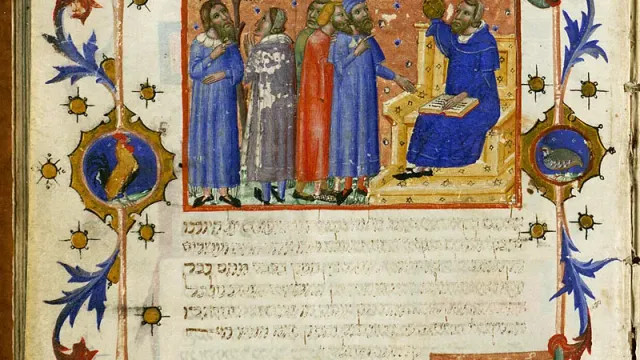 Royal Danish Library · Public domain
Three thousand years of Jewish philosophical reflection — from the wisdom of Job and Ecclesiastes, through medieval rationalists and kabbalists, to Spinoza, Rosenzweig, and Levinas. Asks: What can we know of God? How do we act in an unjust world? What does it mean to be a people scattered through history?
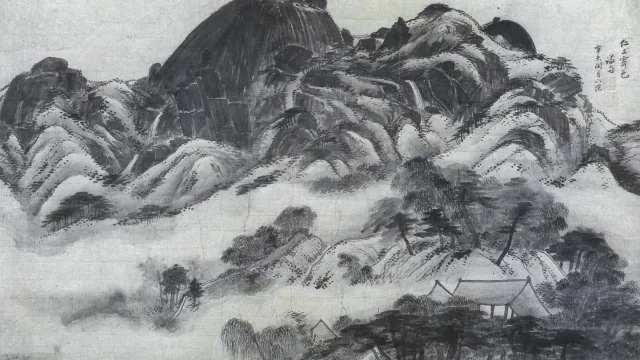 Jeong Seon · Public domain
Korean thought from Buddhism's arrival in the 4th century to today: Buddhist philosophy and Son meditation, Neo-Confucian debate, the Sirhak reformers' practical learning, the Donghak revolution, and contemporary feminist and minjung (people's) philosophy. Explore how Korea adapted, challenged and transformed the great traditions it encountered, from Buddhism and Confucianism to Catholicism and Western philosophy. Ask what it means when peasants arm themselves with a philosophical idea, why the Joseon dynasty fell, and whether its reformers could have saved it.
 Julian Lupyan · CC0
Founded by Zeno in Athens and later lived by a former slave, Epictetus, and an emperor, Marcus Aurelius, Stoic philosophy focuses on the gap between what happens to us and how we respond. This curriculum teaches you to use the Stoic toolkit — the dichotomy of control, negative visualization, the evening review, the four cardinal virtues — as daily practices for handling anger, worry and grief, making clearer decisions and building resilience. It explores questions like: What is actually within your control? How do your judgments shape your emotions? What would a Stoic morning routine look like in your life?
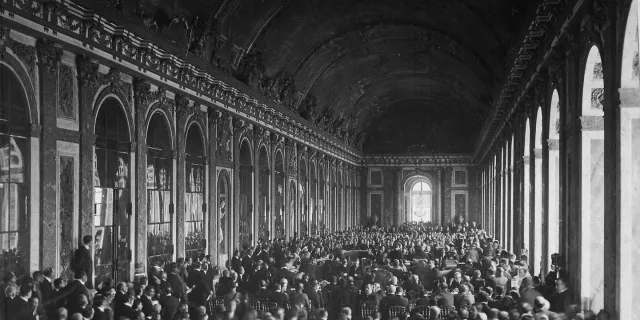 Kirtland · Public domain
From 1914 to the peace of 1919: the war that shattered the old world and made the new one. Trace the arc from the alliance rivalries and nationalist crises that sparked the conflict to the trenches of Verdun, the Russian Revolution, America's entry, and the peace at Versailles, and weigh how far this war set the stage for the next. Covers the main fronts, the home front, and how the war changed the societies that fought it.
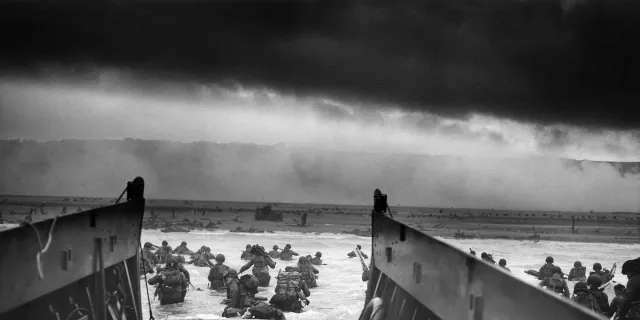 Robert F. Sargent · Public domain
How did the world descend into its deadliest conflict — and what changed because of it? Trace the path from the aftermath of World War I through the rise of totalitarianism, major battles on every front, the Holocaust, life on the home fronts, and the new world order that emerged from the ruins.
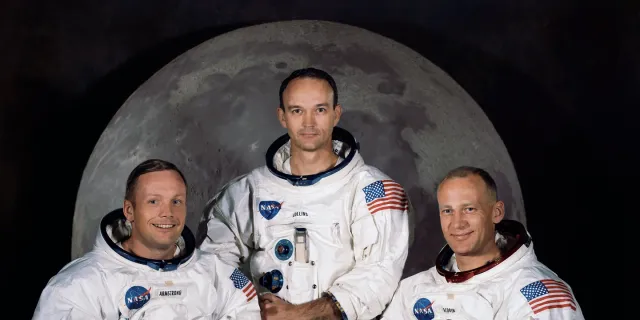 NASA · Public domain
The superpower rivalry that shaped the modern world — from the division of Europe and the nuclear arms race through proxy wars on three continents, life behind the Iron Curtain, and the revolutions that brought down communism. Explores questions like: Why did wartime allies become mortal enemies? How close did we come to nuclear war? What was daily life like in the Soviet bloc?
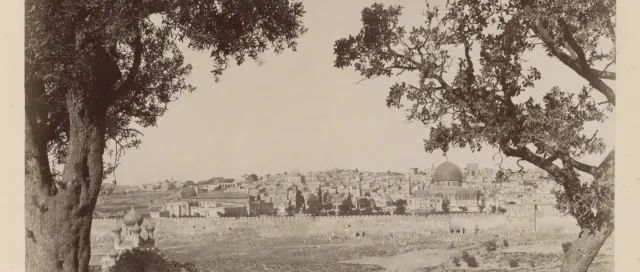 Félix Bonfils · Public domain
Palestine's history from the Bronze Age city-states of Canaan to the present day: the empires that ruled it, the rise of a Palestinian identity and of Zionism, the British Mandate, the 1948 war and the Nakba, occupation, the intifadas and the peace process. Weigh how historians on different sides tell this story, and why it is still argued over.
 Adalbert von Rößler · Public domain
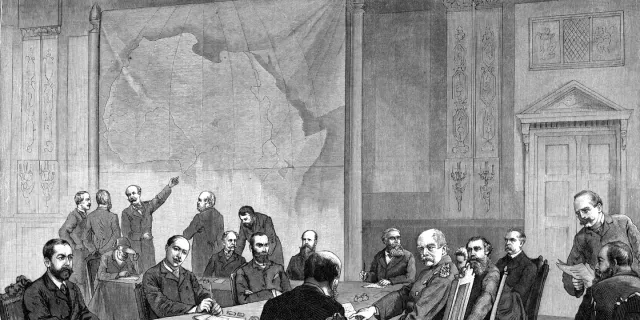
How did empire look to the people it was done to? Meet the empires of West Africa, the Americas and Asia on their own terms. Follow the conquest of the Americas, the Atlantic slave trade, British rule in India and the carving up of the Middle East, and see how the colonized resisted. Who really profited from the Atlantic slave trade? Why was Haiti made to pay compensation to its former slaveholders, a debt it was still paying in 1947? How did a company of merchants come to rule India?
 Jebulon · CC0
Greece from the palaces of Knossos to the Greek Enlightenment: city-states, the Persian Wars and Alexander, Rome, the eastern empire that went on calling itself Roman, its fall in 1453 and the centuries under the sultans. You meet the rulers and look for the people their records left out, with the sources set side by side so you can weigh them yourself. Was there ever a Trojan War? Why did no Byzantine emperor call himself Byzantine?
 AI-generated
Mathematics, science, English, computing, digital literacy, global perspectives, humanities and wellbeing across Grades 1–12. Explores questions like: What did ancient Egypt, Greece and Rome leave behind for us? How does particle theory explain the states of matter? What is algebra really for?
 AI-generated
From place value and fractions to California's Gold Rush and the DNA molecule, this curriculum covers mathematics, English, science, and social studies for Grades 4-10. Aligned to California's Common Core and NGSS standards, it explores questions like: How do ratios and proportional reasoning connect arithmetic to financial literacy? What drove the Age of Revolution, and how do those forces still shape the modern world? How do genes pass traits from one generation to the next?
 AI-generated
Aligned to the Texas state standards (TEKS): math, English language arts, science and social studies for grades 4 to 8, plus Algebra I, Geometry, English I and II, Biology, Chemistry, World Geography and World History for grades 9 and 10. Explores questions like: How do ratios describe the world around us? What makes a convincing argument in writing?
 AI-generated
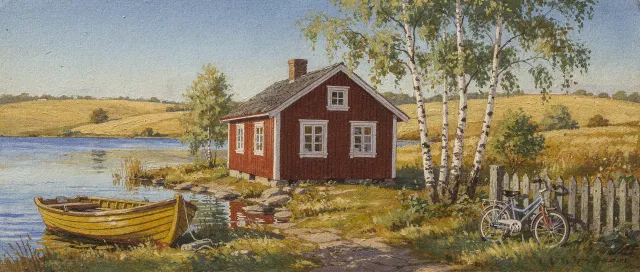
An independently authored curriculum aligned to Sweden's national curriculum (LGR 22) for Grades 1 to 9: mathematics, Swedish, English and modern languages, biology, chemistry, physics, history, geography, religious studies, civics, art, music, crafts, home economics and physical education. From understanding how ecosystems balance and why the French Revolution changed the world, to exploring how the world's religions answer life's big questions and reasoning with statistics. Built around Skolverket's national learning goals.
 AI-generated
School subjects for Grades 1–12, from mathematics and language arts to music, art and physical education. Explores questions like: How did ancient Greek democracy shape the modern world? What makes a good algorithm? How does exercise affect your mental health?
Your AI tutor greets you and picks up right where you left off — on your phone.
The tutor asks questions, explains concepts, and adapts based on your answers — like a real conversation.
Every session updates your knowledge map. Gaps get addressed before they become blind spots.