All ages
Chinese Philosophy
Three thousand years of philosophical thought — from Confucius and Laozi to Mao, Wang Yangming, and contemporary thinkers. Explores the questions Chinese philosophy asks that Western philosophy rarely does: Is human nature good? What is the Way? Can universal love be a political programme? Rigorous, critically grounded, and presented without ideological lens.
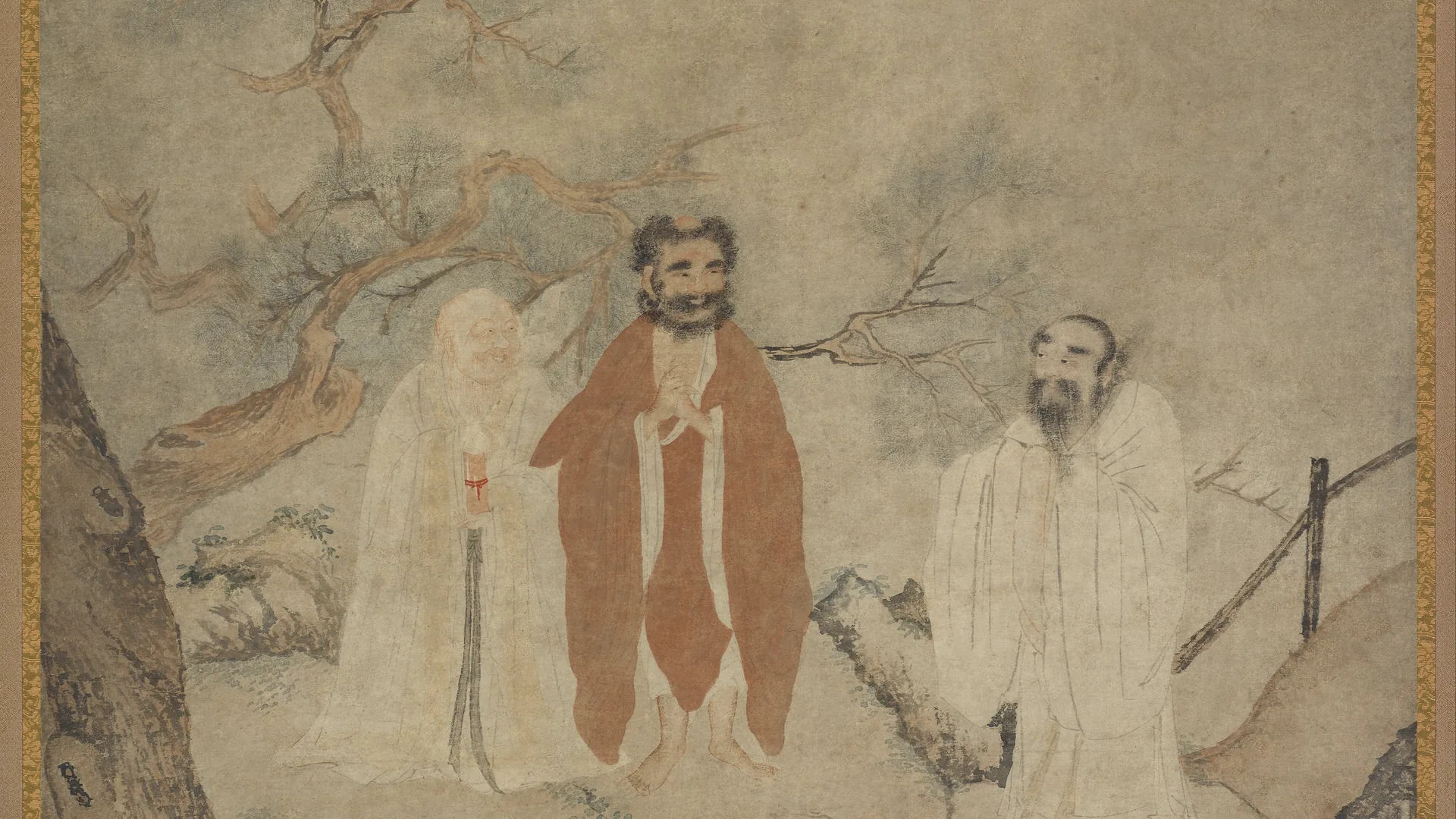
The Buddha, Laozi and Confucius together, a Ming dynasty painting from about 1500.
Freer Gallery of Art · Public domain
Philosophy
- Classical Chinese Philosophy I — Confucianism Explore how Confucius and his followers responded to chaos and social breakdown by developing a philosophy centered on human virtue and ritual. You'll examine ren (humaneness) and li (ritual propriety) as solutions to disorder, and see why these ideas shaped East Asian thought for millennia.
- Classical Chinese Philosophy II — Taoism Explore how ancient Taoist thinkers responded to chaos and conflict by proposing that the deepest power comes from non-action and alignment with nature's flow. You'll examine the Tao itself—the nameless force underlying reality—and learn how virtue (de) emerges not from force but from spontaneous, effortless action (wu wei).
- The Rival Schools — Mohism, Legalism, and Cosmology Explore how Mozi, an ancient Chinese artisan-philosopher, built a radical movement around universal love and ruthless logic to oppose warfare and injustice. You'll encounter Mohism's surprising blend of consequentialism, religious belief, and pacifism—ideas that challenged the dominant schools of his era and still provoke debate today.
- Buddhism in China Explore how Buddhism transformed as it traveled the Silk Road into China, where translators grappled with rendering Sanskrit concepts into Chinese, and monks navigated tensions between foreign teachings and Confucian values like filial piety.
- Neo-Confucianism Explore how Confucianism reinvented itself during China's medieval period to compete with Buddhism and Daoism. You'll trace the philosophical foundations laid by thinkers like Zhou Dunyi and Zhang Zai, whose ideas about cosmic order and human interconnectedness shaped East Asian thought for centuries.
- Modern Chinese Philosophy When China collided with Western power in the 1800s, its thinkers grappled with an urgent question: how to survive modernization without losing their identity? Explore how philosophers like Kang Youwei and Liang Qichao reimagined Confucianism, nationalism, and citizenship for a fractured nation caught between tradition and transformation.
Ready to start learning?
Start for free