All ages
The Oceans
Why is the deep sea harder to reach than the Moon? Dive with your tutor to the deepest trench and meet the life of the sea: animals that glow in the dark, a whale that dives almost three kilometres on one breath and a shark that lives for centuries. Work out how the ocean moves heat and carbon around the planet, meet the microbes that recycle its food and follow that food up to the fish the world catches and farms. Then weigh the evidence on the ocean's newest frontiers, from polar seas and coastal wetlands to deep-sea mining. No maths or science background needed.
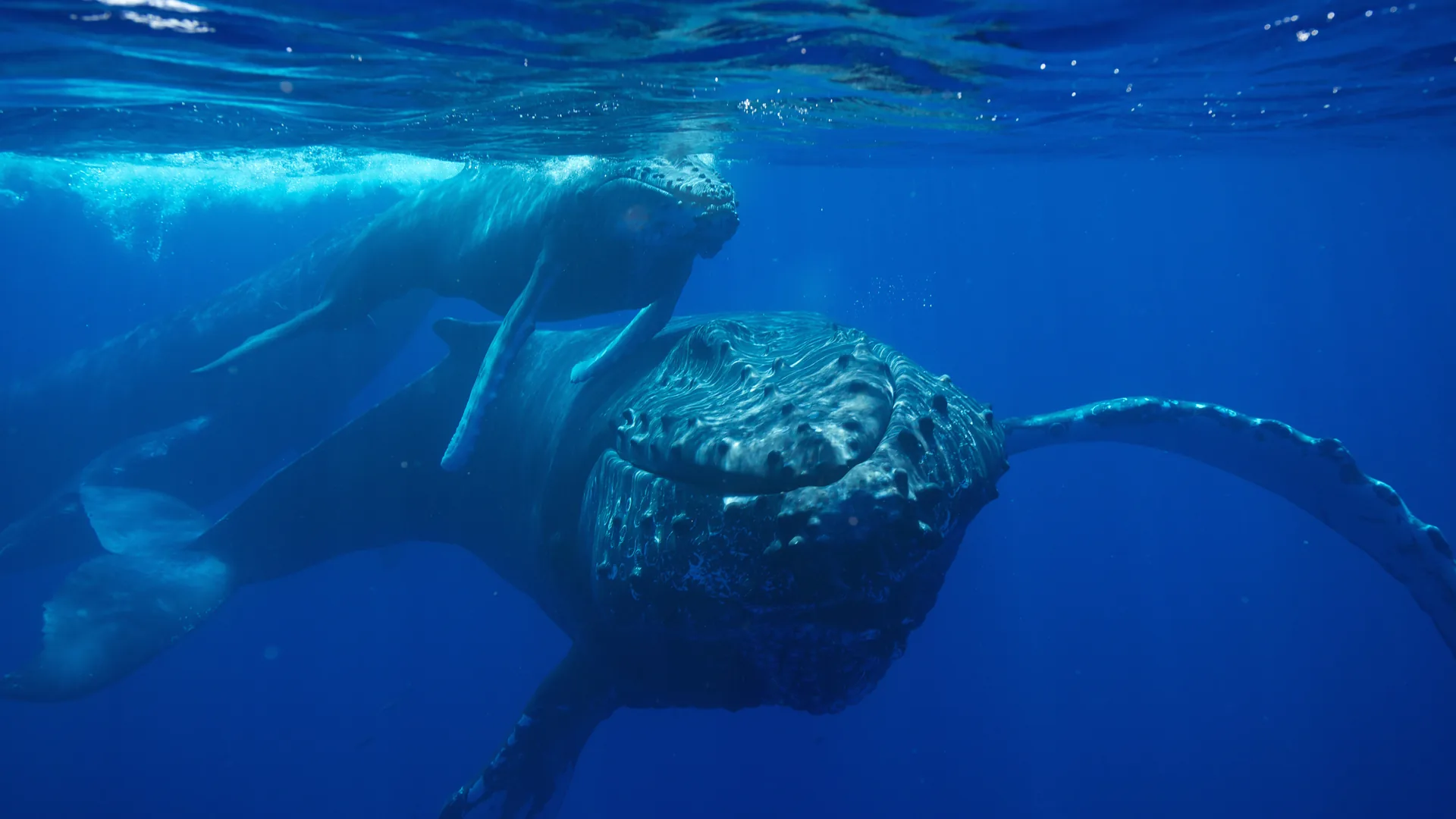
A humpback whale and her calf just below the surface in the Hawaiian Islands Humpback Whale National Marine Sanctuary.
NOAA · Public domain
Science
- Into the Deep: Exploring Earth's Last Frontier Why is the deepest point of the ocean harder to reach than the Moon? Follow the people and robots who have gone down, from the two-man Trieste in 1960 to the cameras that finally filmed a live giant squid, and find out why so much of the deep glows, how fish cope with crushing pressure and how one dead whale can feed the sea floor for decades. Then weigh the evidence on newer puzzles, such as whether lumps of metal on the sea floor really make oxygen in the dark.
- Life in the Sea: Reefs, Whales and the Invisible Forest Does half the oxygen you breathe really come from the sea? Meet the plankton, kelp, coral reefs, whales and sharks that make the ocean alive: how the biggest animal alive lives on tiny krill, how a shark feels the electric field of a fish hidden under sand, and how scientists put a Greenland shark's age at centuries. Then look at what the evidence says about bleaching reefs, overfished cod, plastic and protected areas.
- Ocean Frontiers: Polar Seas, Blue Carbon and the Deep-Sea Mining Question Can the ocean be made to take up more of our carbon, and should its floor be mined for battery metals? Start under the polar ice, with the krill that feed whales and seals and the icefish whose blood runs clear. Then weigh the evidence on mangroves, seagrass and salt marshes, on adding iron, alkaline substances or sinking seaweed to pull carbon from the air, on deep-sea mining, and on protecting the high seas beyond any nation's waters. Where views divide, you hear what supporters and critics argue and what the science can and cannot yet say.
- The Invisible Ocean: Microbes, Nutrients and the Marine Food Web How many living cells swim in a drop of seawater, and why did scientists miss most of them for decades? Meet the microbes and viruses that recycle the sea's food, the bacteria that turn nitrogen from the air into fertiliser, and a tiny alga that appears to have made a captured bacterium part of its own cell. Then follow that food up to the fish people catch and farm, from dead zones and toxic blooms to whether jellyfish are taking over and what salmon farms do to wild salmon.
- The Ocean Engine: Waves, Tides, Currents and Climate Why does the Bay of Fundy rise 16 metres while the Mediterranean barely moves? Work out how wind builds waves and why rogue waves are real, how tides are slowly making Earth's days longer, and whether the Gulf Stream really keeps Europe's winters mild. Then follow the ocean's part in climate: how it has taken up most of the extra heat and about a quarter of our carbon dioxide, why seawater is turning more acidic, and why the evidence is split on whether the Atlantic's great overturning circulation has already slowed.
Ready to start learning?
Start for free