All ages
Cold War
The superpower rivalry that shaped the modern world — from the division of Europe and the nuclear arms race through proxy wars on three continents, life behind the Iron Curtain, and the revolutions that brought down communism. Explores questions like: Why did wartime allies become mortal enemies? How close did we come to nuclear war? What was daily life like in the Soviet bloc?
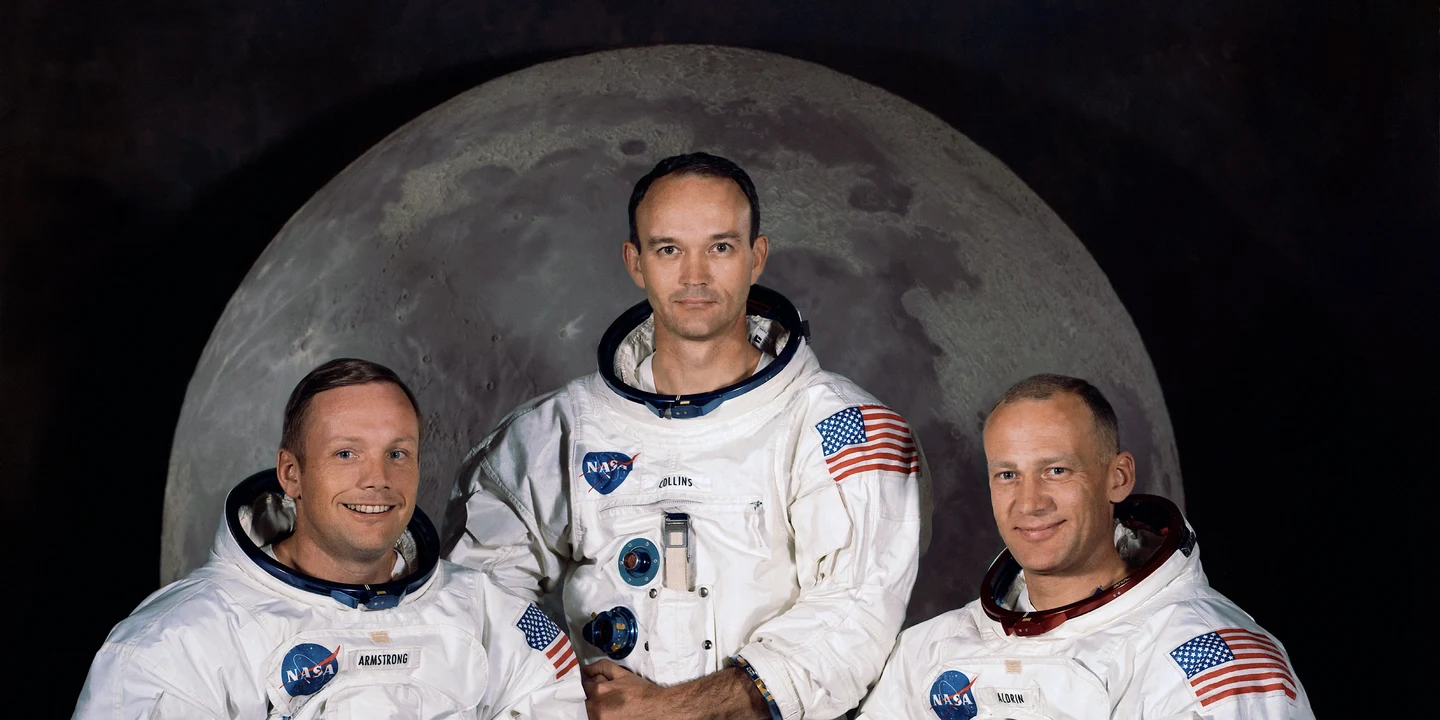
Buzz Aldrin stands on the Moon during the Apollo 11 mission, 20 July 1969 — the climax of the space race.
NASA · Public domain
History
- Origins and the Division of Europe (1945-1949) How the wartime alliance between the United States and the Soviet Union collapsed within four years of victory — from the hopeful conferences at Yalta and Potsdam to the Berlin Blockade, the formation of NATO, and the permanent division of Europe into rival blocs.
- The Korean War and the Nuclear Age (1950-1956) The Cold War's first major hot war on the Korean Peninsula, the terrifying escalation of the nuclear arms race with the hydrogen bomb, and the upheavals that followed Stalin's death — from Khrushchev's secret speech to the Hungarian Revolution and the Suez Crisis.
- Superpower Crises and Brinkmanship (1957-1963) The most dangerous period of the Cold War — from Sputnik's launch and the space race to the construction of the Berlin Wall, the shadow world of espionage, and the Cuban Missile Crisis that brought humanity to the brink of nuclear annihilation.
- The Vietnam War (1955-1975) America's longest and most divisive Cold War conflict — from the French defeat at Dien Bien Phu through two decades of escalating American involvement, the Tet Offensive that shattered public confidence, the anti-war movement that tore the nation apart, and the fall of Saigon.
- The Global Cold War — Proxy Conflicts and the Third World (1953-1989) How the Cold War was fought across the developing world — CIA coups in Iran and Guatemala, civil wars in Angola and Nicaragua, superpower rivalry in the Middle East and Horn of Africa, and the Non-Aligned Movement's attempt to chart an independent course between the blocs.
- Life Behind the Iron Curtain (1949-1989) What it was like to live under communism — the Soviet command economy and its daily absurdities, the surveillance states of Eastern Europe, the brave dissidents who risked everything to speak truth to power, and the Cold War's impact on art, sports, and popular culture on both sides.
- Détente and the Second Cold War (1969-1985) The era of cautious cooperation and its collapse — Nixon's opening to China, the SALT treaties, the Helsinki Accords, and then the Soviet invasion of Afghanistan, Reagan's 'Evil Empire,' the military buildup, and the war scares of the early 1980s that brought the world closer to nuclear conflict than at any time since Cuba.
- The End of the Cold War and the Collapse of Communism (1985-1991) How the impossible happened — Gorbachev's reforms that spun beyond his control, the miraculous revolutions of 1989, the fall of the Berlin Wall, the peaceful dissolution of the Soviet Union, and the debates over legacy and meaning that continue to shape our world.
Ready to start learning?
Start for free