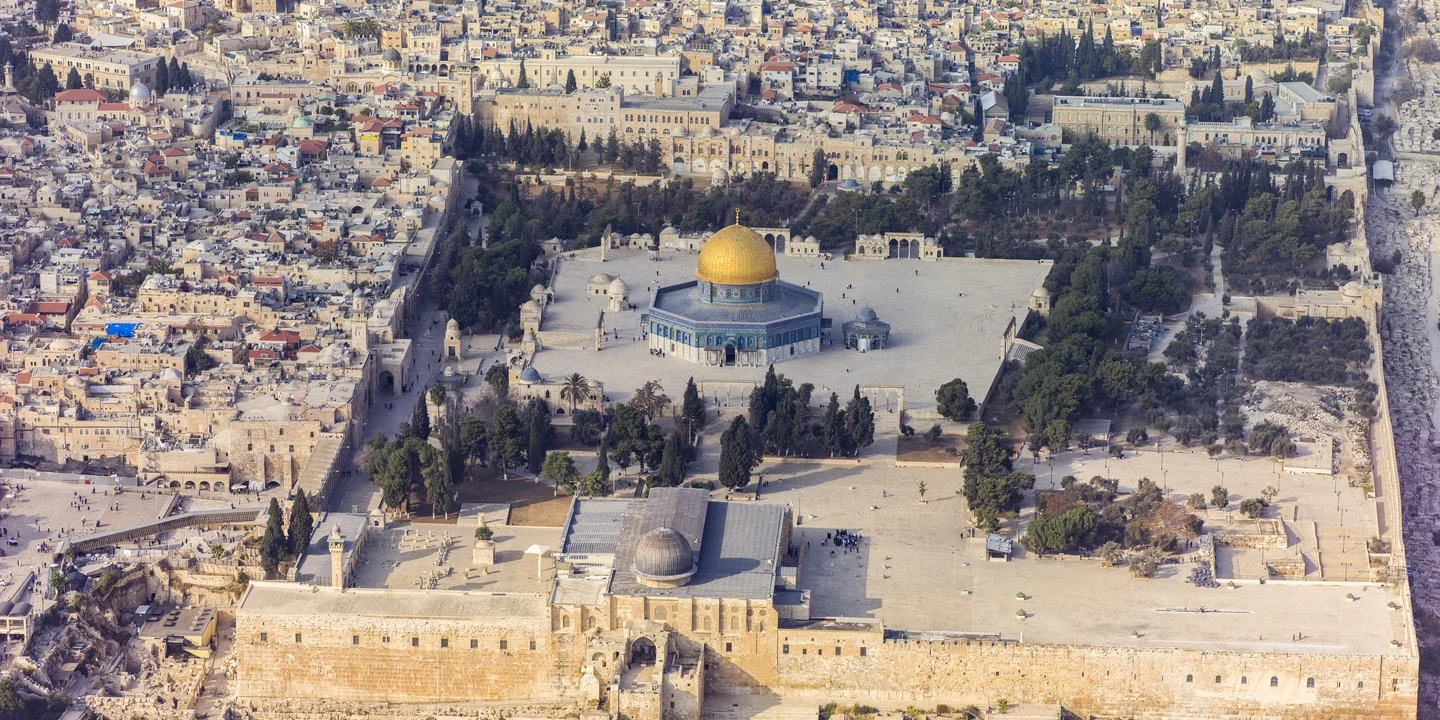
The Israel Palestine conflict explained — origins and competing claims
The Israel Palestine conflict has its roots in competing national movements that emerged in the late 19th and early 20th centuries and made overlapping claims to the same territory.
The Israeli/Zionist perspective
The Zionist movement, founded by Theodor Herzl in the 1890s, sought to establish a Jewish homeland in response to centuries of antisemitism and persecution in Europe. For Zionists, Palestine held unique historical and religious significance as the ancient homeland of the Jewish people — the site of Jewish kingdoms, the Hebrew Bible's geography, and the centre of Jewish religious aspiration expressed for centuries in the phrase 'next year in Jerusalem.' The Holocaust (1933–1945), in which approximately six million Jews were murdered by the Nazi regime, gave the establishment of a Jewish state urgent humanitarian necessity in the eyes of much of the international community.
The Palestinian perspective
Palestinian Arabs opposed both the Balfour Declaration and the Zionist immigration, arguing that they were the existing population of the land with established communities, agriculture, and civic life. Palestinian leaders contended that the creation of a Jewish state would displace an existing people who bore no responsibility for European antisemitism. The 1948 war, which Israelis celebrate as independence and Palestinians mourn as the Nakba, confirmed these fears: approximately 700,000 Palestinians were displaced and prevented from returning.
Both perspectives involve legitimate claims and genuine grievances. Understanding the Israel Palestine conflict explained in full requires holding both in view without dismissing either.
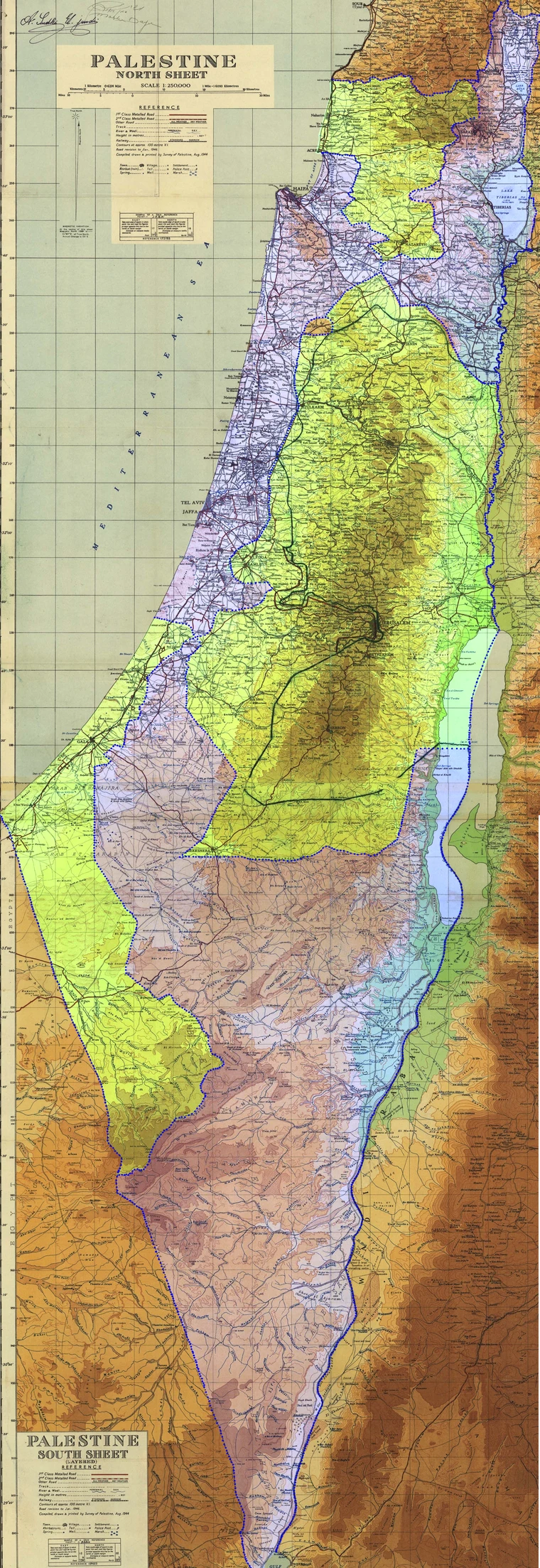
The UN Partition Plan map from 1947 (Resolution 181), showing the proposed division of Mandatory Palestine into an Arab state (dark) and a Jewish state (light), with Jerusalem under international administration.. Image: United Nations, via Wikimedia Commons (Public domain)
Key events from 1948 to the Oslo Accords
Several events have defined the shape of the conflict since 1948.
1948 and the armistice
Israel's declaration of independence in May 1948 and the subsequent war left Israel in control of approximately 78% of Mandatory Palestine — significantly more than the UN partition plan had allocated. The 1949 armistice agreements established the 'Green Line', leaving Jordan in control of the West Bank (including East Jerusalem) and Egypt in control of the Gaza Strip. No Palestinian state was created.
The 1967 Six-Day War
In June 1967, following escalating tensions and an Egyptian blockade, Israel launched pre-emptive strikes against Egypt, Jordan, and Syria. Within six days, Israel had captured the West Bank, East Jerusalem, the Gaza Strip, the Sinai Peninsula, and the Golan Heights. This dramatically expanded Israeli territorial control and placed approximately one million additional Palestinians under Israeli military administration. UN Security Council Resolution 242 called for Israeli withdrawal from occupied territories and recognition of all states in the region — its provisions remain disputed and unimplemented.
The Oslo Accords
The Oslo Accords of 1993 were a breakthrough: the PLO recognised Israel's right to exist; Israel recognised the PLO as the representative of the Palestinian people. The Palestinian Authority was established. However, the Accords deferred the most difficult questions — final borders, the status of Jerusalem, Israeli settlements, and Palestinian refugees — to future negotiations that have not succeeded.
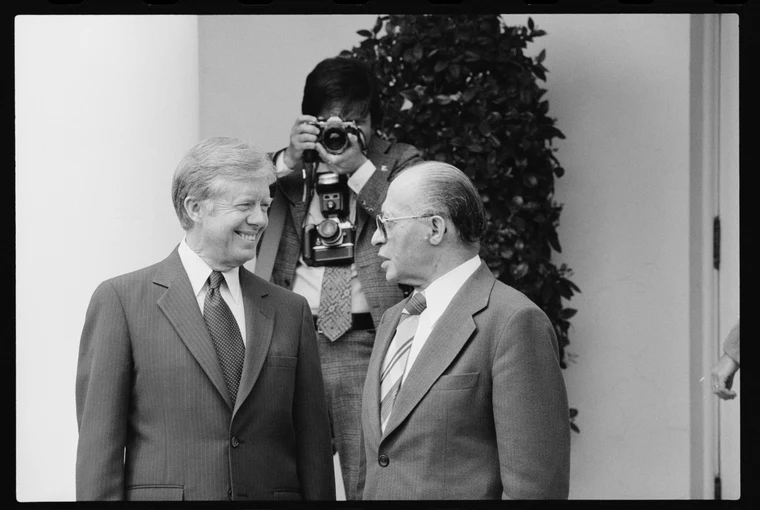
Israeli Prime Minister Menachem Begin, US President Jimmy Carter, and Egyptian President Anwar Sadat at Camp David in September 1978. The resulting accords led to the 1979 Egypt-Israel peace treaty, the first between Israel and an Arab state.. Image: Fitz-Patrick, Bill / White House, via Wikimedia Commons (Public domain)
The central disputes and why they are hard to resolve
Five core disputes define the conflict today and account for the failure of multiple peace negotiations.
Jerusalem
Both Israelis and Palestinians claim Jerusalem as their capital. Israel controls the entire city following the 1967 war, which most countries do not legally recognise. East Jerusalem, including the Old City and its holy sites sacred to Judaism, Islam, and Christianity, is claimed by Palestinians as the capital of a future state. The status of Jerusalem is widely considered the most emotionally and politically charged issue in the conflict.
Israeli settlements
Israel has built over 150 settlements in the West Bank since 1967, in which approximately 700,000 Israeli settlers now live. UN Security Council Resolution 2334 (2016) declared Israeli settlement activity a flagrant violation of international law. Israel disputes this interpretation. The settlements create territorial fragmentation that many analysts consider the central practical obstacle to a viable Palestinian state.
The right of return
Palestinians demand the right of return for refugees displaced in 1948 and their descendants, citing UN Resolution 194. Israel argues that allowing five million or more Palestinian returnees would end Israel as a Jewish-majority state. No solution acceptable to both sides has been found.
Security and recognition
Israel requires reliable security arrangements and unambiguous recognition of its legitimacy as a Jewish state. Palestinians require an end to military occupation, sovereignty over their territory, and freedom of movement. These security and sovereignty needs are frequently in direct tension.
Gaza and Hamas
Gaza has been controlled by Hamas — which does not recognise Israel and is designated a terrorist organisation by the US, EU, and UK — since 2007. An Israeli and Egyptian blockade has severely restricted movement and goods. The situation in Gaza has significantly complicated peace negotiations and created acute humanitarian conditions documented by UN OCHA.
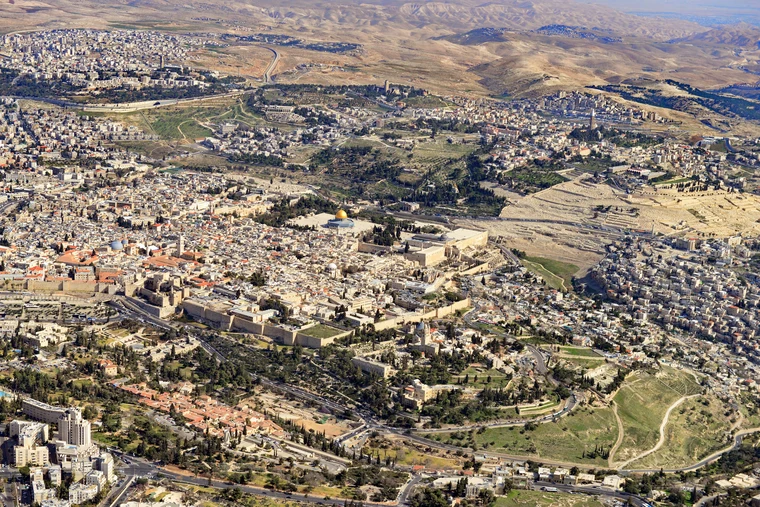
The walled Old City of Jerusalem seen from above, with the Temple Mount/Haram al-Sharif complex visible at its eastern edge. The Old City contains sites sacred to Judaism, Christianity, and Islam.. Image: Avraham Graicer, via Wikimedia Commons (CC BY-SA 4.0)
Did you know?
-
UN Security Council Resolution 2334 (2016) declared Israeli settlement activity in the West Bank a 'flagrant violation of international law' and called on Israel to stop immediately. As of 2024, over 700,000 Israeli settlers live in the West Bank and East Jerusalem.
UN Security Council Resolution 2334 -
The Oslo Accords (1993) were signed by PLO chairman Yasser Arafat and Israeli Prime Minister Yitzhak Rabin. The PLO recognised Israel; Israel recognised the PLO. The Palestinian Authority was created. Final-status negotiations were deferred and have not been successfully completed.
Oslo Accords — UN Treaty Collection -
The International Court of Justice issued an advisory opinion in July 2024 declaring that Israel's prolonged occupation of the Palestinian territories is unlawful under international law and should be ended as rapidly as possible.
ICJ Advisory Opinion on Israeli Occupation — ICJ
Frameworks for peace — the two-state solution and beyond
The two-state solution — two independent states, Israel and Palestine, living side by side within internationally recognised borders — remains the framework supported by the majority of the international community, including the United Nations, the European Union, the United States, and most Arab states. It is the basis of all major peace proposals since the Oslo Accords.
The obstacles to achieving a two-state solution are well documented. They include the fragmentation of Palestinian territory caused by Israeli settlements, the political division between the Palestinian Authority and Hamas, the unresolved status of Jerusalem, the refugee question, and the absence of political will on both sides to make the compromises required.
Alternative frameworks have been proposed. A binational democratic state, in which Israelis and Palestinians would be equal citizens within a single state, is supported by some academics and activists on both sides but faces profound opposition from those who argue it would end Israel as a Jewish state and, for others, that it fails to deliver Palestinian self-determination in practice.
The International Court of Justice issued an advisory opinion in 2024 declaring that Israel's prolonged occupation of Palestinian territories is unlawful under international law and must end. UN OCHA and multiple UN bodies continue to document conditions in the occupied territories and call for accountability.
Understanding the Israel Palestine conflict explained in its full complexity requires attention to both the historical record and the legitimate needs of both peoples. For students of history, international relations, and global affairs, this conflict provides one of the most important and challenging case studies of the modern world. Visit For parents to see how Epivo approaches sensitive historical topics, or explore the International curriculum for structured learning across history, ethics, and global issues.
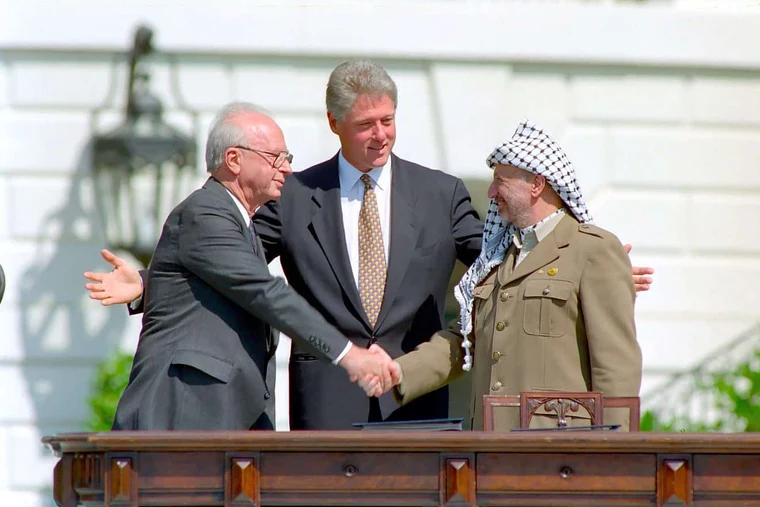
The Oslo Accords signing ceremony at the White House, 13 September 1993. Rabin, Clinton, and Arafat marked the moment the PLO recognised Israel and Israel recognised the PLO as the representative of the Palestinian people.. Image: Vince Musi / The White House, via Wikimedia Commons (Public domain)
Frequently asked questions
- What is the Israel Palestine conflict about?
- At its core, the conflict is about competing claims to the same territory — the land between the Mediterranean Sea and the Jordan River. Both Israelis and Palestinians have historical, religious, and national connections to this land and seek security, sovereignty, and recognition there. The conflict involves unresolved questions of land, statehood, refugees, and security.
- When did the Israel Palestine conflict start?
- The roots of the conflict are most commonly traced to the late 19th century, when Zionism emerged as a movement and Jewish immigration to Palestine increased. The most significant escalation occurred with the 1948 war, which established the State of Israel and displaced approximately 700,000 Palestinians. The 1967 war further shaped the current territorial situation.
- What is the two-state solution?
- The two-state solution envisions an independent Palestinian state in the West Bank and Gaza Strip (with East Jerusalem as its capital) existing alongside Israel within internationally recognised borders. It is supported by the UN, EU, and most of the international community as the framework for a negotiated settlement, though it has not been achieved.
- What is the status of Israeli settlements?
- Israel has built over 150 settlements in the West Bank, now housing approximately 700,000 settlers. UN Security Council Resolution 2334 (2016) declared this activity a 'flagrant violation of international law.' Israel disputes this legal interpretation. Most international governments consider the settlements illegal and an obstacle to a two-state solution.
- What is Hamas?
- Hamas is a Palestinian Islamist political and military organisation that has governed the Gaza Strip since 2007. It does not recognise Israel's right to exist and is designated a terrorist organisation by the US, EU, UK, and other governments. Hamas won Palestinian legislative elections in 2006 and took control of Gaza after a violent conflict with Fatah. It is distinct from the Palestinian Authority.