
What is emotional intelligence — and how is it different from academic ability?
Emotional intelligence is the ability to recognise, understand, and manage your own emotions. It also means sensing and responding to the feelings of others. This is not the same as academic ability. A child can excel at mathematics yet still struggle to handle frustration. They may also find it hard to recover from failure, or understand why a friend is upset.
Name it to tame it
Brain scientist Dr Daniel Siegel describes this as 'name it to tame it.' His research shows that naming a feeling out loud — saying 'I feel angry' — calms the emotional brain. This is why teaching children to identify and name emotions is the essential first step.
The three core areas
In practice, emotional intelligence covers three connected areas. These are: recognising your own feelings, managing your responses, and understanding the feelings of others. Each area builds on the previous one. Children who learn to name emotions early are far better placed to develop empathy and self-regulation as they grow.

Image: Generated with AI (Epivo)
Empathy and self-regulation: the two engines of emotional intelligence
Empathy
Empathy is the part of emotional intelligence that connects us to other people. Researcher Brené Brown defines it clearly: 'Empathy is feeling with people. It is the ability to take the perspective of another person and communicate that deeply.' (source) Children who develop empathy notice when a classmate is left out. They offer support when someone is sad, and they adjust their behaviour based on how others feel.
Self-regulation
Self-regulation is equally central to these skills. The Collaborative for Academic, Social, and Emotional Learning (CASEL) — a leading research organisation in this field — describes it as 'the engine of all social and emotional learning.' Self-regulation means pausing before reacting, staying calm under pressure, and choosing helpful actions even when emotions are running high.
As Fred Rogers observed, 'Feelings are mentionable, and because they're mentionable, they're manageable.' Children who can talk openly about what they feel are, consequently, better able to regulate those feelings. Both empathy and self-regulation are teachable skills, not fixed personality traits.
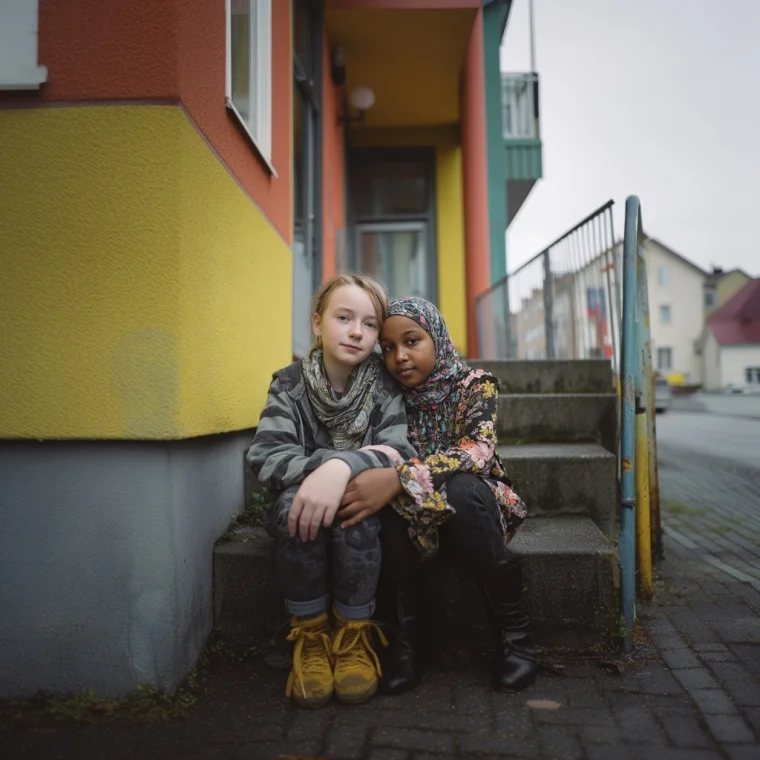
Image: Generated with AI (Epivo)
How emotional intelligence develops from primary through secondary school
Primary school years
Emotional intelligence develops gradually across childhood and adolescence. In the early primary years, children begin by identifying basic emotions — happiness, sadness, anger — in themselves and in others. By the middle primary years, they start connecting emotions to causes. They learn, for example, that jealousy is normal, and that talking about it is more useful than acting on it.
Secondary school
In secondary school, the prefrontal cortex — the part of the brain responsible for impulse control and decision-making — is still maturing. This explains why teenagers sometimes find it harder to stay calm or think clearly when they are emotionally activated. However, this is also the period when these skills can strengthen most significantly. Adolescents who understand why their emotions spike are far better equipped to manage them.
Resilience
Resilience — the ability to bounce back from setbacks — grows alongside emotional intelligence throughout this journey. Developmental psychologist Ann Masten showed that resilience depends not on rare qualities. Instead, it draws on ordinary human resources: trusted relationships, healthy daily habits, and positive thinking patterns. These same foundations support strong emotional intelligence at every stage.

Image: Generated with AI (Epivo)
Practical ways parents can build emotional intelligence at home
Name emotions out loud
Parents play a central role in supporting these skills. Name emotions aloud during everyday situations. When your child is frustrated, try saying: 'It looks like you are feeling frustrated — that makes sense.' This phrase models 'name it to tame it' for children who have not yet found words for their own feelings.
Accept all feelings as valid
UNICEF's research on children's emotional development confirms that every feeling — including jealousy, loneliness, and fear — gives children important information about what they need. Dismissing difficult feelings teaches children to suppress them rather than manage them.
Protect the physical foundations
The World Health Organization highlights that physical and mental wellbeing are deeply connected. A child who is consistently rested and well-nourished is better placed to recognise and regulate emotions.
For structured, curriculum-based support, explore Epivo's Wellbeing course or visit For parents to see how Epivo supports your child's emotional and academic development.

Image: Generated with AI (Epivo)
Did you know?
-
Brain scientist Dr Daniel Siegel's 'name it to tame it' research shows that labelling a feeling out loud activates the brain's verbal centres and measurably reduces the emotional stress response.
The Whole-Brain Child — Dr Daniel Siegel -
CASEL describes self-regulation as 'the engine of all social and emotional learning' — the foundational skill that all other emotional and social abilities depend on.
CASEL SEL Framework -
Psychologist Martin Seligman's Penn Resiliency Program demonstrated that teaching emotional and cognitive skills to young people significantly reduced rates of depression and anxiety.
Penn Resiliency Program — Martin Seligman
Emotional intelligence and long-term mental health
The connection between emotional intelligence and mental health is direct and well-evidenced. The Mental Health Foundation is clear on this point: 'Understanding your emotions is not a sign of weakness — it is one of the most powerful things you can do for your mental health.' Children who develop these skills early handle stress more effectively. They are also more likely to ask for help and sustain healthy relationships throughout life.
Mental health as a spectrum
Mental health is not a fixed state. It moves along a spectrum depending on what is happening in a person's life. Children who understand this — who know that a difficult week does not mean permanent failure — show greater resilience when setbacks occur. Emotional intelligence acts as a protective factor against anxiety and low mood.
Teaching resilience
Research by psychologist Martin Seligman confirms that resilience skills can be explicitly taught. Schools and parents who weave emotional learning into everyday life give children a genuine and lasting advantage. Conversation, consistent modelling, and structured practice all play a part.

Image: Generated with AI (Epivo)
Frequently asked questions
- What is emotional intelligence in simple terms?
- Emotional intelligence is the ability to recognise, understand, and manage your own emotions, and to sense and respond to the emotions of others. It includes skills such as naming feelings, showing empathy, and staying calm under pressure. These are learned skills, not fixed traits.
- At what age does emotional intelligence start to develop?
- Emotional intelligence begins developing in infancy and continues throughout childhood and adolescence. Children as young as three can start naming basic emotions. By the teenage years, with the right support, they can build self-regulation, empathy, and resilience — all core components of emotional intelligence.
- Can emotional intelligence be taught?
- Yes. Research by psychologist Martin Seligman and organisations such as CASEL shows that emotional intelligence skills are learnable at any age. Consistent practice — naming feelings, discussing emotions openly, and modelling empathy — helps children build these skills over time.
- How does emotional intelligence affect school performance?
- Children with strong emotional intelligence manage frustration, stay motivated, and cooperate with classmates more effectively. CASEL's research shows that structured social-emotional learning programmes produce measurable improvements in both academic outcomes and classroom behaviour.
- What are the signs of emotional intelligence in children?
- Key signs include naming feelings accurately, showing empathy towards others, bouncing back from setbacks, managing anger without major outbursts, and asking for help when needed. Children with developed emotional intelligence tend to have stronger friendships and lower levels of anxiety.
- How can parents support emotional intelligence at home?
- Name emotions together during everyday situations, validate all feelings including difficult ones, model calm behaviour when you are stressed, and protect sleep and exercise routines. Consistent, open conversation about emotions is the most powerful everyday tool parents have.