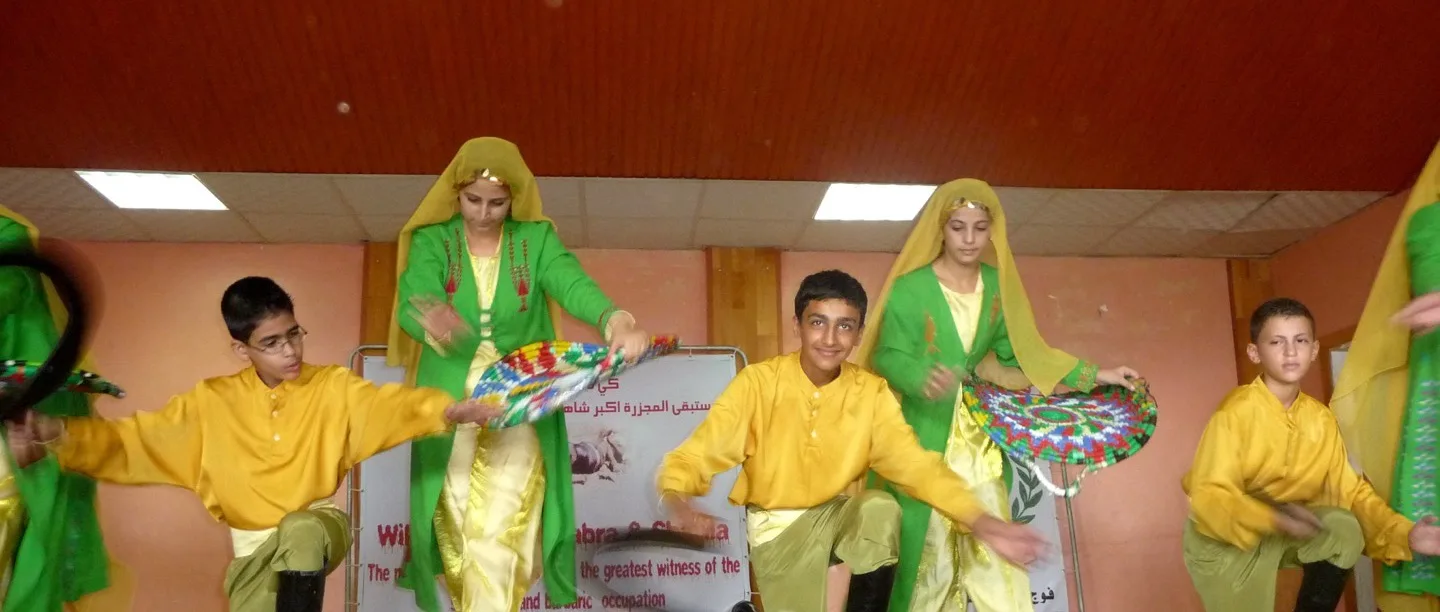
Who are the Palestinians — identity and origins
The Palestinians are the Arab inhabitants of the historical region of Palestine and their descendants. The term refers primarily to those who lived in Mandatory Palestine — the territory administered by Britain between 1920 and 1948 — and to the generations that followed them, wherever they now live.
At the time of the British Mandate, the population of Palestine was predominantly Arab. A 1945 British survey estimated the population at approximately 1.2 million Arabs and 550,000 Jews. The Arab population spoke Arabic, was predominantly Muslim with a significant Christian minority, and had developed distinct cultural, social, and agricultural traditions rooted in the landscape of the region.
The question of Palestinian identity as a distinct national identity — separate from broader Arab or pan-Arab identity — developed gradually through the 20th century, shaped significantly by displacement and the experience of statelessness. Scholars such as Rashid Khalidi, Professor of Arab Studies at Columbia University, have documented this in detail in The Hundred Years' War on Palestine. The Nakba — the mass displacement of 1948 — is widely regarded as the event that most powerfully forged Palestinian national consciousness, by creating a shared experience of loss, exile, and the aspiration for return.
Today, the United Nations recognises Palestinian people as a distinct national group with the right to self-determination, affirmed in UN General Assembly Resolution 3236 (1974).
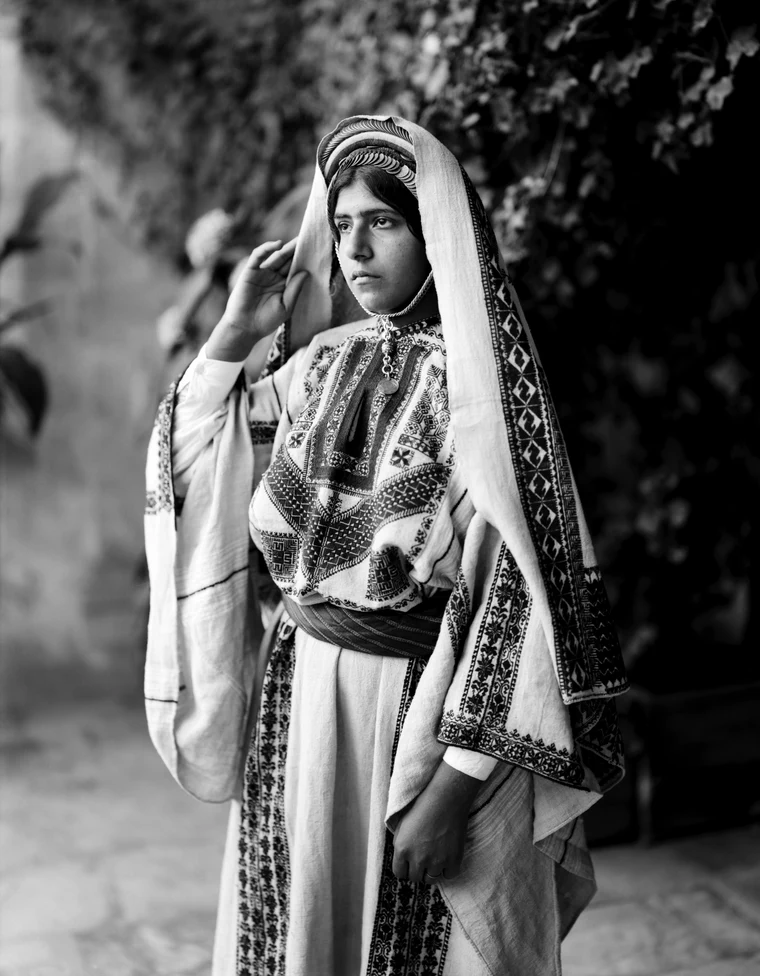
Intricately embroidered dress sleeves (tatreez) from the Ramla area, dating to the 1920s. Each Palestinian region developed distinctive patterns, and the craft was recognised by UNESCO as Intangible Cultural Heritage in 2021.. Image: Ma'moun Othman, via Wikimedia Commons (CC BY-SA 4.0)
Where Palestinians live today — demographics
Today, estimates suggest there are approximately 13–14 million Palestinians worldwide, making it one of the largest diaspora populations relative to its origin territory.
West Bank and Gaza Strip
Approximately 5.5 million Palestinians live in the West Bank and Gaza Strip — the two territories that form the basis of Palestinian claims to statehood. The West Bank, including East Jerusalem, has a population of around 3.2 million; the Gaza Strip has approximately 2.3 million people living in one of the most densely populated territories on earth.
Israel
Approximately 1.9 million Palestinian Arab citizens live inside Israel, making up about 20% of Israel's total population. They hold Israeli citizenship and are sometimes called Israeli Arabs, though many identify as Palestinian.
The diaspora
The largest Palestinian diaspora communities are in Jordan, which hosts approximately 2.3 million registered Palestinian refugees, many of whom have lived there for generations. Lebanon and Syria also have large Palestinian refugee populations. Palestinian communities are found across the Arab world, in Europe, the United States, and South America.
UNRWA — the United Nations Relief and Works Agency for Palestine Refugees — registered approximately 5.9 million Palestinian refugees as of 2023, including descendants of those displaced in 1948 and 1967. These refugees live in UNRWA-registered camps in Jordan, Lebanon, Syria, the West Bank, and Gaza, as well as in the surrounding communities.
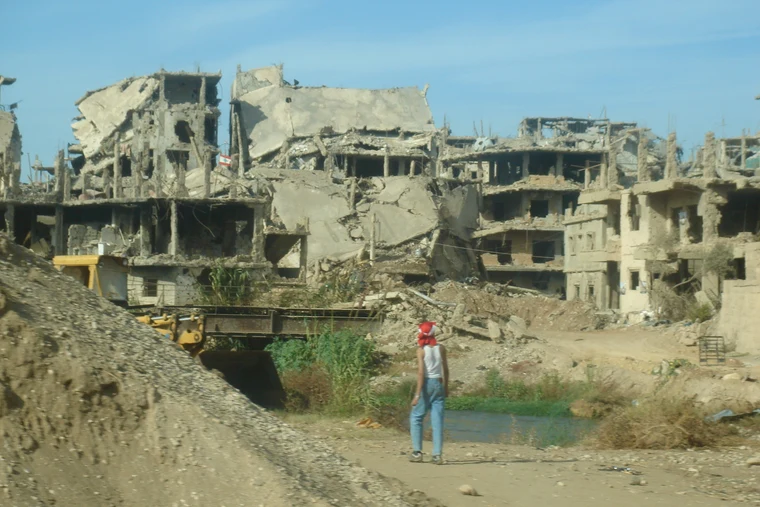
Palestinian refugees at the Nahr el-Bared camp in Lebanon, photographed by UNRWA in 1952. Established in 1949, the camp is one of dozens across the region that continue to house descendants of those displaced in 1948.. Image: S. Madver / UNRWA Photo Archives, via Wikimedia Commons (Public domain)
Palestinian culture and society
Palestinian culture is rooted in the Arabic language, Islamic and Christian religious traditions, and deep attachment to the land and its products — particularly olives and the olive tree, which is a central symbol of Palestinian identity and continuity.
Language and religion
Palestinians speak Palestinian Arabic, a dialect of Arabic. The majority of Palestinians are Sunni Muslim; a significant and historically important minority are Christian, particularly in communities such as Bethlehem, Ramallah, and the Galilee. Palestinian Christians trace their presence in the region to the earliest centuries of Christianity.
Art, music, and craft
Palestinian embroidery — known as tatreez — is one of the most distinctive expressions of Palestinian cultural identity. Each region developed its own patterns, and the embroidery was traditionally passed from mother to daughter. UNESCO recognised Palestinian embroidery as an Intangible Cultural Heritage in 2021. Palestinian literature, poetry (Mahmoud Darwish is the most celebrated Palestinian poet), and visual art have also developed strongly, often engaging with themes of displacement, memory, and return.
Agriculture and food
Olive cultivation has been central to Palestinian rural life for thousands of years. Palestinian cuisine — featuring dishes such as musakhan, maqluba, and knafeh — reflects the region's Mediterranean and Levantine food traditions. These cultural practices continue across the diaspora as expressions of identity and connection to place.
For structured learning in history and world cultures, visit For parents or explore Epivo's International curriculum.
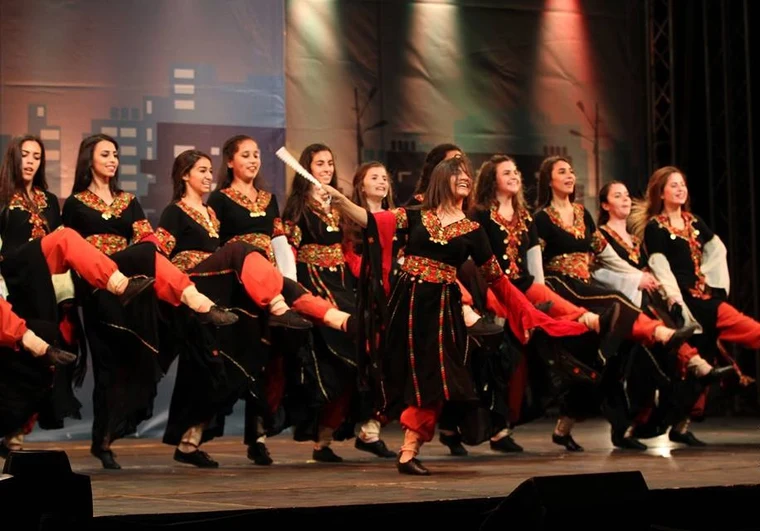
Palestinian girls perform the dabke, a traditional Levantine folk dance involving synchronised stepping and hand-holding. The dance is performed at weddings, festivals, and cultural gatherings across Palestine and the diaspora.. Image: Sarah Canbel, via Wikimedia Commons (CC BY-SA 4.0)
Did you know?
-
UNRWA registered approximately 5.9 million Palestinian refugees as of 2023, including the descendants of those displaced in 1948 and 1967. UNRWA operates schools, health clinics, and relief services across Jordan, Lebanon, Syria, the West Bank, and Gaza.
UNRWA — Palestine Refugees -
UN General Assembly Resolution 3236 (1974) recognised the Palestinian people's right to self-determination, including the right to national independence and sovereignty, and affirmed the right of Palestinians to return to their homes.
UN Resolution 3236 — UNISPAL -
Palestinian embroidery (tatreez) was inscribed on UNESCO's list of Intangible Cultural Heritage in 2021. Each region of historical Palestine developed distinctive patterns, and the craft has been preserved across generations in the diaspora as an expression of cultural continuity.
UNESCO — Palestinian Embroidery
The Palestinian national movement
Palestinian national political identity emerged through the early 20th century in response to Zionist immigration and British policy. Arab nationalist leaders in Palestine opposed the Balfour Declaration and organised politically against partition proposals throughout the Mandate period.
The Palestine Liberation Organisation (PLO) was founded in 1964 and, under Yasser Arafat's leadership from 1969, became the primary representative of Palestinian national aspirations. In 1974, the Arab League recognised the PLO as 'the sole legitimate representative of the Palestinian people.' The PLO gained observer status at the United Nations that same year.
The PLO's charter originally called for the destruction of Israel and the establishment of a Palestinian state across all of historic Palestine. Following the Oslo Accords of 1993, the PLO formally recognised Israel's right to exist and renounced terrorism, while Israel recognised the PLO as the representative of the Palestinian people. The Palestinian Authority was established to administer Palestinian population centres in the West Bank and Gaza.
Since 2007, the Palestinian political landscape has been divided between the Palestinian Authority (led by Fatah) in the West Bank and Hamas in the Gaza Strip. Hamas, which does not recognise Israel, won Palestinian legislative elections in 2006 and took control of Gaza after a conflict with Fatah in 2007.
The United Nations continues to support the principle of Palestinian self-determination and a negotiated two-state solution as the internationally recognised framework for peace.
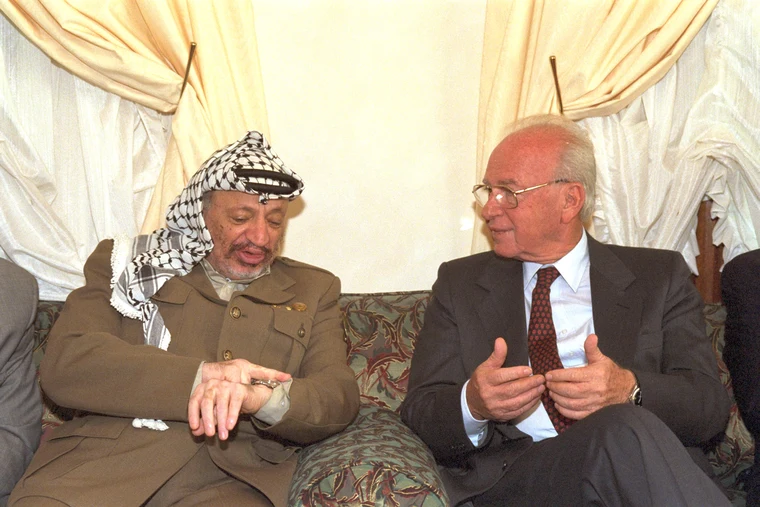
PLO Chairman Yasser Arafat and Israeli Prime Minister Yitzhak Rabin at the White House in September 1993, with President Clinton looking on. The Oslo Accords established the Palestinian Authority and marked mutual recognition between the PLO and Israel.. Image: Vince Musi / The White House, via Wikimedia Commons (Public domain)
Frequently asked questions
- Who are the Palestinians?
- The Palestinians are the Arab inhabitants of the historical region of Palestine and their descendants. The term refers primarily to those who lived in Mandatory Palestine (1920–1948) under British administration, and to subsequent generations wherever they live. They number approximately 13–14 million worldwide today.
- What religion do most Palestinians follow?
- The majority of Palestinians are Sunni Muslim. A significant minority are Christian, particularly in cities such as Bethlehem and Ramallah, with roots tracing to the earliest centuries of Christianity in the region. Palestinian Christian communities have maintained cultural and religious traditions across the diaspora.
- How many Palestinian refugees are there?
- UNRWA registered approximately 5.9 million Palestinian refugees as of 2023, including descendants of those displaced in the 1948 and 1967 wars. The largest registered refugee populations are in Jordan, Lebanon, Syria, the West Bank, and the Gaza Strip.
- What is the PLO?
- The Palestine Liberation Organisation (PLO) is the political representative body of the Palestinian people, founded in 1964 and recognised by the Arab League as the sole legitimate representative of Palestinians since 1974. The PLO signed the Oslo Accords with Israel in 1993 and established the Palestinian Authority to administer Palestinian territories.
- Where do most Palestinians live today?
- The largest Palestinian populations are in the West Bank (~3.2 million), Gaza Strip (~2.3 million), and Jordan (~2.3 million registered refugees). Approximately 1.9 million Palestinian Arab citizens live inside Israel. Significant communities exist in Lebanon, Syria, the Gulf states, Europe, and the Americas.