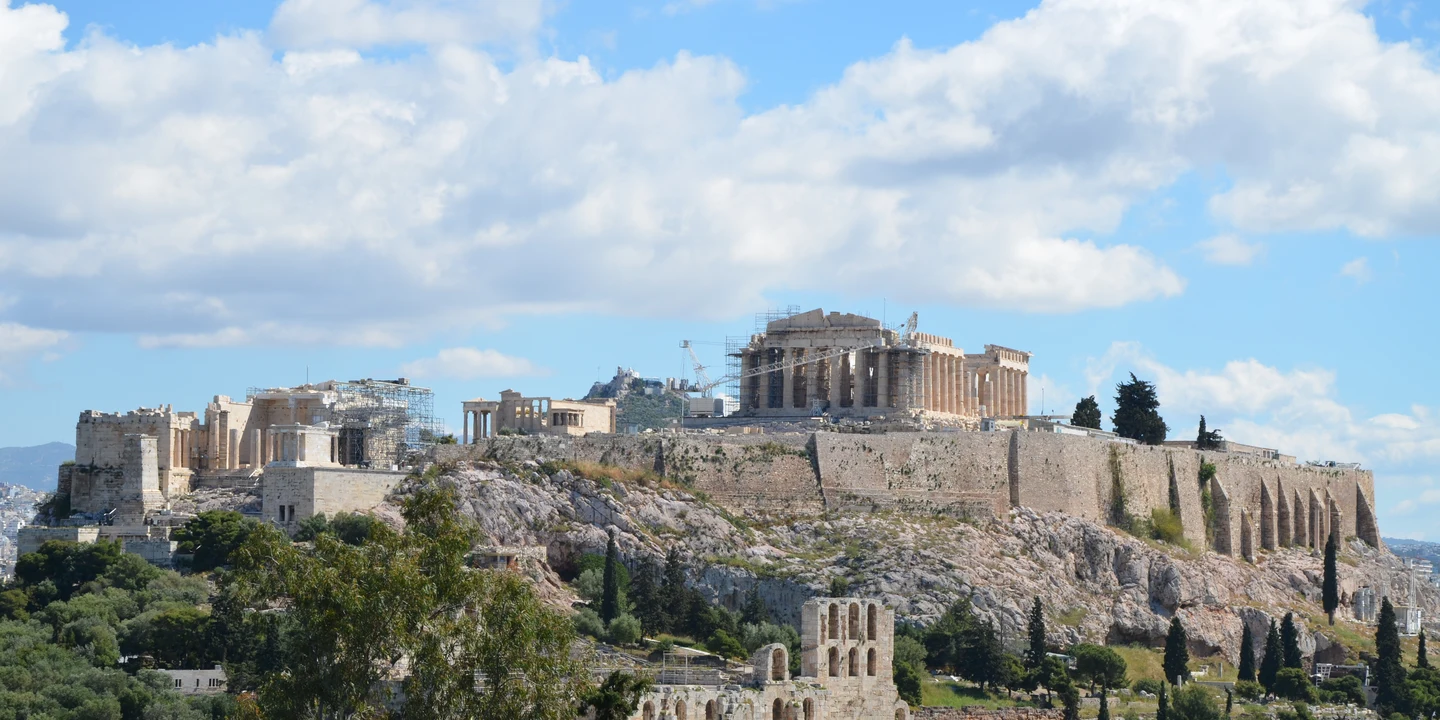
Democracy and City-States
Athens in the 5th century BCE became the birthplace of democracy — rule by the people. Cleisthenes reformed Athenian government around 508 BCE, giving citizens the right to participate directly in decisions. Every male citizen could vote in the Assembly, propose laws, and serve on juries.
This was not democracy as we know it. Women, slaves, and foreigners had no political rights. Only about 10–15% of the population were citizens. But the principle — that government should reflect the will of the governed — was revolutionary. No major civilisation had tried it before.
Sparta vs Athens
Not all Greek city-states resembled Athens. Sparta was a militaristic oligarchy. Boys left their families at seven to train as soldiers. Sparta's army was the most feared in Greece. The rivalry between Athens and Sparta dominated much of classical Greek history, culminating in the Peloponnesian War (431–404 BCE), which Athens eventually lost.
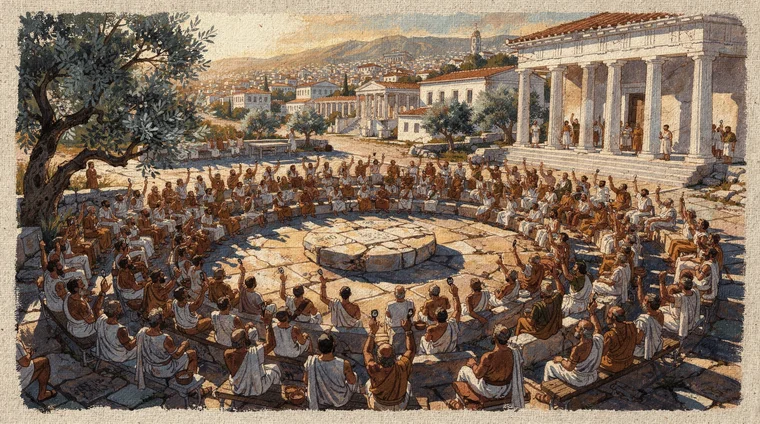
Image: Generated with AI (Epivo)
Philosophy, Science, and the Arts
Ancient Greece produced a remarkable flowering of intellectual life. Philosophers questioned received wisdom and used reason to seek truth.
Socrates (469–399 BCE) taught by asking questions — a method still used in law schools today. His student Plato wrote dialogues exploring justice, beauty, and the ideal state. Plato's student Aristotle investigated biology, physics, logic, ethics, and politics with systematic rigour. Aristotle's works formed the basis of European learning for nearly two thousand years.
Mathematics and science
Thales of Miletus attempted to explain natural phenomena through natural causes rather than myth. Pythagoras gave his name to the theorem about right-angled triangles. Euclid systematised geometry in his Elements. Archimedes calculated the value of pi and discovered principles of buoyancy. Eratosthenes calculated Earth's circumference with remarkable accuracy around 240 BCE.
Literature and art
The epic poems attributed to Homer — the Iliad and the Odyssey — remain among the most influential literary works ever written. Greek drama invented both tragedy and comedy. The Parthenon — built on the Acropolis of Athens between 447 and 438 BCE — represents perhaps the highest achievement of ancient Greek architecture.
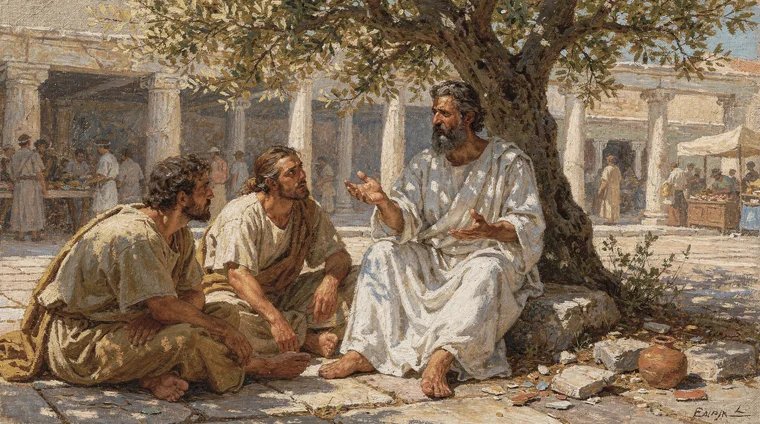
Image: Generated with AI (Epivo)
Ancient Greece's Legacy
Ancient Greece's influence on the modern world is pervasive and deep.
Government
The Athenian experiment with democracy, imperfect as it was, provided the template for later republics. The word 'democracy' is Greek (demos = people, kratos = rule). The framers of the US Constitution and the architects of the French Revolution both looked to ancient Greece for inspiration. What is democracy today would be unthinkable without the Athenian precedent.
The Olympic Games
The ancient Olympics were held at Olympia from 776 BCE, honouring the god Zeus. Athletes from across the Greek world competed in running, wrestling, and chariot racing. The modern Olympics, revived in 1896 in Athens, deliberately echo this ancient tradition.
Language and ideas
Many English words derive from Greek: democracy, philosophy, astronomy, biology, mathematics, theatre, tragedy. The Renaissance was partly a rediscovery of classical Greek and Roman ideas. The foundations of Western science and philosophy are built on the work of ancient Greek thinkers.
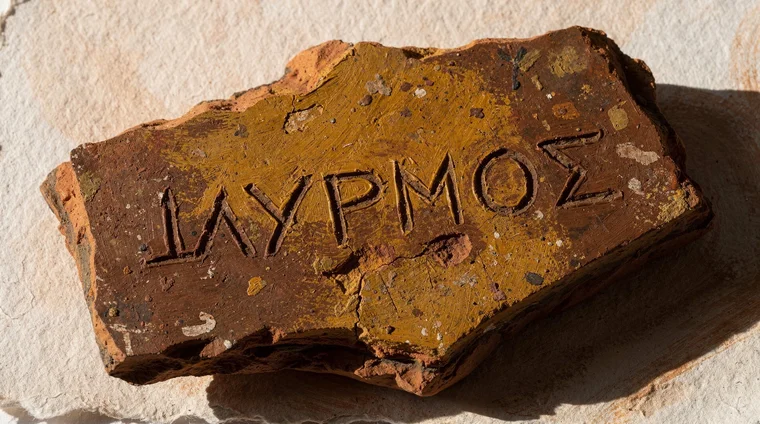
Image: Generated with AI (Epivo)
Frequently asked questions
- When did ancient Greece exist?
- Ancient Greece is generally dated from around 800 BCE (the Archaic Period) to 146 BCE, when Rome conquered the Greek peninsula. The Classical Period (480–323 BCE) produced Athens' democracy and the great philosophers. Alexander the Great (356–323 BCE) spread Greek culture across the Middle East and as far as India in the Hellenistic Period that followed.
- What was life like in ancient Athens?
- For male citizens, life centred on the agora (public marketplace), the gymnasium, and political participation. Education emphasised philosophy, rhetoric, music, and athletics. Women managed the household and had limited public roles. Slaves — perhaps 30–40% of the population — did much of the manual labour. The diet was simple: bread, olives, fish, wine, and vegetables.
- What gods did the ancient Greeks worship?
- The ancient Greeks worshipped a pantheon of gods on Mount Olympus, headed by Zeus. Other major gods included Hera, Poseidon, Athena, Apollo, Aphrodite, and Hermes. Each city had its patron deity — Athens was protected by Athena. Myths explained natural phenomena and human behaviour. Temples, sacrifices, and festivals honoured the gods throughout the year.
- Why did ancient Greece decline?
- Several factors contributed. The destructive Peloponnesian War (431–404 BCE) weakened Athens and many other city-states. Philip II of Macedon then conquered much of Greece by 338 BCE. His son Alexander the Great spread Greek culture far and wide, but this Hellenistic empire eventually fragmented. By 146 BCE, Rome had absorbed the Greek world into its expanding empire.