What apartheid was and how it began
Apartheid was a legal framework that classified every South African by race and used that classification to determine where they could live, work, study, and travel. It gave the white minority complete political and economic control over the non-white majority.
Racial discrimination in South Africa did not begin in 1948. Its roots lay in colonialism. Dutch settlers arrived at the Cape in 1652, followed by the British. Over centuries, colonial rule dispossessed Black South Africans of their land and confined them to reserves. Laws restricting movement, land ownership, and labour rights were already in place before apartheid was formalised.
The turning point came in 1948, when the National Party won the general election on a platform of strict racial separation. Once in power, the party enacted a series of laws that turned racial discrimination into a comprehensive system.
The Population Registration Act (1950) classified every citizen as White, Coloured, Indian, or Native (later Bantu). The Group Areas Act (1950) forced racial groups into separate residential zones, uprooting entire communities. The Bantu Education Act (1953) created an inferior education system designed to prepare Black children only for manual labour. Pass laws required Black South Africans to carry identity documents at all times. Those found without a pass faced arrest and imprisonment.
These laws touched every aspect of daily life. Separate beaches, buses, hospitals, and schools became the norm. Interracial marriage was banned. Black South Africans could not vote in national elections. The system was enforced through police violence, arbitrary detention, and censorship.

Resistance to apartheid: key movements and figures
Opposition to apartheid was widespread, sustained, and came from many directions.
The African National Congress (ANC), founded in 1912, initially pursued non-violent protest. After the Sharpeville massacre of 1960 — when police shot and killed 69 people at a peaceful demonstration against pass laws — the ANC concluded that peaceful methods alone were not enough. Its armed wing, Umkhonto we Sizwe, launched a sabotage campaign. The government responded by banning the ANC and arresting its leaders.
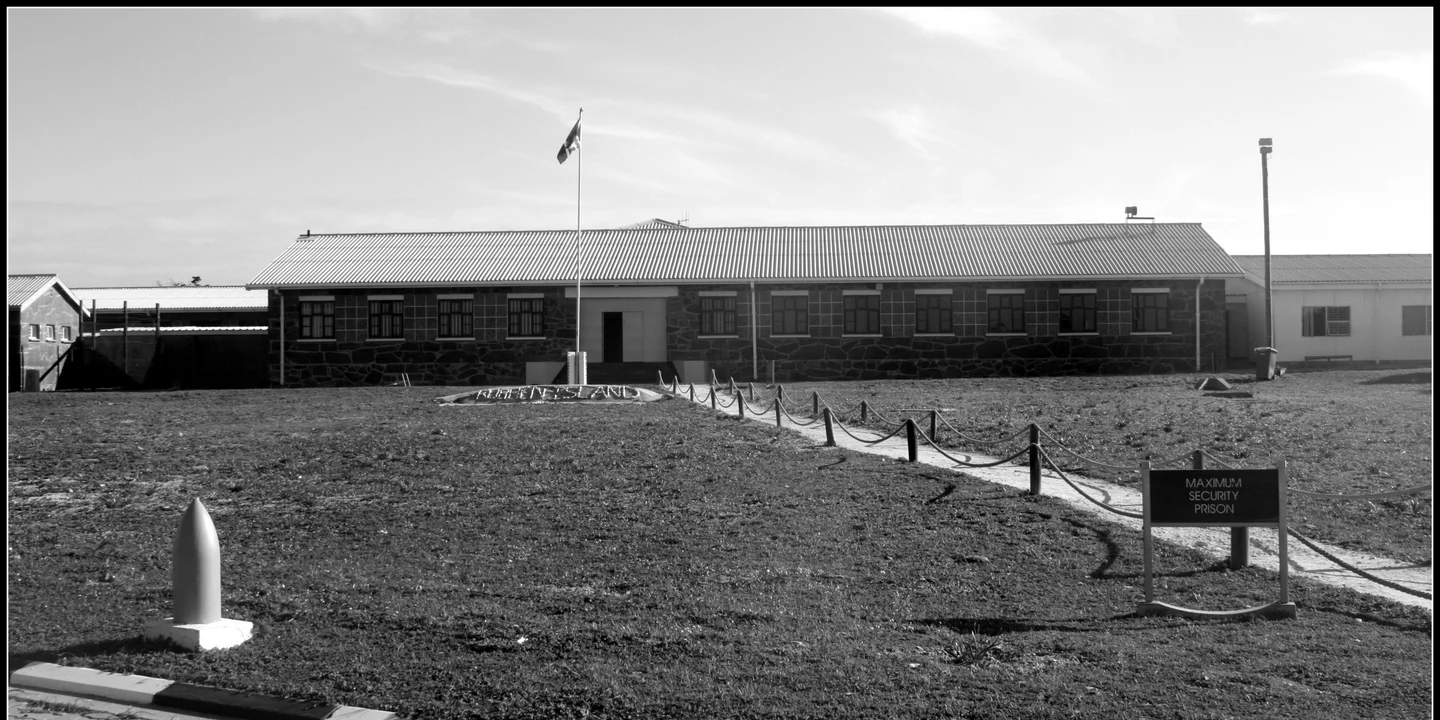
Nelson Mandela, a lawyer and ANC leader, was sentenced to life imprisonment in 1964. He spent 27 years in prison, mostly on Robben Island. His refusal to renounce the struggle made him a global symbol of resistance.
Steve Biko led the Black Consciousness Movement, which emphasised psychological liberation and Black pride. He died in police custody in 1977 after being severely beaten. His death drew international condemnation.
The Soweto uprising of 1976 began when school students protested against being forced to learn in Afrikaans. Police opened fire, killing hundreds. Images of the violence shocked the world and energised the anti-apartheid movement globally.
Archbishop Desmond Tutu used his moral authority to advocate for non-violent change and international pressure. He received the Nobel Peace Prize in 1984 for his efforts. Throughout this period, ordinary South Africans — workers, students, religious communities — sustained the struggle through strikes, boycotts, and acts of defiance.
How apartheid ended: sanctions, negotiations, and democracy
International pressure played a crucial role in ending apartheid. Throughout the 1980s, countries imposed economic sanctions and sporting boycotts on South Africa. Universities and corporations divested from the country. The United Nations declared apartheid a crime against humanity.
By the late 1980s, the apartheid government faced mounting internal resistance, economic decline, and growing isolation. In February 1990, President F.W. de Klerk unbanned the ANC and released Nelson Mandela from prison. Negotiations between the government and liberation movements followed over the next four years.
In April 1994, South Africa held its first fully democratic election. Millions of Black South Africans voted for the first time. The ANC won a landslide victory, and Mandela became president. The transition was remarkably peaceful given the decades of violence that preceded it.
To address the trauma of the apartheid era without plunging the country into cycles of revenge, South Africa established the Truth and Reconciliation Commission (TRC) in 1996, chaired by Desmond Tutu. The TRC heard testimony from victims and perpetrators alike, offering amnesty in exchange for full disclosure. It was grounded in Ubuntu philosophy — the idea that individual healing is inseparable from communal restoration.
The TRC was not without criticism. Many victims felt that amnesty denied them justice. However, it remains one of the most significant experiments in transitional justice in modern history.

The legacy of apartheid and why it still matters
Apartheid formally ended in 1994, but its consequences remain deeply embedded in South African society. Economic inequality between racial groups persists. Land ownership remains skewed. Schools in formerly white areas are better resourced than those in Black townships. Unemployment among Black South Africans is significantly higher than among white South Africans.
The apartheid experience also carries universal lessons. It demonstrates how racial classification systems, once embedded in law, become self-reinforcing. It shows the power of sustained, organised resistance — and the importance of international solidarity in challenging injustice.
For students studying human rights, apartheid is a defining case study. The Universal Declaration of Human Rights, adopted in 1948 — the same year apartheid began — affirms that all people are born free and equal in dignity. Apartheid was a direct violation of that principle on a national scale.
Understanding apartheid helps young people recognise how systems of inequality are built, maintained, and eventually dismantled. It connects to broader questions about justice, reconciliation, and what societies owe to communities that have been systematically harmed.

Did you know?
-
Apartheid South Africa classified its entire population into racial categories under the Population Registration Act of 1950. A person's classification determined where they could live, work, go to school, and who they could marry.
South African History Online — Apartheid Legislation -
Nelson Mandela spent 27 years in prison for his role in the anti-apartheid struggle. After his release in 1990, he led negotiations that ended apartheid and became South Africa's first democratically elected president in 1994.
Nelson Mandela Foundation -
On 21 March 1960, police killed 69 people and wounded 180 at a peaceful protest against pass laws in Sharpeville. The date is now commemorated internationally as the UN International Day for the Elimination of Racial Discrimination.
United Nations — International Day for the Elimination of Racial Discrimination
Frequently asked questions
- What does the word apartheid mean?
- Apartheid is an Afrikaans word meaning 'apartness' or 'separateness.' It was used to describe the system of racial segregation enforced by law in South Africa from 1948 to 1994.
- How long did apartheid last?
- Apartheid was officially in place from 1948 to 1994 — 46 years. Racial segregation in South Africa predated apartheid, however. Discriminatory laws existed under both Dutch and British colonial rule.
- Who was Nelson Mandela?
- Nelson Mandela was a lawyer, anti-apartheid activist, and leader of the ANC. He was imprisoned for 27 years. After his release, he negotiated the end of apartheid and became South Africa's first Black president in 1994.
- What was the Truth and Reconciliation Commission?
- The TRC was a court-like body established in 1996 to address apartheid-era human rights violations. Victims gave testimony and perpetrators could apply for amnesty by fully disclosing their actions. It was chaired by Archbishop Desmond Tutu.
- Is apartheid still affecting South Africa today?
- Yes. Although apartheid laws were repealed, deep economic inequality between racial groups persists. Land distribution, education quality, and employment rates still reflect apartheid-era patterns of systematic disadvantage.