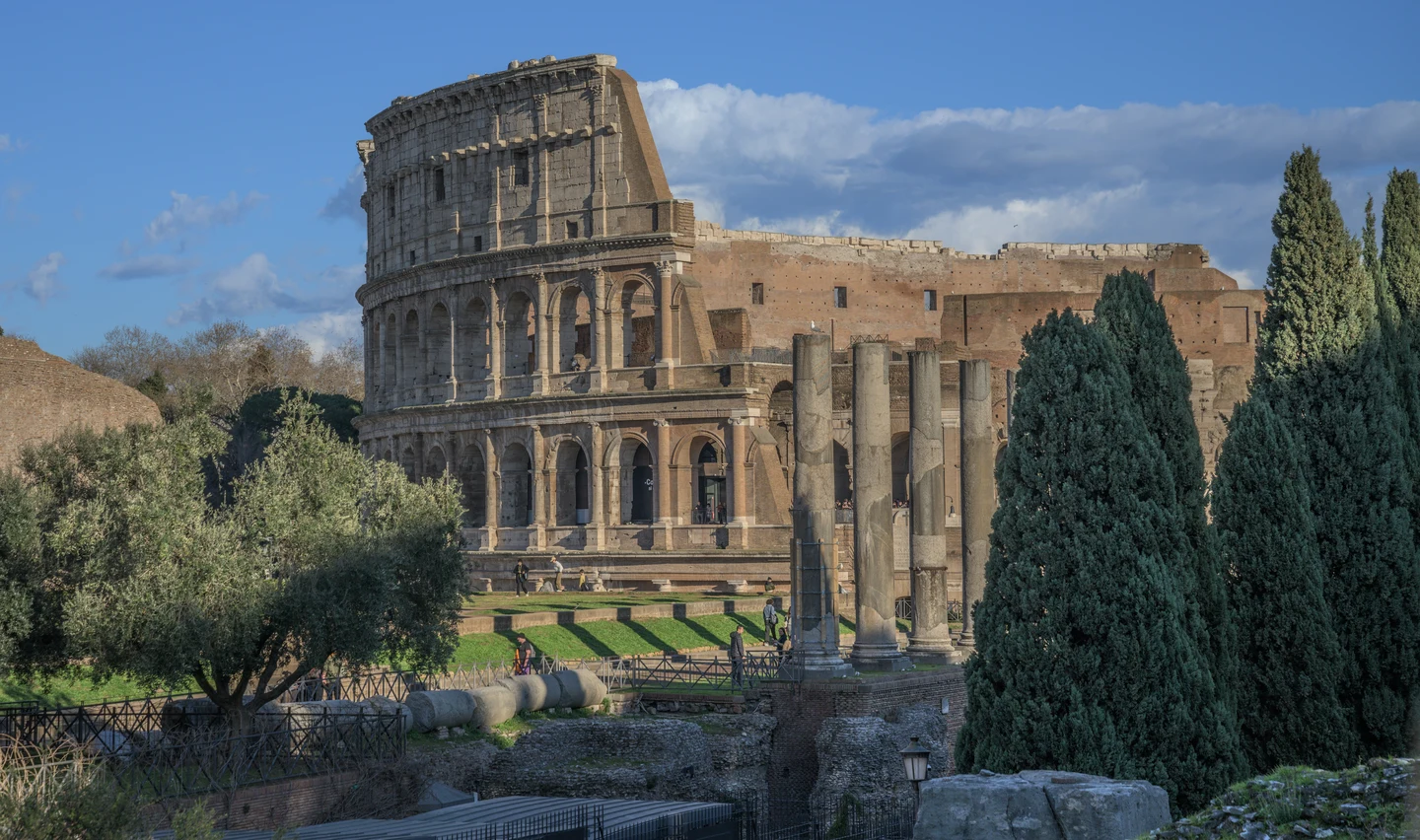
From City to Republic to Empire
Ancient Rome's history is traditionally divided into three periods.
The Kingdom (753–509 BCE)
According to Roman tradition, ancient Rome was founded in 753 BCE by Romulus. For its first two and a half centuries, ancient Rome was ruled by kings. The last king, Tarquinius Superbus, was expelled by the Roman aristocracy in 509 BCE.
The Republic (509–27 BCE)
Ancient Rome became a republic governed by elected officials — two consuls, a senate, and various assemblies. The Roman Republic expanded steadily, conquering the Italian peninsula and then the Mediterranean world. Generals like Julius Caesar became so powerful that the republican system collapsed into civil war.
The Empire (27 BCE – 476 CE)
Augustus became the first Roman emperor in 27 BCE, ending the Republic. The Roman Empire reached its greatest extent under Emperor Trajan (98–117 CE). Ancient Rome controlled Britain, France, Spain, North Africa, Greece, and much of the Middle East. At its peak, ancient Rome held roughly 70 million people — about a quarter of the world's population.
Ancient Greece profoundly influenced ancient Rome's culture, philosophy, and art.
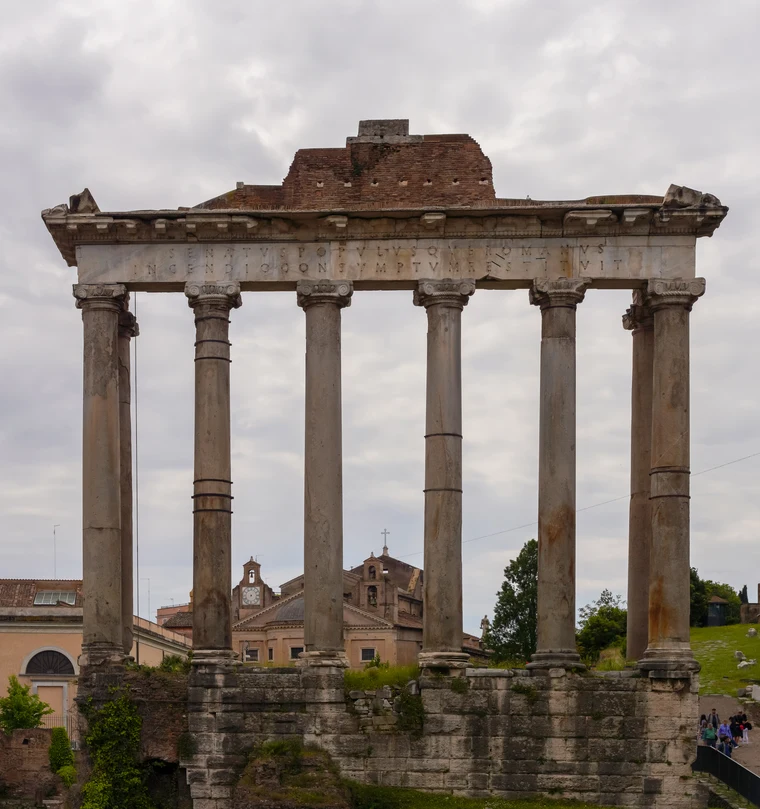
The ruins of the Temple of Saturn and the Roman Forum in Rome. For centuries, the Forum was the centre of Roman public life -- the site of triumphal processions, elections, and speeches.. Image: Jon Gudorf Photography, via Wikimedia Commons (CC BY-SA 2.0)
How Ancient Rome Was Governed and Organised
Ancient Rome developed sophisticated systems of governance, law, and social organisation that influenced Western civilisation.
Roman law
Ancient Rome's greatest lasting contribution may be its legal system. Roman law introduced concepts still used today: innocent until proven guilty, the right to appeal, contracts, property rights, and the distinction between public and private law. The Justinian Code (534 CE) compiled Roman law into a systematic text that became the foundation of legal systems across Europe.
The Roman army
The Roman army was the instrument of the empire's expansion. Organised into legions of about 5,000 soldiers, the Roman army was highly disciplined, well-equipped, and adaptable. Roman military engineering — siege weapons, fortifications, and the famous Roman roads — was unmatched in the ancient world.
Roman society
Roman society had a rigid social hierarchy: senators, equestrians (knights), and ordinary citizens at the top, with slaves (who made up roughly a third of the population) at the bottom. Citizenship was highly valued and was gradually extended to conquered peoples — a key factor in holding the empire together.
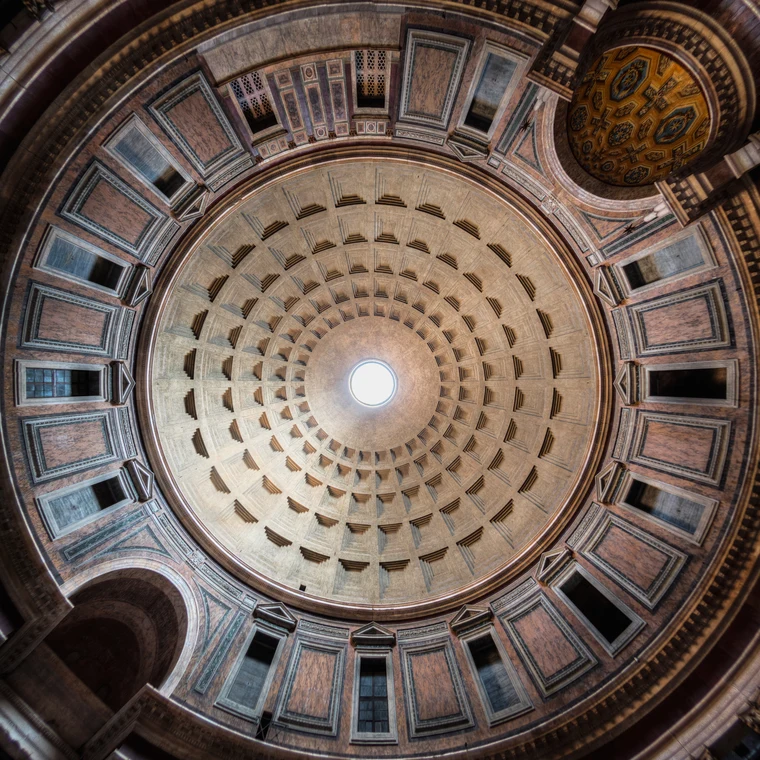
The interior of the Pantheon in Rome, showing its coffered concrete dome and central oculus. Built around 125 CE under Emperor Hadrian, it remains the world's largest unreinforced concrete dome.. Image: Szilas, via Wikimedia Commons (CC0)
The Fall of Ancient Rome and Its Legacy
Ancient Rome did not fall in a single event. The Western Roman Empire gradually weakened over the 4th and 5th centuries CE, under pressure from Germanic tribes, internal political instability, and economic problems. In 476 CE, the last Western emperor was deposed. The Eastern Roman Empire — centred on Constantinople — continued as the Byzantine Empire until 1453 CE.
Why ancient Rome fell
Historians debate the causes of ancient Rome's decline. Popular explanations include military overextension, reliance on mercenaries, economic troubles, political corruption, and the pressure of migration and invasion. No single factor was decisive — the fall of ancient Rome was the product of centuries of accumulated problems.
The legacy of ancient Rome
Ancient Rome's influence never truly ended. Latin evolved into the Romance languages — French, Spanish, Italian, Portuguese, and Romanian. Roman law shaped the legal systems of Continental Europe and their colonies. Architecture inspired by ancient Rome fills Washington D.C., London, and Paris. Words like 'senator', 'republic', 'census', and 'calendar' all come from ancient Rome.
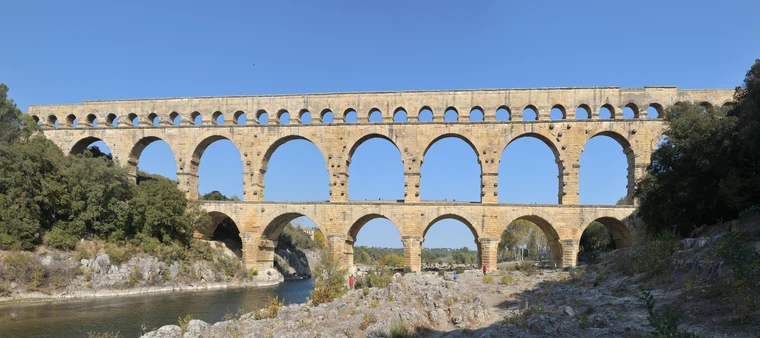
The Pont du Gard, a Roman aqueduct bridge in southern France built in the first century CE. Standing nearly 50 metres high, it carried water over 50 kilometres to the city of Nemausus (modern Nimes).. Image: Benh LIEU SONG, via Wikimedia Commons (CC BY-SA 3.0)
Frequently asked questions
- When did ancient Rome exist?
- Ancient Rome is traditionally dated from its legendary founding in 753 BCE to the fall of the Western Empire in 476 CE — over 1,200 years. The Eastern Empire, centred on Constantinople, continued until 1453 CE. This makes Rome one of the longest-lasting political entities in history, spanning from the early Iron Age to the late medieval period.
- What language did ancient Rome speak?
- Latin was the official language of ancient Rome and the Roman Empire. As Rome expanded, Latin spread across Europe and the Mediterranean. After the fall of ancient Rome, Latin evolved into the Romance languages: French, Spanish, Italian, Portuguese, and Romanian. Latin also remained the language of scholarship, the Catholic Church, and law well into the modern period.
- What did ancient Rome contribute to modern life?
- Its contributions include: the Roman alphabet (used by most Western languages), Roman numerals, the Julian calendar (basis of our modern calendar), Roman law (foundation of most European legal systems), concrete, aqueducts, and road engineering. Many English words come from Latin, and institutions like the Senate and the concept of a republic trace directly to ancient Rome.
- How big was ancient Rome at its peak?
- At its peak under Emperor Trajan (c. 117 CE), the empire covered about 5 million square kilometres — from Britain in the north to Egypt in the south, from Portugal in the west to Mesopotamia in the east. The population was roughly 50 to 90 million people, making it one of the largest states the ancient world had seen.