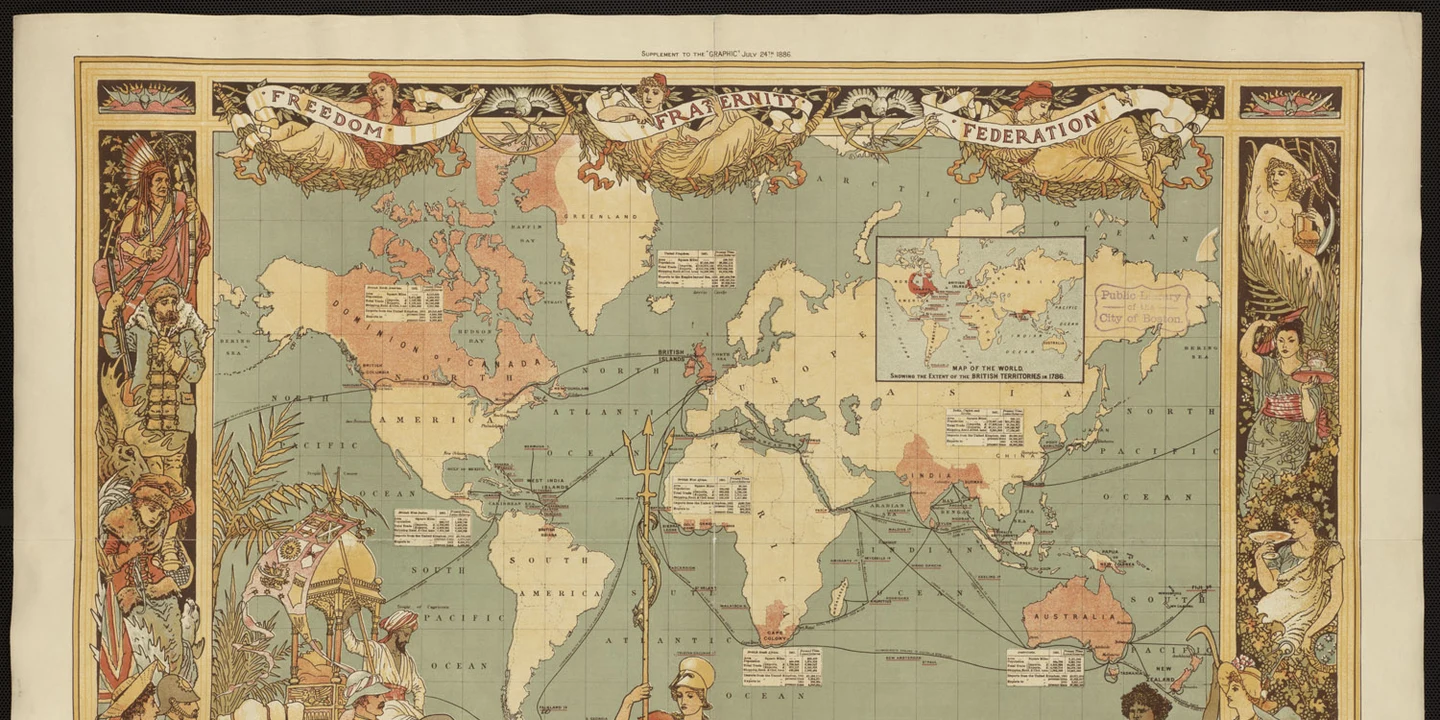
How the British Empire began
The British Empire began in the late 1500s and early 1600s when English merchants, explorers, and settlers established colonies in North America and the Caribbean. In 1607, the first permanent English settlement was founded at Jamestown, Virginia. Over the following decades, Britain also claimed territory in the West Indies, where sugar plantations created enormous wealth.
These early colonies relied heavily on enslaved labour. British traders played a central role in the transatlantic slave trade, forcibly transporting millions of Africans to plantations in the Americas. According to the National Archives, British ships carried approximately 3.4 million enslaved people between 1640 and 1807.
The East India Company
In 1600, Queen Elizabeth I granted a royal charter to the East India Company, giving it a monopoly on English trade with Asia. Initially a trading venture, the Company gradually gained military and political power in India. By the mid-1700s, it controlled large areas of the subcontinent through a combination of diplomacy, alliances with local rulers, and armed force. The Company's conquest of Bengal in 1757 marked a turning point, transforming Britain from a trading nation into an imperial power.
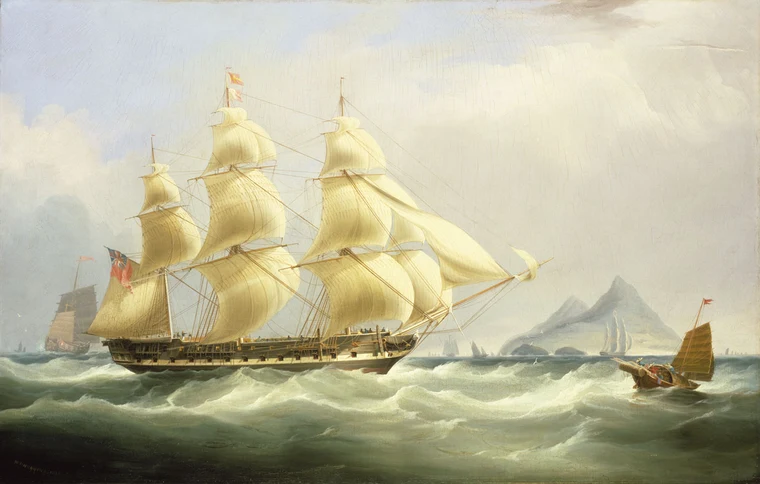
An East Indiaman — a merchant vessel of the British East India Company, which grew from a trading firm into a colonial power.. Image: William John Huggins, via Wikimedia Commons (Public domain)
What was the British Empire at its height?
At its peak in the early 20th century, the British Empire was the largest empire the world had ever seen. It covered roughly 35 million square kilometres and governed around 400 million people across every continent.
Key territories included India (often called the "jewel in the crown"), large parts of Africa, Canada, Australia, New Zealand, Hong Kong, and numerous islands across the Caribbean and Pacific. Britain also controlled strategically important locations like the Suez Canal in Egypt, Gibraltar, and Singapore.
How Britain maintained control
Britain used several methods to maintain control over its vast empire. In some territories, such as Australia and Canada, British settlers formed self-governing dominions. In others, such as India and much of Africa, Britain ruled through a system of colonialism that gave local populations little political power. Colonial administrators often exploited divisions between ethnic and religious groups to prevent unified resistance.
The British military and the Royal Navy enforced imperial rule. According to the British Library, the navy's global reach allowed Britain to protect trade routes, move troops quickly, and project power across oceans. Economic policies also favoured Britain, with colonies supplying raw materials and serving as captive markets for British manufactured goods.
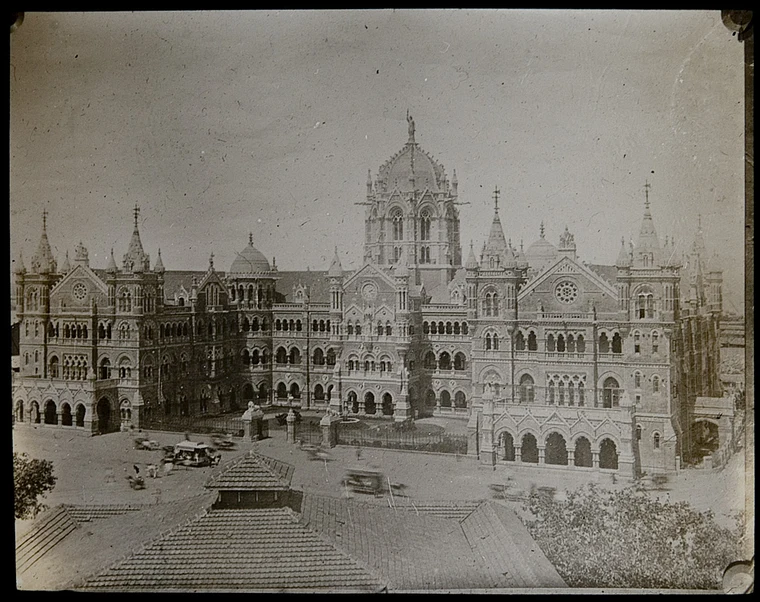
The Victoria Terminus (now Chhatrapati Shivaji Terminus) in Bombay, built in 1888, reflects the scale of British colonial ambition in India.. Image: Unknown authorUnknown author, via Wikimedia Commons (Public domain)
The impact of colonial rule on peoples around the world
The British Empire brought profound and often devastating changes to the lives of colonised peoples around the world. While imperial histories sometimes emphasise infrastructure like railways and telegraph systems, the human cost was immense.
In India, British economic policies contributed to repeated famines. The Great Famine of 1876–1878 killed an estimated 5.5 million people, partly because grain continued to be exported even as millions starved. In Africa, the British Empire seized land from indigenous communities, imposed forced labour, and disrupted existing political and social structures during the scramble for Africa.
Cultural and social disruption
Colonial rule also reshaped cultures and societies. The British imposed their legal systems, languages, and educational models on colonised populations. In many regions, missionaries worked alongside colonial administrators to convert indigenous peoples to Christianity. Traditional governance structures were often dismantled or subordinated to colonial authority.
Resistance to British rule took many forms. In India, the Sepoy Rebellion of 1857 challenged Company rule directly. In southern Africa, the Zulu Kingdom fought British expansion in the Anglo-Zulu War of 1879. Across the empire, people resisted through armed uprisings, civil disobedience, and political organisation.
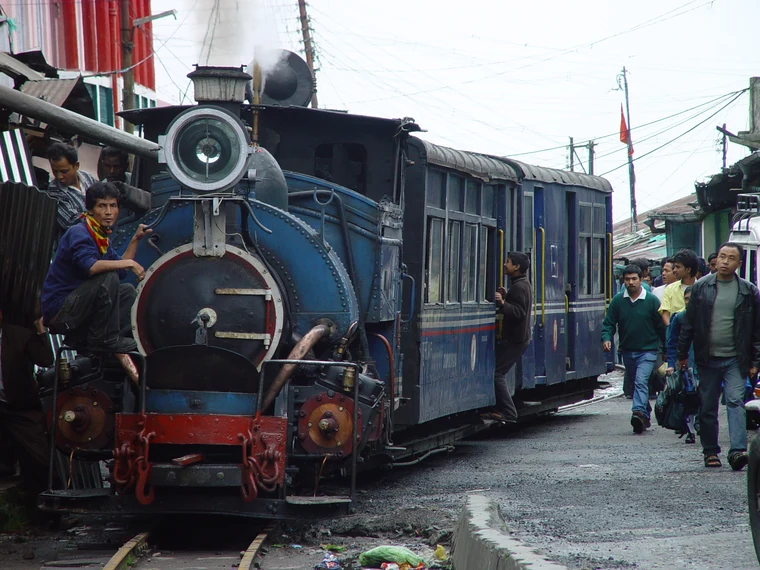
The Darjeeling Himalayan Railway, built by the British in 1881 to connect tea plantations to the plains — now a UNESCO World Heritage Site.. Image: Mjanich, via Wikimedia Commons (CC BY-SA 3.0)
Did you know?
-
At its height in 1920, the British Empire covered roughly 35.5 million square kilometres — about one quarter of the Earth's total land area — making it the largest empire in recorded history.
Encyclopaedia Britannica — British Empire -
British ships transported approximately 3.4 million enslaved Africans across the Atlantic between 1640 and 1807, making Britain one of the largest participants in the transatlantic slave trade.
The National Archives — Britain and the Trade -
Between 1945 and 1965, over 50 former British colonies gained independence. India's independence in 1947 marked the beginning of the end for the empire, and by the 1960s most African and Caribbean territories had followed.
British Library — The British Empire
How the British Empire ended through decolonization
The British Empire did not collapse overnight. Instead, it unravelled over several decades through a process known as decolonization.
The two World Wars weakened Britain's ability to maintain its empire. World War 2 in particular drained British finances and shifted global power toward the United States and the Soviet Union. At the same time, independence movements across Asia and Africa gained strength. In India, leaders such as Mahatma Gandhi and Jawaharlal Nehru led mass campaigns of civil disobedience that made continued British rule unsustainable.
India and Pakistan gained independence in August 1947, but partition along religious lines led to widespread violence and the displacement of roughly 15 million people. In Africa, independence movements accelerated during the 1950s and 1960s. Ghana became the first sub-Saharan African colony to gain independence in 1957, and most other African territories followed within a decade.
Legacy and ongoing debates
The legacy of the British Empire remains deeply contested. Former colonies inherited borders drawn by imperial powers, legal systems shaped by colonial law, and economies structured around the extraction of resources. In many countries, the effects of colonial rule continue to shape politics, inequality, and identity today. The handover of Hong Kong to China in 1997 is often considered the symbolic end of the British Empire, though Britain still governs several overseas territories including the Falkland Islands and Gibraltar.
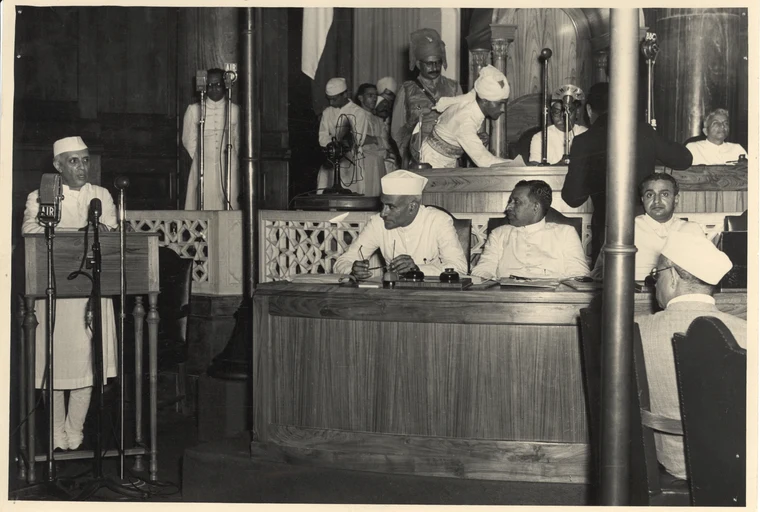
Nehru delivers his famous 'Tryst with Destiny' speech to the Constituent Assembly at midnight on 15 August 1947.. Image: Unknown author, via Wikimedia Commons (Public domain)
Frequently asked questions
- How many countries were part of the British Empire?
- At various points in history, the British Empire controlled or claimed territory in over 90 present-day countries and regions. These ranged from large nations like India, Australia, and Canada to small island territories across the Caribbean, Pacific, and Indian oceans.
- When did the British Empire start and end?
- The British Empire began with the establishment of overseas colonies in the early 1600s. It reached its peak around 1920 and gradually dissolved through decolonization after World War 2. The handover of Hong Kong to China in 1997 is often seen as its symbolic end.
- Why was India called the jewel in the crown?
- India was called the "jewel in the crown" because it was the most economically valuable and strategically important territory in the British Empire. India supplied cotton, tea, spices, and other raw materials, and its large population provided a massive market for British goods.
- How did the British Empire affect Africa?
- The British Empire seized large areas of Africa during the late 1800s, displacing communities, imposing forced labour, and extracting natural resources. Colonial borders divided ethnic groups and merged rival communities. These disruptions continue to affect African nations today.
- What countries are still British territories today?
- Britain currently governs 14 British Overseas Territories, including the Falkland Islands, Gibraltar, Bermuda, the Cayman Islands, and the British Virgin Islands. These territories are largely self-governing but rely on Britain for defence and foreign affairs.