The Core Ideas of the Enlightenment
The Enlightenment was not a single unified movement but a collection of related ideas that spread across Europe.
Reason over authority
Enlightenment thinkers argued that reason — the capacity for rational thought — was humanity's defining feature and the proper basis for knowledge. Tradition, superstition, and blind deference to authority were to be challenged. Every claim, whether in science, politics, or religion, should be tested against reason and evidence.
Natural rights and social contract
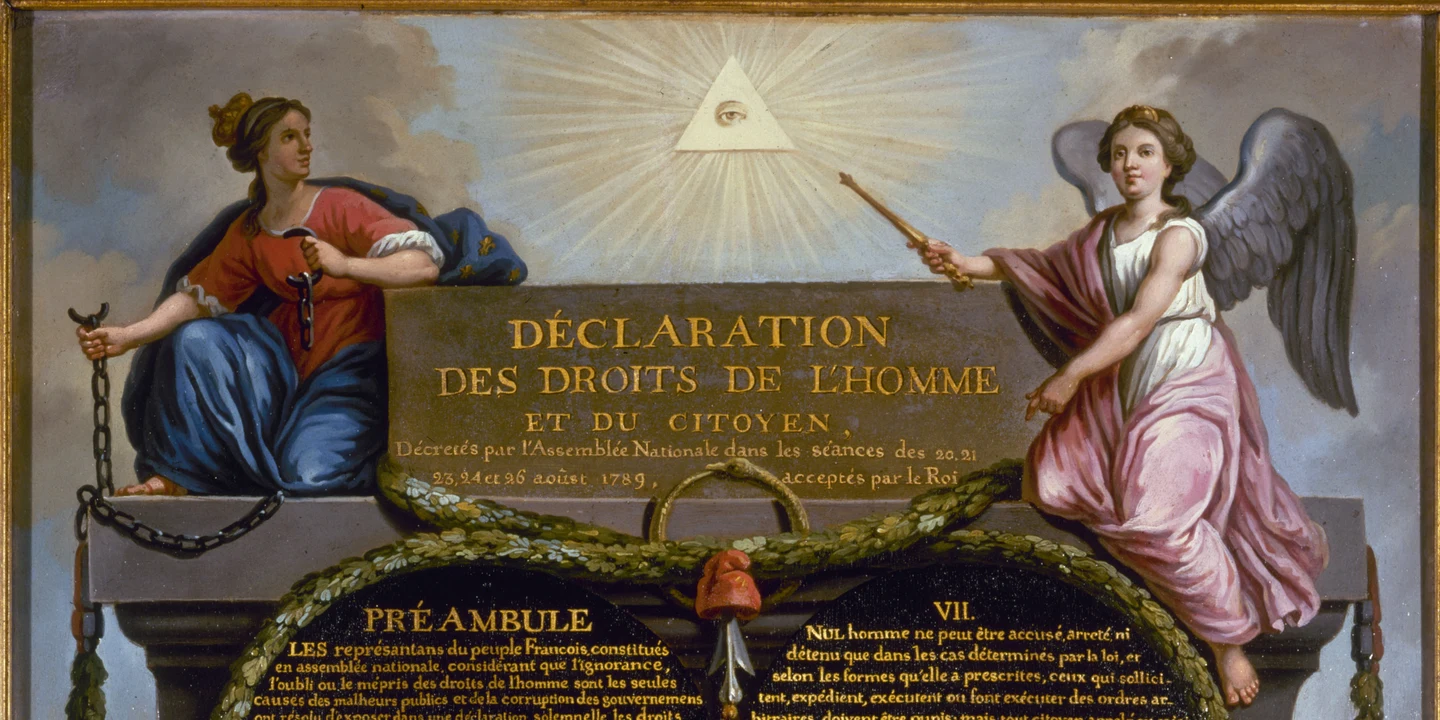
John Locke argued that people are born with natural rights — life, liberty, and property — that no government can legitimately take away. Government exists to protect these rights, not to override them. If a government fails in this duty, citizens have the right to replace it. This idea directly inspired the American Declaration of Independence and the French Revolution.
Progress and education
Enlightenment thinkers believed in human progress — that society could improve through education, science, and rational governance. The Encyclopédie — a massive French reference work edited by Diderot and d'Alembert — aimed to gather all human knowledge in one place and make it accessible. Democracy as a political ideal was deeply shaped by Enlightenment thinking.
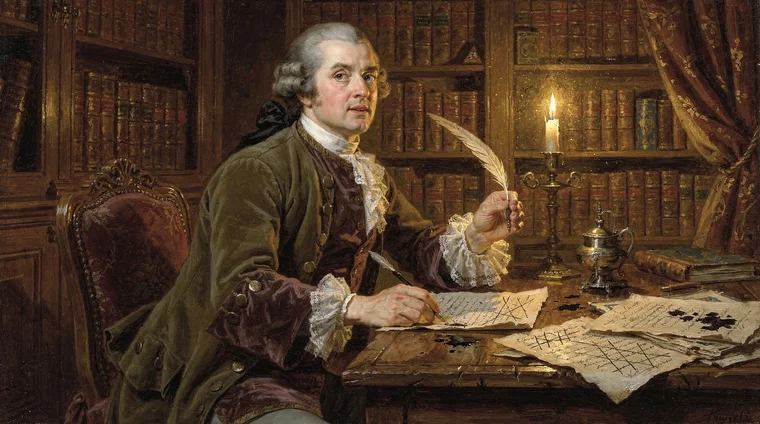
Image: Generated with AI (Epivo)
Key Enlightenment Thinkers
Several figures are central to understanding the Enlightenment and its legacy.
John Locke (1632–1704)
The English philosopher John Locke laid the groundwork for liberal political philosophy. His ideas about natural rights and government by consent directly influenced later revolutions and constitutions.
Voltaire (1694–1778)
The French writer Voltaire was a fierce critic of the Catholic Church, religious intolerance, and political tyranny. His satirical novel Candide mocked complacency and blind optimism. He championed free speech and press freedom.
Jean-Jacques Rousseau (1712–1778)
Rousseau's concept of the 'social contract' argued that legitimate political authority derives from the collective will of the people. His work influenced the French Revolution and later democratic thought.
Immanuel Kant (1724–1804)
The German philosopher Kant's essay What is Enlightenment? (1784) gave the movement its name and clearest definition: 'Dare to know! Have the courage to use your own understanding.'
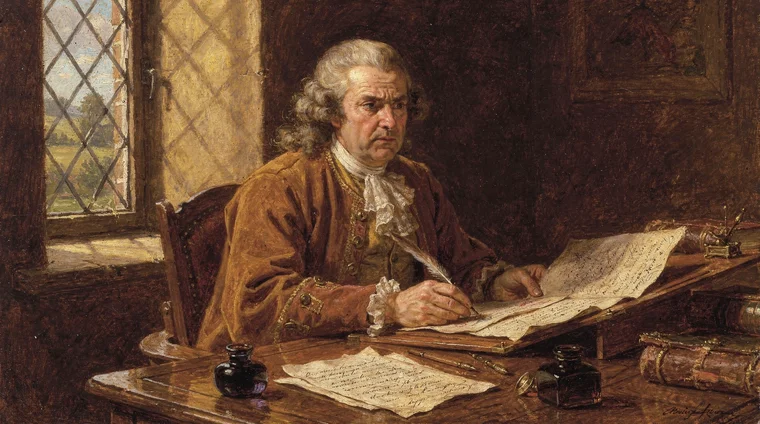
Image: Generated with AI (Epivo)
The Enlightenment's Lasting Impact
The consequences of Enlightenment thought continue to shape contemporary politics, science, and society.
Political revolutions
The American Revolution (1776) and French Revolution (1789) were directly inspired by Enlightenment ideas. The Declaration of Independence echoes Locke almost verbatim. These revolutions established constitutional government, rule of law, and citizens' rights as practical ideals.
Science and medicine
The Enlightenment accelerated the scientific revolution. Organised inquiry, peer criticism, and publication of findings became norms. Vaccination, germ theory, and modern medicine have Enlightenment roots in the value of empirical evidence over tradition.
Critiques and limits
The Enlightenment had contradictions. Many of its thinkers owned enslaved people or denied rights to women. The ideal of universal reason coexisted with practices of empire and exclusion. Human rights as a universal concept took further centuries to develop — and remains contested. Evaluating the Enlightenment requires holding both its extraordinary ideas and its historical failures together.

Image: Generated with AI (Epivo)
Frequently asked questions
- When was the Enlightenment and where did it happen?
- The Enlightenment is generally dated from the late 17th century to the early 19th century — roughly 1680–1800. It began in England and the Netherlands, spread to France (where it was most radical), and influenced Germany, Scotland, and the American colonies. Each country had distinct emphases, but all shared the core commitment to reason.
- How did the Enlightenment affect religion?
- Enlightenment thinkers generally challenged the authority of organised religion rather than religion itself. Most were deists — believing in God but not in divine intervention or church authority. Some were atheists. The movement promoted religious toleration and the separation of church and state, which influenced the First Amendment in the US.
- Was the Enlightenment only a European movement?
- Primarily yes, though its ideas spread globally through colonialism, revolution, and trade. Enlightenment ideas about natural rights and sovereignty inspired independence movements in Latin America and Asia. But the movement also provided intellectual justification for colonialism — a contradiction that postcolonial scholars have examined critically.
- How is the Enlightenment relevant today?
- Contemporary debates about free speech, secularism, democracy, and science all trace to Enlightenment foundations. Challenges to expert authority, disinformation, and religious nationalism are often framed as threats to Enlightenment values. Whether those values are universal or culturally specific remains a live philosophical and political debate.