What caused the Scramble for Africa?
The Scramble for Africa was driven by economic greed, political rivalry between European nations, and racist ideologies that justified conquest. Several forces combined to turn European attention toward Africa in the late 19th century.
Economic motivations
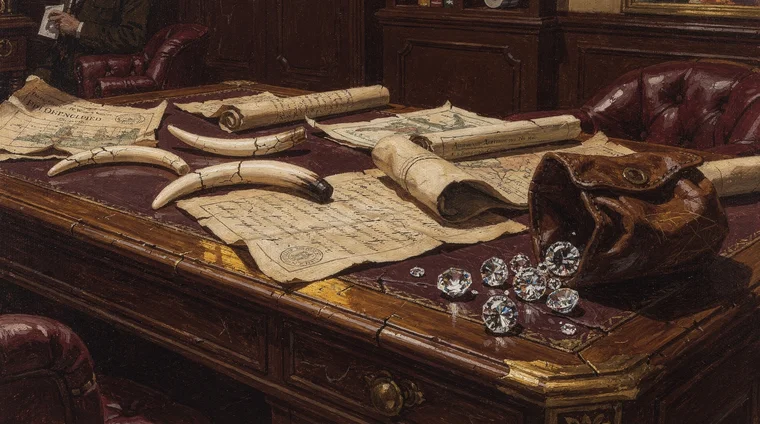
The Industrial Revolution created an enormous demand for raw materials. European factories needed rubber, palm oil, cotton, copper, gold, and diamonds. Africa had these resources in abundance. At the same time, European manufacturers wanted new markets to sell their finished goods. Colonial control guaranteed access to both.
Strategic competition
European nations competed fiercely for global power. When France expanded into West Africa, Britain responded by pushing into East and Southern Africa. Germany, Belgium, Portugal, and Italy all sought their share. No major power wanted to be left without African territory, because imperialism had become a measure of national prestige.
Racism and Social Darwinism
Many Europeans believed they were racially superior to Africans. Social Darwinism — a misapplication of Darwin's theory of natural selection — was used to argue that European domination was natural and inevitable. Missionaries and politicians spoke of a 'civilising mission,' but this rhetoric masked exploitation. It is important to recognise that Africa before colonisation was not a land without civilisation. The continent was home to complex kingdoms, trading networks, and diverse cultures, from the Songhai Empire to the Kingdom of Kongo.
The Berlin Conference and the partition of Africa
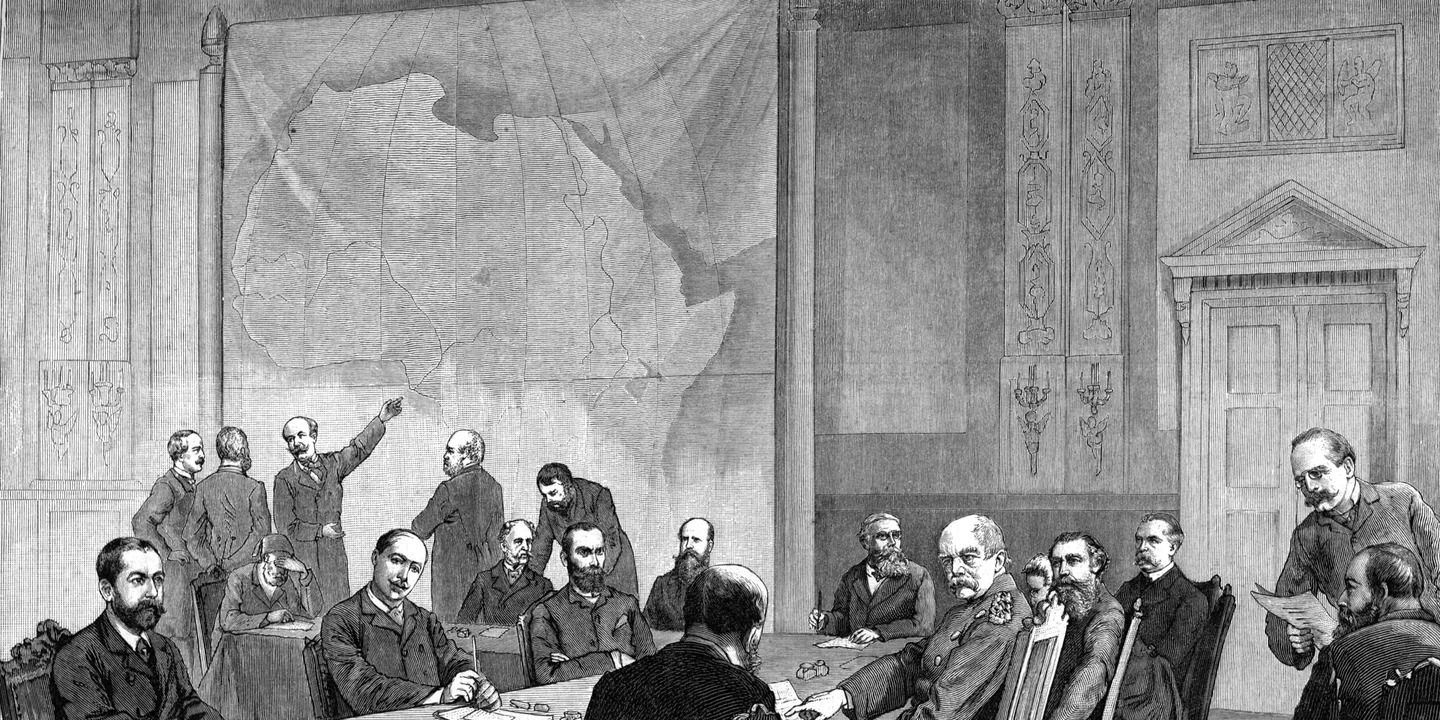
In 1884-85, representatives from 14 European nations met in Berlin to establish rules for claiming African territory. No African leaders were invited. The conference did not directly divide Africa, but it set the framework that accelerated the process.
The Berlin Conference established the principle of 'effective occupation,' meaning that a European power had to demonstrate administrative control to claim territory. This triggered a rush to establish colonial governments across the continent.
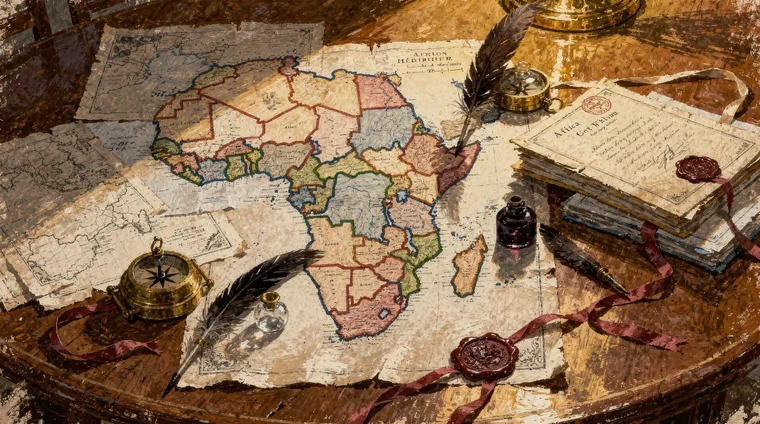
Within a decade, borders were drawn with little regard for existing ethnic, linguistic, or political boundaries. Communities that had lived together for centuries were split between different colonies. Rival groups were forced into a single administrative unit. These arbitrary borders remain largely unchanged today and continue to fuel conflict.
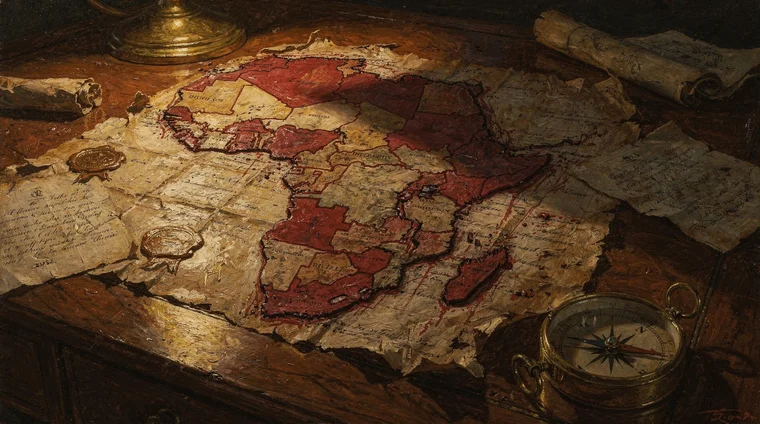
By 1914, only Ethiopia and Liberia remained independent. Britain controlled the largest share, followed by France. Belgium's King Leopold II claimed the vast Congo basin as his personal property. Germany held territories in East, West, and South-West Africa, while Portugal and Italy controlled smaller coastal regions.
How Africans resisted European colonisation
Africans did not passively accept European conquest. Resistance took many forms, from armed warfare to diplomatic negotiation and cultural preservation.
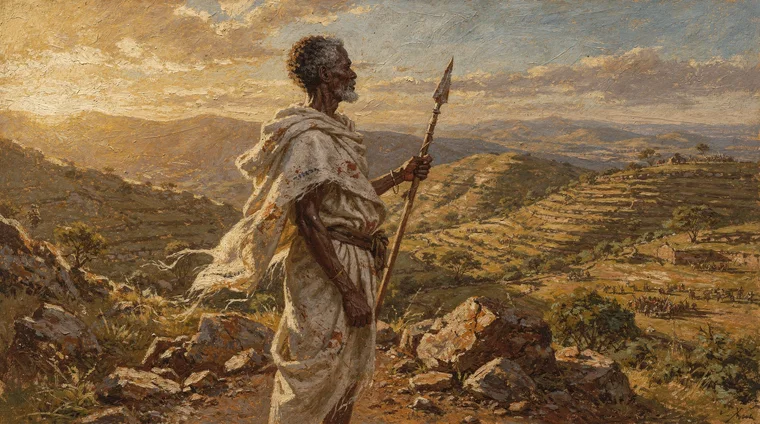
The most famous military victory came at the Battle of Adwa in 1896, where Ethiopian forces under Emperor Menelik II defeated an Italian invasion. Ethiopia remained independent throughout the colonial period — a powerful symbol of African resistance.
In West Africa, Samori Ture built a powerful state and fought French expansion for nearly two decades before his capture in 1898. The Zulu Kingdom in Southern Africa inflicted significant defeats on British forces, including at the Battle of Isandlwana in 1879, before eventually being overwhelmed. The Herero and Nama peoples in German South-West Africa (now Namibia) rose against colonial rule in 1904, leading to a genocide in which German forces killed tens of thousands.
Resistance was not only military. Many communities preserved their languages, religions, and cultural practices despite colonial pressure. Others used diplomacy to maintain autonomy within the colonial system. These traditions of resistance later informed the independence movements of the 20th century.
Consequences of the Scramble for Africa
The consequences of the Scramble for Africa were devastating and long-lasting. Colonial rule reshaped the continent's political, economic, and social structures in ways that persist today.
The Congo Free State under King Leopold II stands as one of the most extreme examples of colonial brutality. Congolese people were forced to harvest rubber under a system of terror that included mutilation, hostage-taking, and mass killing. An estimated 10 million people died. International outcry eventually forced Belgium to take over the territory, though conditions improved only marginally.
Across the continent, colonialism disrupted existing economies and replaced them with extraction-focused systems. Africans were forced to grow cash crops for export rather than food for their communities. Infrastructure was built to move resources to ports, not to connect African communities. Education and healthcare were minimal and designed to produce compliant workers, not independent citizens.
The arbitrary borders created during the Scramble remain one of its most visible legacies. Countries like Nigeria, Sudan, and the Democratic Republic of the Congo contain hundreds of ethnic groups forced together by colonial boundaries. These divisions have contributed to civil wars, ethnic tensions, and political instability.
Understanding the Scramble for Africa is essential for understanding modern Africa — and for recognising that its challenges are not accidents of geography but consequences of historical decisions made in European capitals.
Did you know?
-
By 1914, European powers controlled approximately 90% of the African continent. Only Ethiopia and Liberia remained independent.
Encyclopaedia Britannica — Scramble for Africa -
The Berlin Conference of 1884-85, which set the rules for European claims in Africa, included 14 European nations but no African representatives.
Encyclopaedia Britannica — Berlin West Africa Conference -
An estimated 10 million Congolese people died under King Leopold II's forced labour regime in the Congo Free State between 1885 and 1908.
BBC History — King Leopold II
Frequently asked questions
- What was the Scramble for Africa in simple terms?
- The Scramble for Africa was the period between 1881 and 1914 when European countries competed to claim and control African territory. By 1914, nearly the entire continent was under European colonial rule.
- Why did European countries want to colonise Africa?
- European powers wanted Africa's natural resources, new markets for their goods, strategic military advantages, and national prestige. Racist ideologies were used to justify the conquest.
- What was the Berlin Conference?
- The Berlin Conference of 1884-85 was a meeting of European nations that set rules for claiming African territory. No African leaders were invited. It accelerated the partition of the continent.
- Did any African nations resist colonisation successfully?
- Ethiopia defeated an Italian invasion at the Battle of Adwa in 1896 and remained independent throughout the colonial period. Many other African peoples also resisted, though most were eventually overpowered.
- How does the Scramble for Africa affect the continent today?
- Colonial borders still define most African nations, often grouping rival communities together. Economic structures built for extraction rather than development continue to limit growth. The Scramble's legacy shapes ongoing political and social challenges.