What was the slave trade and how did it begin?
So what was the slave trade in practice? It was the organised capture, sale, and forced transportation of African people to work as enslaved labourers in European colonies. It began in the early 1500s when Portuguese traders first shipped enslaved Africans to plantations in Brazil and the Caribbean.
Slavery itself existed in many societies before this period. However, the transatlantic slave trade was different in both scale and brutality. It created a commercial system that treated human beings as property, bought and sold purely for profit.
The triangular trade
The transatlantic system followed a triangular pattern across three continents. First, European ships sailed to West Africa carrying manufactured goods such as textiles, guns, and metal tools. Then, traders exchanged these goods for enslaved people captured through warfare, kidnapping, or purchase from local rulers. According to the Smithsonian National Museum of African American History and Culture, an estimated 12.5 million Africans were forced onto slave ships between 1500 and 1867. The ships then crossed the Atlantic to the Americas, where enslaved people were sold. Finally, ships returned to Europe loaded with sugar, tobacco, cotton, and other goods produced by enslaved labour.
As a result, this system generated enormous wealth for European traders, colonial planters, and the nations that supported colonialism. The profits also helped fund the Industrial Revolution in Britain and shaped the modern global economy.
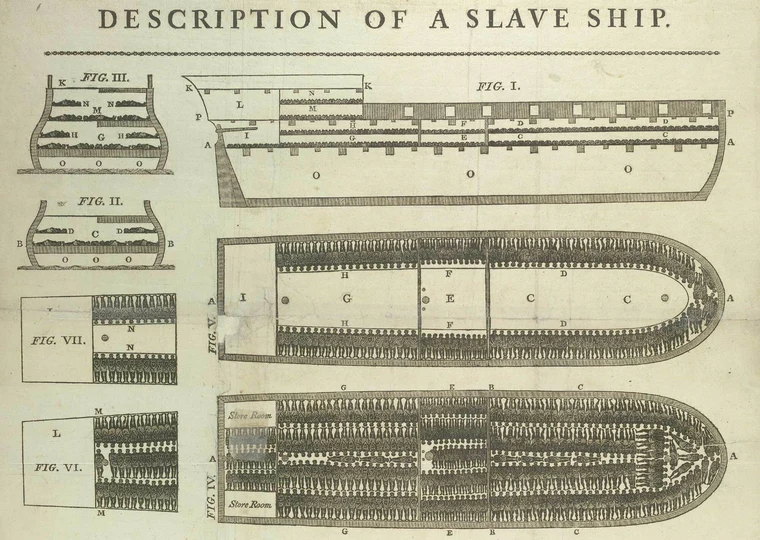
Image: Plymouth Chapter of the Society for Effecting the Abolition of the Slave Trade, via Wikimedia Commons (Public domain)
The Middle Passage and the human cost
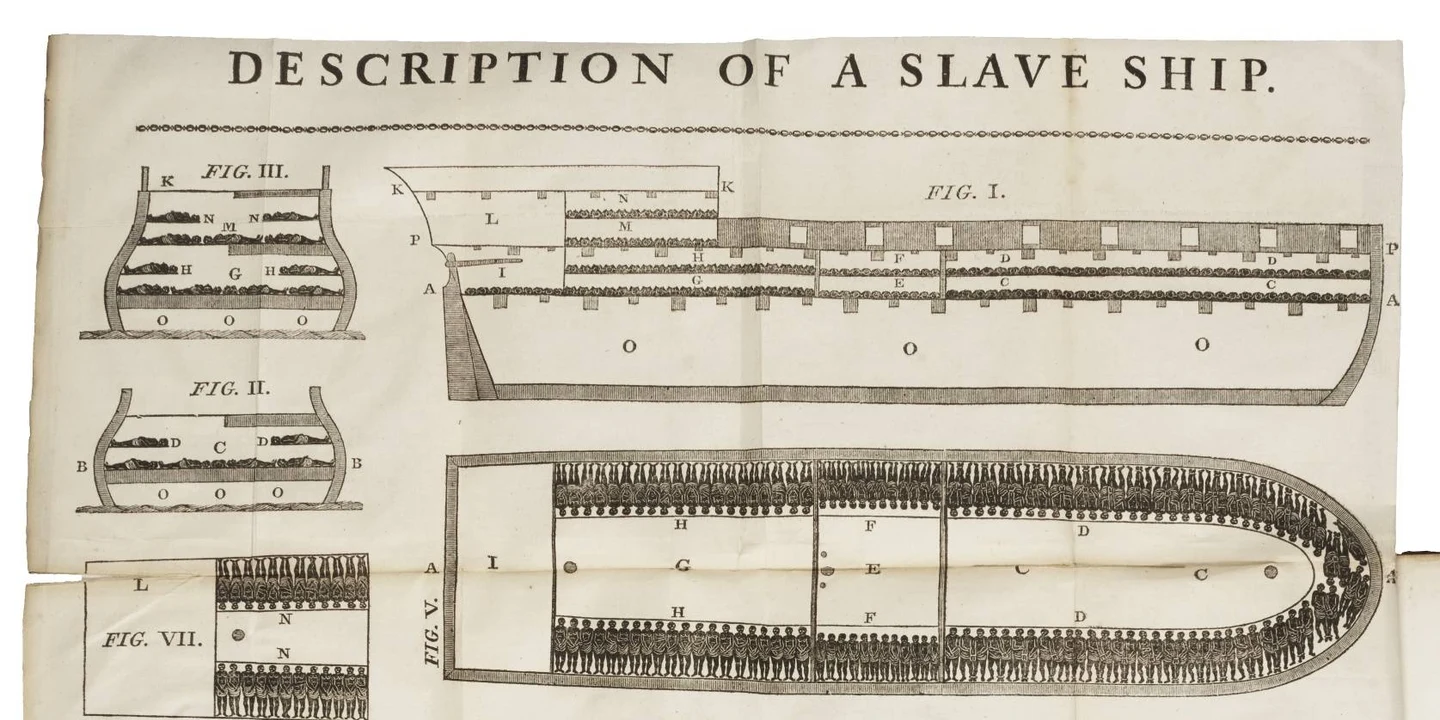
The Middle Passage was the name given to the voyage across the Atlantic Ocean from Africa to the Americas. It was the deadliest stage of what was the slave trade's most brutal process.
Enslaved people were packed into the lower decks of ships in conditions that denied their basic humanity. Voyages lasted between six weeks and three months, depending on weather and destination. According to Encyclopaedia Britannica, approximately 1.8 million people died during the Middle Passage from disease, malnutrition, and despair.
Resistance on the ships
Even in these conditions, enslaved people found ways to resist. Some refused food as a form of protest. Others organised uprisings aboard the ships. For example, in 1839, captives on the ship Amistad seized control and attempted to sail back to Africa. These acts of resistance show that enslaved people never accepted their captivity passively.
Those who survived the crossing faced sale at auction upon arrival. Consequently, families were deliberately separated. People were also assigned new names and forbidden from speaking their own languages. Despite this, many preserved elements of their cultures, religions, and traditions, which continue to influence societies across the Americas today.
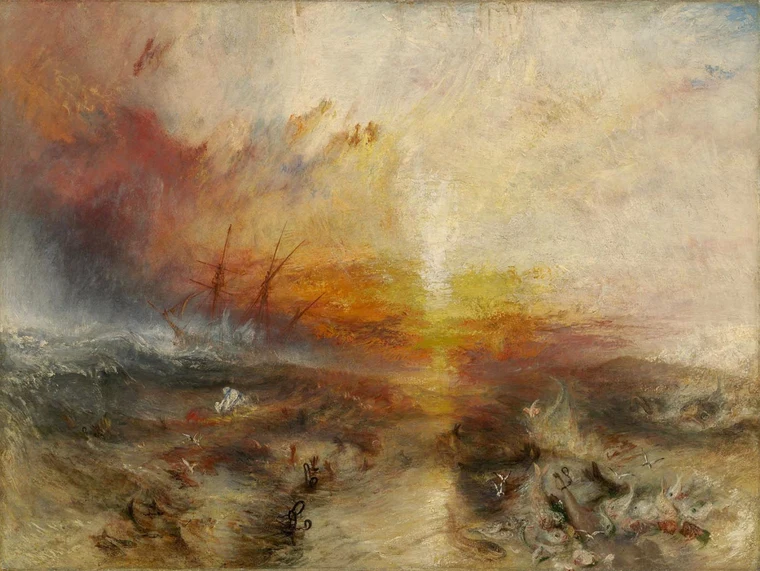
Turner's 'The Slave Ship' (1840) — the painting depicts enslaved people thrown overboard during a storm, a practice driven by insurance fraud.. Image: J. M. W. Turner, via Wikimedia Commons (Public domain)
Plantation economies and the slave trade's reach
To fully understand what was the slave trade, we must examine the plantation economies it sustained. Enslaved people produced the sugar, cotton, tobacco, rice, and coffee that European markets demanded.
Sugar plantations in the Caribbean and Brazil were among the most profitable enterprises in the world. The work was gruelling and dangerous. In fact, enslaved labourers worked from dawn to dusk, and mortality rates on sugar plantations were so high that plantation owners constantly needed new captives from Africa to replace those who died.
Cotton and the American South
In the United States, the slave trade became deeply connected to cotton production after the invention of the cotton gin in 1793. Consequently, cotton exports made the American South one of the wealthiest regions in the world, all built on enslaved labour. By 1860, nearly four million enslaved people lived in the southern states.
Furthermore, the economic reach of the slave trade extended far beyond the plantations. Banks in London and New York financed slave voyages. Insurance companies also insured enslaved people as property. Meanwhile, textile mills in Manchester processed cotton picked by enslaved workers. As a result, the slave trade shaped the economies of nations that never had plantations on their own soil. This global network of profit is closely tied to the history of imperialism.
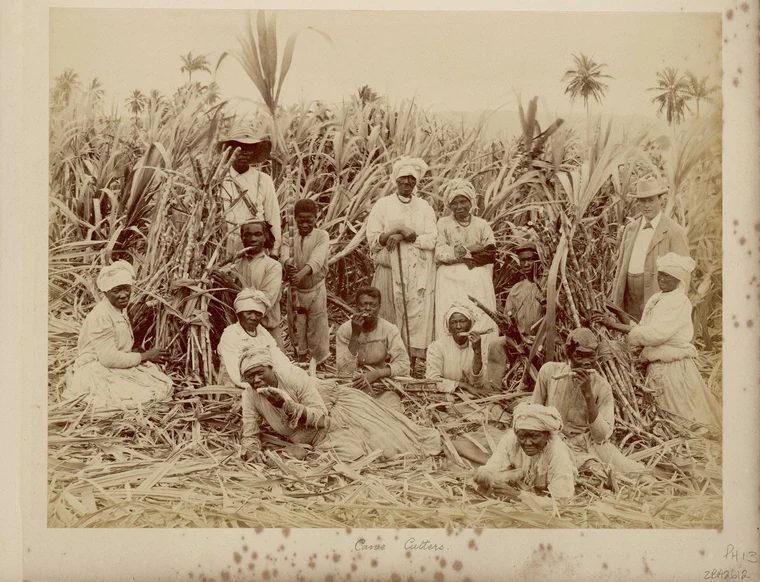
Enslaved workers cutting sugar cane in Jamaica — Caribbean plantations generated enormous wealth for European empires at devastating human cost.. Image: Royal Museums Greenwich, via Wikimedia Commons (Public domain)
Did you know?
-
An estimated 12.5 million enslaved Africans were forcibly transported across the Atlantic between 1500 and 1867. Of those, approximately 10.7 million survived the crossing to reach the Americas.
Smithsonian NMAAHC — Historical legacy of slavery -
Brazil received more enslaved Africans than any other country — approximately 4.9 million people, nearly 40% of all those transported across the Atlantic.
Trans-Atlantic Slave Trade Database — SlaveVoyages -
Britain abolished its slave trade in 1807 and emancipated enslaved people in its colonies in 1833. The British government paid £20 million in compensation — to the slave owners, not the enslaved people.
Encyclopaedia Britannica — Abolition of slavery
How abolition movements ended the slave trade
The abolition of the slave trade was the result of decades of campaigning by both enslaved people and free activists who demanded an end to this system.
Most importantly, enslaved people themselves were central to abolition. The Haitian Revolution of 1791–1804 was the largest and most successful uprising of enslaved people in history. Led by Toussaint Louverture and Jean-Jacques Dessalines, enslaved Haitians overthrew French colonial rule and established the first free Black republic. As a result, this revolution terrified slave-owning societies across the Americas.
Abolitionist campaigns in Europe
In Britain, activists such as Olaudah Equiano, a formerly enslaved man, published accounts of his experiences that shocked the public. Additionally, groups like the Society for Effecting the Abolition of the Slave Trade organised petitions, boycotts, and public speaking tours. In 1807, the British Parliament voted to abolish the slave trade, and in 1833 it passed the Emancipation Act freeing enslaved people throughout the British Empire.
In the United States, abolition came through the Civil War. The Emancipation Proclamation of 1863 and the Thirteenth Amendment of 1865 formally ended slavery. Finally, Brazil was the last country in the Americas to abolish slavery, in 1888. Nevertheless, the long-term effects of the slave trade continued to shape societies worldwide. The era of the Scramble for Africa that followed brought new forms of exploitation to the African continent.
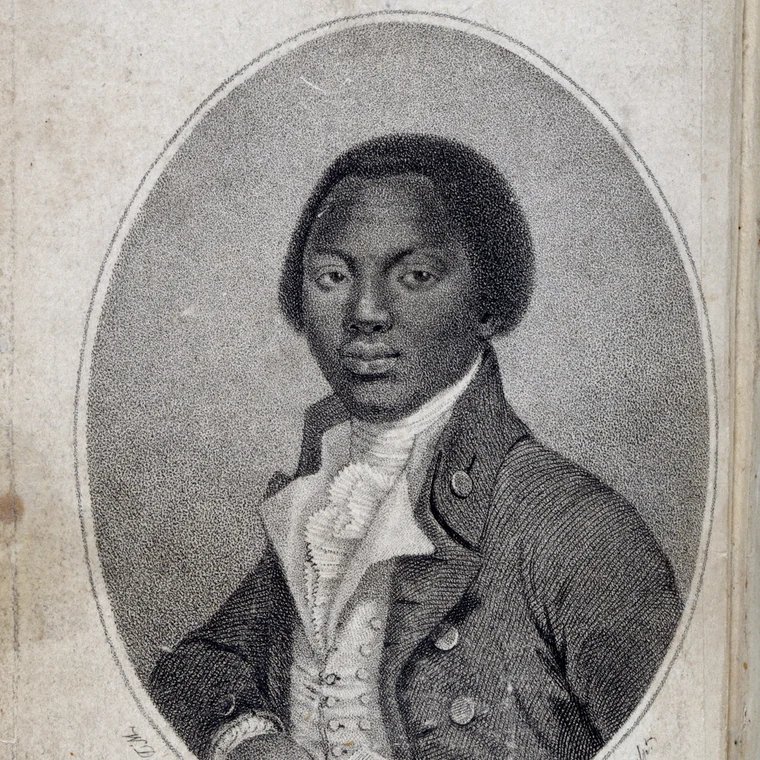
Olaudah Equiano's autobiography (1789) — his account of enslavement and the Middle Passage became a powerful weapon against the slave trade.. Image: Daniel Orme (engraving), via Wikimedia Commons (Public domain)
Frequently asked questions
- How many people were enslaved during the transatlantic slave trade?
- Approximately 12.5 million Africans were forcibly transported across the Atlantic between 1500 and 1867. Around 1.8 million died during the Middle Passage. An estimated 10.7 million survived the crossing to reach the Americas.
- Which countries were involved in the slave trade?
- Portugal, Britain, France, Spain, the Netherlands, and Denmark were the main European nations involved. Portugal transported the most enslaved people, followed by Britain. The United States, Brazil, and Caribbean colonies were the primary destinations.
- When did the slave trade end?
- Britain abolished its slave trade in 1807 and freed enslaved people in 1833. The United States ended slavery in 1865 after the Civil War. Brazil was the last country in the Americas to abolish slavery, in 1888.
- What was the Middle Passage?
- The Middle Passage was the forced voyage of enslaved Africans across the Atlantic Ocean to the Americas. Captives endured overcrowded ships for six weeks to three months. An estimated 1.8 million people died during the crossing.
- How did enslaved people resist the slave trade?
- Enslaved people resisted through uprisings, escape, cultural preservation, and refusal to cooperate. The Haitian Revolution of 1791–1804 was the largest successful revolt. Many also resisted aboard slave ships and on plantations daily.