What was trench warfare on the Western Front?
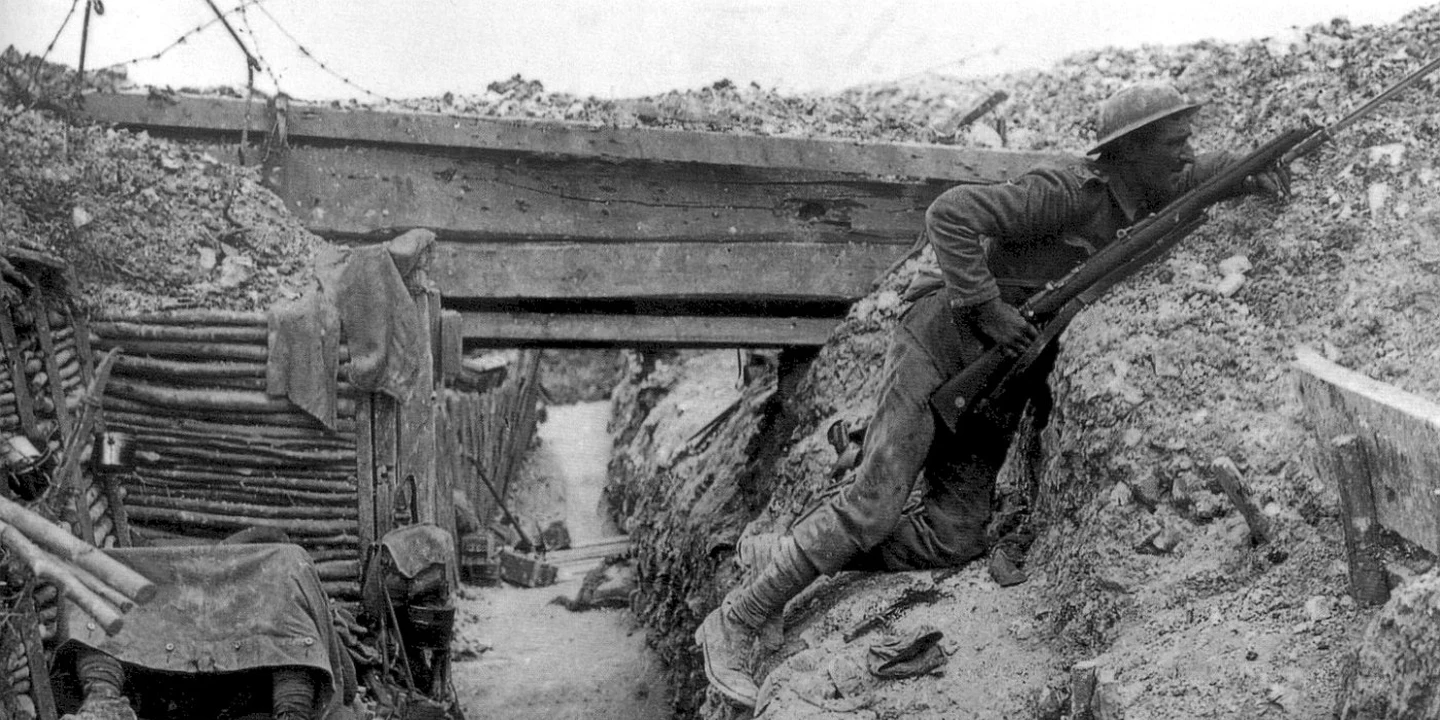
Trench warfare was a defensive strategy in which soldiers fought from fortified ditches rather than advancing across open ground. It became the defining feature of World War 1 after the initial rapid movement of 1914 gave way to a deadlock.
By late 1914, both sides had dug extensive trench systems stretching roughly 700 kilometres from the English Channel to the Swiss border. According to Imperial War Museum, neither army could outflank the other, so both dug in. The result was a continuous line of opposing trenches separated by a deadly strip of open ground called no man's land.
The trench system
Trenches were not single ditches. They formed a complex network with three main lines. The front-line trench faced the enemy directly. Behind it ran a support trench, and further back sat the reserve trench. Communication trenches connected all three, allowing soldiers and supplies to move without exposure to enemy fire. Trenches were dug in a zigzag pattern so that a single shell could not destroy a long section at once.
The causes of World War 1 created the conditions for this kind of war. Alliances locked major powers into a conflict that none could win quickly, and defensive technology had outpaced offensive tactics.
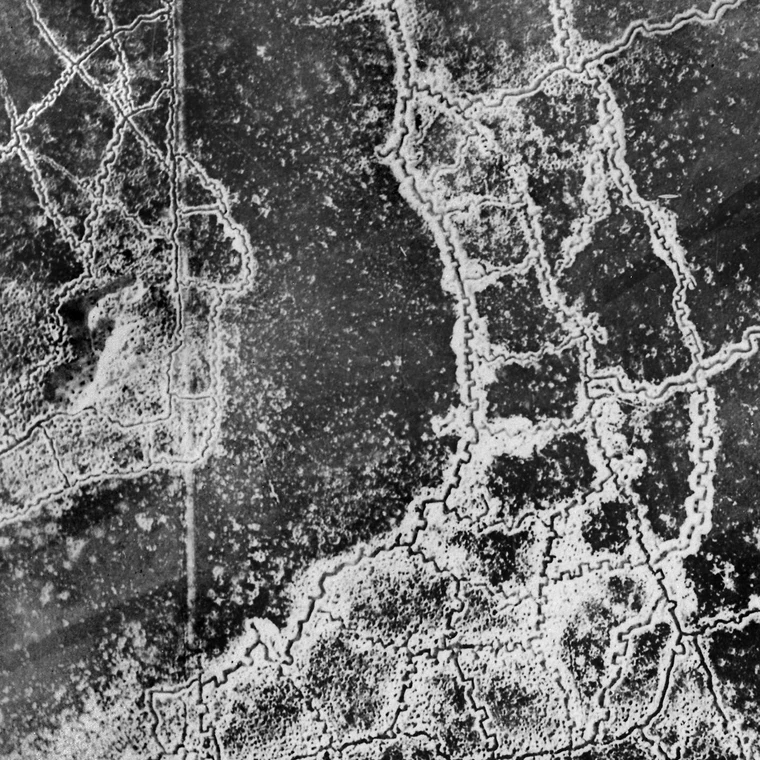
Aerial view of the Loos-Hulluch trench system, July 1917 — the zigzag pattern minimised blast damage from shell explosions.. Image: Unknown author, via Wikimedia Commons (Public domain)
Daily life in the trenches
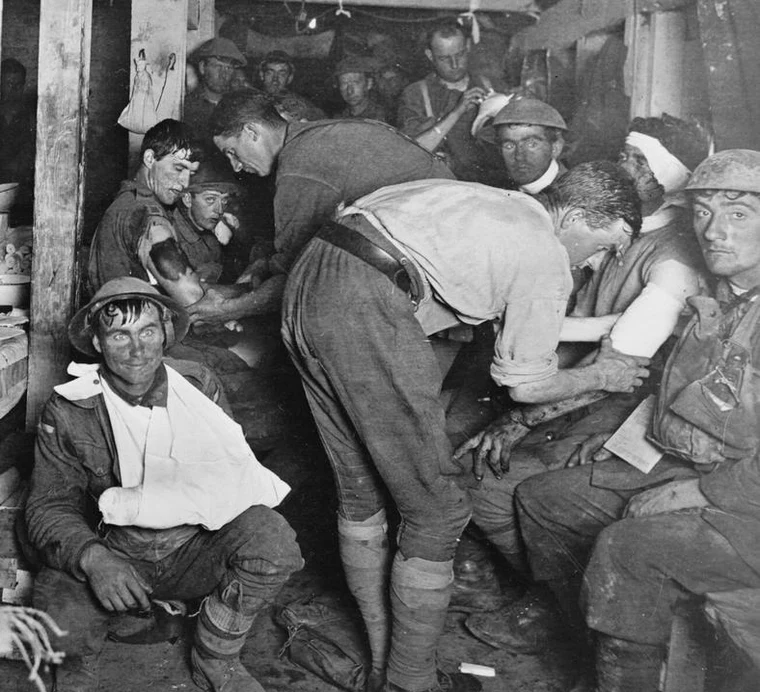
Life in the trenches was exhausting, dangerous, and deeply unpleasant. Soldiers typically rotated through the front line for four to seven days before moving to support or reserve positions.
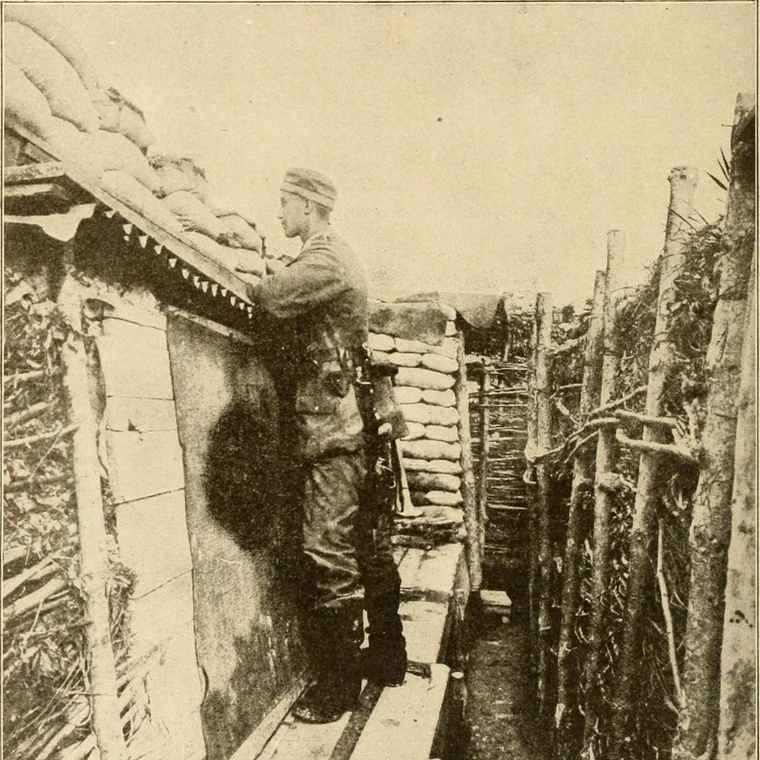
Trenches were often waterlogged because they sat below the water table, especially in the clay soils of Flanders. Standing in cold water for days caused a painful condition called trench foot, which could lead to gangrene and amputation. Rats thrived in the filth, feeding on discarded food and, in some cases, the bodies of fallen soldiers. Lice spread rapidly through uniforms and caused trench fever, a debilitating illness.
The routine of trench life
Most activity happened at dawn and dusk. Each morning began with "stand-to" — soldiers lined the fire step with weapons ready, expecting an enemy attack. After stand-to came breakfast, then a day of chores: repairing walls, filling sandbags, draining water, and cleaning weapons. At night, patrols crept into no man's land to gather intelligence or repair barbed wire.
According to BBC Bitesize, boredom was as constant as danger. Long stretches of inactivity were punctuated by sudden, terrifying bombardments that could arrive without warning.
Soldiers rest in a waterlogged trench. Constant rain, poor drainage, and cold temperatures made daily life in the trenches a constant struggle against the elements.. Image: National Library of Scotland, via Wikimedia Commons (Public domain)
Weapons and tactics of trench warfare
The stalemate of trench warfare drove both sides to develop increasingly destructive weapons. Machine guns, artillery, poison gas, and eventually tanks all shaped the fighting on the Western Front.
Machine guns were the single most important reason trenches existed. A single gun crew could mow down hundreds of advancing soldiers in minutes. As a result, any infantry attack across no man's land faced devastating casualties before reaching the enemy trench.
Poison gas
Germany first used chlorine gas at the Second Battle of Ypres in April 1915. The greenish cloud caused choking, blindness, and death. Both sides soon developed their own chemical weapons, including phosgene and mustard gas. Gas masks became standard equipment, but early versions offered limited protection. Mustard gas could burn skin on contact, making it dangerous even with respiratory protection.
Artillery and tanks
Artillery bombardments preceded most attacks, sometimes lasting days. The Battle of the Somme began with a seven-day bombardment of German positions. However, shells often failed to destroy deep dugouts, leaving defenders ready when the infantry advanced.
Tanks first appeared at the Somme in September 1916. These armoured vehicles could cross trenches and crush barbed wire, but early models were slow, unreliable, and vulnerable to artillery. By 1918, improved tanks contributed to breaking the stalemate, though they did not win the war alone.
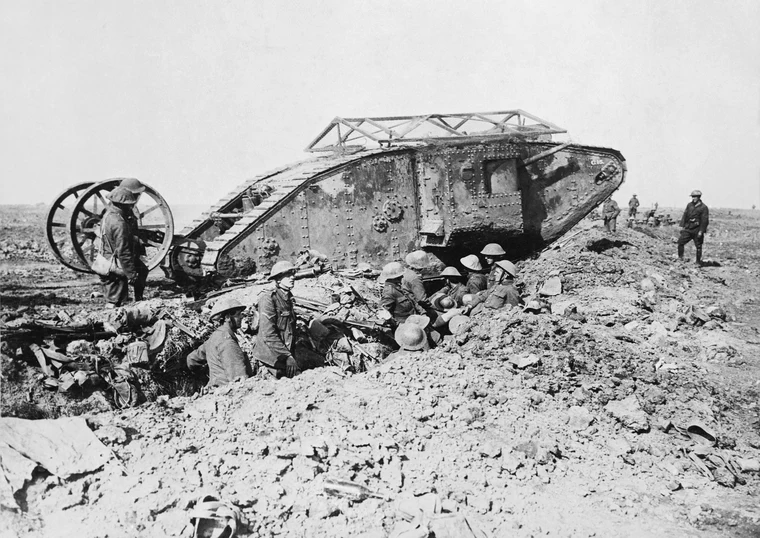
A British Mark I tank crosses a trench during the Battle of the Somme in 1916. Tanks were designed to break the deadlock of trench warfare, but early models were slow and mechanically unreliable.. Image: Ernest Brooks, via Wikimedia Commons (Public domain)
Did you know?
-
The Western Front trench system stretched roughly 700 kilometres from the English Channel to Switzerland. In total, if all connecting and reserve trenches were included, the combined length exceeded 40,000 kilometres.
Imperial War Museum — Trench Warfare -
On the first day of the Battle of the Somme, 1 July 1916, the British Army suffered approximately 57,470 casualties — the bloodiest single day in British military history — largely due to machine gun fire against soldiers advancing across no man's land.
BBC Bitesize — The Battle of the Somme -
Poison gas was used by both sides from 1915 onward. An estimated 1.3 million soldiers suffered gas-related injuries during World War 1, and approximately 90,000 died from gas attacks.
Encyclopaedia Britannica — Chemical Weapons
The psychological impact of trench warfare
Trench warfare caused lasting psychological damage to millions of soldiers. The constant threat of death, the noise of shelling, and the horror of watching comrades die created conditions that overwhelmed the human mind.
Doctors at the time called it "shell shock." Soldiers experienced tremors, nightmares, paralysis, and an inability to speak. Many could not explain what was wrong. Military authorities initially treated shell shock as cowardice, and some soldiers were punished or even executed for refusing to return to the front line.
Today, historians and psychologists recognise shell shock as an early description of post-traumatic stress disorder (PTSD). According to the National Archives, approximately 80,000 British soldiers were treated for shell shock during the war. The true number was almost certainly higher, as many cases went unreported.
The experience of trench warfare changed how societies thought about war. The generation that fought in the trenches returned home deeply scarred, and their testimony helped shape the anti-war movements that followed. Understanding this psychological toll is essential to understanding why the Treaty of Versailles and the search for lasting peace mattered so much to the people who survived.
A shell-shocked soldier photographed during World War 1 — the condition was initially dismissed but is now recognised as PTSD.. Image: Unknown author, via Wikimedia Commons (Public domain)
Frequently asked questions
- Why did soldiers dig trenches in World War 1?
- Soldiers dug trenches because modern weapons, especially machine guns and artillery, made it nearly impossible to advance across open ground. Trenches provided protection from enemy fire and allowed armies to hold their positions for extended periods.
- How wide was no man's land?
- No man's land varied in width from as little as 25 metres to over 450 metres, depending on the location. This open ground between opposing trenches was covered in barbed wire, shell craters, and mud, making any crossing extremely dangerous.
- What was shell shock?
- Shell shock was a term used during World War 1 to describe the psychological breakdown soldiers experienced from prolonged exposure to combat. Symptoms included tremors, nightmares, and paralysis. It is now recognised as post-traumatic stress disorder (PTSD).
- When did trench warfare end?
- Trench warfare on the Western Front ended in 1918 when new tactics combining tanks, aircraft, and coordinated infantry attacks broke through the German lines. The Hundred Days Offensive from August to November 1918 restored mobile warfare and led to the Armistice.
- What diseases were common in the trenches?
- Trench foot, caused by standing in cold water, was one of the most widespread conditions. Trench fever, spread by lice, caused high fevers and joint pain. Dysentery and typhus also affected soldiers due to poor sanitation and contaminated water supplies.