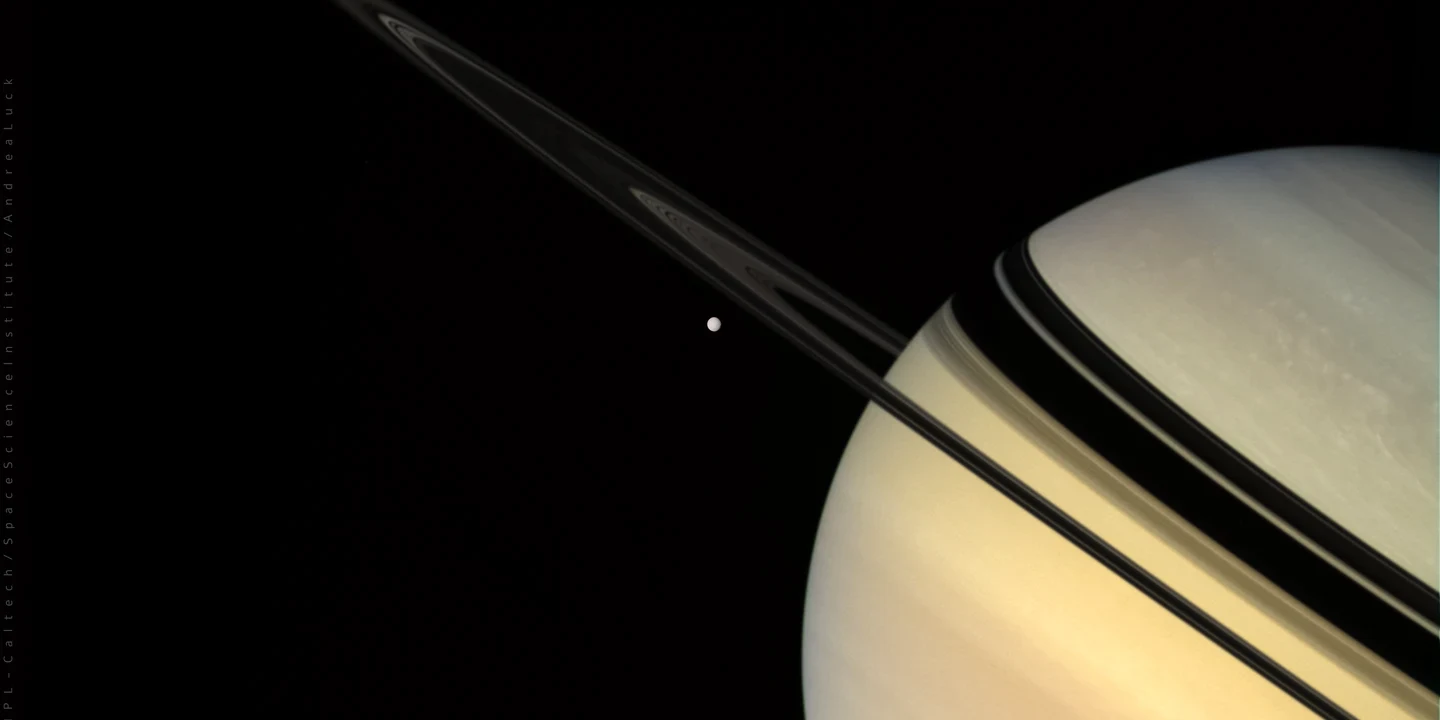
What is the solar system — definition and structure
The solar system is the Sun and everything that orbits around it, held in place by the Sun's gravity. It includes eight planets, dozens of moons, hundreds of thousands of asteroids, and billions of comets and smaller bodies.
The solar system formed approximately 4.6 billion years ago from a rotating cloud of gas and dust. As gravity pulled this material together, the Sun ignited at the centre and the remaining debris clumped into the planets and other objects we see today.
The solar system is enormous by human standards. Light, which travels at 300,000 kilometres per second, takes about 8 minutes to travel from the Sun to Earth. It takes more than 5 hours to reach the dwarf planet Pluto at the outer edge of the solar system.
The solar system sits in the Milky Way galaxy, about two-thirds of the way from the galactic centre. The Milky Way contains hundreds of billions of stars, and the universe contains hundreds of billions of galaxies.
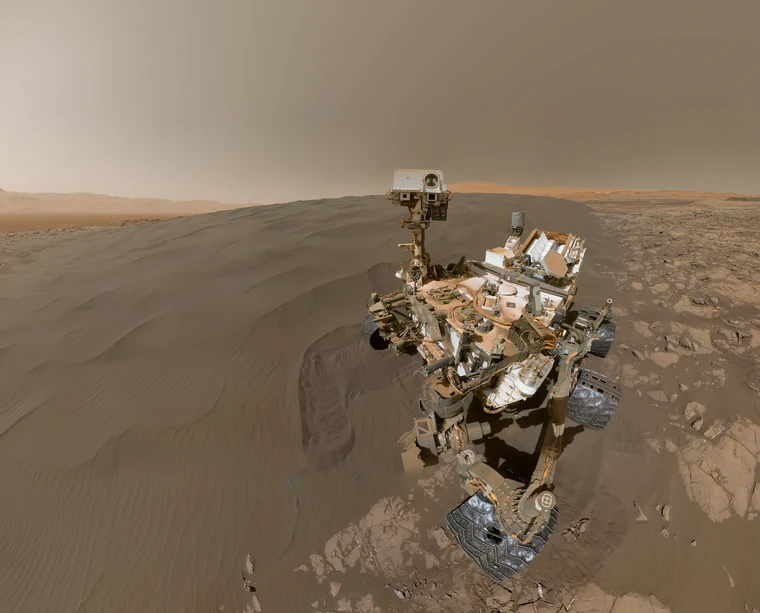
A selfie taken by NASA's Curiosity rover on the surface of Mars at the Namib Dune in Gale Crater. The image was assembled from multiple shots taken by the rover's arm-mounted camera.. Image: NASA/JPL-Caltech/MSSS, via Wikimedia Commons (Public domain)
The eight planets of the solar system
The eight planets orbit the Sun in roughly circular paths called ellipses. They are divided into two groups:
Inner rocky planets
The four planets closest to the Sun are small and made mostly of rock and metal:
- Mercury — smallest planet, no atmosphere, extreme temperature swings
- Venus — hottest planet (462°C average), thick CO₂ atmosphere
- Earth — third planet, the only known world with liquid water and life
- Mars — red due to iron oxide, has the solar system's tallest volcano (Olympus Mons)
Outer gas and ice giants
The four outer planets are much larger and made primarily of gas or ice:
- Jupiter — largest planet, famous Great Red Spot storm, 95 known moons
- Saturn — distinctive ring system made of ice and rock particles, 146 known moons
- Uranus — rotates on its side, ice giant
- Neptune — farthest planet, strongest winds in the solar system (up to 2,100 km/h)
Between the inner and outer planets lies the asteroid belt, a region containing millions of rocky and metallic objects.
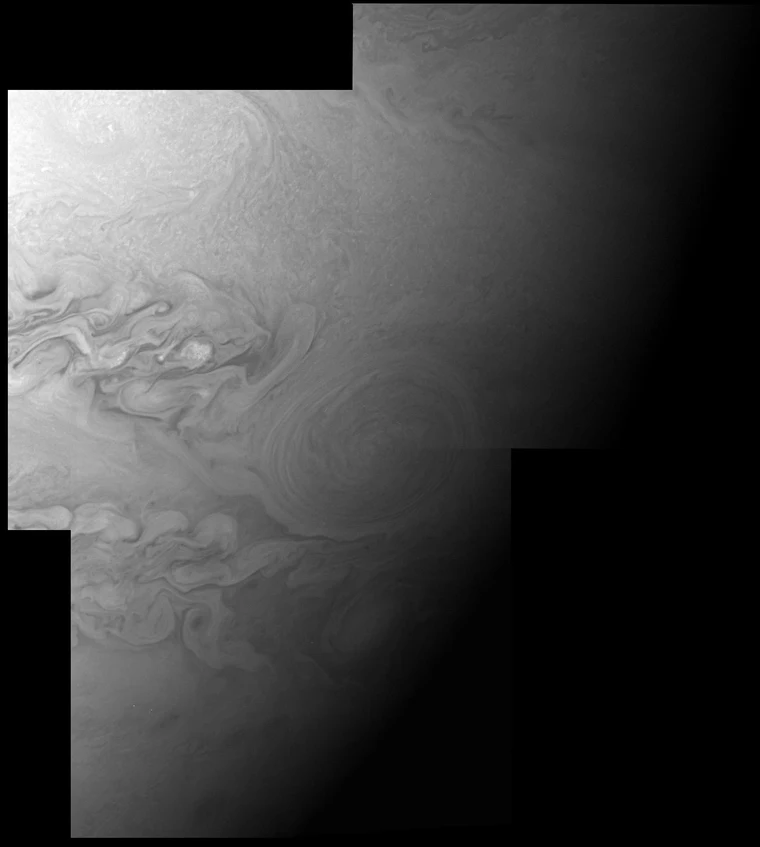
Jupiter and its Great Red Spot photographed by the Hubble Space Telescope. The Great Red Spot is a storm larger than Earth that has been raging for at least several hundred years.. Image: NASA/ESA/Goddard/UCBerkeley/JPL-Caltech/STScI, via Wikimedia Commons (Public domain)
Gravity — what holds the solar system together
The force that holds the solar system together is gravity. Every object with mass attracts every other object with mass. The Sun, which contains about 99.86% of all the mass in the solar system, exerts a powerful gravitational pull that keeps all the planets, moons, asteroids and comets in orbit.
The planets do not fall into the Sun because they are also moving sideways at high speed. This balance between forward motion and the Sun's gravitational pull produces a stable orbit — the same principle that keeps artificial satellites orbiting Earth.
The Moon stays in orbit around Earth for the same reason: Earth's gravity pulls the Moon inward, while the Moon's sideways velocity prevents it from spiralling in. The Moon's gravity, in turn, causes Earth's ocean tides.
Beyond the eight planets, the solar system includes: - Dwarf planets such as Pluto, Eris, and Ceres - The Kuiper Belt — a region of icy bodies beyond Neptune - The Oort Cloud — a vast, distant sphere of comets at the very edge of the solar system
For parents, visiting a local planetarium or using free apps like NASA's Eyes on the Solar System is a vivid way to explore these distances with children. The For parents guide lists further resources for science at home.
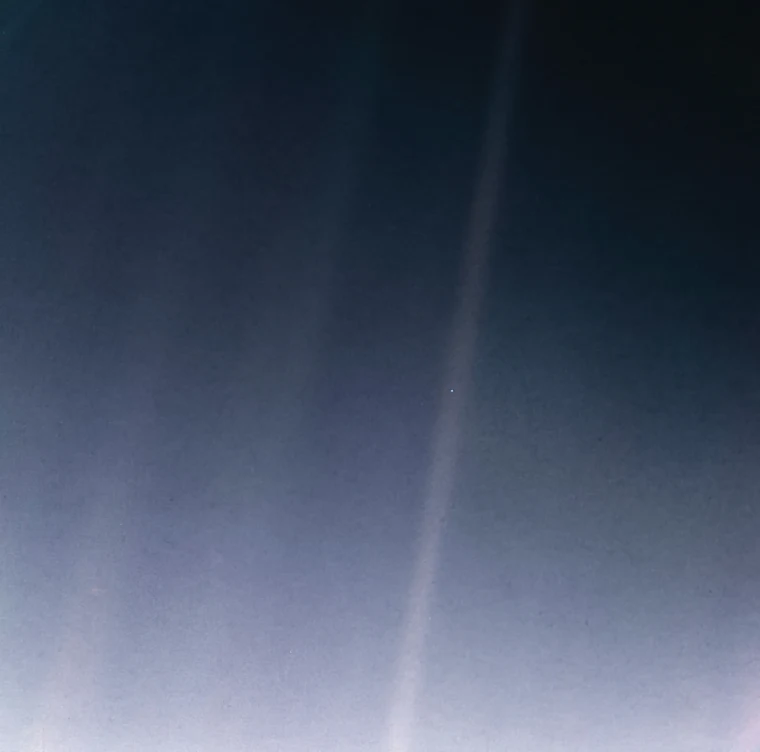
The famous Pale Blue Dot photograph taken by Voyager 1 in 1990 from a distance of about 6 billion kilometers. Earth appears as a tiny speck suspended in a beam of sunlight, illustrating our planet's place in the vastness of the solar system.. Image: NASA/JPL (Voyager 1), via Wikimedia Commons (Public domain)
Frequently asked questions
- Why is Pluto no longer called a planet?
- In 2006, the International Astronomical Union redefined what counts as a planet. To qualify, a body must orbit the Sun, have enough gravity to be roughly spherical, and have cleared other objects from its orbital zone. Pluto fails the third test — it shares its orbit with many other Kuiper Belt objects — so it was reclassified as a dwarf planet.
- How far is Earth from the Sun?
- Earth is about 150 million kilometres from the Sun on average. This distance is called 1 Astronomical Unit (AU). It takes sunlight about 8 minutes to travel this distance. This distance is why Earth receives enough warmth for liquid water and life, but not so much that oceans boil away.
- Could there be life elsewhere in the solar system?
- Scientists think some moons in the solar system are the most promising candidates for life beyond Earth. Europa (a moon of Jupiter) and Enceladus (a moon of Saturn) have subsurface liquid water oceans under their icy surfaces. Mars may have had liquid water and microbial life in the distant past.
- What is the difference between a moon and a planet?
- A planet orbits the Sun directly. A moon (natural satellite) orbits a planet, not the Sun. Earth has one moon; Mars has two; Jupiter has 95 known moons. Some moons — such as Jupiter's Ganymede — are larger than the planet Mercury.