Phenomenology course: Can you describe what you see without assuming it's really there?
Work it out in conversation with your own AI tutor in the Epivo app.

Free · No card · Android app
Start learning freeFree · No card · Opens Google Play (Android)
Get an email when the iPhone app is ready.
- 30 minutes a day with your tutor, on the free plan
- Remembers where you left off and what you've told your tutor about yourself
- Certificate included anyone can check it online
Why Epivo
Learn through engaging dialogue. Not through lectures.
Gain deeper understanding and stay capable in a changing world.
Free · No card · Android app
Start learning freeHow it works
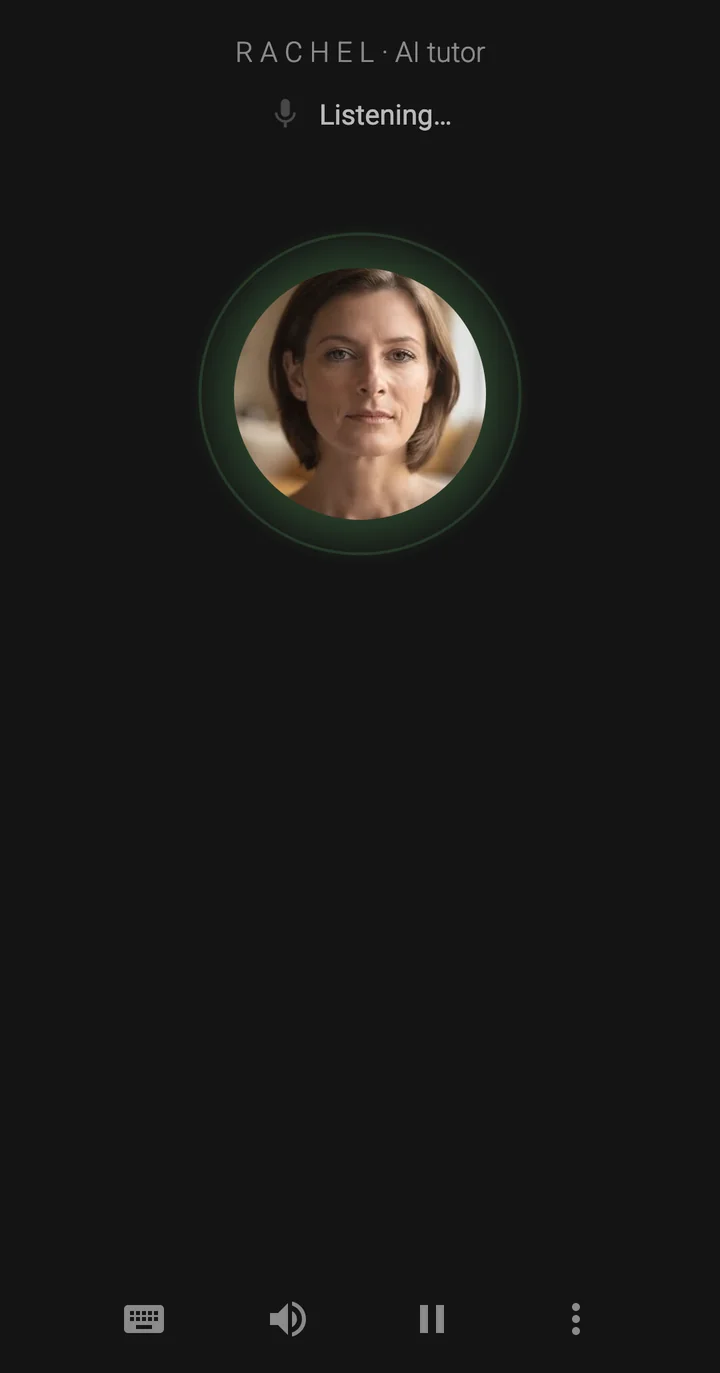
- Your tutor sets out one idea at a time, then hands you one small puzzle about your own experience.
- You think it through, out loud or by typing. You don't need to know the answer: your tutor helps you along and tells you when you're close.
- Step by step, it adds up. Your tutor remembers your past sessions and picks up where you left off.
What you'll understand
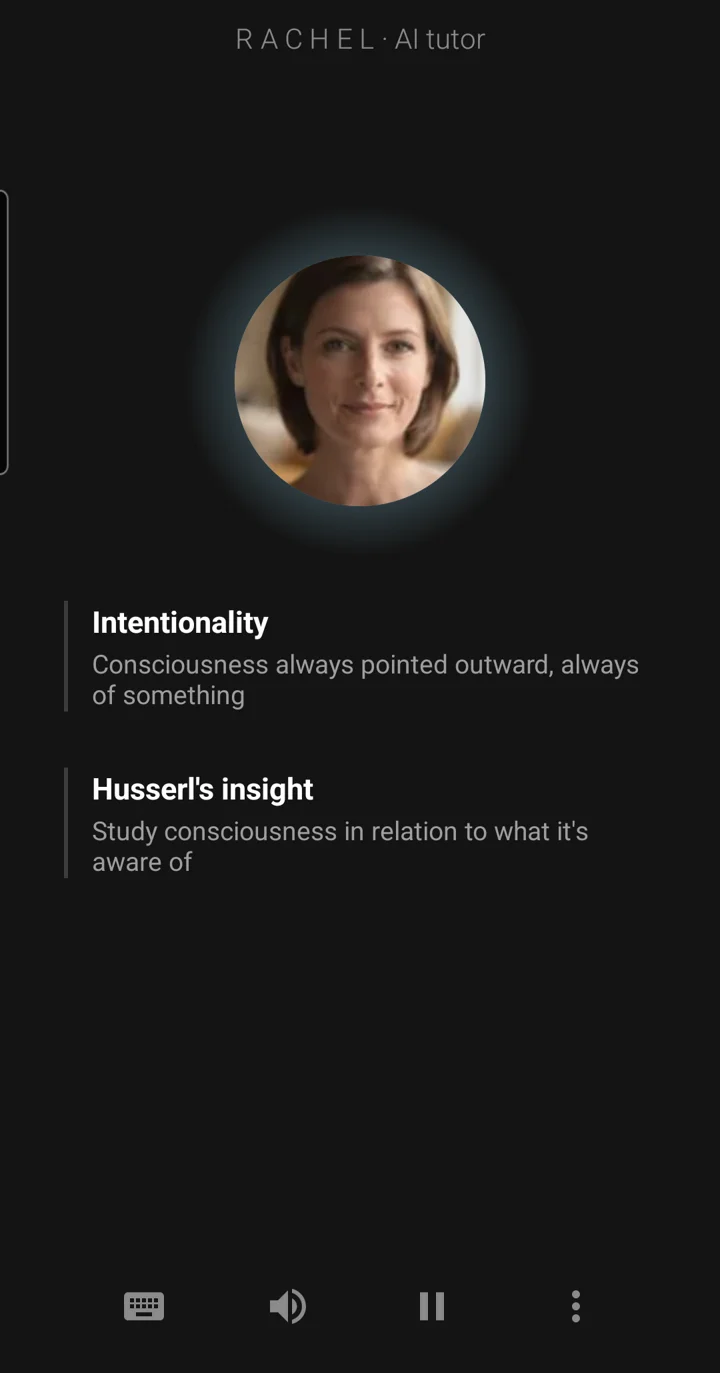
- Why every look, thought or feeling is always aimed at something
- How to set aside what you assume and simply describe how things appear to you
- Why Heidegger said you understand a hammer by using it, not by staring at it
- Where it led: Sartre and Beauvoir on what it means to be free
- Why science still struggles to explain what an experience is like from the inside
You don't need to have read Husserl or Heidegger. Phenomenology is taught inside Epivo's Western philosophy route, in its course on 20th-century philosophy, which then follows where their questions went. See every course in Western philosophy →
Hear how a phenomenology lesson starts
Let's start in 1900, with a mathematician who turned to describing experience. His name was Edmund Husserl. So here's my first question. Look at something near you, a cup or a window. Can you describe how it looks without assuming it's really there? Tell me what you notice, and we'll see where it leads.
What it costs
Free
- 30 minutes a day with your tutor
- No card needed.
- Your first hour uses the Premium voice (once, not every day). After that your tutor speaks with the free voice, which runs on your phone. The lessons, the questions and your progress stay exactly the same.
- Certificates included.
- Want more time? Paid plans add more tutoring time and more Premium voice time. See plans and prices →
Finish with a certificate
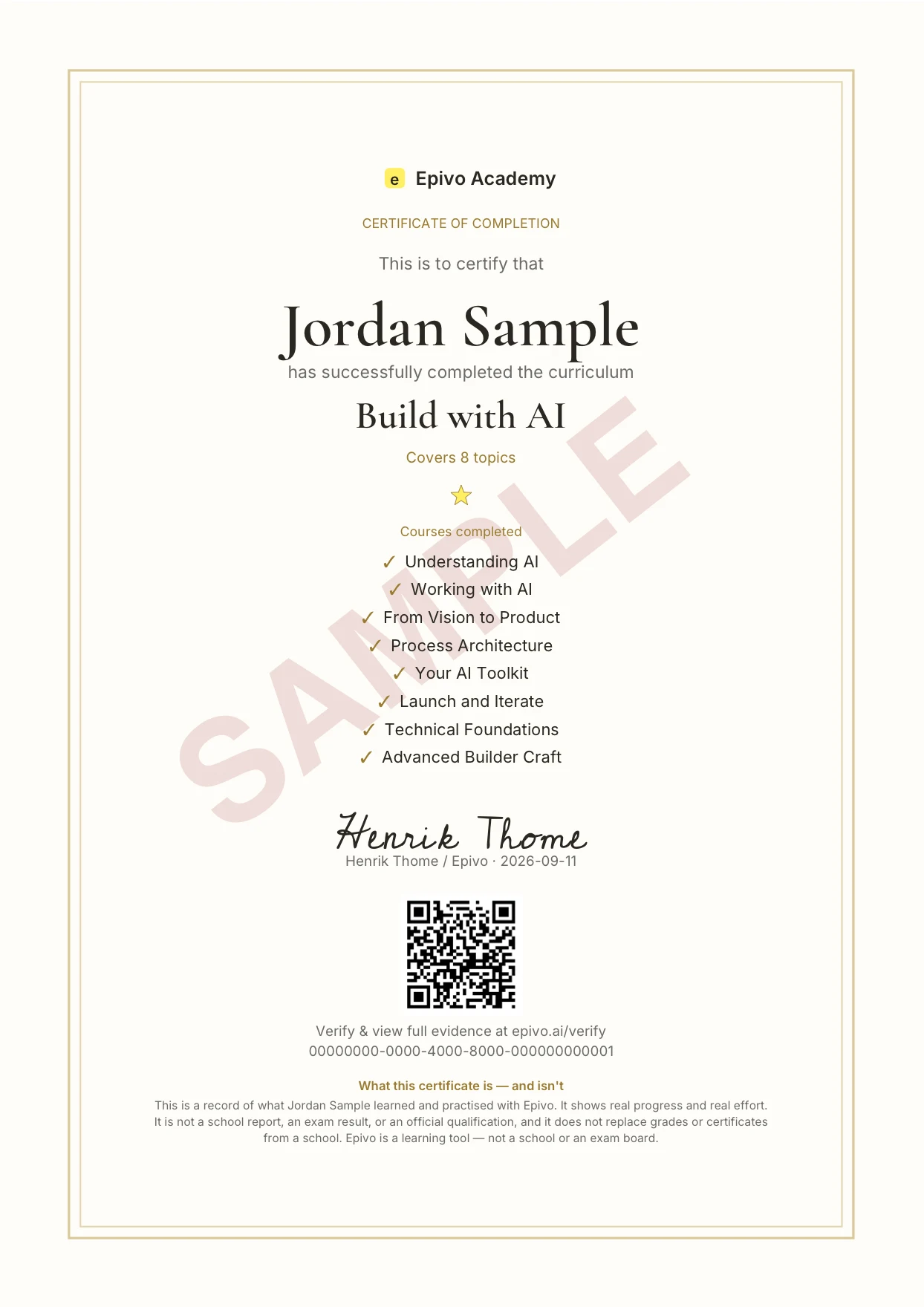
Finish all the Western philosophy courses and earn a certificate anyone can check online. See a sample →
Questions
Is it really free?
Yes. Thirty minutes a day with your tutor, and no card. Paid plans add more time if you ever want it.
Is my tutor a real person?
No. Your tutor is an AI that talks with you, follows a planned course and remembers your past sessions.
How do I know the lessons are accurate?
Before written lesson material reaches you, an AI checks its key facts against independent published sources, and a second AI re-checks anything flagged. Your tutor is instructed to teach from that material and to tell you when unsure: an instruction, not a guarantee. And you can check for yourself: tap Sources in the lesson menu and pick a session to see what it drew on, including links to the original sources.
How is this different from asking ChatGPT?
ChatGPT answers what you ask. Your tutor leads the way: a planned route through Western philosophy, phenomenology included, one question at a time, picking up where you left off.
Can I start with phenomenology?
Yes, just ask. Your tutor can take you there after a short recap that sets the scene. If you don't ask, you begin where Western philosophy did, in ancient Greece.
What will I learn about phenomenology?
One topic on Husserl's way of describing experience, and one on Heidegger's idea that we are always already caught up in the world. Then the course follows where those questions went: Sartre and Beauvoir on freedom, and the puzzle of what an experience is like from the inside.
Is it on iPhone?
Not yet. Epivo runs on Android today. Open this page on an iPhone and you can leave your email; we'll tell you when the iPhone app is ready.
One ordinary thing, described closely, can teach you a lot. Uncover the rest together.
Want to start with phenomenology? Just ask, and your tutor can take you there after a short recap. Otherwise you begin where Western philosophy did, in ancient Greece.
Free · No card · Android app
Start learning freeFree · No card

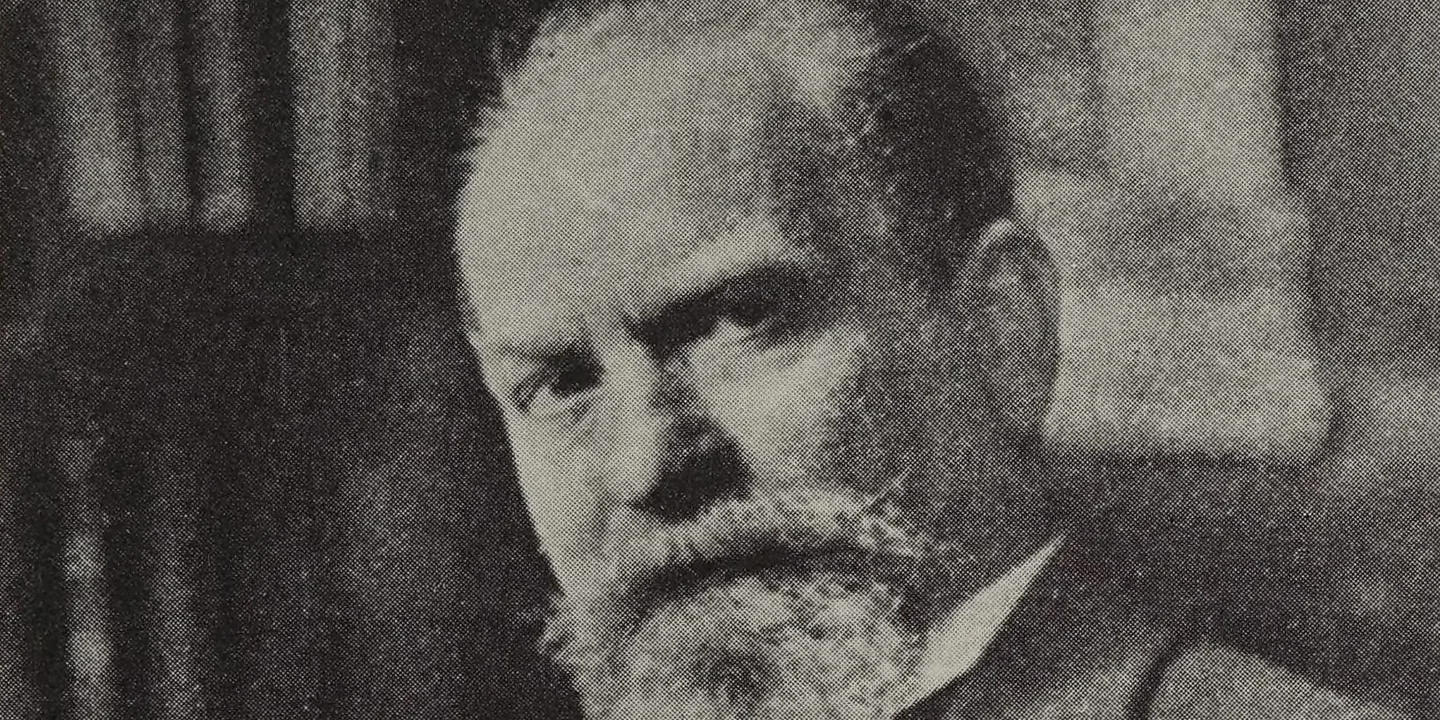
Photo credits (via Wikimedia Commons). Edmund Husserl, as pictured in 1929: photographer unknown (public domain), cropped. Apple blossom, Priorwood Garden, Melrose: David Hawgood, CC BY-SA 2.0, cropped.
