Utilitarianism course: Can you tell right from wrong by adding up everyone's happiness?
Work it out in conversation with your own AI tutor in the Epivo app.

Free · No card · Android app
Start learning freeFree · No card · Opens Google Play (Android)
Get an email when the iPhone app is ready.
- 30 minutes a day with your tutor, on the free plan
- Remembers where you left off and what you've told your tutor about yourself
- Certificate included anyone can check it online
Why Epivo
Learn through engaging dialogue. Not through lectures.
Gain deeper understanding and stay capable in a changing world.
Free · No card · Android app
Start learning freeHow it works
- Your tutor tells the story, one thinker at a time, then hands you one small puzzle to think about.
- You think it through, out loud or by typing. You don't need to know the answer: your tutor helps you along and tells you when you're close.
- Step by step, it adds up. Your tutor remembers your past sessions and picks up where you left off.

What you'll understand
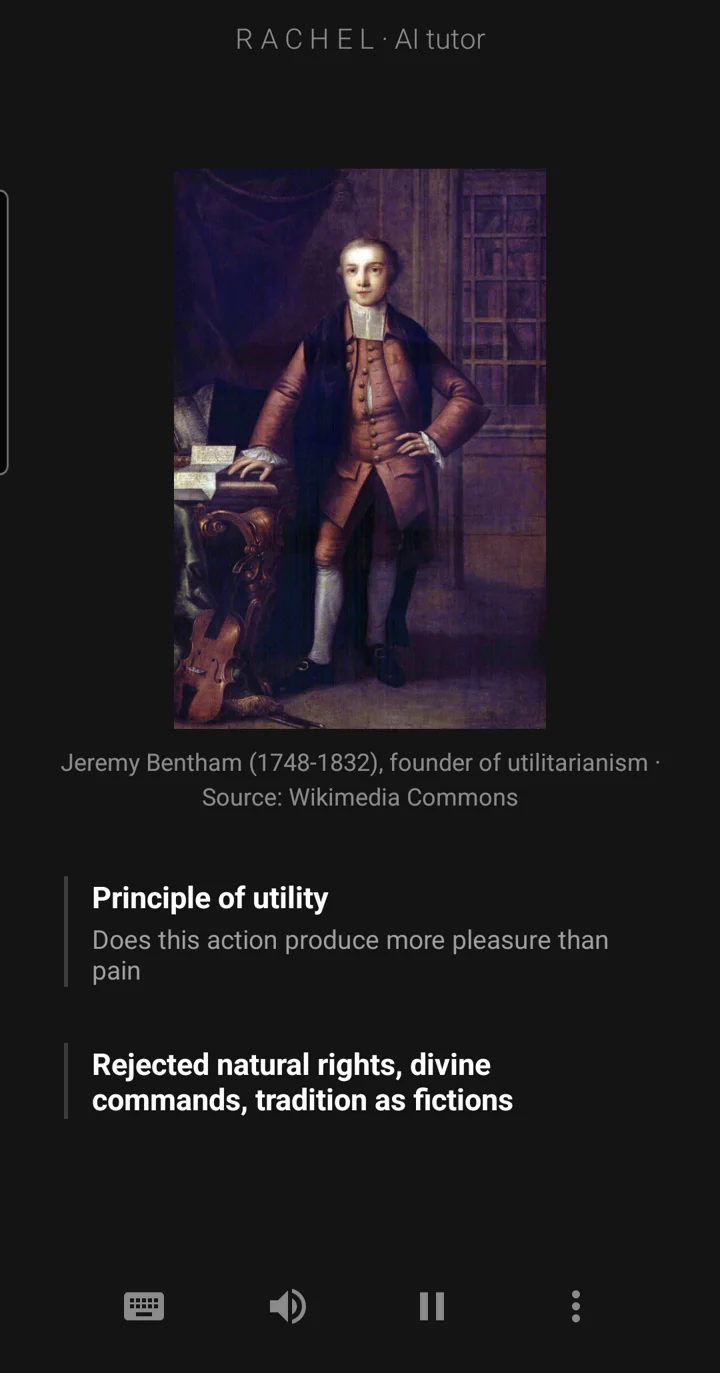
- How Bentham tried to judge right and wrong by adding up pleasure and pain
- Why Mill said some pleasures are worth more than others
- Why Mill thought the only good reason to limit your freedom is to stop you harming others
- Why Sidgwick found no easy answer when your own happiness and everyone else's pull apart
- Their critics and rivalsHow Hegel, Marx, Kierkegaard and Nietzsche asked very different questions about history, work and how to live
You don't need to know anything first. See every course in Western philosophy →
Hear how a utilitarianism lesson starts
Let's start in London, in 1789. Jeremy Bentham has a bold idea: judge every law by one test, how much happiness it brings and how much pain it causes. So here's my first question for you. Can happiness really be added up? Tell me what you think, and we'll see where it leads.
What it costs
Free
- 30 minutes a day with your tutor
- No card needed.
- Your first hour uses the Premium voice (once, not every day). After that your tutor speaks with the free voice, which runs on your phone. The lessons, the questions and your progress stay exactly the same.
- Certificates included.
- Want more time? Paid plans add more tutoring time and more Premium voice time. See plans and prices →
Finish with a certificate
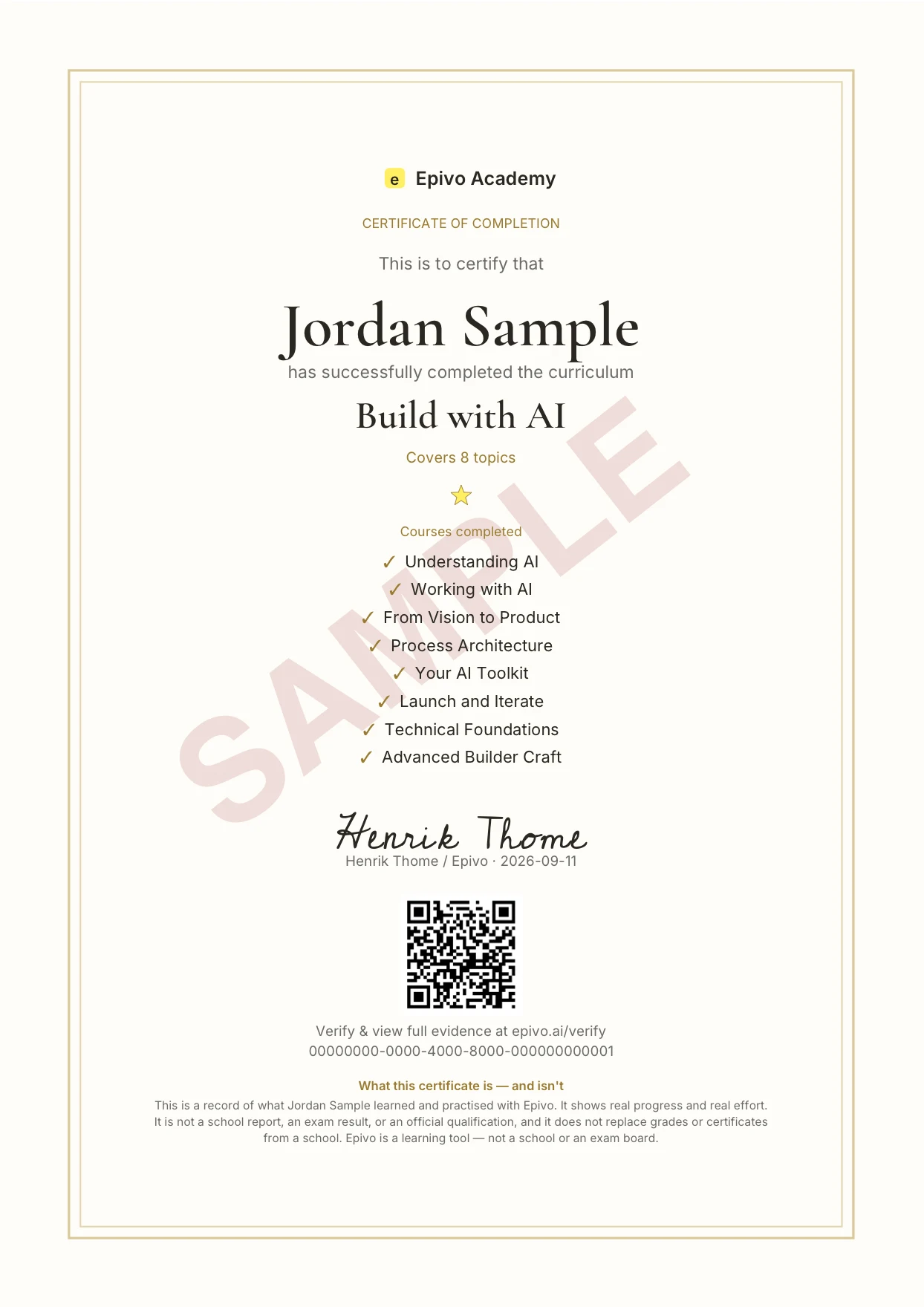
Finish all the Western philosophy courses and earn a certificate anyone can check online. See a sample →
Questions
Is it really free?
Yes. Thirty minutes a day with your tutor, and no card. Paid plans add more time if you ever want it.
Is my tutor a real person?
No. Your tutor is an AI that talks with you, follows a planned course and remembers your past sessions.
How do I know the lessons are accurate?
Before written lesson material reaches you, an AI checks its key facts against independent published sources, and a second AI re-checks anything flagged. Your tutor is instructed to teach from that material and to tell you when unsure: an instruction, not a guarantee. And you can check for yourself: tap Sources in the lesson menu and pick a session to see what it drew on, including links to the original sources.
How is this different from asking ChatGPT?
ChatGPT answers what you ask. Your tutor leads the way: a planned route through Bentham, Mill and their critics, one question at a time, picking up where you left off.
Can I go straight to Bentham?
Yes, just ask. Your tutor teaches all of Western philosophy, from ancient Greece on, and can take you to Bentham after a quick recap of Kant.
What comes after Bentham and Mill?
If you want to keep going, ask your tutor for 20th Century Philosophy, which includes Peter Singer on how far our moral concern should reach, and John Rawls on what makes a society just.
Is it on iPhone?
Not yet. Epivo runs on Android today. Open this page on an iPhone and you can leave your email; we'll tell you when the iPhone app is ready.
Ask what happiness is worth. Work out the rest together.
Your tutor teaches all of Western philosophy, from ancient Greece on. Want utilitarianism first? Just ask, and your tutor can take you to Bentham, after a quick recap of Kant.
Free · No card · Android app
Start learning freeFree · No card

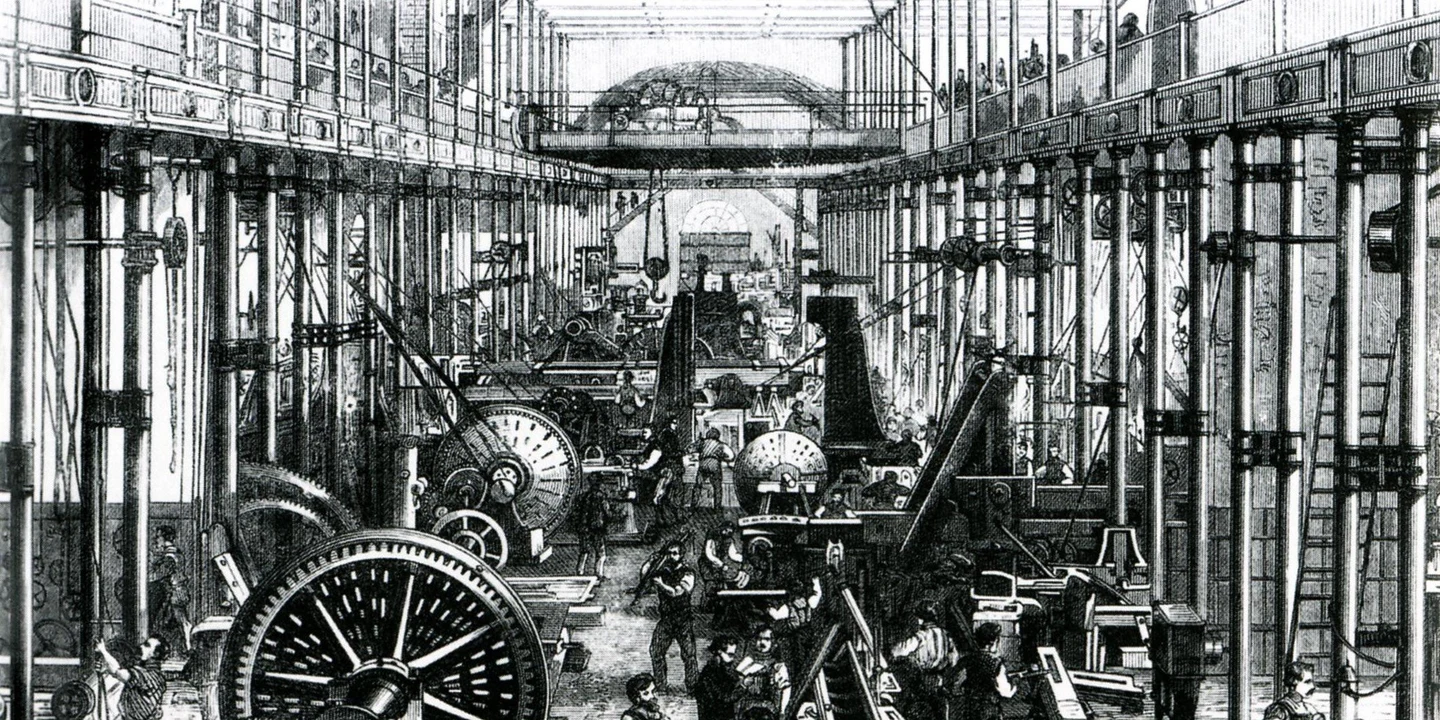
Photo credits (via Wikimedia Commons). A machine factory in Chemnitz, Germany, 1868: engraving by an unknown artist (public domain), cropped. People relaxing in the Englischer Garten, Munich: gruban, CC BY-SA 2.0, cropped.
