African philosophy course: Who would you be if no one had ever spoken to you?
Work it out in conversation with your own AI tutor in the Epivo app.

Free · No card · Android app
Start learning freeFree · No card · Opens Google Play (Android)
Get an email when the iPhone app is ready.
- 30 minutes a day with your tutor, on the free plan
- Remembers where you left off and what you've told your tutor about yourself
- Certificate included anyone can check it online
How it works
- Your tutor introduces an idea, a piece at a time, then hands you one small puzzle about it.
- You think it through, out loud or by typing. You don't need to know the answer: your tutor helps you along and tells you when you're close.
- Step by step, it adds up. Your tutor remembers your past sessions and picks up where you left off.
What you'll understand
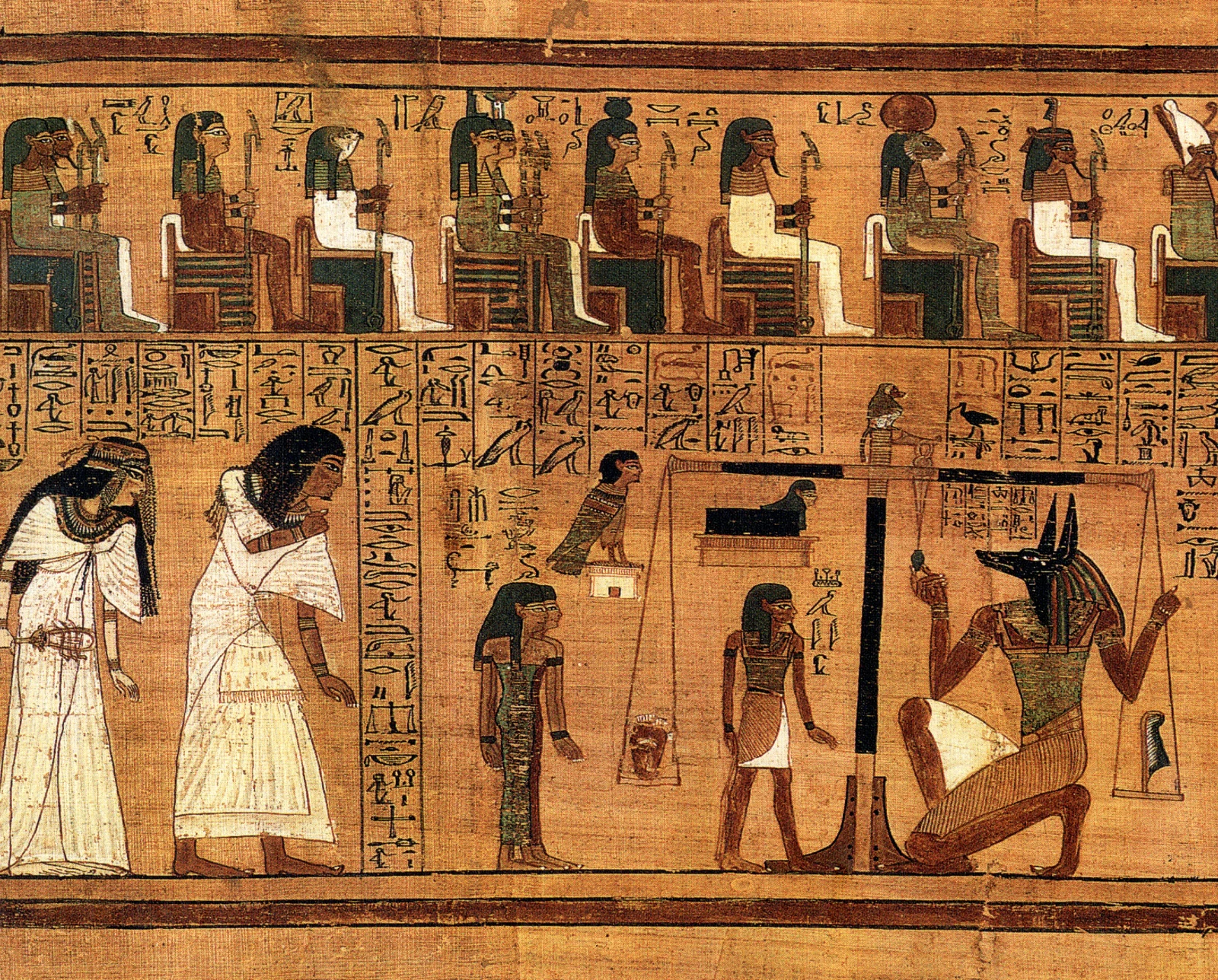
- Ancient EgyptWhat Egypt's scribes meant by Ma'at — truth, justice and balance — and how they imagined a life being weighed at the end of it
- What a person is made ofHow Akan thinkers split a person into a soul from God, a spirit from the father and blood from the mother, and what the Yoruba call the destiny you chose before you were born
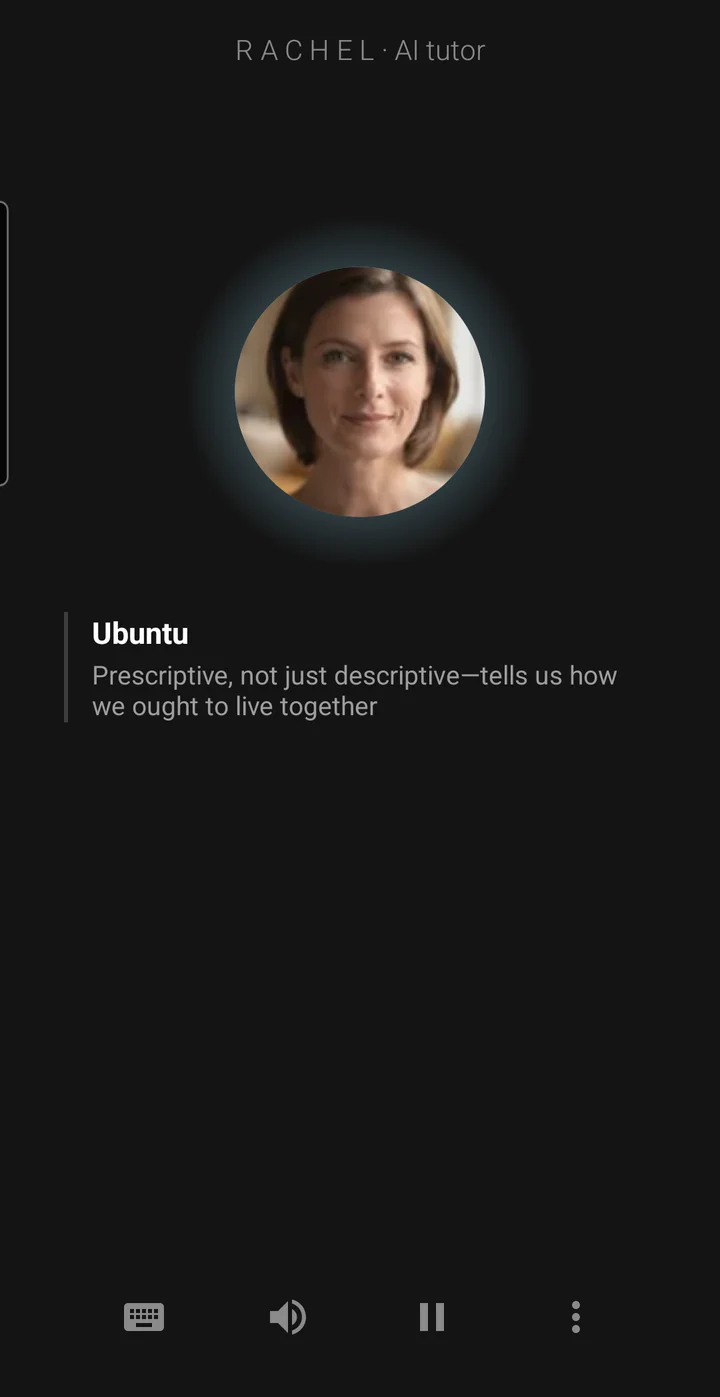
- UbuntuWhy “I am because we are” is a claim about what makes someone a person at all, and what follows if it is right
- Under empire, and afterWho gets to decide who you are: what Fanon, Biko and Nkrumah argued about freedom and culture, under empire and after independence
- Rights and reconciliationWhere African feminists find customary law and legal rights in conflict, and how Ubuntu shaped South Africa's choice to put reconciliation before punishment
You don't need to know anything first. The course runs in six parts, from ancient Egypt to what African thinkers argue about now — climate, AI and decolonising knowledge. Tell your tutor you want African philosophy when you start. See the full course →
Hear a sample of how a lesson starts
Let's start with a word from southern Africa: ubuntu. People often translate it as, I am because we are. So here's my first question for you. Could someone raised entirely alone still be a person? Tell me what you think, and we'll see where it leads.
What it costs
Free
- 30 minutes a day with your tutor
- No card needed.
- Your first hour uses the Premium voice (once, not every day). After that your tutor speaks with the free voice, which runs on your phone. The lessons, the questions and your progress stay exactly the same.
- Certificates included.
- Want more time? Paid plans add more tutoring time and more Premium voice time. See plans and prices →
Finish with a certificate
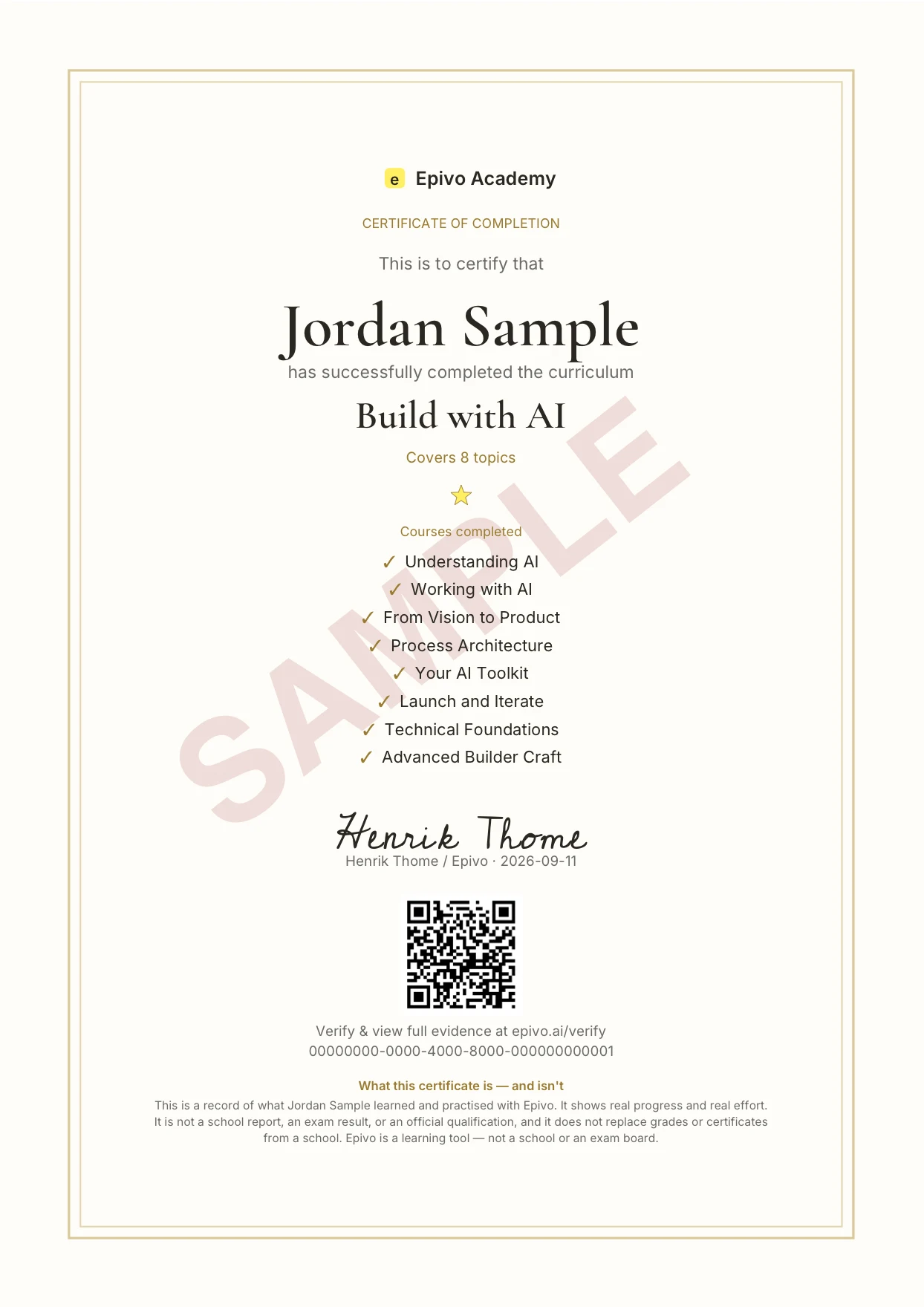
Finish all the African philosophy courses and earn a certificate anyone can check online. See a sample →
Questions
Is it really free?
Yes. Thirty minutes a day with your tutor, and no card. Paid plans add more time if you ever want it.
Is my tutor a real person?
No. Your tutor is an AI that talks with you, follows a planned course and remembers your past sessions.
How do I know the lessons are accurate?
Before written lesson material reaches you, an AI checks its key facts against independent published sources, and a second AI re-checks anything flagged. Your tutor is instructed to teach from that material and to tell you when unsure: an instruction, not a guarantee. And you can check for yourself: tap Sources in the lesson menu and pick a session to see what it drew on, including links to the original sources.
How is this different from asking ChatGPT?
ChatGPT answers what you ask. Your tutor leads the way: a planned route through African philosophy, one question at a time, picking up where you left off.
Do I need to know any African history first?
No. Each idea is introduced from scratch, and the people and places are explained as they come up. The course starts in ancient Egypt and works forward.
Where do Fanon and the liberation thinkers come in?
In part four, on Pan-African political philosophy. Fanon is taught through his quarrel with Negritude; alongside him come Biko, Nkrumah, Cabral, Rodney and Sankara, each with their own lesson.
Is this only about Ubuntu?
No. Ubuntu is one part of six. The others cover ancient Egyptian and Nile Valley thought, Akan and Yoruba metaphysics, Pan-African political philosophy, African feminist philosophy, and what African thinkers are arguing about today.
Is it on iPhone?
Not yet. Epivo runs on Android today. Open this page on an iPhone and you can leave your email; we'll tell you when the iPhone app is ready.
Start with one word: ubuntu.
Your first lesson begins with Ma'at, ancient Egypt's idea of truth and balance; ubuntu comes later.
Free · No card · Android app
Start learning freeFree · No card

Image credits. The weighing of the heart, from the Book of the Dead of Ani, British Museum (public domain), cropped. The Great Enclosure, Great Zimbabwe: Andrew Moore, CC BY-SA 2.0, cropped.

