Critical thinking course: Why do smart people fall for bad arguments?
Work it out in conversation with your own AI tutor in the Epivo app.

Free · No card · Android app
Start learning freeFree · No card · Opens Google Play (Android)
Get an email when the iPhone app is ready.

- 30 minutes a day with your tutor, on the free plan
- Remembers where you left off and what you've told your tutor about yourself
- Certificate included anyone can check it online
How it works
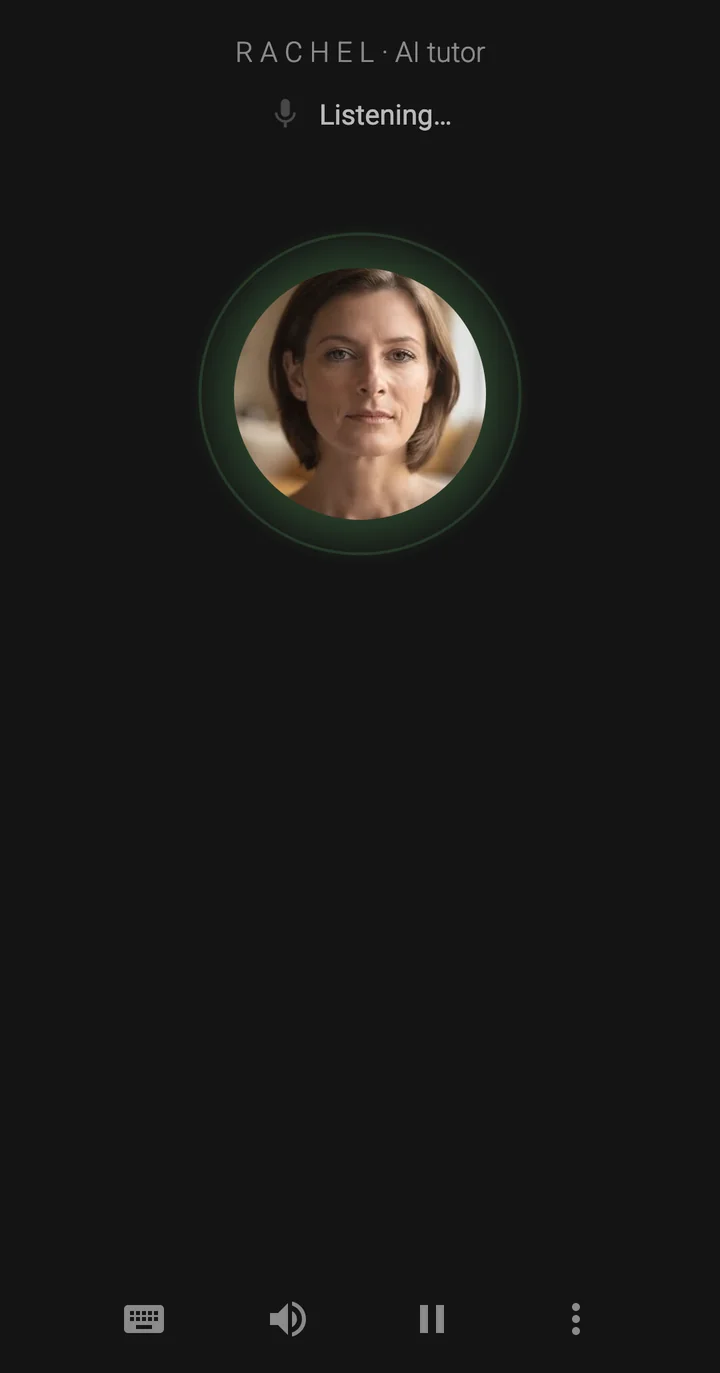
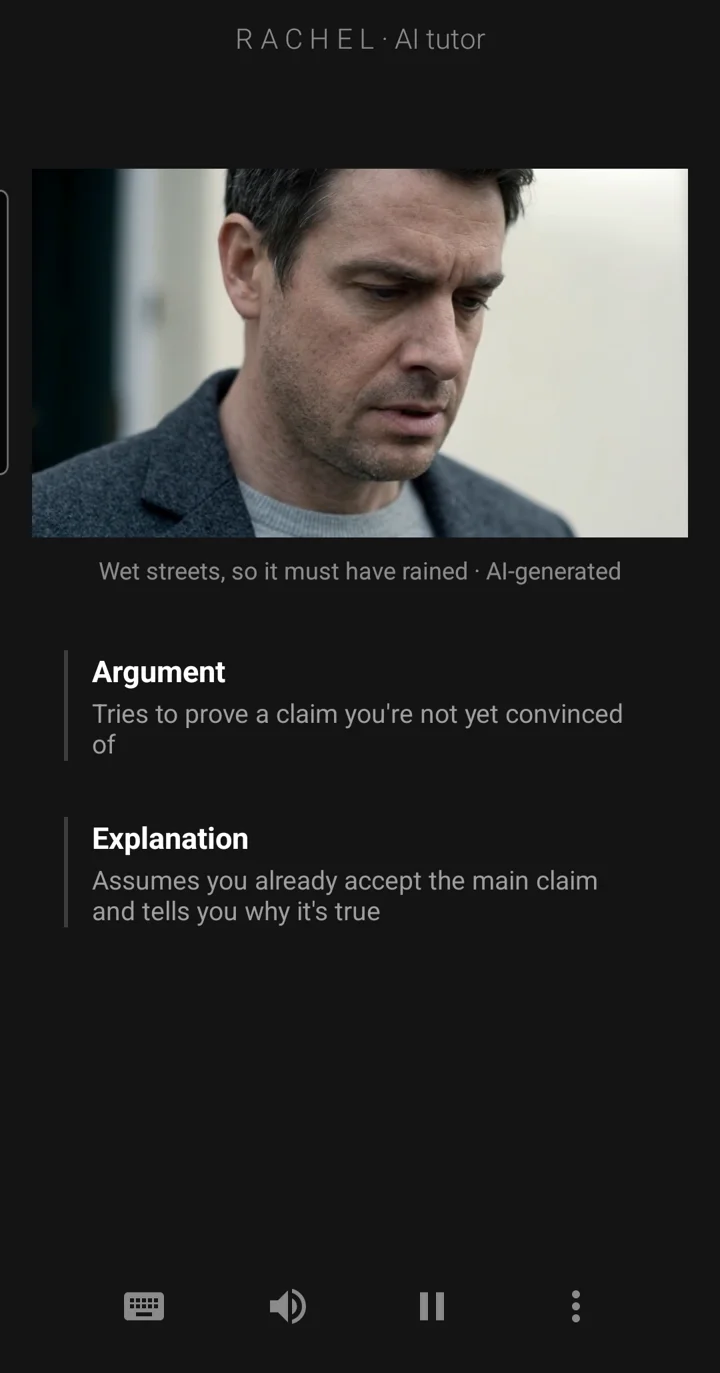
- Your tutor starts from an everyday claim, then hands you one small puzzle about it: what's the reason, and does it hold?
- You think it through, out loud or by typing. You don't need to know the answer: your tutor helps you along and tells you when you're close.
- Step by step, it adds up. Your tutor remembers your past sessions and what you've shared, and picks up where you left off.
What you'll understand
- How to spot an argument, and find the step it quietly takes for granted
- Why your mind takes shortcuts, and when they lead you astray
- How to trace a claim back to its source and weigh the evidence behind it
- The tricks numbers play in the news, from a missing total to a stretched chart
- How to disagree well: give the other side its best case, and change your mind when the evidence says so
You don't need to know anything first. The course begins with a simple question: what makes something an argument? See the full course →
Hear how a critical thinking lesson starts
Let's start with something you hear every day. Someone says: you should get more sleep, because tired people make worse decisions. So here's my first question for you. Is that an argument, or just an opinion? Tell me what you think, and we'll see where it leads.
What it costs
Free
- 30 minutes a day with your tutor
- No card needed.
- Your first hour uses the Premium voice (once, not every day). After that your tutor speaks with the free voice, which runs on your phone. The lessons, the questions and your progress stay exactly the same.
- Certificates included.
- Want more time? Paid plans add more tutoring time and more Premium voice time. See plans and prices →
Finish with a certificate
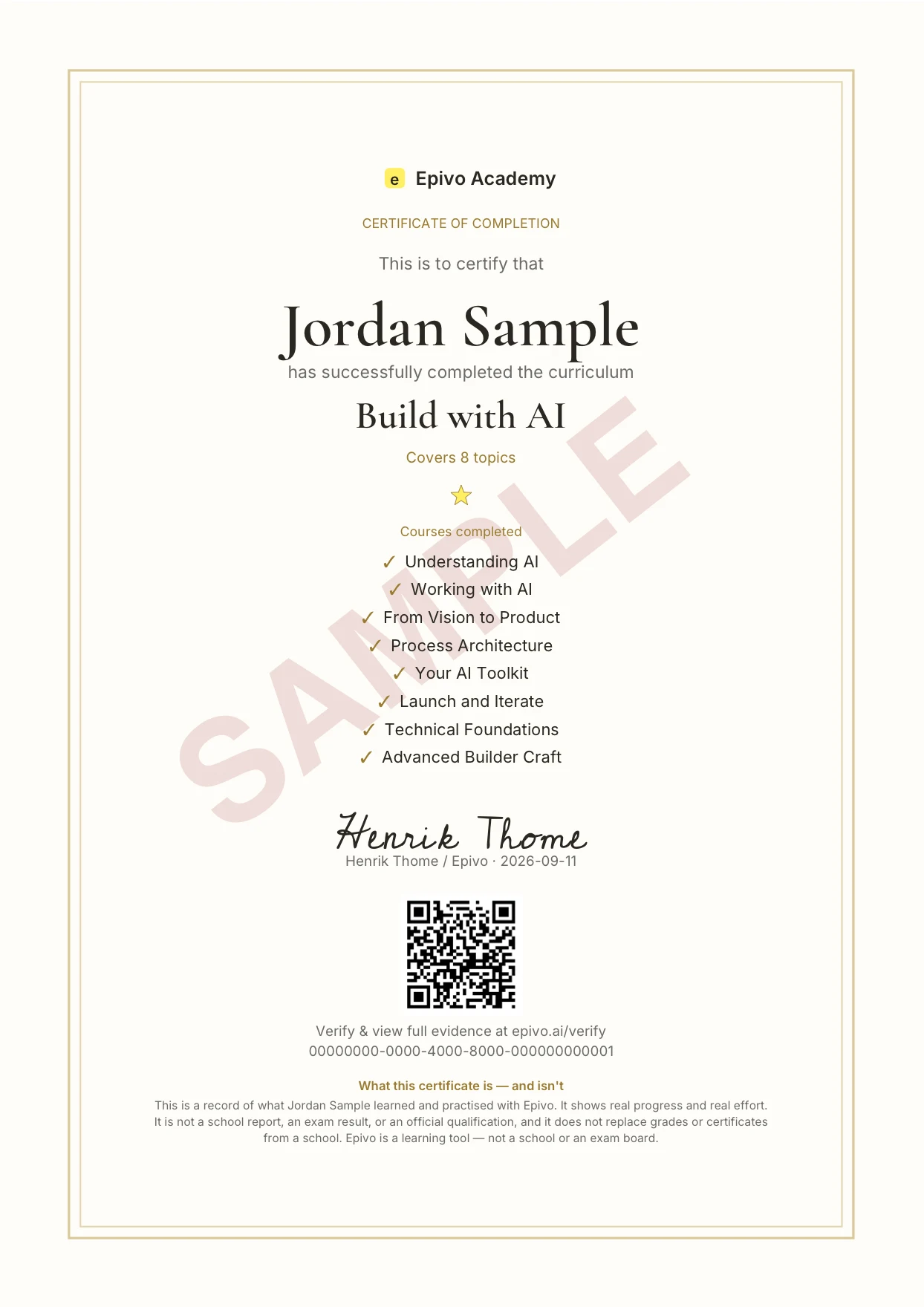
Finish all the critical thinking courses and earn a certificate anyone can check online. See a sample →
Questions
Is it really free?
Yes. Thirty minutes a day with your tutor, and no card. Paid plans add more time if you ever want it.
Is my tutor a real person?
No. Your tutor is an AI that talks with you, follows a planned course and remembers your past sessions.
How do I know the lessons are accurate?
Before written lesson material reaches you, an AI checks its key facts against independent published sources, and a second AI re-checks anything flagged. Your tutor is instructed to teach from that material and to tell you when unsure: an instruction, not a guarantee. And you can check for yourself: tap Sources in the lesson menu and pick a session to see what it drew on, including links to the original sources.
How is this different from asking ChatGPT?
ChatGPT answers what you ask. Your tutor leads the way: a planned route through critical thinking, one question at a time, picking up where you left off.
Will it help me make sense of the news?
Yes. Whole parts of the course look at how headlines use numbers, how your social media feed decides what you see, and how to check a story or a photo before you share it.
Does it cover cognitive biases?
Yes. One part of the course is about the mental shortcuts everyone takes, like noticing only what fits what we already believe, or sticking with a plan because we've already paid for it, and simple habits for catching them in yourself.
Is it on iPhone?
Not yet. Epivo runs on Android today. Open this page on an iPhone and you can leave your email; we'll tell you when the iPhone app is ready.
Start with one everyday claim. Work out the rest together.
When you start, tell your tutor you want our Critical Thinking course. Your first lesson begins with telling an argument from a plain opinion.
Free · No card · Android app
Start learning freeFree · No card

Photo credits (via Wikimedia Commons). A woman reading a newspaper: tranmautritam, CC0, cropped. Rodin's The Thinker, Musée Rodin, Paris: BKP, CC BY-SA 3.0, cropped.

