All ages
Human Origins
Fifty thousand years ago we were not alone. Who were the Neanderthals and Denisovans, why do most people alive today still carry their DNA, and why are we the only humans left? Work it out with your tutor, from the first upright walkers in Africa to footprints left by some of the first Americans — and go deeper into how our bodies and our cultures evolved, our primate roots, and who moved and mixed in the last 10,000 years. No science background needed.
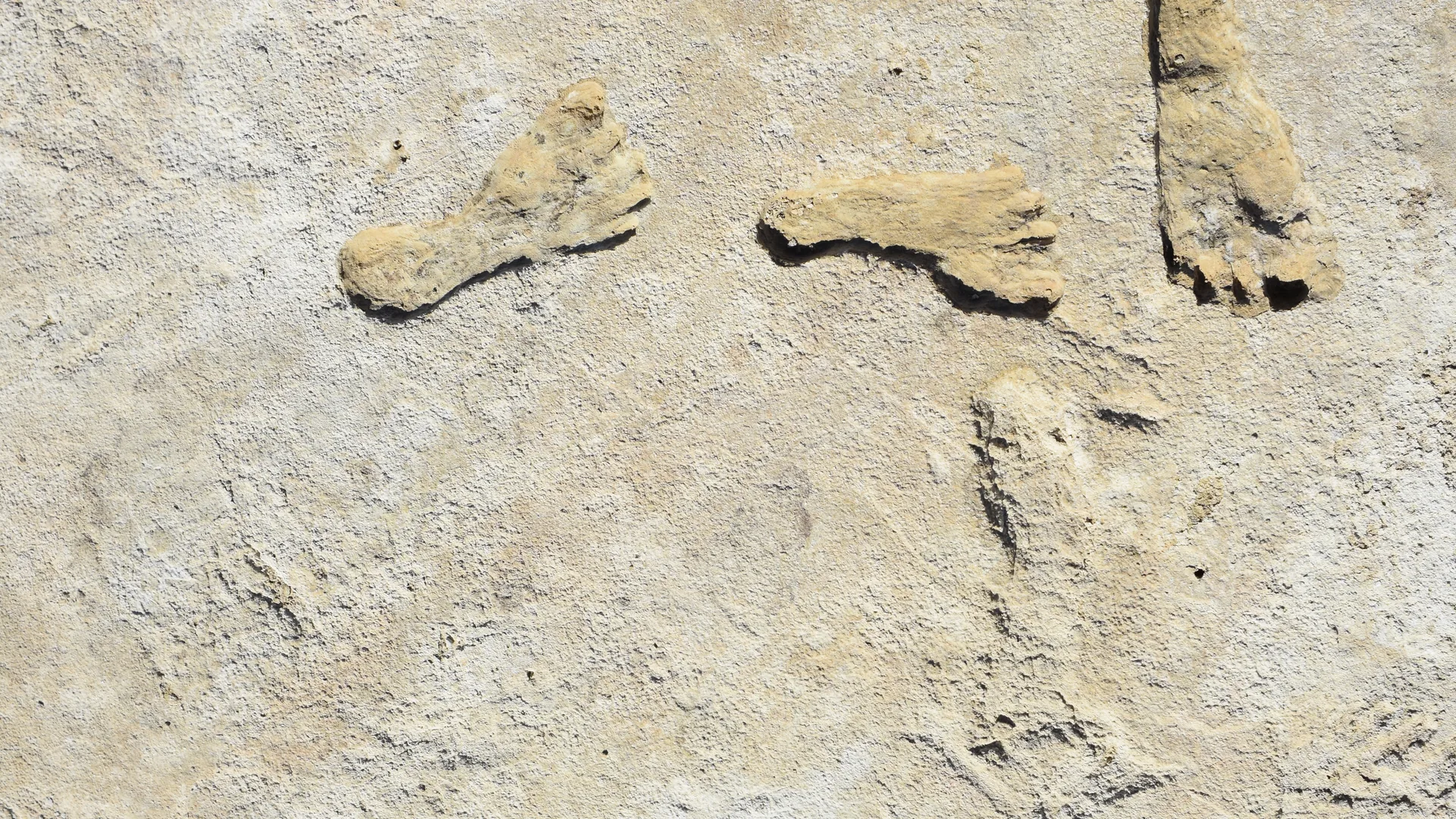
Fossilised human footprints left during the last ice age in what is now White Sands National Park, New Mexico.
National Park Service · Public domain
Science
- Becoming Us: Art, Language and the Peopling of the World When did humans start making art and talking, and how did people spread across the world? Weigh the clues from beads, cave paintings and genes, follow the first Australians and Americans across seas and ice, and end on the questions scientists are still arguing about.
- Before the Split: Our Primate Roots Where did monkeys and apes come from, and how did monkeys reach South America without a boat? Go back sixty million years to the first primates, through a world once ruled by apes, to the ancestor we share with chimpanzees.
- Built to Run and Throw: How the Human Body Evolved Why can humans run for hours and throw hard and straight when no other ape can? Read the human body as a record of how our ancestors lived, from legs, shoulders and sweat glands to bare skin, hands and teeth, and see how it kept changing after farming began.
- From Upright Apes to Homo sapiens How can a bone tell you its owner walked upright? Follow six million years in Africa, from the first apes on our side of the split through Lucy, the first stone tools and the travels of Homo erectus, to the birth of our own species about 300,000 years ago.
- Our Lost Cousins: Neanderthals, Denisovans and the Other Humans Who were the Neanderthals and Denisovans, and why do most people alive today still carry their DNA? Meet the other humans who shared the planet with us fifty thousand years ago, from a finger bone in a Siberian cave to a metre-tall islander in Indonesia, and weigh the ideas about what happened to them.
- Why Are Humans So Different? Culture, Cooperation and Who Moved Where Why did lost explorers starve where local people lived well? Explore how humans learn from each other, teach, share with strangers and make music, then see what ancient DNA can and cannot tell us about an old puzzle: did farming and languages spread by being copied, or by people moving?
Ready to start learning?
Start for free