Early modern philosophy course: If a dream can feel completely real, how can you be sure you're awake right now?
Work it out in conversation with your own AI tutor in the Epivo app.

Free · No card · Android app
Start learning freeFree · No card · Opens Google Play (Android)
Get an email when the iPhone app is ready.
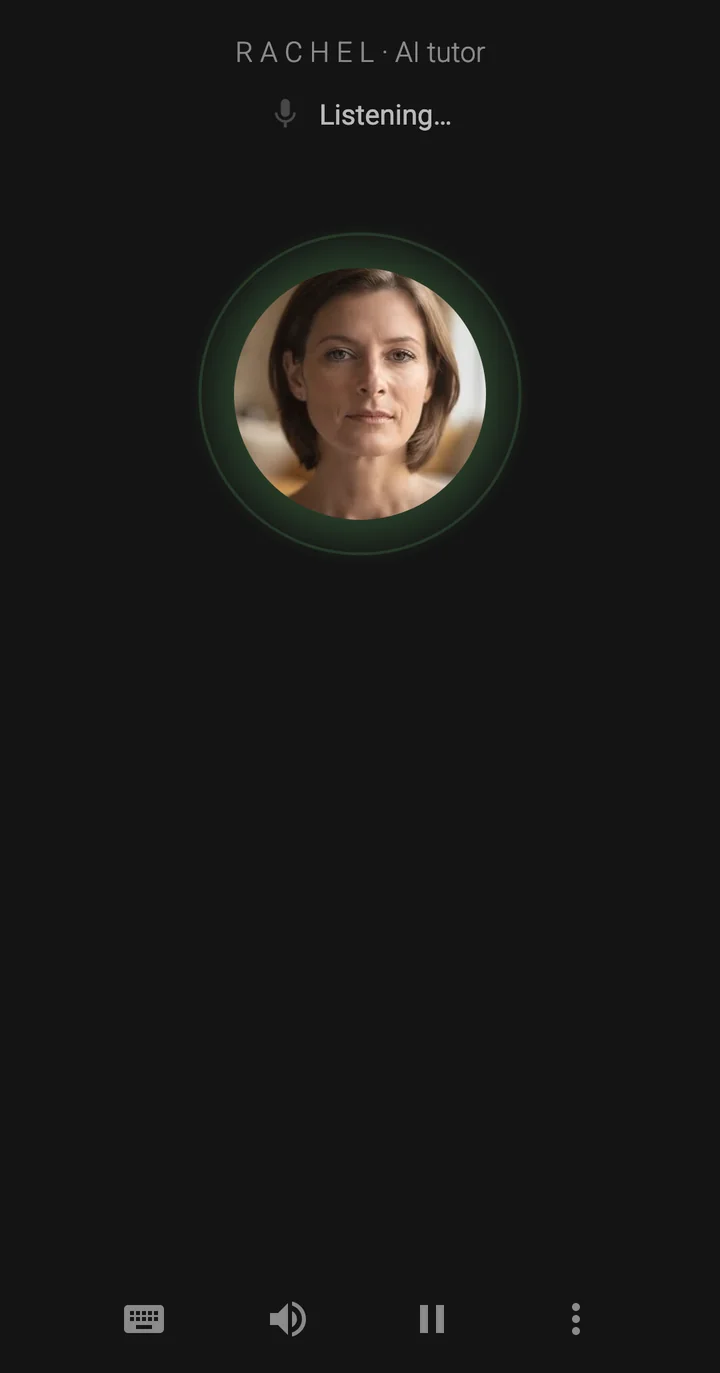
- 30 minutes a day with your tutor, on the free plan
- Remembers where you left off and what you've told your tutor about yourself
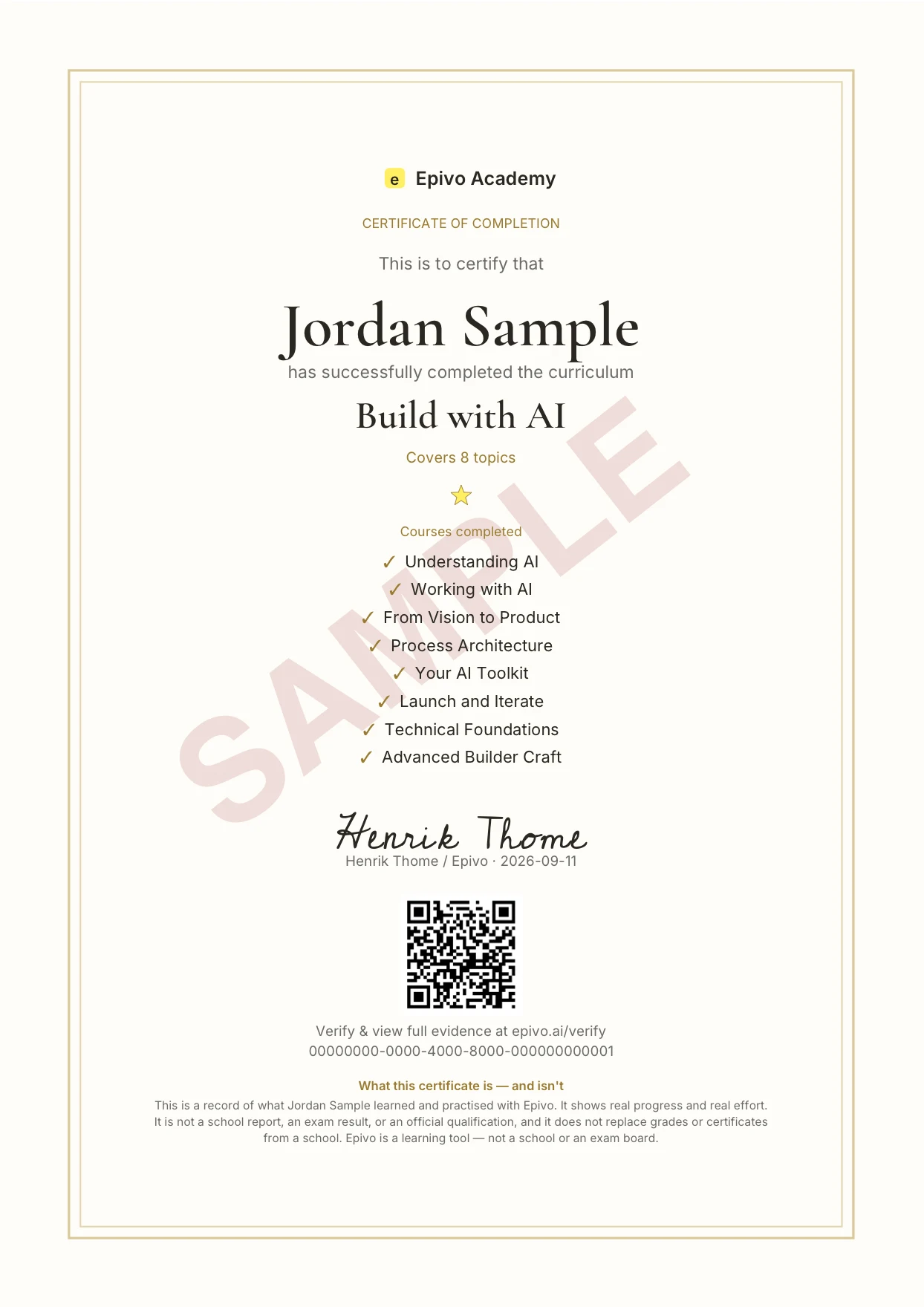
- Certificate included anyone can check it online
Why Epivo
Learn through engaging dialogue. Not through lectures.
Gain deeper understanding and stay capable in a changing world.
Free · No card · Android app
Start learning freeHow it works
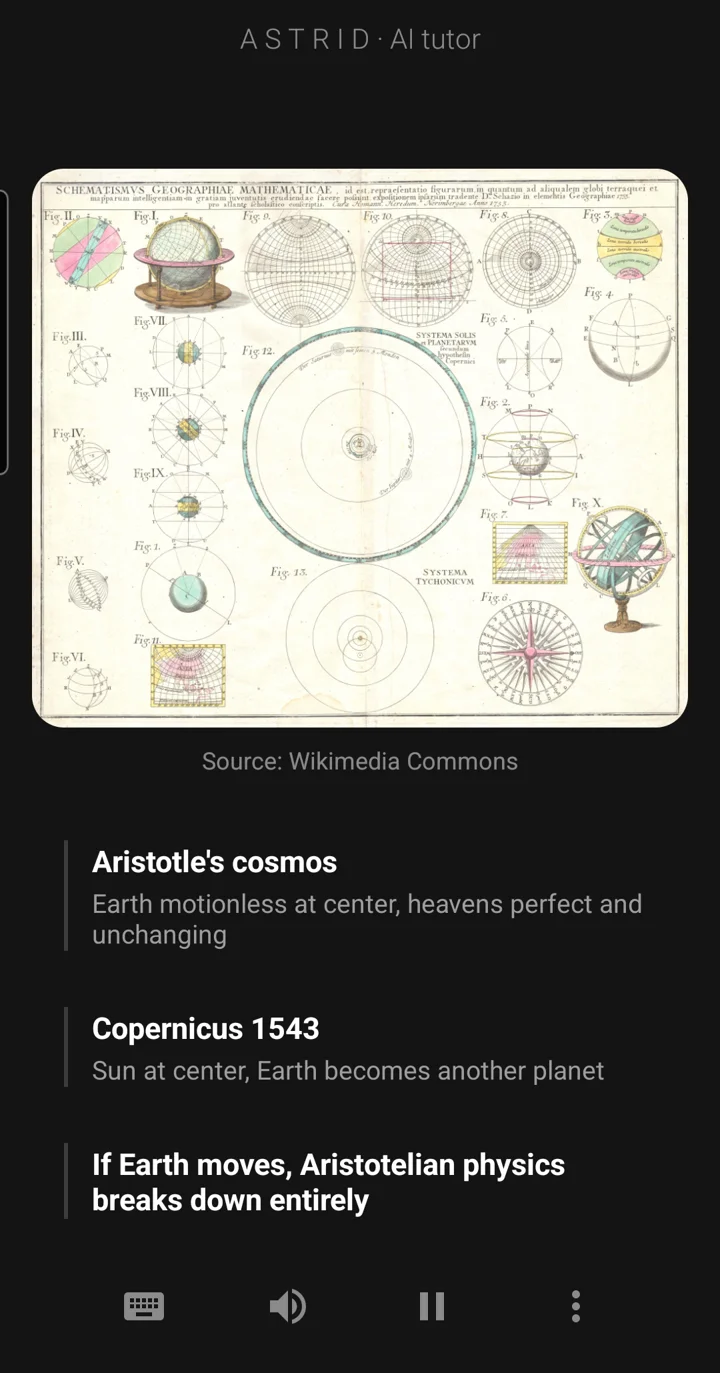
- Your tutor tells the story, a piece at a time, then hands you one small puzzle about why a thinker saw the world the way they did.
- You think it through, out loud or by typing. You don't need to know the answer: your tutor helps you along and tells you when you're close.
- Step by step, it adds up. Your tutor remembers your past sessions and picks up where you left off.
What you'll understand
- How the new science of Galileo shook what people thought they knew for certain
- How Descartes doubted everything he could, to find the one thing he couldn't
- Why Spinoza and Leibniz believed you could work out what the world is really like just by thinking
- How Locke and Hume traced every idea back to experience, and why Hume said no argument can show the sun must rise tomorrow
- How Hobbes, Locke and Rousseau argued that a government's authority comes from an agreement among the people it rules
You don't need to have read any philosophy first. See every course in Western philosophy →
Hear how an early modern philosophy lesson starts
Let's start in 1610. Galileo has just pointed a telescope at the night sky and seen moons circling Jupiter. For centuries, people trusted the old books about the heavens. So here's my first question for you. If the books could be that wrong, what else might be? Tell me what you think.
What it costs
Free
- 30 minutes a day with your tutor
- No card needed.
- Your first hour uses the Premium voice (once, not every day). After that your tutor speaks with the free voice, which runs on your phone. The lessons, the questions and your progress stay exactly the same.
- Certificates included.
- Want more time? Paid plans add more tutoring time and more Premium voice time. See plans and prices →
Finish with a certificate
Finish all the Western philosophy courses and earn a certificate anyone can check online. See a sample →
Questions
Is it really free?
Yes. Thirty minutes a day with your tutor, and no card. Paid plans add more time if you ever want it.
Is my tutor a real person?
No. Your tutor is an AI that talks with you, follows a planned course and remembers your past sessions.
How do I know the lessons are accurate?
Before written lesson material reaches you, an AI checks its key facts against independent published sources, and a second AI re-checks anything flagged. Your tutor is instructed to teach from that material and to tell you when unsure: an instruction, not a guarantee. And you can check for yourself: tap Sources in the lesson menu and pick a session to see what it drew on, including links to the original sources.
How is this different from asking ChatGPT?
ChatGPT answers what you ask. Your tutor leads the way: a planned route through the whole period, one question at a time, picking up where you left off.
Can I start with early modern philosophy?
Yes, just ask. Your tutor teaches all of Western philosophy, from ancient Greece on, and can take you straight to early modern philosophy, starting with a quick look back at the Middle Ages, then Copernicus and Galileo.
What is the difference between rationalism and empiricism?
Rationalists, like Descartes, Spinoza and Leibniz, held that reason on its own can establish truths about what exists. Empiricists, like Locke and Hume, held that every idea starts with experience. The course works through both sides, and why the stalemate between them pushed Kant toward a new approach.
Is it on iPhone?
Not yet. Epivo runs on Android today. Open this page on an iPhone and you can leave your email; we'll tell you when the iPhone app is ready.
One doubt changed everything. Uncover the rest together.
Your tutor teaches all of Western philosophy, from ancient Greece on. Want early modern philosophy first? Just ask, and your tutor can take you there, starting with a quick look back at the Middle Ages, then the new science of Copernicus and Galileo.
Free · No card · Android app
Start learning freeFree · No card
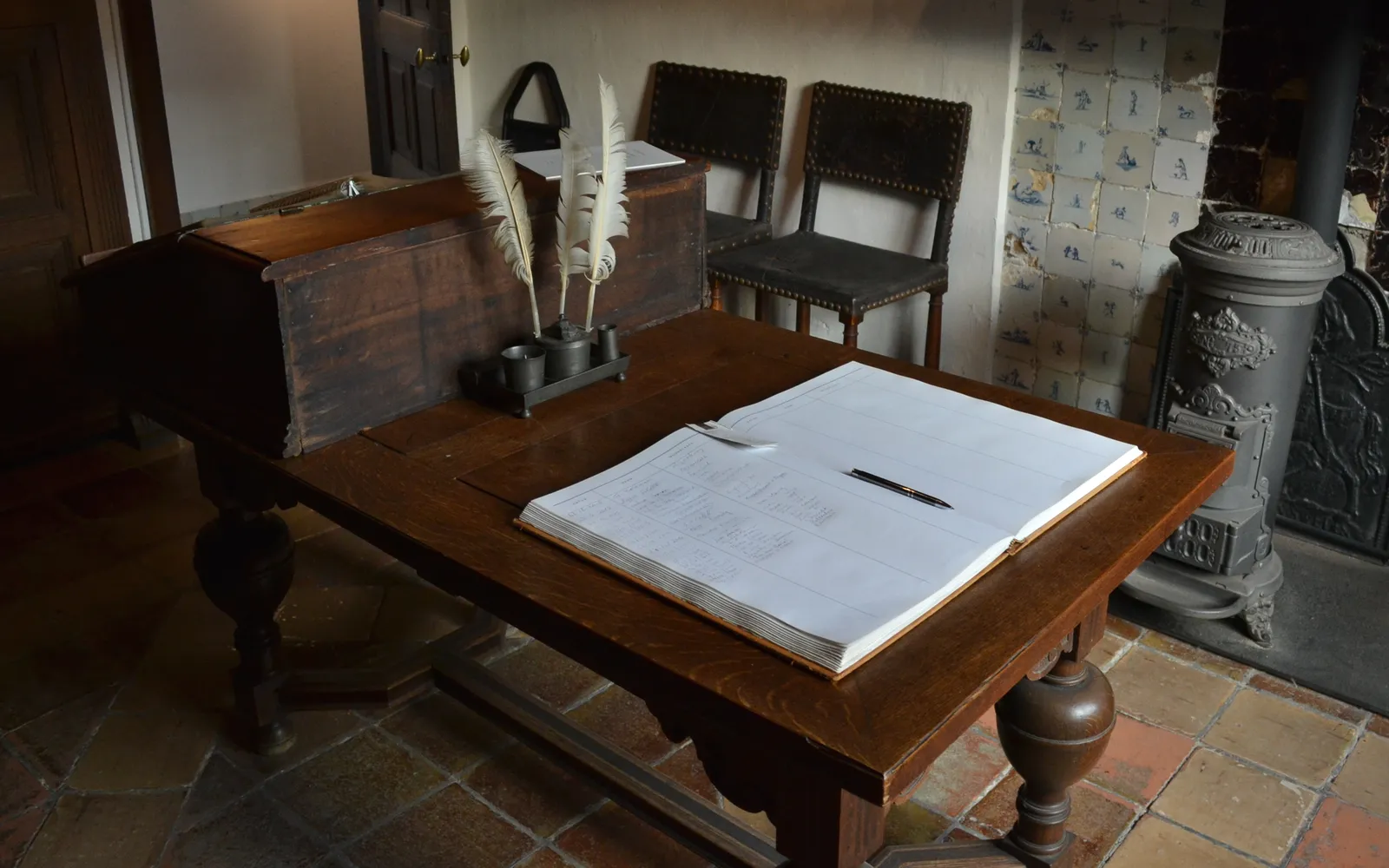
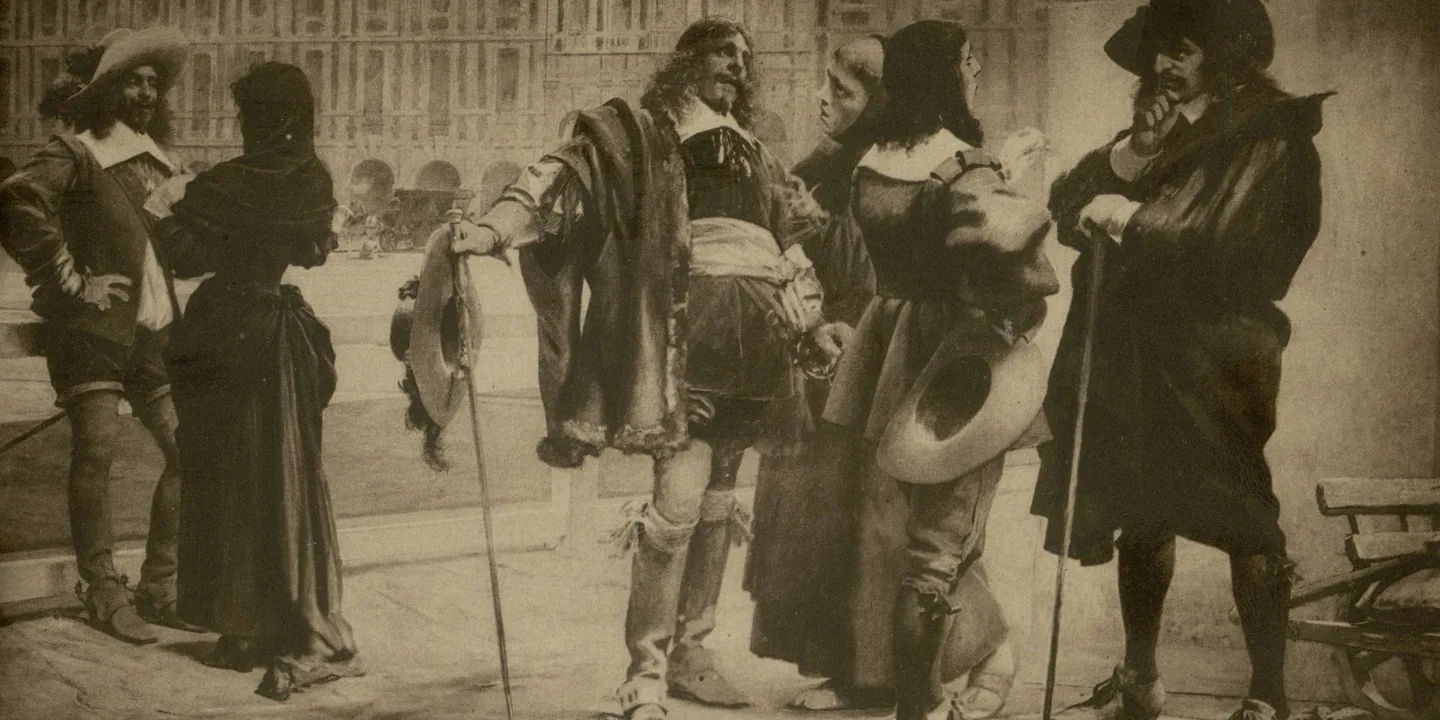
Image credits (all via Wikimedia Commons). Top: Théobald Chartran's mural in the Sorbonne, from an early twentieth-century postcard, Bibliothèque interuniversitaire de la Sorbonne, photographer unknown, CC BY-SA 4.0, cropped. Declaration of the Rights of Man and of the Citizen, 1789: Jean-Jacques-François Le Barbier (public domain), cropped. Spinoza's study as reconstructed in the Spinozahuis, Rijnsburg: MLWatts, CC BY-SA 4.0, cropped.

