How the universe works: How do you photograph something that swallows light?
Work it out in conversation with your own AI tutor in the Epivo app.

Free · No card · Android app
Start learning freeFree · No card · Opens Google Play (Android)
Get an email when the iPhone app is ready.
- 30 minutes a day with your tutor, on the free plan
- Remembers where you left off and what you've told your tutor about yourself
- Certificate included anyone can check it online
How it works
- Your tutor tells the story of a discovery, a piece at a time, then hands you one small puzzle: how could anyone know that?
- You think it through, out loud or by typing. You don't need to know the answer: your tutor helps you along and tells you when you're close.
- Step by step, it adds up. Your tutor remembers your past sessions and picks up where you left off.
What you'll understand
- Black holesWhat a black hole really is, what would happen if you fell into one, and how its shadow was first photographed in 2019
- The lives of starsWhy the Sun isn't on fire, how the biggest stars explode, where the iron in your blood was made, and why gold may come from two dead stars colliding
- Dark matterWhy stars at a galaxy's edge move too fast for the matter we can see: a clue to something no one has yet detected directly
- The Big BangWhy the night sky is dark, a simple question that leads back to the Big Bang and the oldest light in the universe
- Planets and other worldsWhy Venus is hotter than Mercury, which moons may hide oceans under their ice, and how we find planets circling other stars
You don't need any maths or science behind you. See all eight astronomy courses →
Hear a sample of how a lesson starts
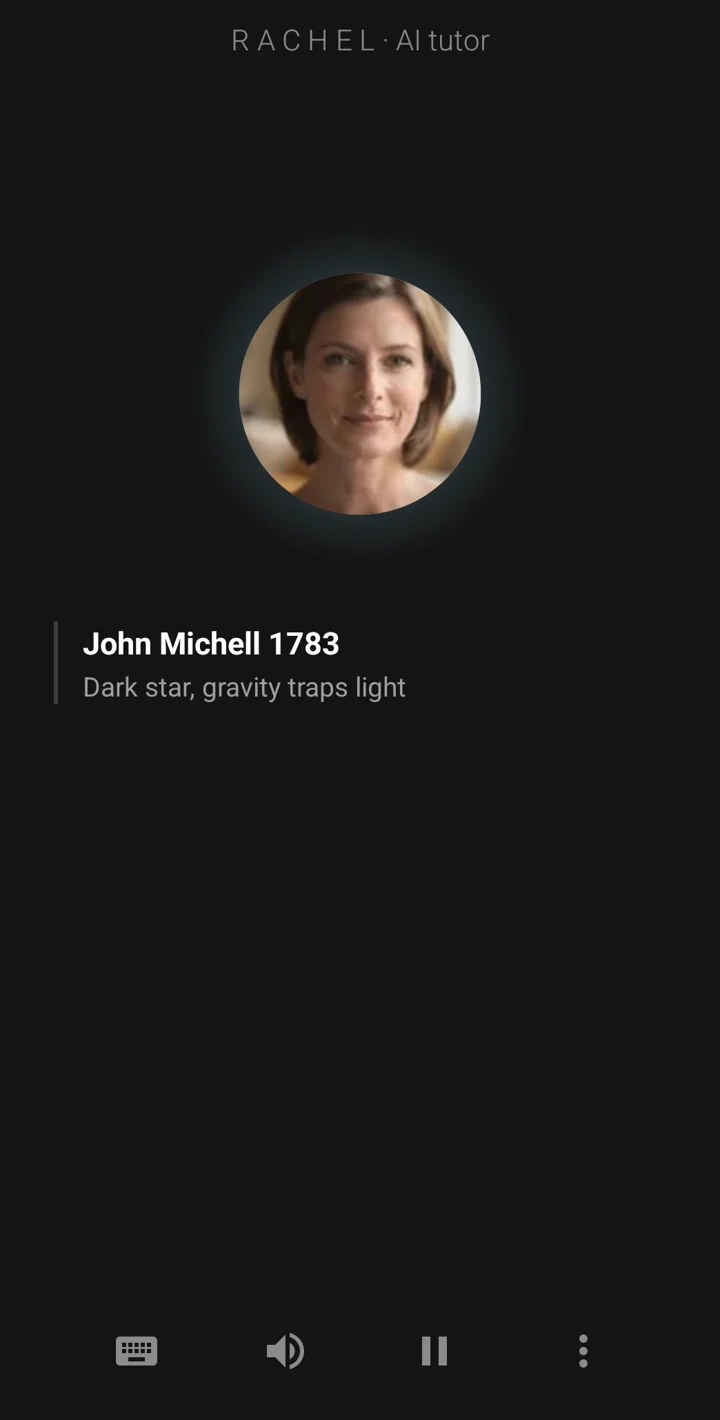
In 1783, an English country clergyman asked a strange question. Could a star be so heavy that it pulls back its own light? Today we call that a black hole. So here's my first question for you. If nothing can get out, how could we ever know one is there? Tell me what you think, and we'll work it out together.
What it costs
Free
- 30 minutes a day with your tutor
- No card needed.
- Your first hour uses the Premium voice (once, not every day). After that your tutor speaks with the free voice, which runs on your phone. The lessons, the questions and your progress stay exactly the same.
- Certificates included.
- Want more time? Paid plans add more tutoring time and more Premium voice time. See plans and prices →
Finish with a certificate
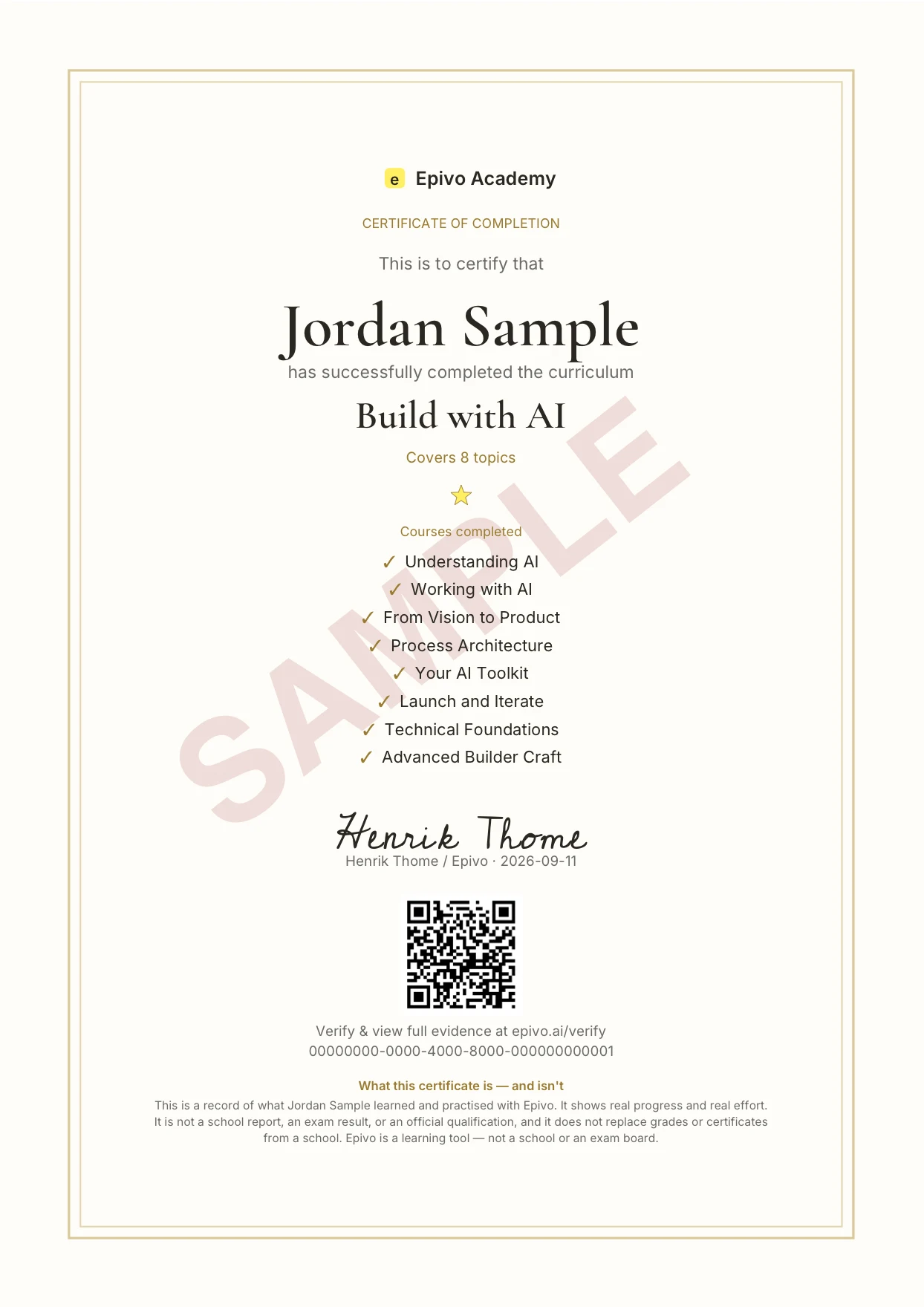
Finish all the astronomy courses and earn a certificate anyone can check online. See a sample →
Questions
Is it really free?
Yes. Thirty minutes a day with your tutor, and no card. Paid plans add more time if you ever want it.
Is my tutor a real person?
No. Your tutor is an AI that talks with you, follows a planned course and remembers your past sessions.
How do I know the lessons are accurate?
Before written lesson material reaches you, an AI checks its key facts against independent published sources, and a second AI re-checks anything flagged. Your tutor is instructed to teach from that material and to tell you when unsure: an instruction, not a guarantee. And you can check for yourself: tap Sources in the lesson menu and pick a session to see what it drew on, including links to the original sources.
How is this different from asking ChatGPT?
ChatGPT answers what you ask. Your tutor leads the way: a planned route that starts with black holes and goes on through stars, galaxies and planets, one question at a time, picking up where you left off.
Do I need to be good at maths?
No. Your tutor explains each idea in plain language, with comparisons you can picture, and checks you're following before moving on. You'll understand how the universe works without a single calculation.
Can I start with the Big Bang, or the planets?
Yes, just ask. Your tutor can take you there after a short recap of what came just before. Otherwise, once you've said you'd like to learn astronomy, you begin with black holes.
Is it on iPhone?
Not yet. Epivo runs on Android today. Open this page on an iPhone and you can leave your email; we'll tell you when the iPhone app is ready.
Begin with a black hole. Work out the rest together.
Tell your tutor you'd like to learn astronomy, and your first lesson starts at the edge of a black hole.
Free · No card · Android app
Start learning freeFree · No card
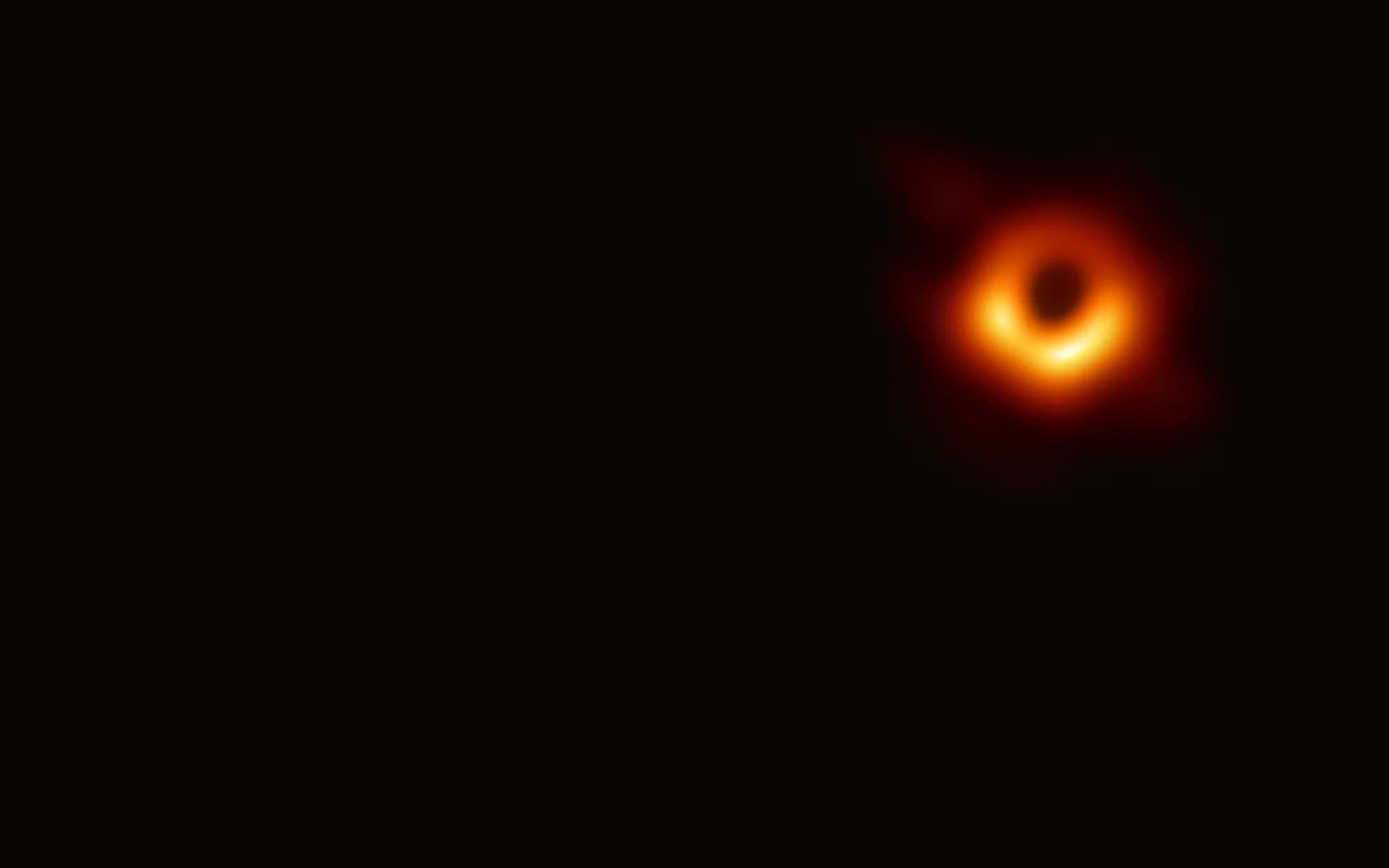
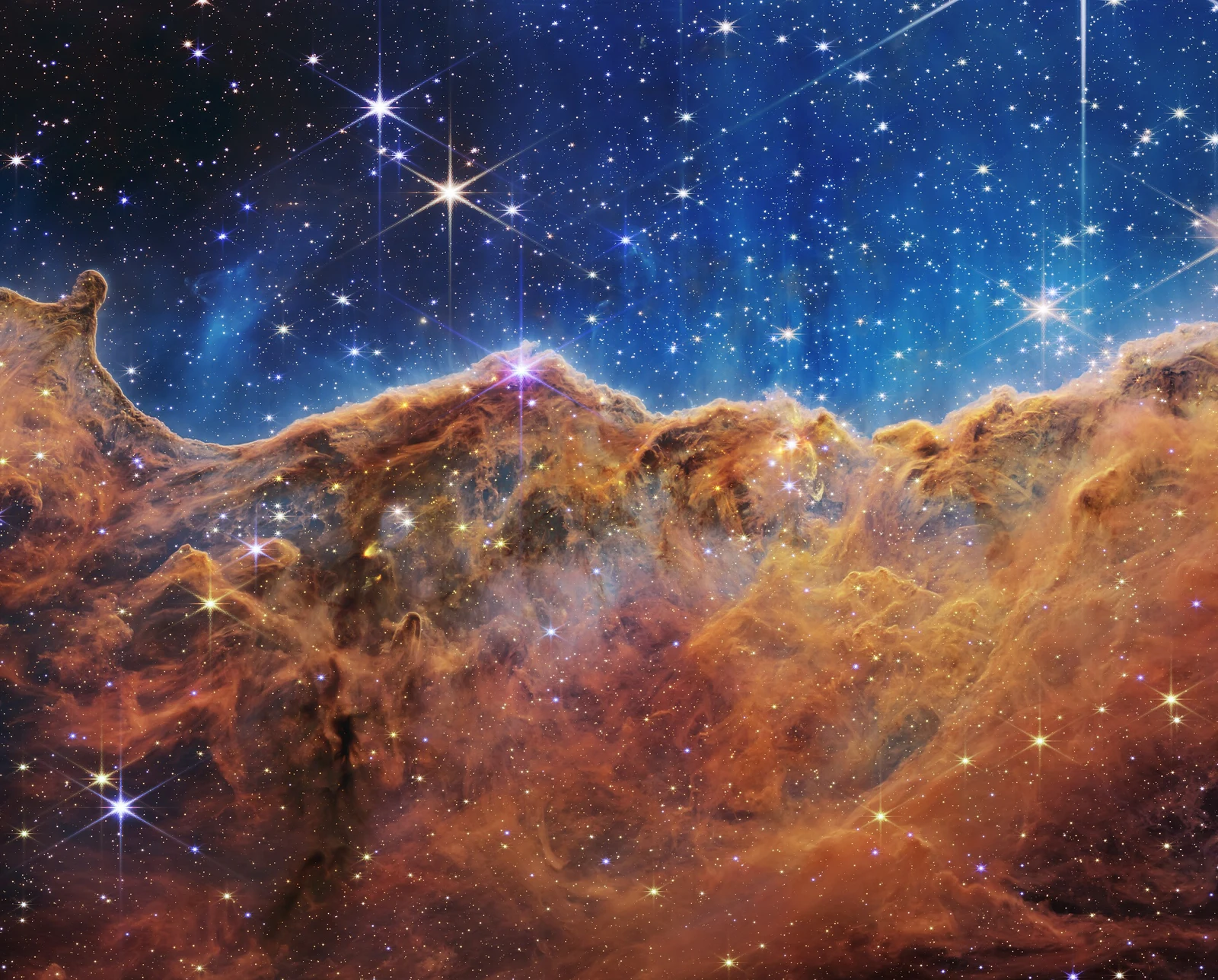
Photo credits. The Cosmic Cliffs in the Carina Nebula, James Webb Space Telescope: NASA, ESA, CSA, STScI (public domain), cropped. The black hole at the centre of galaxy M87, Event Horizon Telescope: EHT Collaboration, CC BY 4.0, resized, cropped and extended.

