IGCSE English tutor: Can your teenager see what a writer is really doing, and point to the words that prove it?
Your child learns by talking it through with their own AI tutor in the Epivo app.
Free · No card · No in-app purchases · Then connect your child's Android phone with a code
Get an email when the iPhone app is ready.

- 30 minutes a day for each child you add, on the free plan
- Remembers where they left off and what your child has told the tutor
- Certificate included anyone can check it online
How it works
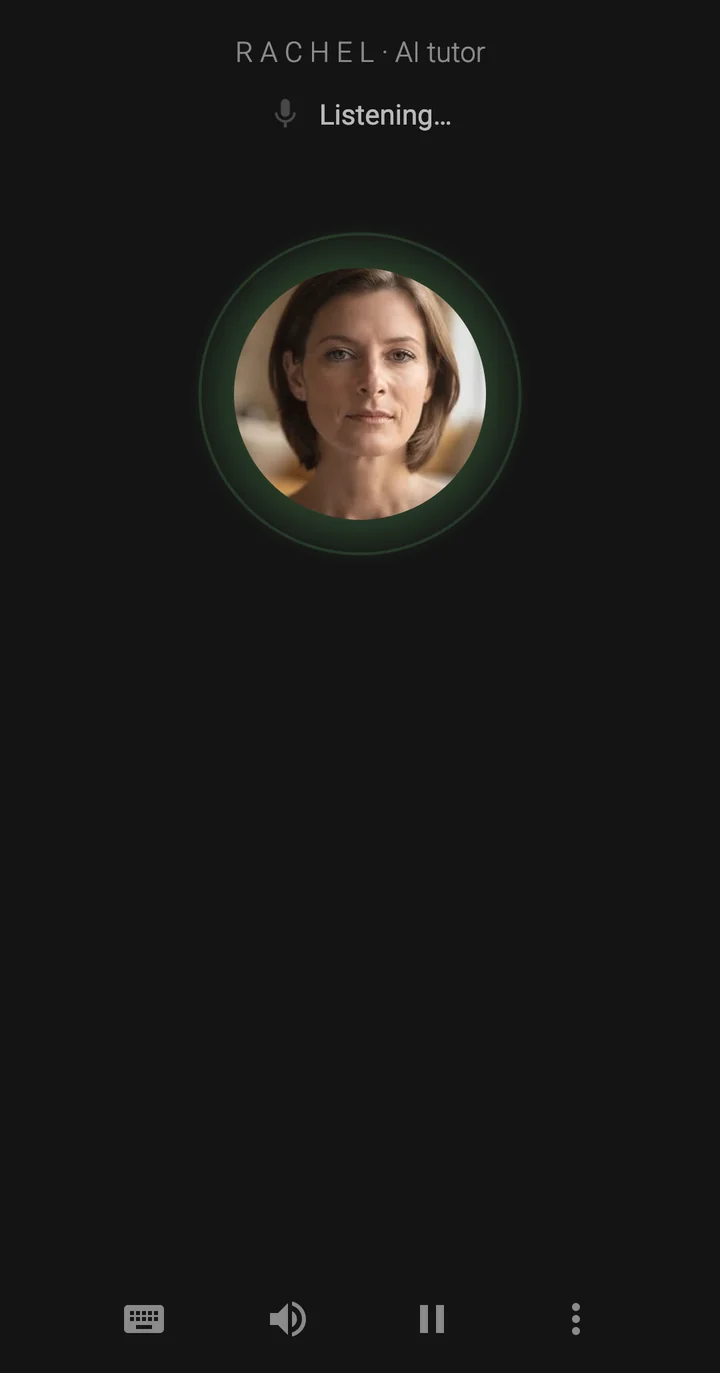
- The tutor takes a topic a piece at a time, then hands your child one small puzzle to work out.
- Your child thinks it through, out loud or by typing. They don't need to know the answer: the tutor helps them along and tells them when they're close.
- Step by step, it adds up. The tutor remembers your child's past sessions and picks up where they left off. Once your child's app is connected to your free parent account at app.epivo.ai, you can follow along there.
What your child will learn
- Grade 10How to work out what a writer only hints at, and point to the words that show it
- Grades 9–10How to see what a writer's word choices do to a reader
- Grade 9How to judge whether a source can be trusted, and pull ideas together from several texts
- Grade 9How to turn notes on a passage into a short, clear summary
- Grades 9–10How to write in the format a task asks for, and answer what was actually asked
This is Epivo's own International curriculum. It isn't a Cambridge course, Cambridge doesn't endorse it, and it doesn't promise to cover the IGCSE syllabus or prepare your child for the exam. Your child tells the tutor their grade, chooses International, and starts on that grade's courses. See the full curriculum →
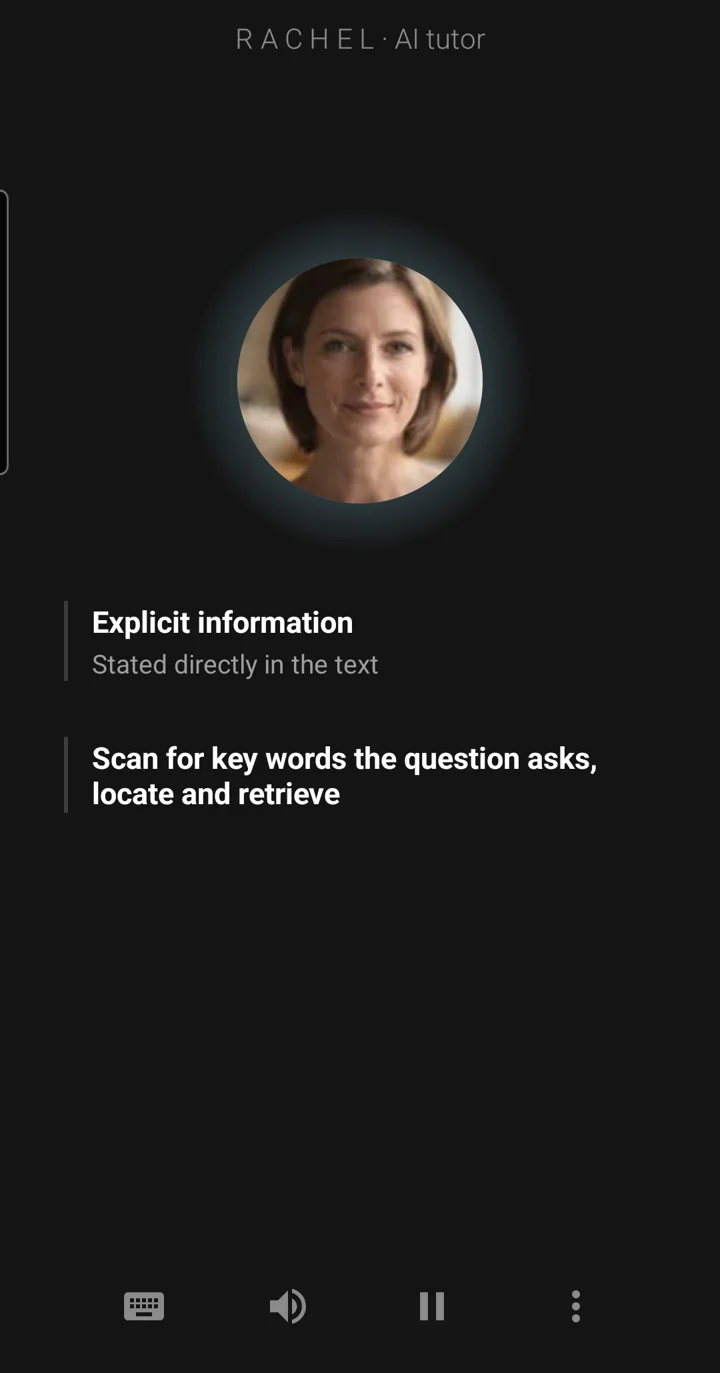
Hear how an English lesson starts
Let's start with a question writers think about all the time. Imagine two adverts for the same running shoes: one lists the facts, the other tells a story about a runner at dawn. Which one makes you want them more? Tell me which, and we'll work out what the writer did to make that happen.
What it costs
Free
- 30 minutes a day for each child you add
- No card needed.
- Each child's first hour uses the Premium voice (once, not every day). After that the tutor speaks with the Free voice, which runs on your child's phone. The lessons, the questions and their progress stay exactly the same.
- Certificates included.
- Want more time? Paid plans add more tutoring time and more Premium voice time, per child. See plans and prices →
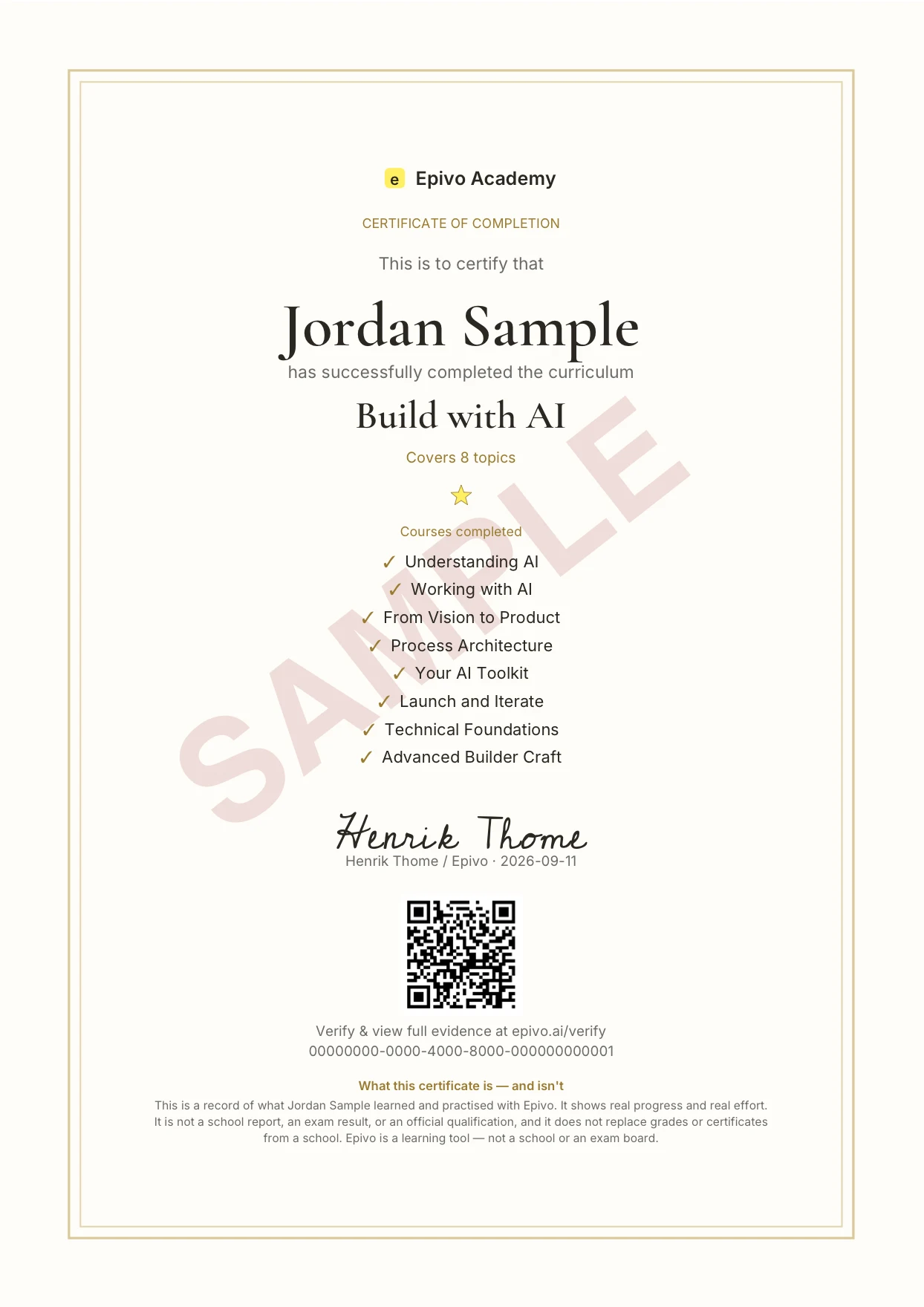
Finish with a certificate
When your child completes their whole curriculum, they earn a certificate that anyone you share it with can check online: a record of what they've learned. See a sample →
Questions
How much screen time is it?
On the free plan, up to 30 minutes a day for each child. When the time is used up, the session ends. You can't set a shorter limit in Epivo yourself, though Android's Family Link can limit the phone as a whole. Paid plans add more time, and you only pay if you choose one: nothing can be bought inside the app.
How do I set it up?
Create your free parent account at app.epivo.ai and add your child. Your parent account then shows a code: scan it with your child's Android phone, and it installs Epivo from Google Play if needed and connects the app to your account. Epivo runs on Android phones today; the iPhone app is on its way.
How do I know the lessons are accurate?
Before written lesson material reaches your child, an AI checks its key facts against independent published sources, and a second AI re-checks anything flagged. The tutor is instructed to teach from that material and to say when unsure: an instruction, not a guarantee. And you can check for yourself: your child can tap Sources in the lesson menu and pick a session to see what it drew on, including links to the original sources, and in your parent account you can read each topic's written lesson, where there is one, and its sources.
How is this different from asking ChatGPT?
ChatGPT answers what your child asks. The tutor leads the way: a planned route through the course, one question at a time, picking up where they left off. Your child does the thinking, and once their app is connected to your account, you can see what they covered.
Does my child need my permission?
It depends on your child's age and the country we record for them, which stays the same even if they travel or move. The law sets an age below which a parent must agree: 13 in the US, the UK and Sweden, 16 in Germany and Ireland, for example. If we can't tell which country that is, we use 16. If you add your child in your parent account with their date of birth, you give consent there for any child under 16, because we don't know their country yet. If your child tells the tutor an age below that age, the tutor won't teach until you approve, from an emailed link or by scanning a code shown in the app.
What can I see as a parent?
Once your child's app is connected to your parent account, you can see which topics they've started, which they've shown they understand and which need a review. You can see each session's topic, date and length, and read the conversation itself. You choose their courses and their tutor there too. All of this stops when your child turns 18: from then on, their learning is their own.
Is it safe for my child?
Your child talks only with AI characters, their tutor and a storyteller, and the app says "AI tutor" beside the tutor's name. There are no other people to chat with and no ads. The tutor is instructed to stay on the lesson, refuse harmful requests and keep the conversation suited to your child's age. If your child seems upset, the tutor is instructed to answer kindly and suggest talking to a trusted adult, and where we know their country, the tutor may give them a children's helpline number. If anything the tutor says worries you, tap Report issue in the app and it comes to us. We don't use your child's conversations to train AI models, and their voice isn't stored.
Which curriculum does my child follow?
This is Epivo's own International curriculum. It isn't a Cambridge course, Cambridge doesn't endorse it, and it doesn't promise to cover the IGCSE syllabus or prepare your child for the exam. Its English courses for grades 9 and 10 are for the same ages as most IGCSE students, 14 to 16, and cover many of the topics IGCSE students meet: reading closely, finding evidence, judging sources, summarising and writing for a set task. Your child starts on the courses for their school grade. In the British system, Year 10 is about Grade 9 and Year 11 about Grade 10. Their certificate is a learning record, not an official qualification.
Can my child practise IGCSE past papers in Epivo?
No. Epivo has no Cambridge past papers. Some lessons mention what examiners look for, but the course isn't exam practice: it builds the reading and writing skills underneath.
Help your child read closely and write with purpose.
Let your teenager read like a writer.

- Free
- No card
- Android app
Free · No card · No in-app purchases

Photo credits (via Wikimedia Commons). Taking notes with a pencil: Thought Catalog, CC0, cropped. The La Trobe Reading Room, State Library of Victoria, Melbourne: DP Singh Bhullar, CC BY-SA 4.0, cropped.

