Imperialism course: How did a few small countries in Europe come to rule so much of the world?
Work it out in conversation with your own AI tutor in the Epivo app.

Free · No card · Android app
Start learning freeFree · No card · Opens Google Play (Android)
Get an email when the iPhone app is ready.
- 30 minutes a day with your tutor, on the free plan
- Remembers where you left off and what you've told your tutor about yourself
- Certificate included anyone can check it online
Why Epivo
Learn through engaging dialogue. Not through lectures.
Gain deeper understanding and stay capable in a changing world.
Free · No card · Android app
Start learning freeHow it works
- Your tutor tells the story, a piece at a time, then hands you one small puzzle about why it happened.
- You think it through, out loud or by typing. You don't need to know the answer: your tutor helps you along and tells you when you're close.
- Step by step, it adds up. Your tutor remembers your past sessions and picks up where you left off.
What you'll understand
- Before the empiresWhat the world was like before European empires spread: Mali, the Inca, the Mughals and the Ottomans at their height
- 1492–1600Why disease did more of the killing in the Americas than soldiers did, and what the conquered recorded about it
- 1500–1888The Atlantic slave trade through the people who lived it, and the revolution in Haiti that ended slavery there
- 1600–1947How a British trading company came to rule India, and how India won its independence in 1947
- 1800–1948How the Ottoman lands were divided after the First World War, through promises that contradicted each other, and why those borders still matter
You don't need to know anything first. The course begins in West Africa. See the full course →
Hear a sample of how a lesson starts
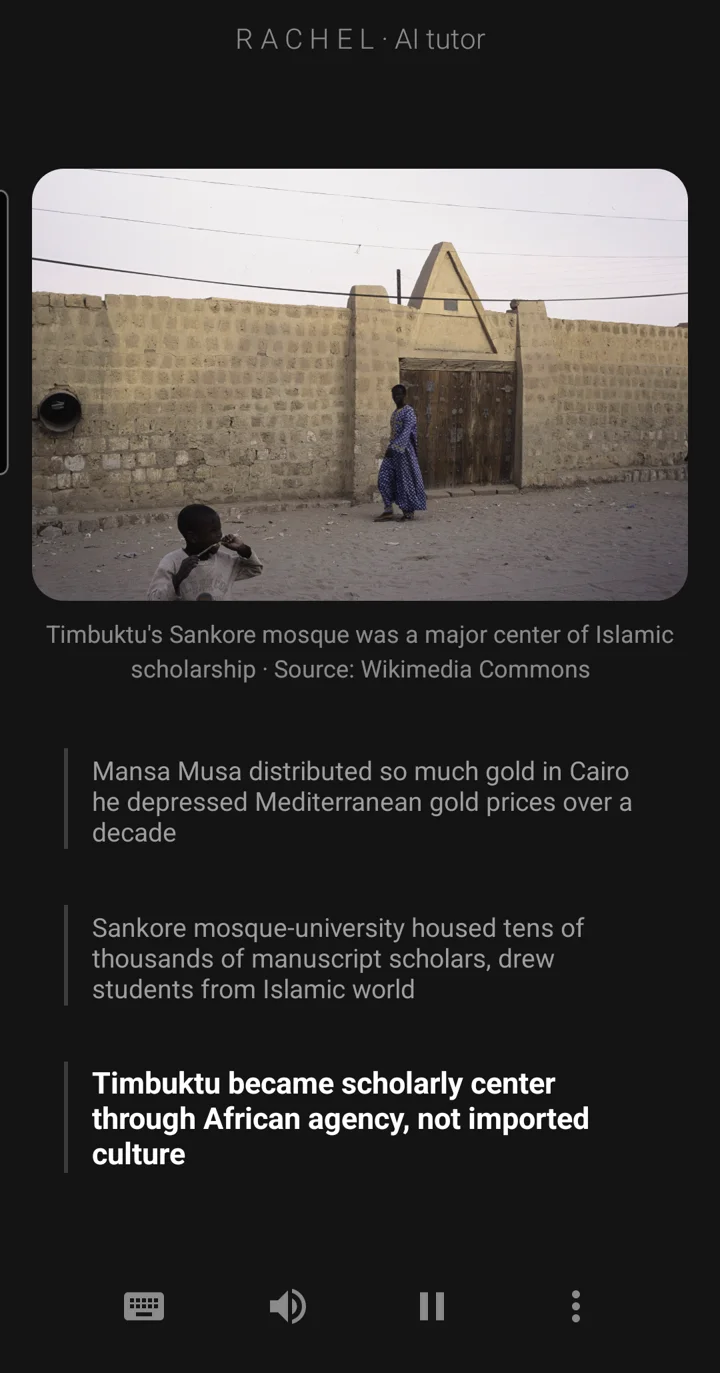
Let's start in West Africa, in 1324. Mansa Musa, the ruler of Mali, sets off for Mecca carrying so much gold that its price in Cairo falls for years. So here's my first question for you. How do you think Mali became that rich? Tell me your guess, and we'll find out together.
What it costs
Free
- 30 minutes a day with your tutor
- No card needed.
- Your first hour uses the Premium voice (once, not every day). After that your tutor speaks with the free voice, which runs on your phone. The lessons, the questions and your progress stay exactly the same.
- Certificates included.
- Want more time? Paid plans add more tutoring time and more Premium voice time. See plans and prices →
Finish with a certificate
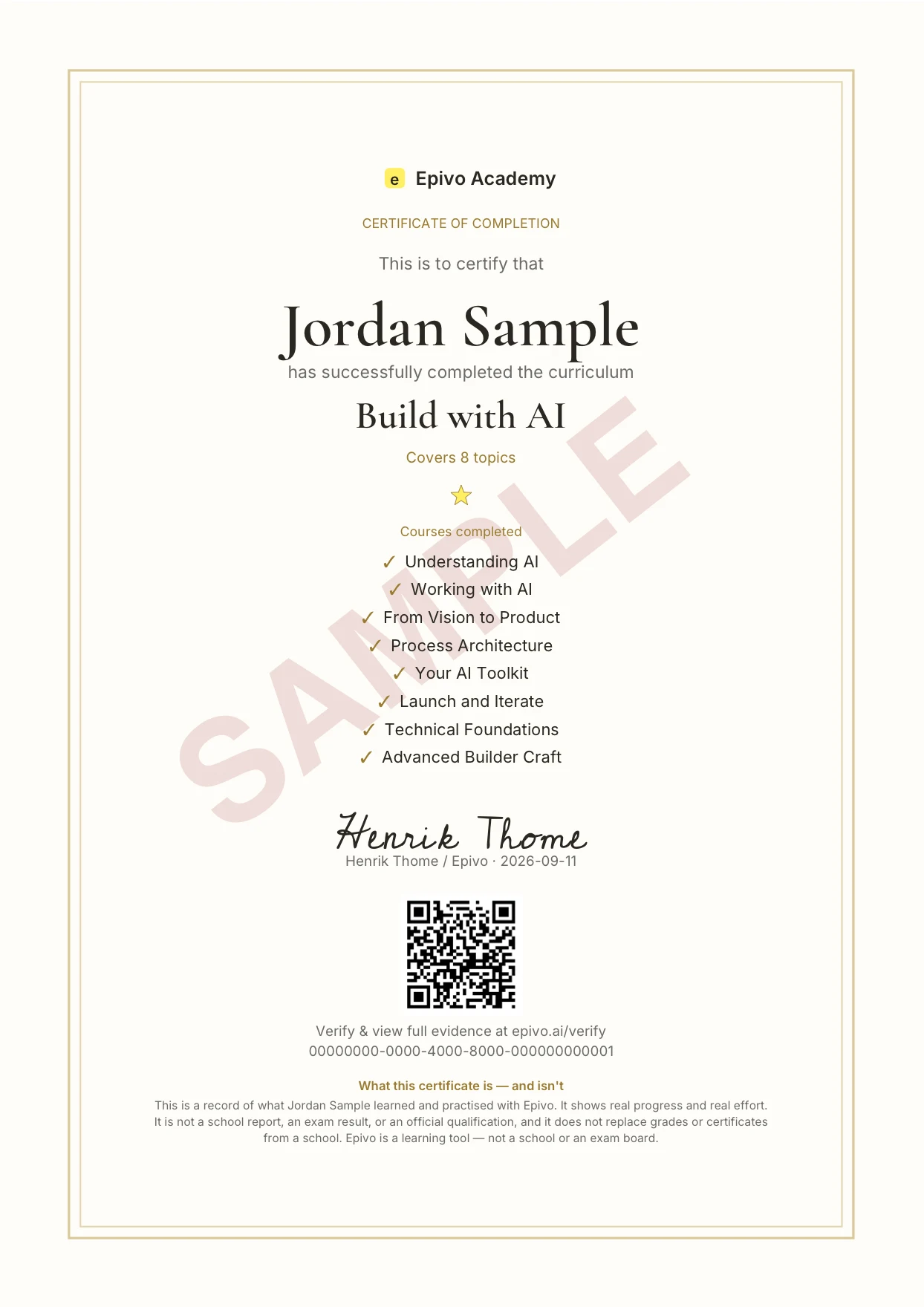
Finish all the courses on the era of imperialism and earn a certificate anyone can check online. See a sample →
Questions
Is it really free?
Yes. Thirty minutes a day with your tutor, and no card. Paid plans add more time if you ever want it.
Is my tutor a real person?
No. Your tutor is an AI that talks with you, follows a planned course and remembers your past sessions.
How do I know the lessons are accurate?
Before written lesson material reaches you, an AI checks its key facts against independent published sources, and a second AI re-checks anything flagged. Your tutor is instructed to teach from that material and to tell you when unsure: an instruction, not a guarantee. And you can check for yourself: tap Sources in the lesson menu and pick a session to see what it drew on, including links to the original sources.
How is this different from asking ChatGPT?
ChatGPT answers what you ask. Your tutor leads the way: a planned route through the history of empire, one question at a time, picking up where you left off.
Does it include the people who lived under empire?
Yes. The course starts with the people who lived under empire: the civilisations that were already there, and how people resisted, wrote back and won their independence. Where historians still disagree, your tutor shows you the debate and asks what you make of it.
Does it look at how empires made money?
Yes. You follow the money, from the silver of Potosí and the sugar plantations of the Caribbean to the East India Company, and ask who paid for Europe's new wealth.
Is it on iPhone?
Not yet. Epivo runs on Android today. Open this page on an iPhone and you can leave your email; we'll tell you when the iPhone app is ready.
Start in Mali. Uncover the rest together.
Your first lesson opens in 1324, as Mansa Musa sets off for Mecca with Mali's gold.
Free · No card · Android app
Start learning freeFree · No card

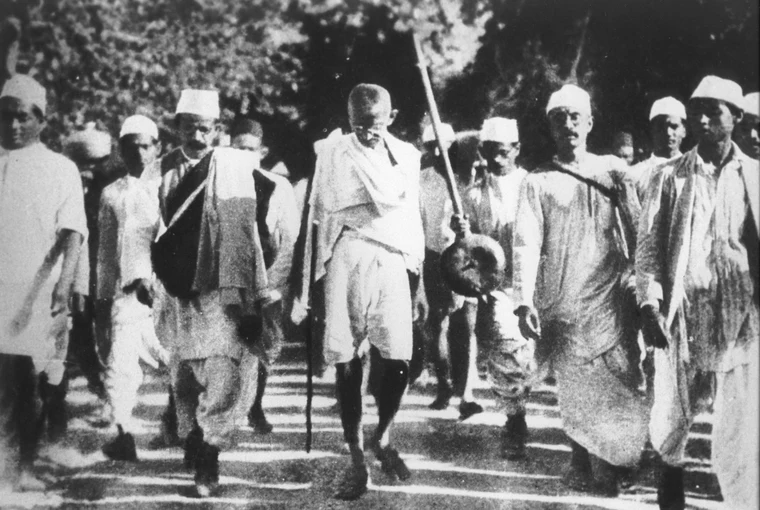
Photo credits (all via Wikimedia Commons). The Salt March, 1930: unknown photographer (public domain). Dome of the Süleymaniye Mosque, Istanbul: Ggia, CC BY-SA 3.0, cropped. Olaudah Equiano, frontispiece of his autobiography, 1789: engraving by Daniel Orme (public domain). Jawaharlal Nehru speaking at independence, August 1947: unknown photographer (public domain). The Great Mosque of Djenné, Mali, 2021: Ondřej Havelka, CC BY-SA 4.0, cropped.
