Palestine history course: How did one small piece of land come to matter so much to so many people?
Work it out in conversation with your own AI tutor in the Epivo app.

Free · No card · Android app
Start learning freeFree · No card · Opens Google Play (Android)
Get an email when the iPhone app is ready.
- 30 minutes a day with your tutor, on the free plan
- Remembers where you left off and what you've told your tutor about yourself
- Certificate included anyone can check it online
Why Epivo
Learn through engaging dialogue. Not through lectures.
Gain deeper understanding and stay capable in a changing world.
Free · No card · Android app
Start learning freeHow it works
- Your tutor tells the story, a piece at a time, then hands you one small puzzle about what happened and why.
- You think it through, out loud or by typing. You don't need to know the answer: your tutor helps you along and tells you when you're close.
- Step by step, it adds up. Your tutor remembers your past sessions and picks up where you left off.

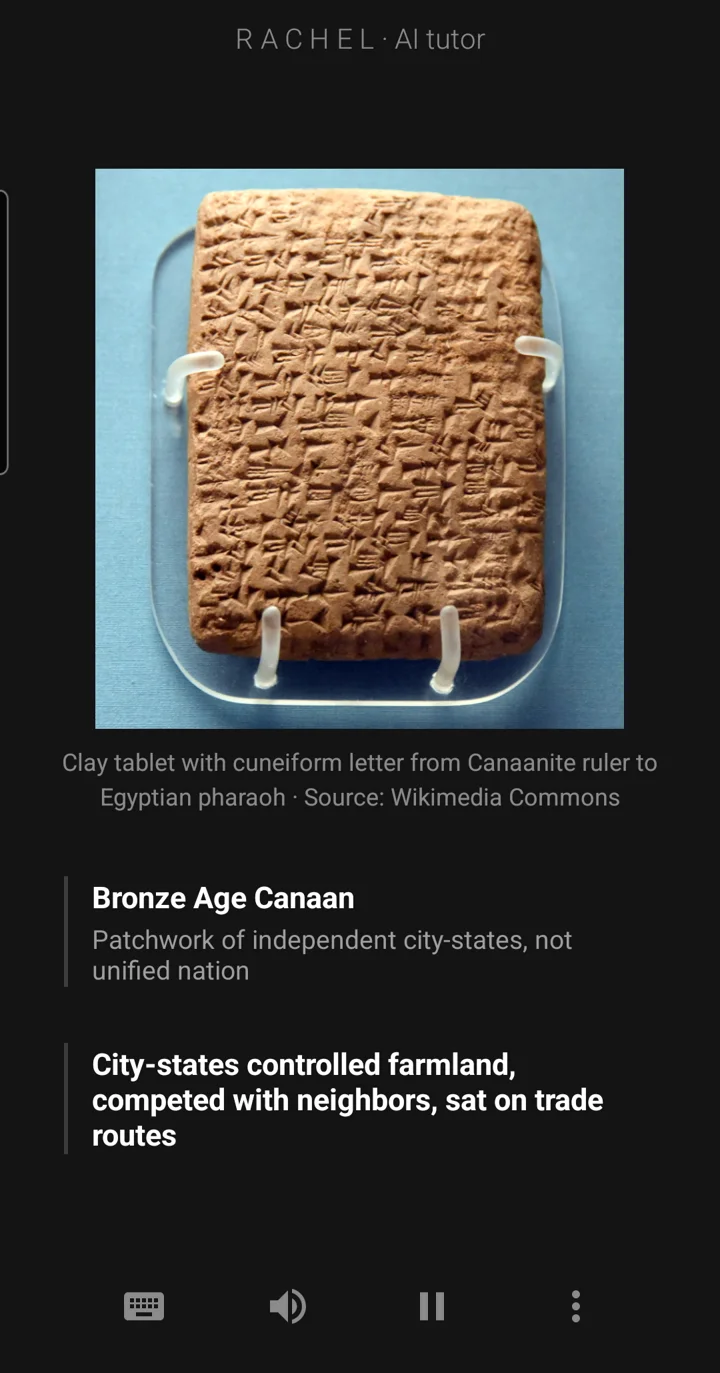
What you'll understand
- 3000 BCE–1516Who has lived in this land since the Canaanite cities, and why so many peoples wanted it
- 1516–1917How life ran under the Ottomans, in towns, villages and land law, and how new national movements took shape
- 1917–1948What Britain promised during the First World War, how it ruled under the Mandate, and how the 1947 partition plan ended in war
- 1948The 1948 war and the Nakba, when around 700,000 to 750,000 Palestinians became refugees, and why historians still argue over what caused it
- 1948–todayExile and diaspora, occupation after 1967, the intifadas, the Oslo talks and Gaza, and how this history has been written
You don't need to know anything first. The course begins with the Canaanite cities, around 3000 BCE. See the full course →
Hear a sample of how a lesson starts
Let's start five thousand years ago, with the Canaanite cities of this land. People here farmed, traded and built walled towns. So here's my first question for you. What do you think made this narrow strip of land worth settling? Tell me your guess, and we'll see where it leads.
What it costs
Free
- 30 minutes a day with your tutor
- No card needed.
- Your first hour uses the Premium voice (once, not every day). After that your tutor speaks with the free voice, which runs on your phone. The lessons, the questions and your progress stay exactly the same.
- Certificates included.
- Want more time? Paid plans add more tutoring time and more Premium voice time. See plans and prices →
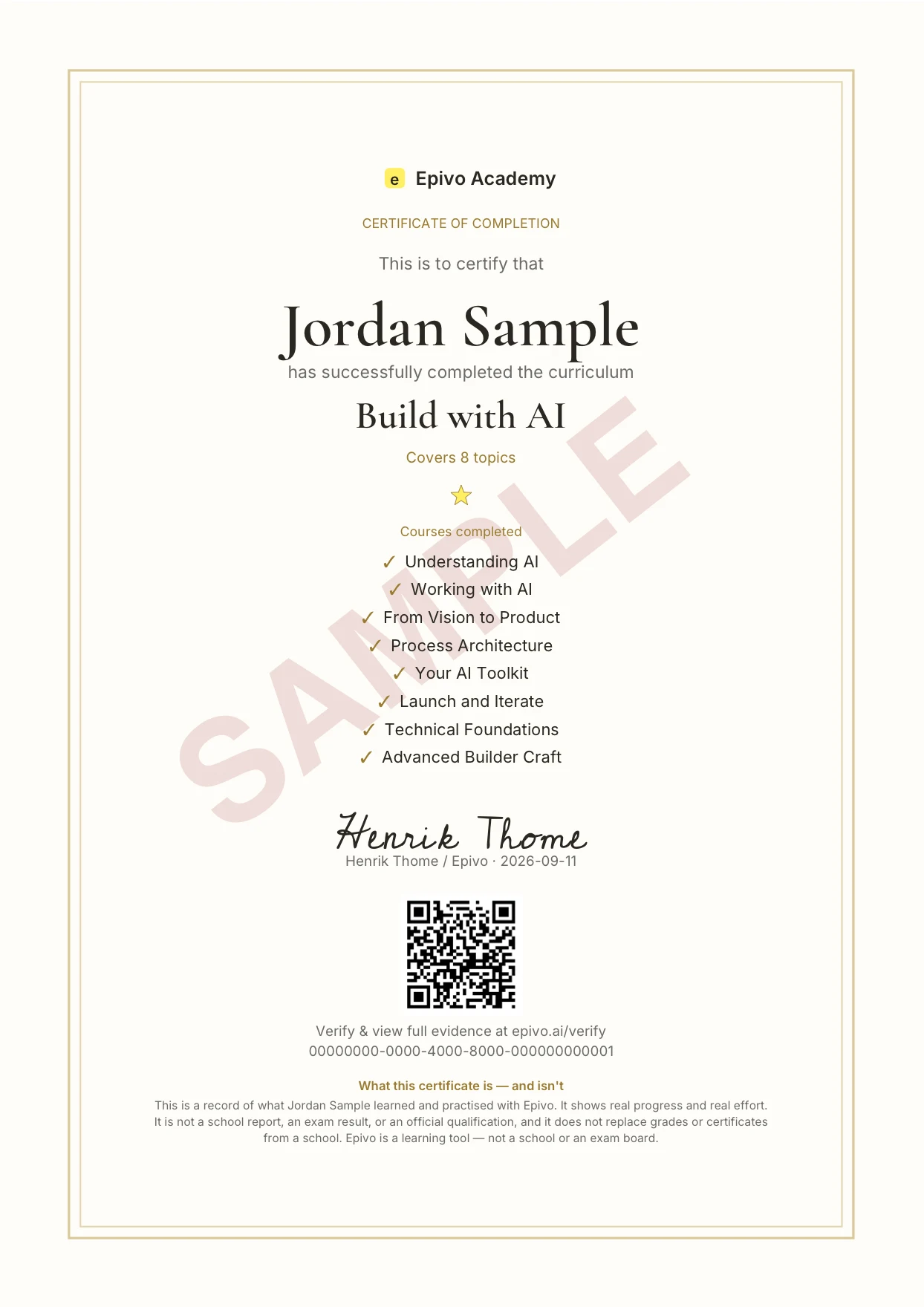
Finish with a certificate
Finish all the courses on the history of Palestine and earn a certificate anyone can check online. See a sample →
Questions
Is it really free?
Yes. Thirty minutes a day with your tutor, and no card. Paid plans add more time if you ever want it.
Is my tutor a real person?
No. Your tutor is an AI that talks with you, follows a planned course and remembers your past sessions.
How do I know the lessons are accurate?
Before written lesson material reaches you, an AI checks its key facts against independent published sources, and a second AI re-checks anything flagged. Your tutor is instructed to teach from that material and to tell you when unsure: an instruction, not a guarantee. And you can check for yourself: tap Sources in the lesson menu and pick a session to see what it drew on, including links to the original sources.
How is this different from asking ChatGPT?
ChatGPT answers what you ask. Your tutor leads the way: a planned route through the whole history, one question at a time, picking up where you left off.
How far back does it go?
To around 3000 BCE and the Canaanite cities, then forward through the kingdoms of Israel and Judah, Babylonian, Hellenistic, Roman, Byzantine, Islamic, Crusader, Mamluk, Ottoman and British rule to the present.
Does it cover the questions people still argue about?
Yes. The course is written mainly from Palestinian and revisionist scholarship, such as Rashid Khalidi's. On 1948 it also sets out the traditional Israeli account beside the historians who challenge it, such as Avi Shlaim and Ilan Pappé, and asks what you make of the evidence.
Is it on iPhone?
Not yet. Epivo runs on Android today. Open this page on an iPhone and you can leave your email; we'll tell you when the iPhone app is ready.
Start five thousand years back. Uncover the rest together.
Your first lesson opens with the Canaanite cities of the Bronze Age, and the course runs to today.
Free · No card · Android app
Start learning freeFree · No card
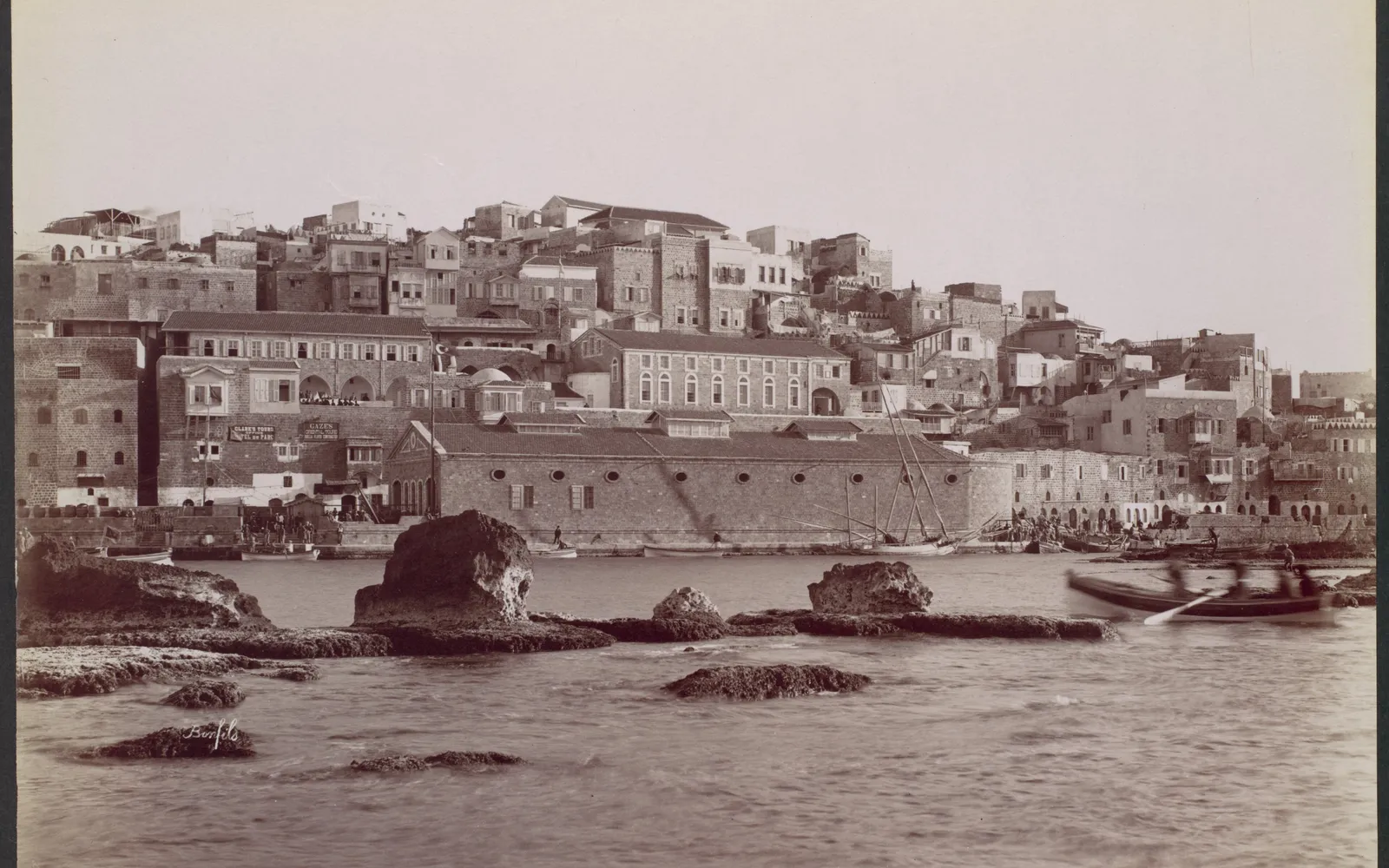
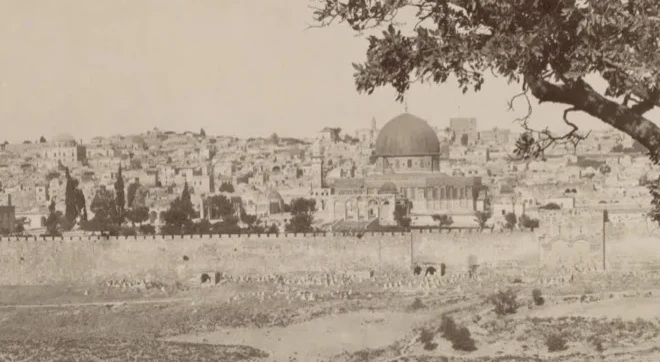
Photo credits. Jerusalem from the Mount of Olives, late 19th century: Félix Bonfils, Rijksmuseum, via Wikimedia Commons (public domain, cropped). Panorama of Jaffa, about 1880: Félix Bonfils, Metropolitan Museum of Art, CC0 1.0, cropped.
