Types of Misleading Information
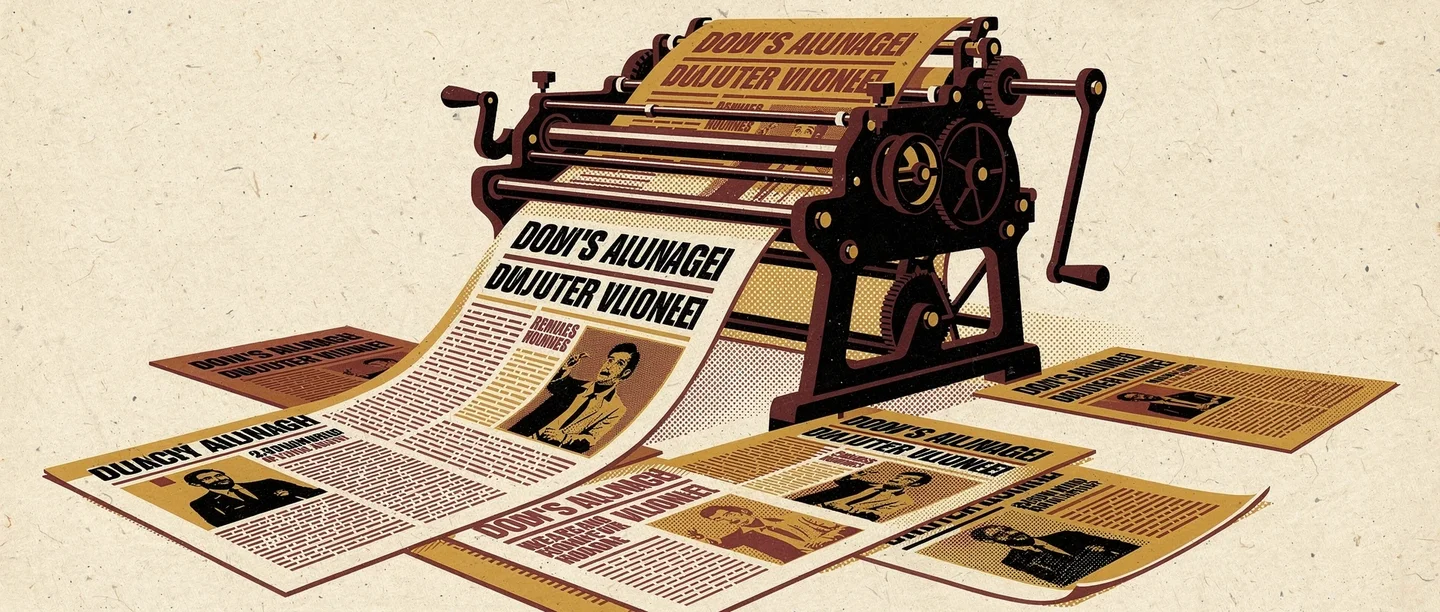
Not all false information is the same. Researchers distinguish between types based on intent and accuracy.
Disinformation
Disinformation is deliberately false content created to deceive. State actors, political campaigns, and bad-faith media outlets produce disinformation to mislead audiences — fabricated quotes attributed to real politicians, doctored images, invented events. This is fake news in the most deliberate sense.
Misinformation
Misinformation is false information spread without deliberate intent to deceive — someone shares an inaccurate story because they believe it is true. Most viral false stories spread this way: people sharing content without verifying it, amplifying inaccuracies unintentionally. Understanding misinformation is essential context for the fake news problem.
Malinformation
Malinformation weaponises real information: taking quotes out of context, sharing old images as current, or presenting true facts selectively.
Satire and parody
Satire that exaggerates for comic effect is legitimate and valuable. But satirical headlines shared without context — especially on social media where the source is not visible — are routinely mistaken for genuine reports. The Onion and The Babylon Bee publish deliberately absurd content that is regularly shared as if factual.
Why Fake News Spreads
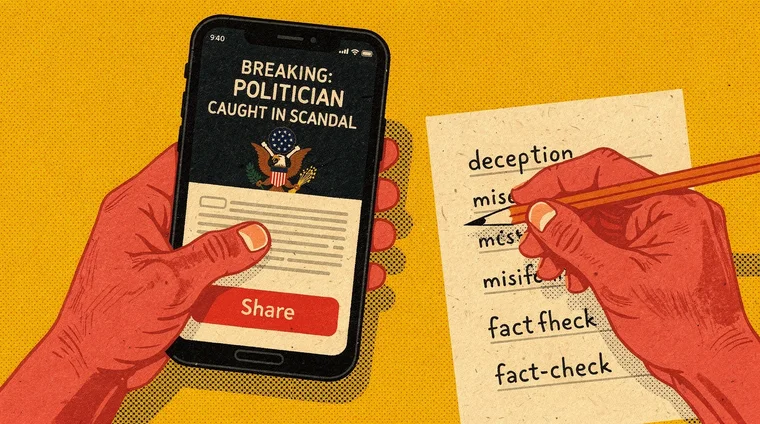
False information spreads for reasons rooted in psychology, technology, and economics.
Emotional content travels faster
Content that triggers strong emotions — outrage, fear, disgust, excitement — is shared more than neutral content. False stories are often crafted to provoke exactly these responses. Research from MIT's Media Lab found that false news spreads significantly faster and more widely on Twitter than accurate news, particularly for political topics.
Algorithms reward engagement
Social media platforms optimise for engagement — shares, likes, comments. Outrage-inducing content, whether true or false, performs well by these metrics. The result is that misleading content is often promoted by the same systems that connect people. Understanding how social media algorithms work helps explain why false stories go viral.
Confirmation bias
People are more likely to believe and share information that confirms what they already think. This is confirmation bias — a psychological tendency that makes all of us susceptible to accepting inaccurate information when it fits our worldview. Fake news is often designed to exploit this vulnerability.
Financial incentives
Many false stories are produced not for political goals but for money. Advertising networks pay per click, so sensational false headlines generate revenue. The 2016 US election saw teenagers in North Macedonia earning significant income by creating fake political news sites targeting American audiences.

How to Spot and Verify Information
Critical evaluation of sources is a learnable skill. These strategies help distinguish reliable from unreliable information.
Check the source
Who published it? Is the domain familiar? Look for 'About Us' pages. Be cautious of sites with unusual domain names (e.g., abcnews.com.co), heavy advertising, or no named journalists. Established news organisations with editorial standards and accountability are generally more reliable than anonymous blogs or single-author websites.
Reverse image search
Images in alarming stories are often from unrelated events. Right-click any image and 'Search image' using Google or TinEye to find where it has previously appeared. This quickly reveals images misrepresented as current when they are years old.
Use fact-checking sites
Full Fact (UK), Snopes (US), PolitiFact, and AFP Fact Check investigate viral claims and publish findings. If a story is spreading widely, it has likely already been investigated. Looking up claims before sharing them takes seconds and prevents the amplification of inaccuracies.
Read beyond the headline
Misleading headlines are often technically true but omit context that changes the meaning entirely. Read the full article before sharing. Check whether other reputable outlets report the same event — genuine news is covered by multiple independent sources.
Frequently asked questions
- Is 'fake news' just a political term?
- The phrase became politically charged when it was used to dismiss legitimate journalism critical of public figures. But the underlying phenomenon — false, misleading, or fabricated information presented as news — is real and well-documented. Researchers prefer terms like 'disinformation', 'misinformation', and 'malinformation' to distinguish different types of harmful information, regardless of political context.
- Why can't platforms just remove fake news?
- Determining what is false is genuinely difficult. Satire, contested facts, and evolving scientific understanding all complicate automated removal. Human fact-checkers cannot keep pace with the volume of content. Platforms face political pressure when they remove content — accusations of bias follow any moderation decision. The scale of social media makes comprehensive moderation practically impossible with current technology.
- How can I tell if a photo has been altered?
- Some signs of manipulation include unnatural lighting, blurring around object edges, inconsistent shadows, and visual artefacts at the boundaries of inserted elements. Reverse image search often reveals the original, unaltered source. Tools like FotoForensics analyse image metadata and compression artefacts that can indicate editing. AI-generated images are increasingly hard to detect visually — metadata analysis is more reliable.
- What should I do if I accidentally shared something false?
- Delete or correct the post as quickly as possible. Post a clear correction that is at least as visible as the original share — ideally as an update or reply to the original, not just quietly removing it. Acknowledge the error without excessive self-flagellation. Misinformation spreads because well-intentioned people share things without verifying. Correcting mistakes publicly models good digital citizenship.