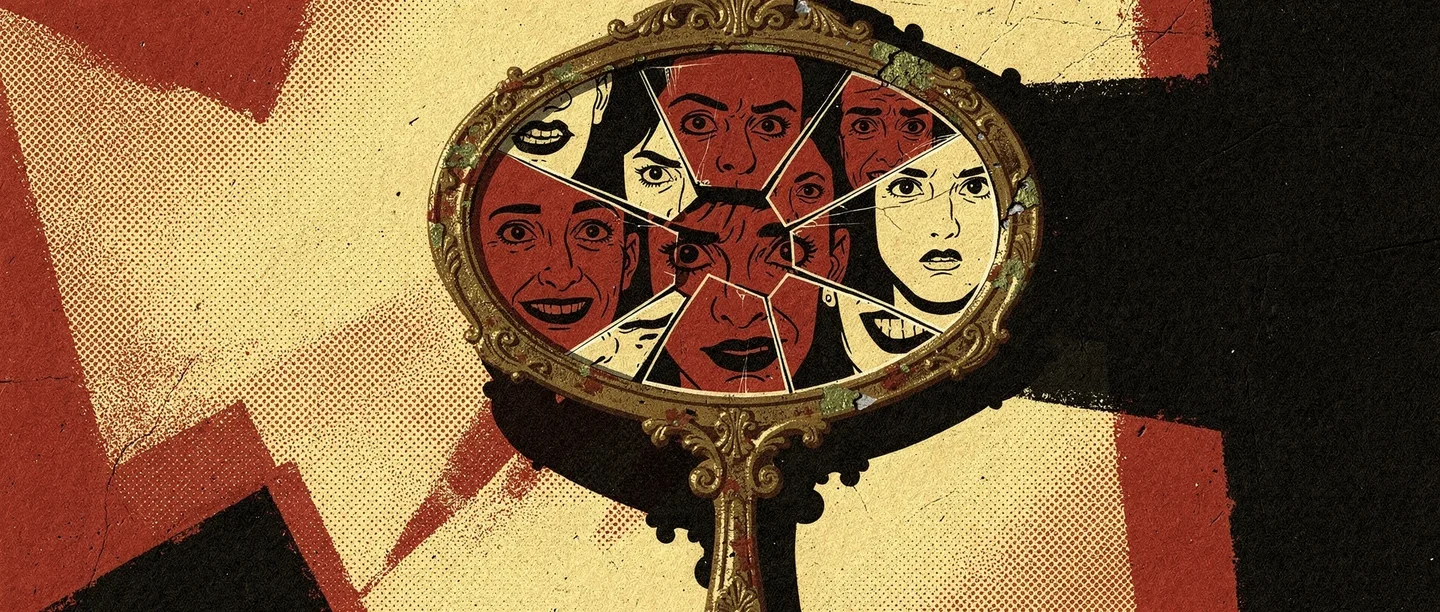
What is misinformation and how does it spread?
Misinformation is false or inaccurate information — whether spread intentionally or not. The key feature of misinformation is that it is wrong, regardless of why it is being shared. Someone might pass on misinformation because they genuinely believe it is true, or because they have not checked its source. Either way, the effect on the reader is the same.
Disinformation is a related but distinct concept. Disinformation is misinformation that is spread deliberately, with the intention to deceive. State-sponsored disinformation campaigns, for example, deliberately create and spread false narratives to influence public opinion in other countries. Propaganda is an older term for much the same thing: information designed to promote a particular point of view, often by distorting or omitting facts.
Misinformation spreads particularly quickly online because social platforms are designed to maximise engagement. Content that triggers strong emotions — anger, fear, surprise, or outrage — tends to be shared more widely than calm, factual reporting. Research from MIT found that false news spreads on social media approximately six times faster than accurate news, because it tends to be more novel and emotionally engaging.
Search algorithms and recommendation systems also play a role. Because these systems show users content similar to what they have already engaged with, people can find themselves in information bubbles — seeing primarily content that confirms what they already believe. This makes it harder to encounter the corrections or alternative perspectives that might challenge misinformation.
Understanding misinformation is not just a media literacy issue — it connects directly to cybersecurity, since many phishing attacks and social engineering scams rely on spreading false information to manipulate behaviour.
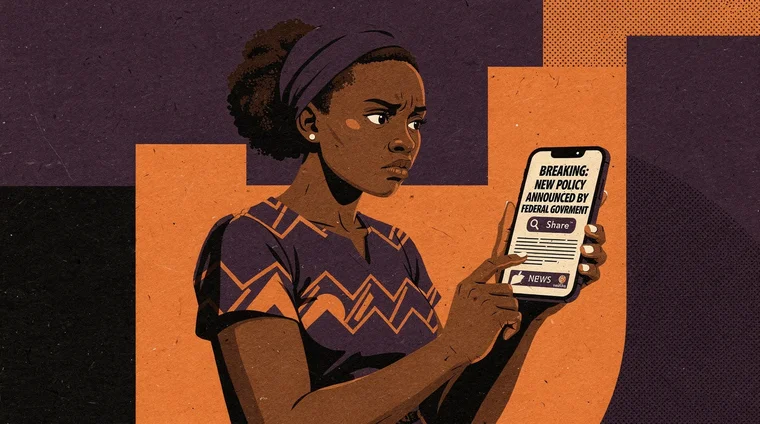
Types of false information online
Not all false or misleading content is the same. Understanding the different types of misinformation helps students recognise them more easily.
Fake news
Fake news refers to entirely fabricated news stories presented in the format of genuine journalism. These stories are often designed to look credible — using realistic-sounding website names, professional layouts, and a factual tone. The goal is usually to influence opinion on a political topic or to generate advertising revenue through clicks.
Deepfakes
Deepfakes are manipulated images, audio recordings, or videos created using AI to make it appear that a real person said or did something they did not. Deepfake technology has improved rapidly and is increasingly difficult to detect with the naked eye. Researchers and platforms are developing detection tools, but the technology is advancing faster than the safeguards.
Satire and parody
Satire — comic or exaggerated content intended to criticise or mock — is not misinformation when it is clearly labelled as such. However, satire is frequently misunderstood and shared out of context by people who take it at face value. A clearly labelled satirical headline about a politician can become misinformation when someone shares it as if it were a real news story.
Misleading statistics
Statistics can be presented in ways that are technically accurate but deeply misleading. A 50% increase in a very small number sounds dramatic but may represent only a handful of cases. Charts with manipulated scales can make small differences look enormous. Evaluating whether statistics are being used honestly is an important part of media literacy.
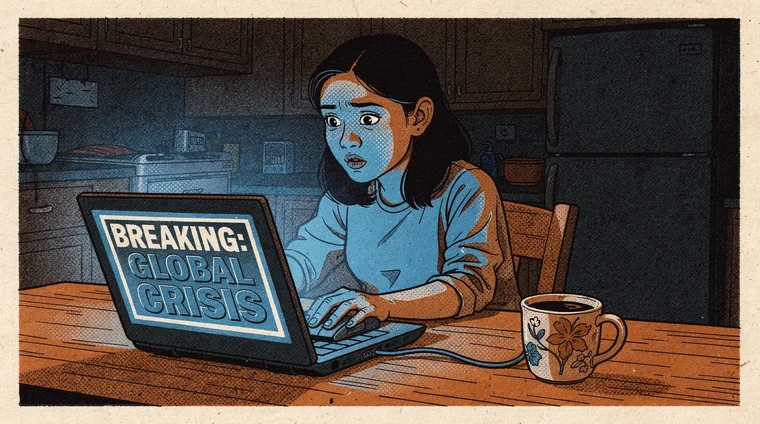
Did you know?
-
A 2018 MIT study published in Science found that false news spreads on Twitter approximately six times faster than accurate news, because it tends to be more novel and emotionally engaging.
Poynter MediaWise — Media Literacy Resources -
The Reuters Institute Digital News Report found that fewer than half of people across 40 countries trust the news they encounter online — a figure that has declined steadily over the past decade.
Reuters Institute — Digital News Report -
FirstDraft, an international misinformation research organisation, identifies seven distinct types of problematic content — from satire to fabricated content — each requiring different fact-checking strategies.
FirstDraft — Understanding Information Disorder
How to spot misinformation — a guide for students
Developing the skills to evaluate information critically is one of the most valuable things a student can learn. Several practical strategies make it much easier to identify misinformation before it is shared further.
First, check the source. Who published this information? Is it a known news organisation with editorial standards, or a website you have never heard of? Check the About page and look for editorial policies or named journalists. Misinformation often appears on sites with vague ownership and no accountability.
Second, look for corroboration. If a claim is true, other reputable sources will report it. If you cannot find the same story on a major news website or from an official organisation, be cautious. A claim that only appears in one place — particularly on social media — should be treated with scepticism.
Third, check the date. Old stories are frequently reshared out of context and presented as current news. An event from two years ago can look like breaking news when the publication date is removed or overlooked. Always check when the content was originally published.
Fourth, examine the emotional tone. Misinformation is frequently designed to provoke strong emotional reactions — anger, fear, or disbelief. If a piece of content makes you feel immediately outraged or shocked, that is a signal to pause and verify before sharing.
Epivo's International Curriculum teaches critical evaluation of digital content as part of digital literacy for grades 6 to 9. Students learn to assess the reliability of online sources, understand how recommendation algorithms shape what they see, and develop responsible habits for sharing information.
For further guidance, Poynter's MediaWise programme and the FirstDraft information disorder guide are both excellent resources for students and families learning to navigate an information-rich world.
Frequently asked questions
- What is misinformation in simple terms?
- Misinformation is false or inaccurate information, shared whether intentionally or not. It differs from disinformation, which is false information spread deliberately to deceive. Both types can influence opinions, decisions, and behaviour when they are not caught and corrected.
- What is the difference between misinformation and disinformation?
- Misinformation is inaccurate information shared without necessarily intending to deceive — for example, someone repeating a false claim they believed was true. Disinformation is false information spread deliberately, with the intention of misleading or manipulating the audience.
- How do I fact-check something I see online?
- Check the source — is it a known publication with editorial standards? Search for the same story on multiple reputable sites. Check the publication date. Look for named journalists and verifiable citations. Dedicated fact-checking organisations such as Snopes, Full Fact, and AFP Fact Check are also useful.
- Why does misinformation spread so quickly on social media?
- Social media algorithms prioritise content that generates strong emotional reactions — and misinformation often does this by being shocking, outrageous, or novel. As a result, false content spreads faster than accurate reporting, even when corrections are later published.
- What is a deepfake?
- A deepfake is a manipulated image, audio clip, or video created using AI to make it appear that a real person said or did something they did not. Deepfakes are a growing form of misinformation that can be difficult to detect without specialist tools.
- How can parents help children understand misinformation?
- Discuss online content together — when your child shares something surprising, explore it together rather than simply accepting or rejecting it. Model the habit of checking sources, and ask questions like: who made this? Why might they want us to believe it? What evidence supports it?