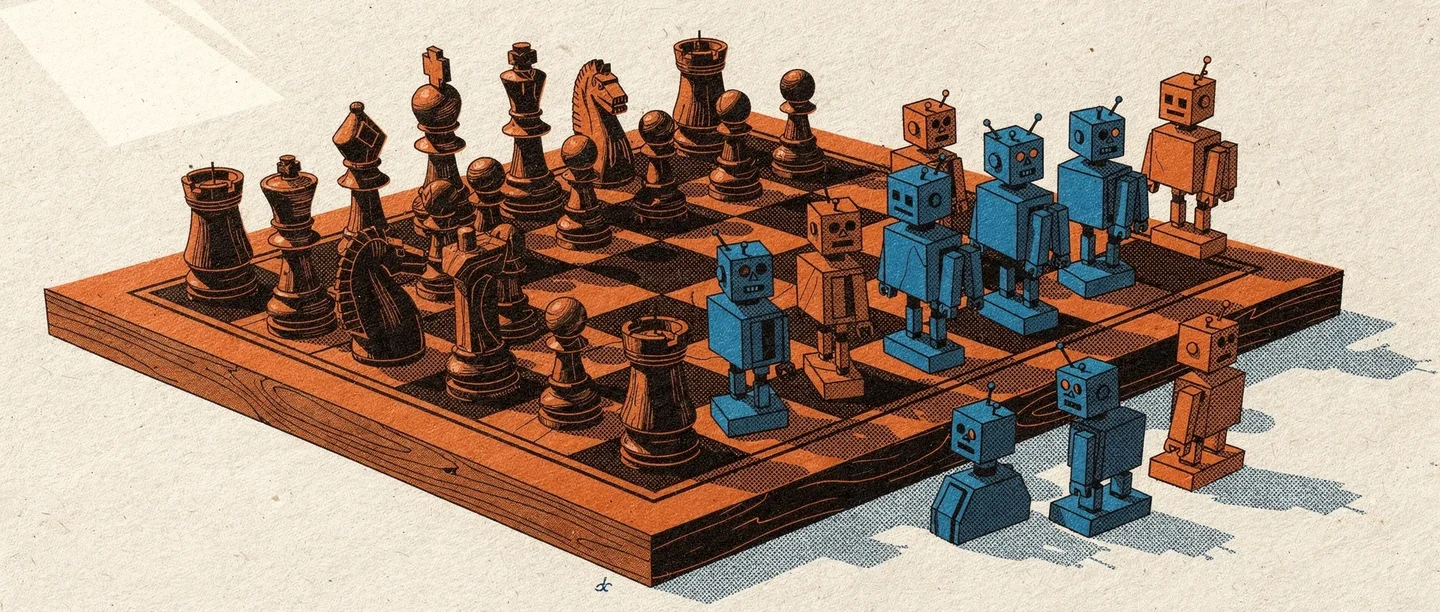
What is artificial intelligence?
Artificial intelligence, or AI, is the ability of computers to perform tasks that normally require human thinking — tasks such as recognising faces in images, understanding spoken language, translating text, and making decisions from data.
Most modern AI systems work through machine learning. In this approach, a computer learns by analysing enormous amounts of data rather than following pre-written rules. For example, an AI trained on millions of photographs can learn to tell the difference between a cat and a dog without any human ever explicitly defining what those animals look like. The more data it processes, the better it typically becomes.
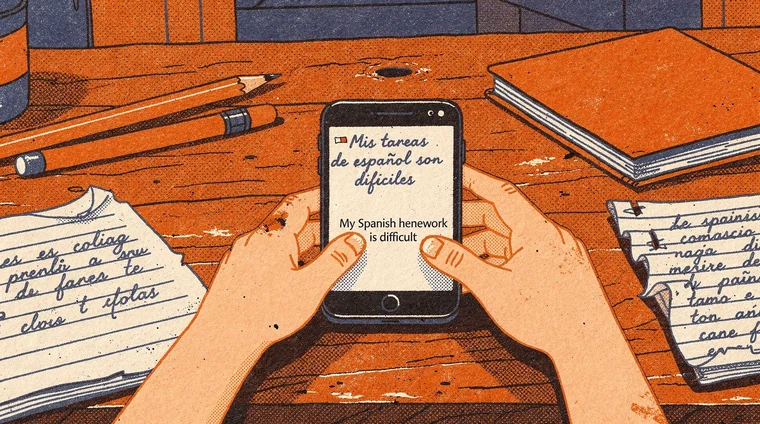
However, artificial intelligence does not understand what it is doing in the way humans do. It identifies statistical patterns in data rather than grasping meaning or intention. An AI translating a sentence is not reading for meaning the way a person would — it is applying patterns found across billions of previous translations.
AI is already embedded in many everyday technologies. Voice assistants such as Siri and Google Assistant use AI to understand spoken questions. Streaming services like Netflix and Spotify use AI to recommend content based on what you have previously watched or listened to. Navigation apps use AI to predict traffic conditions in real time. In each case, the AI is applying learned patterns rather than truly understanding the world around it.

How AI is used in everyday life and education
Artificial intelligence is far more widespread than most people realise. In healthcare, AI systems can analyse medical scans to help doctors detect conditions such as cancer earlier than was previously possible. In transport, AI powers the lane-keeping and collision-avoidance features found in modern vehicles. These are not future technologies — they are in use today.
Schools are also beginning to benefit from AI-powered learning tools. These systems monitor how individual students progress and adapt accordingly — presenting extra practice when a student is struggling, or advancing quickly when a concept has been fully understood. This kind of personalised support was previously only available through one-to-one tutoring.
However, AI also reflects the quality and fairness of the data it was trained on. If that data contains historical biases — for example, if past hiring decisions consistently favoured certain groups — an AI trained on it may repeat those patterns. A 2019 study published in the journal Science found that a widely used healthcare algorithm allocated fewer resources to Black patients than to equally sick white patients, because it had been trained on historically biased spending data. Understanding these risks is part of what it means to think critically about AI.
Social media platforms also rely heavily on AI to decide what content appears in your feed. Because these algorithms are designed to maximise engagement, they sometimes amplify emotionally charged or misleading content — a key reason why misinformation spreads so rapidly online.
Did you know?
-
Machine learning — the most common form of AI — improves by training on large datasets. The more data processed, the more accurate the system typically becomes.
MIT News — Artificial Intelligence -
A 2019 study published in Science found that a widely used healthcare AI systematically disadvantaged Black patients due to bias in its historical training data.
BBC Bitesize — What is AI? -
Netflix estimates that its AI recommendation system saves the company over $1 billion per year by reducing subscriber cancellations through personalised content suggestions.
MIT News — Artificial Intelligence
Why students need to understand artificial intelligence
Understanding artificial intelligence matters for every student, not just those planning a career in technology. The technology is already reshaping the world young people are entering — influencing job markets, healthcare systems, political communication, and everyday decision-making. The ability to ask critical questions about any powerful system — who built it, what data it used, and whose interests it serves — is a new and essential form of literacy.
Epivo's International Curriculum introduces students in grades 6 to 9 to the principles of computing, algorithms, and the social implications of digital technologies. These foundations prepare students to engage with artificial intelligence not just as passive users, but as informed thinkers who can evaluate the genuine benefits and real limitations of these tools.
For students and families interested in the safety dimension of connected technologies, our guide to cybersecurity is a useful companion. Understanding how recommendation systems and learning algorithms make decisions connects closely to questions of data privacy — how personal information is collected, stored, and potentially used without users fully realising it. Developing awareness of both capabilities and risks is central to digital literacy in the modern age, and this understanding will only grow more important as these technologies continue to evolve.
For parents, the most valuable approach is to discuss technology choices openly at home. When a child uses a voice assistant, receives a recommendation from a streaming service, or encounters targeted content on social media, explore together: how might the system have decided that? What patterns might it have found? These conversations develop the habit of questioning technology thoughtfully — a skill that will serve young people throughout their lives and across many different careers.
Further reading: the BBC's Bitesize guide to AI and resources from MIT's AI news hub offer clear, accessible explanations for students and parents who want to explore the topic further.

Frequently asked questions
- What is artificial intelligence in simple terms?
- Artificial intelligence is technology that allows computers to perform tasks that normally require human thinking — such as recognising speech, translating languages, or recommending what to watch next. AI learns from data rather than following fixed rules written by programmers.
- How does AI learn?
- Most AI systems learn through machine learning — they are trained on large datasets and adjust their responses based on patterns they find. The more data they process, the more accurate they typically become. However, they do not truly understand what they are doing.
- What are examples of AI in everyday life?
- Common examples include voice assistants (Siri, Alexa), streaming recommendations (Netflix, Spotify), translation tools (Google Translate), spam filters in email, and navigation apps that predict traffic. Social media feeds are also personalised by AI.
- Can AI be wrong or biased?
- Yes. AI systems learn from data, and if that data reflects historical biases, the AI can repeat or amplify them. AI hiring tools have been found to favour certain groups, and healthcare AI has been shown to disadvantage patients from underrepresented backgrounds.
- Why should students learn about artificial intelligence?
- AI is shaping education, work, and society. Students who understand how AI works — and its limitations — are better equipped to ask critical questions, make informed decisions, and adapt to a world where AI tools are increasingly present in daily life.