What Is Imperialism and How Did It Differ from Colonialism?
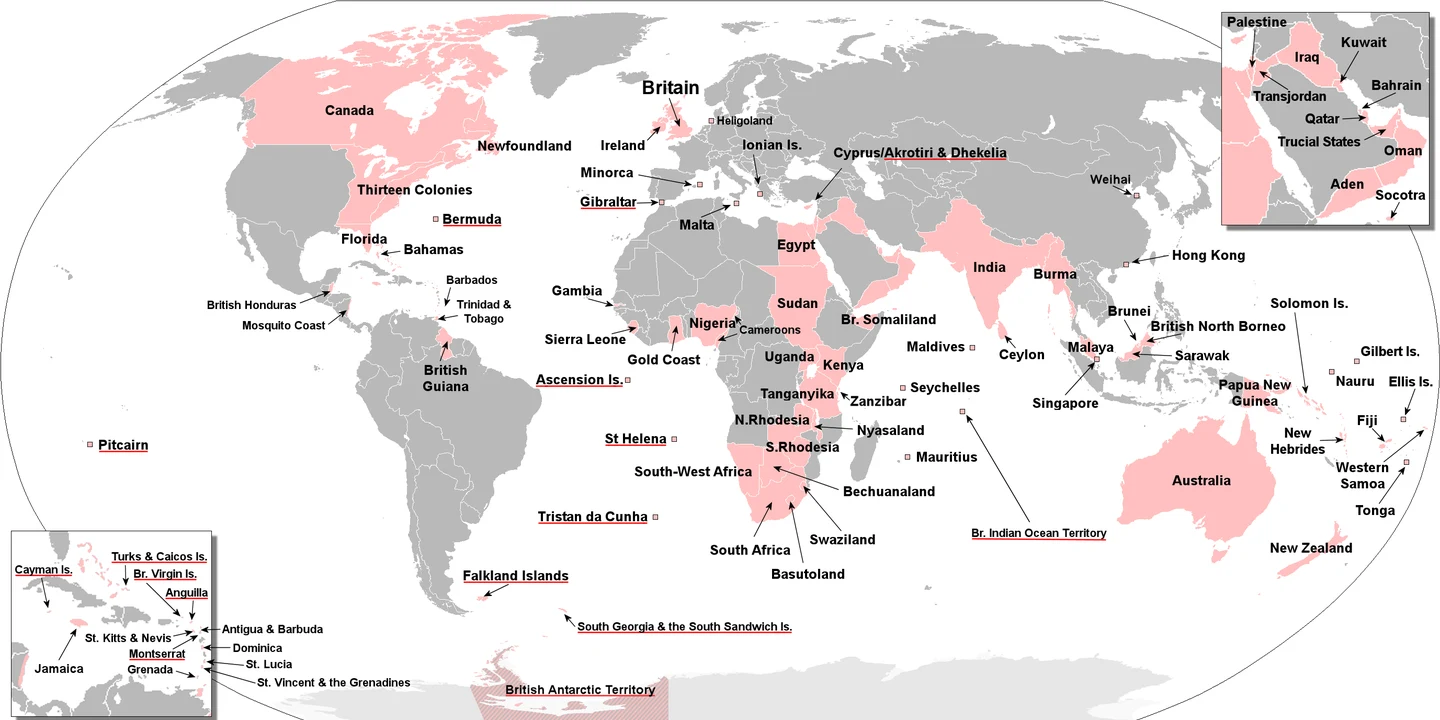
Understanding what is imperialism requires distinguishing it from colonialism. Imperialism is the broader drive to extend power and influence over foreign peoples. Colonialism is one specific form of imperialism that involves direct territorial control and settlement.
Formal and informal imperialism
Historians distinguish two main types. Formal imperialism means direct political control — a foreign power governs the territory, appoints officials, and enforces its laws. Britain's rule over India after 1858 is a clear example. Informal imperialism, in contrast, means economic or political dominance without direct rule. In the 19th century, Britain controlled much of China's trade through unequal treaties without formally governing the country.
Settler colonialism
Settler colonialism is a distinct form where the imperial power sends large populations to permanently occupy and transform the territory. In Australia, North America, and southern Africa, settlers displaced indigenous peoples, seized land, and built new societies. This form of imperialism had especially devastating consequences for indigenous populations.
The "civilising mission"
European powers justified imperialism with the belief that they were bringing civilisation, Christianity, and progress to supposedly backward peoples. Rudyard Kipling's 1899 poem called this "The White Man's Burden." In reality, this ideology masked economic exploitation and racial hierarchy. The language of civilisation served as a moral cover for conquest.
The Age of Exploration and Early Empires
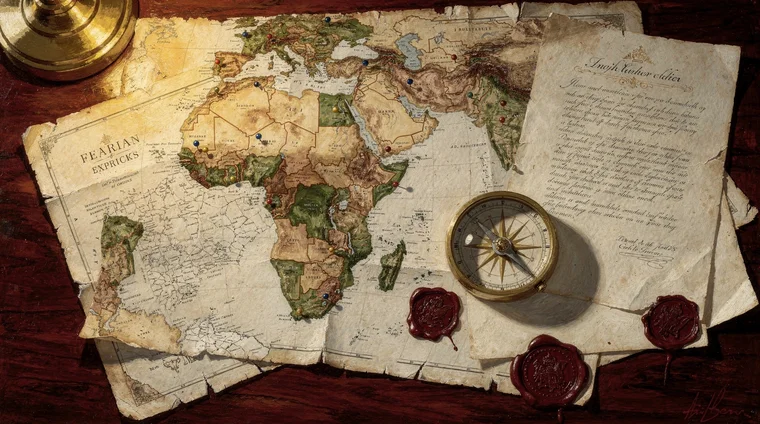
European imperialism began with the Age of Exploration in the 15th century. Portugal and Spain led the way, followed by the Netherlands, Britain, and France.
Portugal and Spain
Portugal established trading posts along the coasts of Africa and Asia from the 1440s onwards. Spain, after Columbus's 1492 voyage, conquered vast territories in the Americas. By 1550, Spain controlled most of Central and South America. Both empires extracted silver, gold, and agricultural goods using forced indigenous and enslaved African labour.
The Dutch and British
The Dutch East India Company, founded in 1602, built a commercial empire across Southeast Asia. Britain's East India Company gradually took control of India through trade agreements and military force over the 18th century. These trading companies operated as quasi-states — raising armies, signing treaties, and governing millions of people for private profit.
Economic engines of imperialism
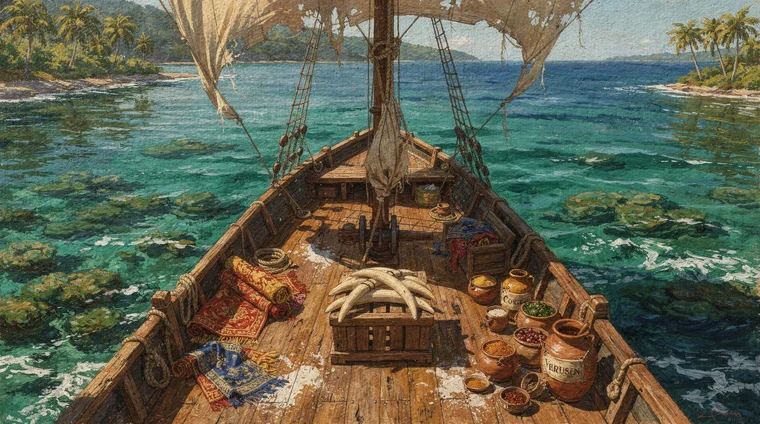
Trade monopolies were central to early imperialism. Imperial powers forced colonies to sell raw materials cheaply and buy manufactured goods at inflated prices. The transatlantic slave trade — which forcibly transported roughly 12 million Africans to the Americas — was driven by the demand for cheap plantation labour. These economic systems enriched Europe while devastating colonised societies.
The Scramble for Africa and Imperialism in Asia
The late 19th century saw imperialism reach its peak. European powers carved up Africa and tightened their grip on Asia.
The Berlin Conference (1884-85)
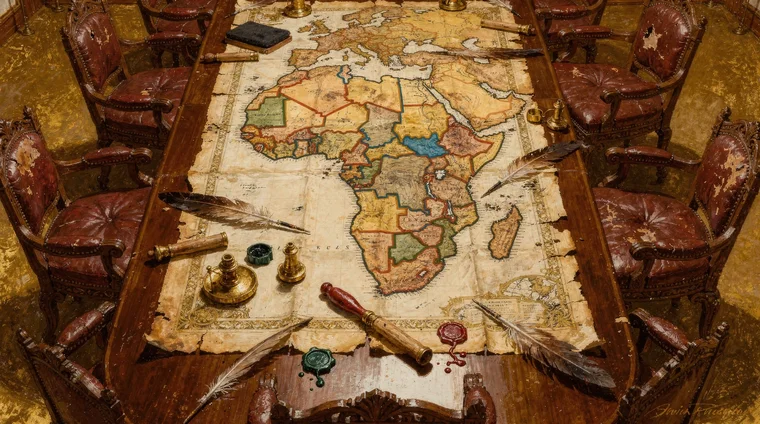
In 1884, representatives of 14 European nations met in Berlin to divide Africa among themselves. No African leaders were invited. The conference established rules for claiming African territory, triggering a race for control. By 1914, European powers controlled approximately 90% of the African continent. Borders were drawn with no regard for existing ethnic, linguistic, or political boundaries.
British imperialism in India
Britain's control of India represented imperialism at its most extensive. After the Indian Rebellion of 1857, the British Crown assumed direct rule from the East India Company. Britain restructured India's economy to export raw cotton and import British textiles, destroying India's domestic manufacturing. India became, as historians note, a source of raw materials and a captive market for British goods.
Resistance to imperialism
Imperialism was never unchallenged. The Zulu Kingdom fought British expansion in southern Africa. The Boxer Rebellion (1899-1901) opposed foreign influence in China. In India, the Indian National Congress demanded self-rule from 1885 onwards. These resistance movements laid the foundations for 20th-century independence struggles that eventually dismantled the empires.
Decolonisation, Neo-Colonialism, and the Legacy of Imperialism
Most formal empires collapsed after World War 2, but imperialism left deep structural legacies that persist today.
Decolonisation
The two world wars weakened European empires economically and morally. India gained independence in 1947. Most African nations followed in the 1950s and 1960s. Portugal held on until 1975. Decolonisation was often violent — France fought wars in Algeria and Vietnam before withdrawing. However, independence did not automatically bring prosperity or stability.
Neo-colonialism
Ghanaian leader Kwame Nkrumah coined the term "neo-colonialism" in 1965 to describe how former imperial powers maintained economic control over newly independent states. Through debt arrangements, trade agreements, and military interventions, wealthy nations continued to influence former colonies. This form of imperialism operates without formal political control but produces similar patterns of economic extraction.
Lasting effects
Imperialism's consequences are visible across the modern world. Arbitrary colonial borders fuel conflicts in Africa and the Middle East. Former colonies remain disproportionately represented among the world's poorest nations. Language, legal systems, and religious affiliations in dozens of countries reflect imperial histories rather than indigenous traditions. Answering what is imperialism today means recognising these ongoing patterns. Understanding colonialism and imperialism together is essential for making sense of globalisation and global inequality today.
Frequently asked questions
- What is the difference between imperialism and colonialism?
- Imperialism is the broader policy of extending power over other peoples through economic, political, or military means. Colonialism is a specific form of imperialism involving direct territorial control and often settlement. All colonialism is imperialism, but imperialism can also operate through trade dominance, debt, or political pressure without formal colonial rule.
- When did the Age of Imperialism begin and end?
- European imperialism began in the 15th century with Portuguese and Spanish exploration. It peaked between 1870 and 1914 during the so-called New Imperialism — the Scramble for Africa and expansion in Asia. Formal empires largely ended between 1947 and 1975 through decolonisation, though economic forms of imperialism continue today.
- Why did European countries want empires?
- European powers pursued empires for economic gain — access to raw materials, new markets, and cheap labour. Strategic competition between nations also drove expansion, as controlling territory meant controlling trade routes and denying rivals resources. Ideological beliefs in racial and cultural superiority provided moral justification for conquest and exploitation.
- What is neo-colonialism?
- Neo-colonialism describes how powerful nations maintain economic control over weaker states without formal political rule. Former colonial powers and multinational corporations use debt, trade agreements, and political influence to extract resources and shape policies in developing countries. Kwame Nkrumah of Ghana popularised the term in 1965 to describe this continuation of imperial economic patterns.
- How does imperialism still affect the world today?
- Imperialism shaped modern borders, economic systems, and political institutions across Africa, Asia, and the Americas. Colonial borders drawn without regard for local populations fuel ongoing conflicts. Former colonies face structural economic disadvantages rooted in centuries of extraction. Language, legal systems, and religious affiliations in many countries reflect imperial impositions rather than indigenous traditions.