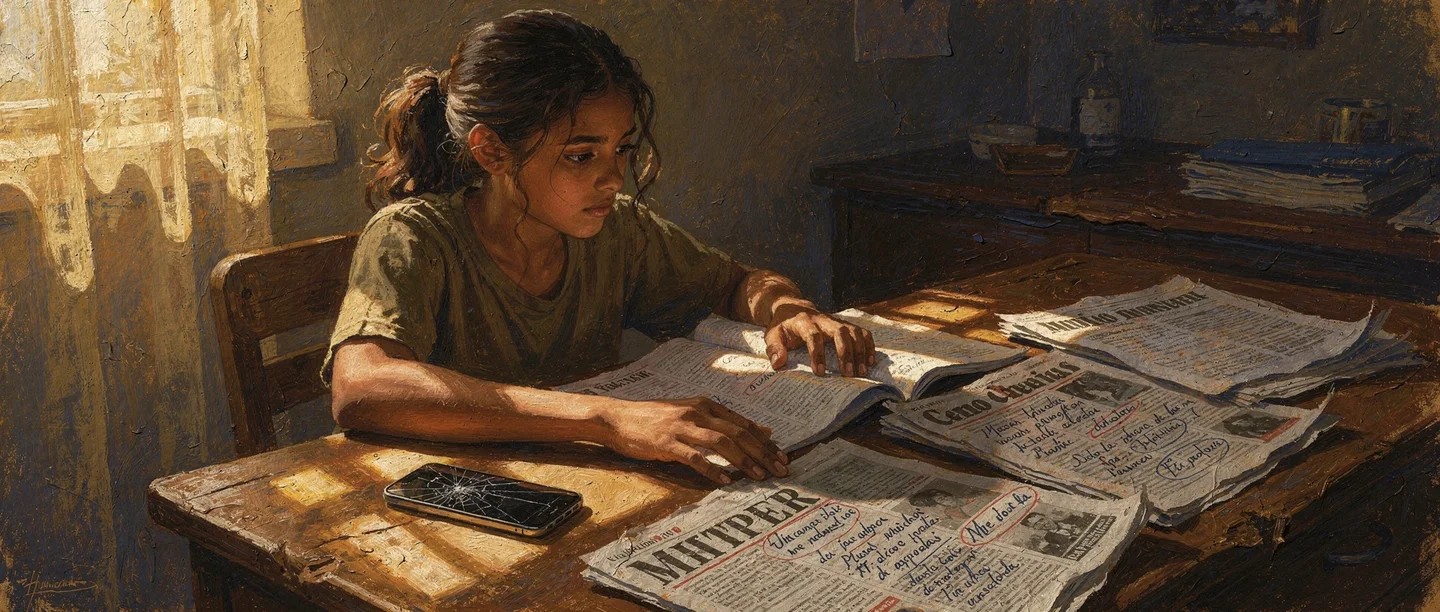
The definition of media literacy
Media literacy is a framework of skills that allows people to engage thoughtfully with media rather than consuming it passively. UNESCO defines it through six core competencies: access, analyse, evaluate, create, reflect, and act. Together these form the basis of what it means to be an informed citizen in the digital age.
The term covers a broad range of media: news articles, social media posts, podcasts, videos, advertisements, photographs, and data visualisations. It also extends to the platforms that deliver this content — search engines, social networks, and recommendation algorithms that shape what we see.
Media literacy is closely related to critical thinking, which is the broader capacity to reason carefully about claims and arguments. Where critical thinking addresses logic and reasoning in general, media literacy applies those skills specifically to media contexts — asking not just is this argument sound? but who produced this, why, and for whom?
Scholars and educators treat media literacy as a prerequisite for democratic participation. A citizen who cannot distinguish reliable reporting from propaganda cannot make genuinely informed decisions. This is why organisations such as the National Association for Media Literacy Education (NAMLE) advocate for media literacy to be taught in every school.
Misinformation, disinformation, and malinformation
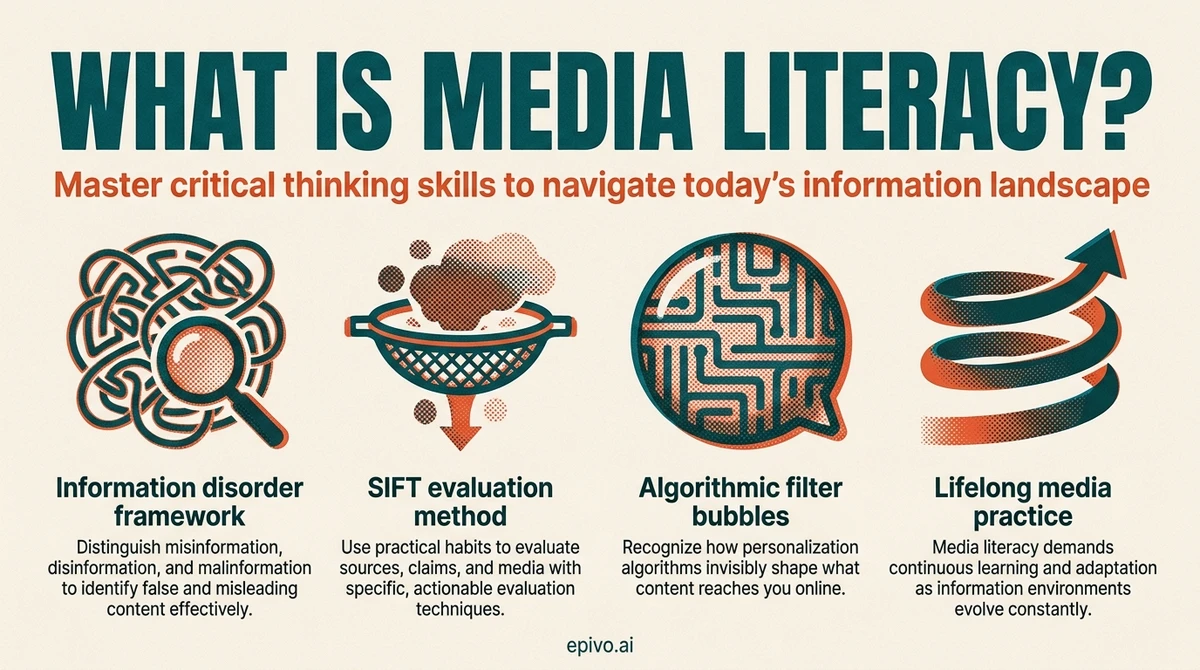
One of the most important frameworks for understanding false and misleading content is the information disorder model developed by Claire Wardle and Hossein Derakhshan for the Council of Europe in 2017. They identify three distinct categories, each with different intentions and different levels of harm.
Misinformation is false information shared without intent to harm. A person who shares an inaccurate article because they genuinely believed it to be true is spreading misinformation. Disinformation is false information created and shared with the deliberate intent to deceive or harm — state-sponsored propaganda, for example, or coordinated inauthentic behaviour on social media. Malinformation is the most subtle category: content that is technically true but is shared with the intent to harm — such as publishing someone's private address to facilitate harassment.
Understanding these distinctions matters because the appropriate response differs in each case. Misinformation can often be corrected through better information. Disinformation requires systemic responses — platform policy, regulation, and source verification. Malinformation raises questions about privacy and ethics that go beyond factual accuracy.
For students learning to evaluate sources, asking who created this and why? is the first step in placing a piece of content into the right category. Reliable sources are transparent about authorship, funding, and corrections.
Image: Generated with AI (Epivo)
Practical skills: how to evaluate what you read
Being media literate is not just about knowing theory — it requires specific, practised habits of evaluation. One widely used framework is the SIFT method, developed by digital literacy researcher Mike Caulfield:
- Stop: Pause before sharing or acting on information. Ask yourself whether you know anything about the source.
- Investigate the source: Look up who is behind the content. A quick search often reveals whether a site has a known bias, a satirical purpose, or a history of publishing false information.
- Find better coverage: For important claims, search for corroborating reporting from multiple independent, established sources. If only one outlet is reporting something significant, treat it with caution.
- Trace claims: Follow links and citations back to their original source. Many misleading articles distort or misrepresent primary sources.
Other practical tools include reverse image search — dragging an image into Google Images or TinEye to check whether it has been taken out of context — and lateral reading, the technique of opening multiple browser tabs to check a source's reputation before reading its content.
For video content, pay attention to context clues: date stamps, captions, and whether the same footage appears elsewhere with a different label. The rise of deepfakes — synthetic video created using artificial intelligence — makes visual verification increasingly important. Researchers at MIT Media Lab and elsewhere are developing detection tools, but human scepticism remains the first line of defence.

Image: Generated with AI (Epivo)
Filter bubbles and algorithmic media
Understanding media literacy today requires understanding how digital platforms shape what we see. In his 2011 book The Filter Bubble, Eli Pariser argued that personalisation algorithms create invisible barriers around each user, showing them content that confirms existing beliefs and hiding perspectives that might challenge them. While the original thesis has been debated and refined, the core concern remains relevant: algorithmic curation can narrow our exposure to diverse viewpoints without our awareness.
Social media platforms optimise for engagement — which often means content that provokes strong emotional reactions. Outrage, fear, and moral condemnation tend to generate more clicks, shares, and comments than careful, nuanced reporting. This incentive structure can amplify extreme or misleading content even when platforms have no explicit intention to spread falsehoods.
A media literate approach to social media involves actively diversifying sources. This means following outlets and commentators with different perspectives, being alert to the emotional register of content (high outrage is often a signal to slow down and verify), and distinguishing between opinion, analysis, and straight reporting.
It also means understanding the commercial interests of media organisations. Advertising-funded outlets depend on traffic; subscription outlets depend on readers who feel well-served. Neither model is inherently dishonest, but both create pressures that shape editorial decisions. Asking who funds this? is always a reasonable question.

Image: Generated with AI (Epivo)
Did you know?
-
56% of people globally say they worry about distinguishing real news from fake news online, according to the Reuters Institute Digital News Report 2023.
Reuters Institute Digital News Report 2023 -
UNESCO defines media literacy through six core competencies — access, analyse, evaluate, create, reflect, and act — in its Global Media and Information Literacy Assessment Framework (2013).
UNESCO — Global Media and Information Literacy Assessment Framework -
Claire Wardle and Hossein Derakhshan's 2017 Council of Europe report identified three types of false content: misinformation, disinformation, and malinformation — a framework now used by researchers and policymakers worldwide.
Council of Europe — Information Disorder (Wardle & Derakhshan, 2017)
Why media literacy matters — and how to build it
What is media literacy in a rapidly changing information environment? It is not a skill you acquire once and keep forever. It requires ongoing practice and adaptation as media environments change. The same critical habits that helped a reader assess a newspaper in 2005 must now extend to TikTok videos, AI-generated images, podcast transcripts, and data visualisations.
For students, the best starting point is developing a habit of curiosity about sources. Before sharing or acting on information, ask: Who wrote this? When? What is their evidence? Who might benefit from my believing this? These questions do not require expert knowledge — they require only the discipline to pause.
For parents and educators, modelling these habits matters. Discussing news stories together, asking aloud about sources, and demonstrating lateral reading are all effective ways to build media literacy in younger learners. Organisations such as Media Literacy Now advocate for systematic media literacy instruction in school curricula across the United States and beyond.
Ultimately, media literacy is an expression of intellectual agency. In a world where information is abundant and attention is scarce, the ability to navigate media environments critically is what distinguishes an engaged citizen from a passive consumer. It connects to the oldest questions in critical thinking: how do we know what we know, and how should we act on that knowledge?

Image: Generated with AI (Epivo)
Frequently asked questions
- What is media literacy in simple terms?
- Media literacy is the ability to find, understand, evaluate, and use information from media sources — including news, social media, video, and advertising. It means being an active, critical consumer of information rather than accepting everything you see or read at face value.
- What is the difference between media literacy and information literacy?
- Information literacy is the broader skill of finding and evaluating information from any source, including books, databases, and research papers. Media literacy specifically focuses on media texts — news, social media, broadcast, and digital content — and includes understanding how media industries and platforms work.
- What are examples of media literacy skills?
- Examples include identifying the source and author of a news article, reverse image searching a photograph to check its origin, recognising the difference between news reporting and opinion, spotting sponsored content, understanding how algorithms curate your social media feed, and checking whether a claim is corroborated by multiple independent sources.
- Why is media literacy important for students?
- Students today encounter enormous volumes of information online, much of it misleading or false. Media literacy helps them make informed decisions, participate meaningfully in democratic life, and protect themselves from manipulation. It is also a transferable skill that supports academic research and professional life.
- What is the SIFT method?
- SIFT stands for Stop, Investigate the source, Find better coverage, and Trace claims. Developed by Mike Caulfield, it is a practical four-step checklist for evaluating online content quickly and effectively before sharing or acting on it.
- What is the difference between misinformation and disinformation?
- Misinformation is false information spread without intent to harm — often by people who genuinely believe it is true. Disinformation is false information deliberately created and spread to deceive, mislead, or cause harm. The difference lies in intent, not in the content itself.