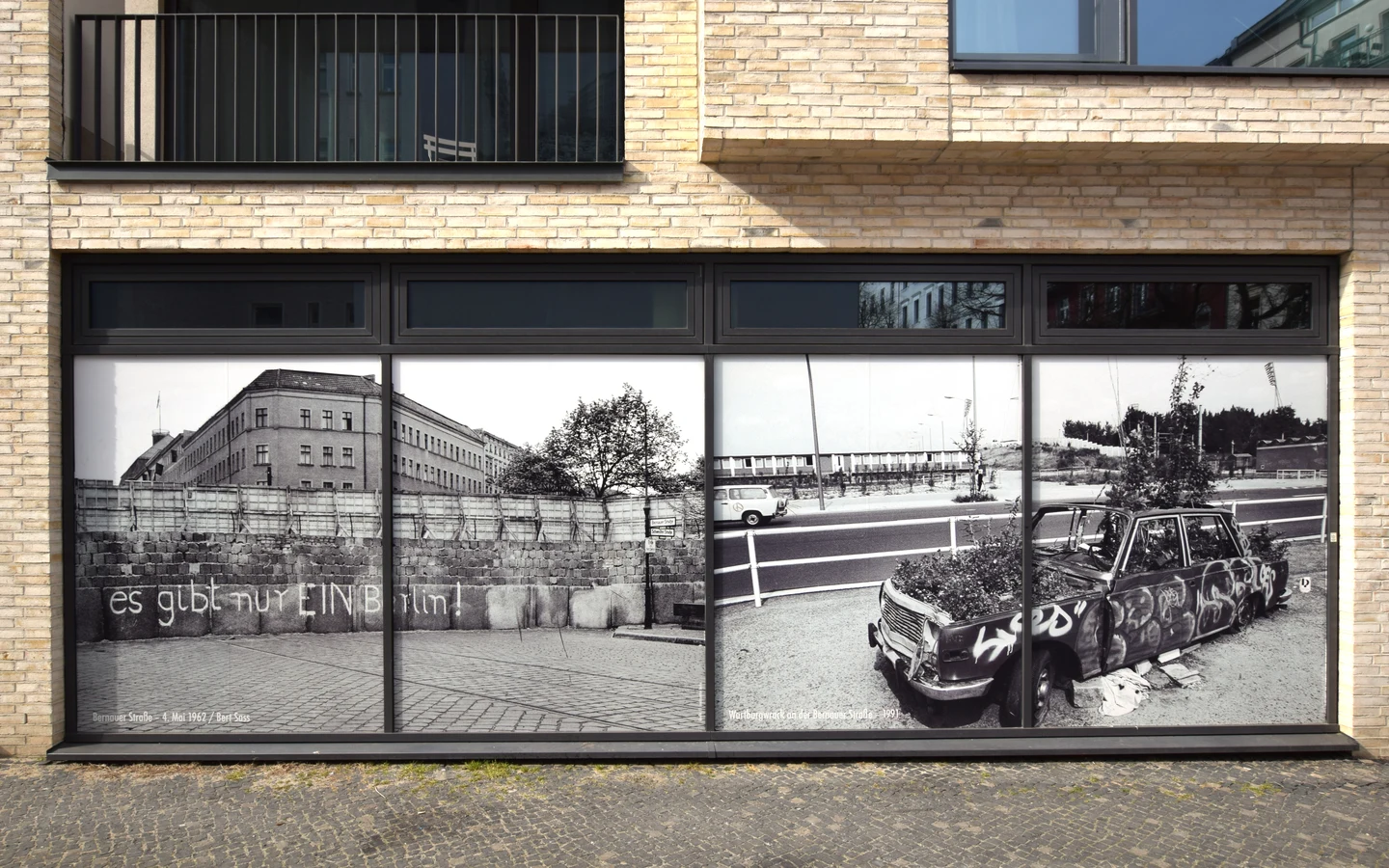
Origins of the Cold War
The Cold War emerged from the ruins of World War 2. The United States and Soviet Union had fought as allies against Nazi Germany, but their systems were fundamentally incompatible. The US championed liberal democracy and capitalism. The USSR, under Joseph Stalin, promoted communist ideology and single-party rule.
As Soviet forces liberated Eastern Europe from Nazi occupation, Stalin installed communist governments in those countries. Winston Churchill described an 'iron curtain' descending across Europe in 1946. By 1947, the US had announced the Truman Doctrine — promising to support free peoples resisting communist takeover — and the Cold War had begun.
The division of Europe
Germany was divided into Western and Eastern zones. Berlin — deep inside the Soviet zone — was split in four. When the Soviets blockaded West Berlin in 1948, the Western Allies responded with a massive airlift, supplying the city by air for 11 months. The confrontation set the tone for the Cold War: indirect pressure, not direct combat.
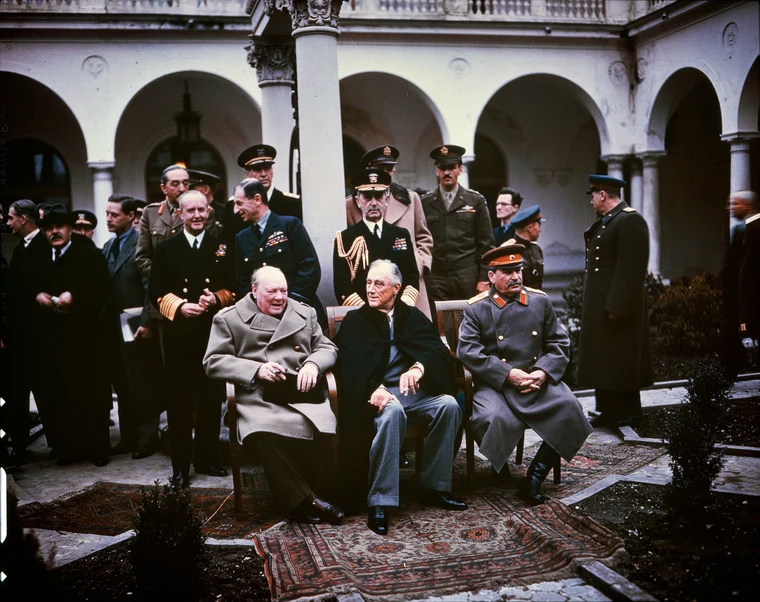
Winston Churchill, Franklin Roosevelt, and Joseph Stalin meet at the Yalta Conference in February 1945. Their wartime alliance would soon fracture into the Cold War rivalry that divided the world.. Image: US government photographer, via Wikimedia Commons (Public domain)
The Arms Race, Space Race, and Crises
The Cold War was defined by two great competitions: the nuclear arms race and the space race.
The Soviet Union tested its first atomic bomb in 1949. Both sides then developed far more powerful hydrogen bombs. By the 1960s, each superpower had enough nuclear weapons to destroy the other many times over. The logic of mutually assured destruction (MAD) meant that neither side could launch a first strike without being annihilated in return.
The space race
The space race was both a military and propaganda competition. The Soviets launched the first satellite (Sputnik, 1957) and sent the first human to space (Yuri Gagarin, 1961). The US responded with the Apollo programme and landed the first humans on the Moon in 1969. Both sides saw space as a domain of strategic advantage.
The Cuban Missile Crisis
The most dangerous moment of the Cold War came in October 1962. The US discovered Soviet nuclear missiles being installed in Cuba, just 145 km from Florida. For 13 days, the world held its breath as US President Kennedy and Soviet Premier Khrushchev negotiated. The Soviets agreed to remove the missiles. The crisis revealed how close nuclear war could come — and led to the installation of a direct hotline between Washington and Moscow.
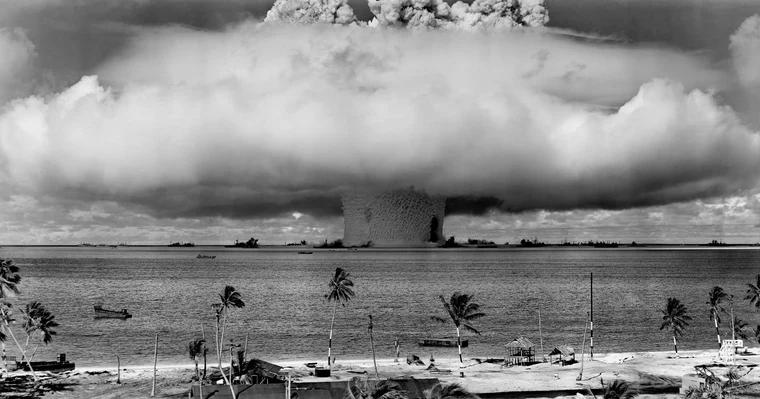
The mushroom cloud from the Operation Crossroads Baker nuclear test at Bikini Atoll in 1946. The nuclear arms race between the US and Soviet Union defined the Cold War and brought the threat of mutual annihilation.. Image: United States Department of Defense, via Wikimedia Commons (Public domain)
Proxy Wars and the End of the Cold War
The two superpowers rarely fought each other directly. Instead, the Cold War was fought through proxy conflicts — wars in which each side backed opposing factions in a third country.
The Korean War (1950–1953) pitted US-backed South Korea against Soviet and Chinese-backed North Korea, ending in a stalemate. The Vietnam War drew the US into a decade-long conflict against communist North Vietnam. The Soviets intervened in Afghanistan in 1979, becoming mired in a guerrilla war backed in part by American funding.
The fall of the Soviet Union
By the 1980s, the Soviet economy was struggling to compete with the West while funding a massive military. Soviet leader Mikhail Gorbachev introduced reforms — glasnost (openness) and perestroika (restructuring). But these reforms unleashed forces he could not control. Communist governments across Eastern Europe collapsed in 1989. The Berlin Wall fell on 9 November 1989. The Soviet Union itself dissolved in December 1991. The causes of this collapse included economic failure, nationalism, and the weight of military competition with the West.
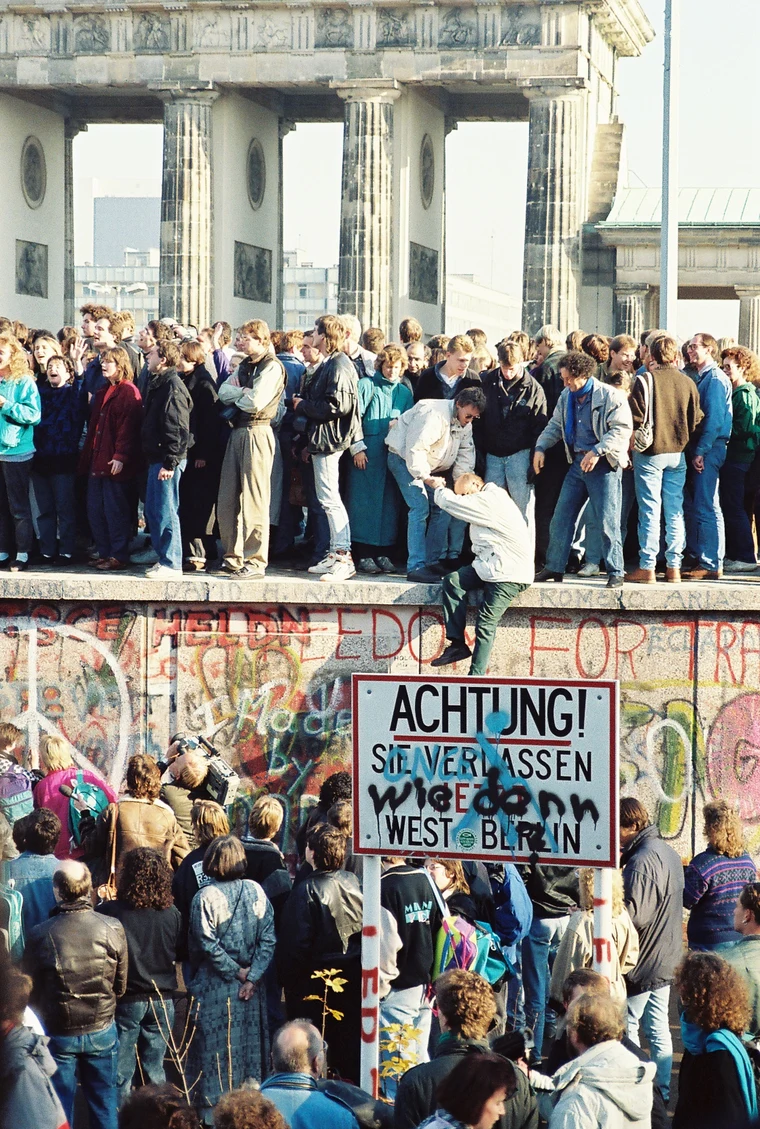
Crowds gather on the Berlin Wall near the Brandenburg Gate on 9 November 1989. The Wall's fall marked the beginning of the end of the Cold War; the Soviet Union dissolved two years later.. Image: Sue Ream, via Wikimedia Commons (CC BY 3.0)
Frequently asked questions
- Why was the Cold War called 'cold'?
- It was called cold because there was no direct, large-scale military conflict between the US and Soviet Union — the two main adversaries. Writer George Orwell first used the term in 1945, and journalist Walter Lippmann popularised it. The 'heat' of direct combat was always present in proxy conflicts, but the main rivals never fought each other openly.
- Who won the Cold War?
- The United States and its Western allies are generally considered to have won. The Soviet Union dissolved in 1991, communist governments in Eastern Europe collapsed, and Western liberal democracy expanded. However, many historians caution that 'winning' oversimplifies a complex transition — and that the legacy of the Cold War continues to shape global politics today.
- What was the Iron Curtain?
- The Iron Curtain was the symbolic and physical boundary dividing Europe between Western democracies and Eastern communist states from 1947 to 1991. Churchill's phrase captured how the Soviet Union had sealed off its sphere of influence. In Berlin, it became a literal wall — built in 1961, it divided the city and prevented East Germans from fleeing to the West.
- How did the Cold War affect ordinary people?
- Profoundly. In the US, fear of nuclear war led to civil defence drills and bomb shelters. In Eastern Europe, citizens lived under surveillance, restricted travel, and censored information. In the developing world, proxy conflicts killed millions. The space race and defence spending drove technological advances — from the internet to GPS — that shaped life for everyone.