Why the French Revolution Happened
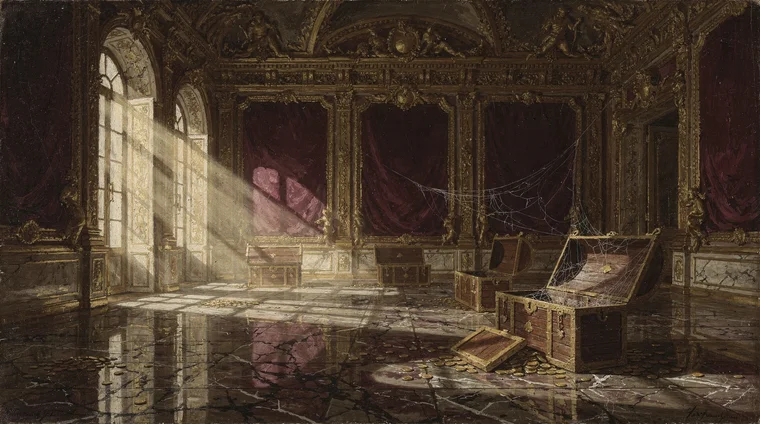
France in the 1780s was facing multiple crises at once. King Louis XVI was an absolute monarch — in theory, his power was unlimited. In practice, France was nearly bankrupt. Two costly wars (including supporting the American Revolution) had drained the treasury. A series of poor harvests drove bread prices to levels ordinary people could not afford.
French society was divided into three estates. The First (clergy) and Second (nobility) paid little tax. The Third Estate — everyone else, from wealthy merchants to starving peasants — bore most of the burden. When Louis called the Estates-General in 1789 to address the financial crisis, the Third Estate demanded a greater voice.
The Enlightenment influence
Philosophers like Voltaire, Rousseau, and Montesquieu had spent decades questioning absolute monarchy and arguing for reason, individual rights, and popular sovereignty. These ideas from the Enlightenment had spread through educated French society. The American Declaration of Independence (1776) showed that revolution was possible.
The Revolution Unfolds: 1789–1799
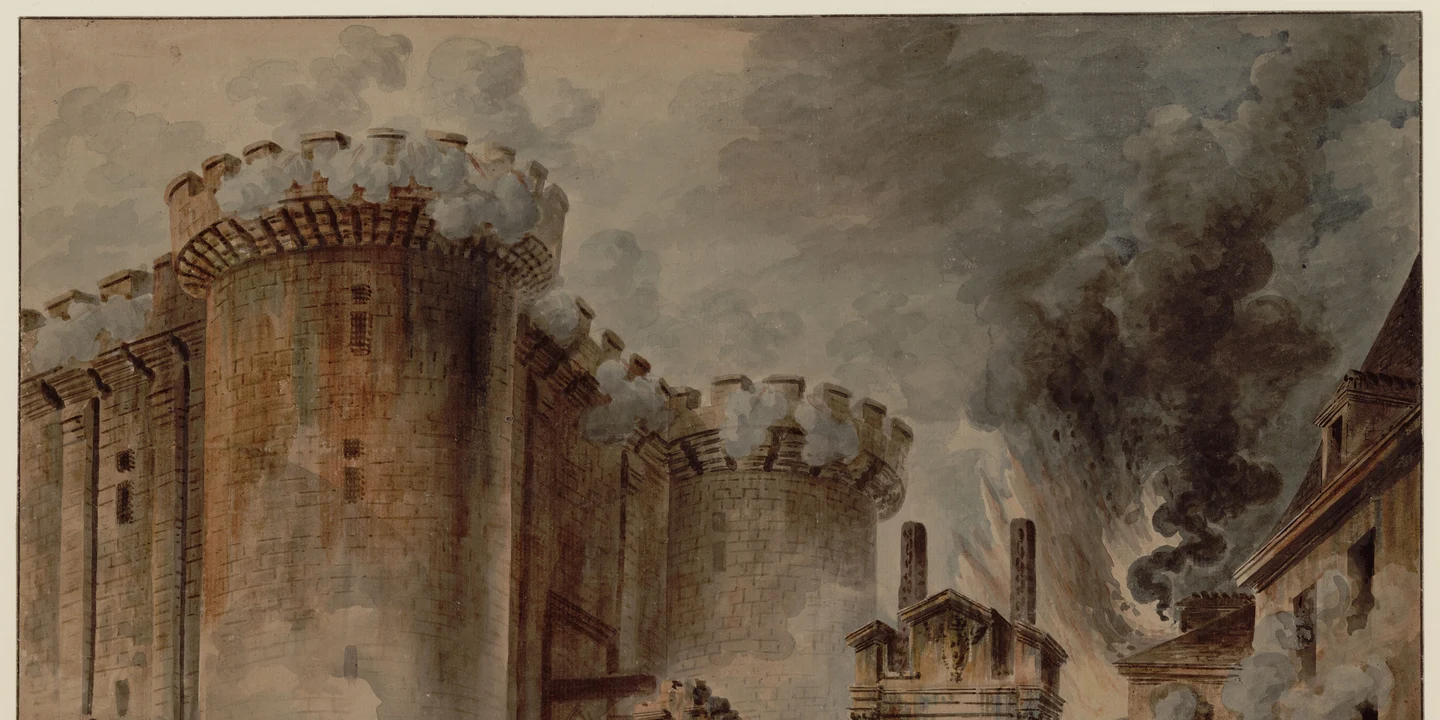
The French Revolution moved quickly from reform to radical transformation. In June 1789, the Third Estate declared itself a National Assembly. Members took an oath not to disband until France had a written constitution. When Louis XVI threatened military force, Parisian crowds stormed the Bastille on 14 July. This act — seizing a symbol of royal tyranny — became the defining moment of the revolution.
The Declaration of the Rights of Man and Citizen, adopted in August 1789, stated that men were born free and equal in rights. It became one of the foundational documents of modern democracy.
The Terror
The revolution became increasingly radical. A Committee of Public Safety, led by Maximilien Robespierre, took control in 1793. It executed not just the King (guillotined in January 1793) and Queen Marie Antoinette, but anyone deemed a threat to the revolution. Around 17,000 people were officially executed during the Reign of Terror; many thousands more died in prison. Robespierre himself was eventually arrested and guillotined in 1794.
Napoleon
The French Revolution ended in chaos and instability. Napoleon Bonaparte, a military general who had risen to prominence during the revolution's wars, seized power in a coup in 1799. He imposed order — but at the cost of democratic rule.
Why the French Revolution Still Matters
The French Revolution permanently changed how people thought about government. Before 1789, monarchy and hereditary privilege were seen as natural and God-given. After the revolution, popular sovereignty — the idea that governments derive their authority from the people — became the default assumption of modern politics.
The revolutionary ideals of liberté, égalité, fraternité (liberty, equality, fraternity) remain France's national motto. The metric system was invented during the revolution. The modern concept of left and right in politics comes from seating arrangements in the National Assembly, where radicals sat on the left and conservatives on the right.
Global impact
The French Revolution inspired liberal and nationalist movements across Europe throughout the 19th century. It contributed to independence movements in Latin America. Its ideals clashed directly with the conservative order that the Industrial Revolution was creating — helping to generate the ideological conflicts that dominated the 19th and 20th centuries.
Frequently asked questions
- What were the main causes of the French Revolution?
- The main causes were financial crisis (France was nearly bankrupt), social inequality (the tax burden fell on the poor, not the privileged), food shortages following harvest failures, and Enlightenment ideas challenging the legitimacy of absolute monarchy. These factors combined to produce a political crisis that the monarchy could not manage.
- What was the Bastille and why was it stormed?
- The Bastille was a medieval fortress in Paris used as a prison and symbol of royal power. On 14 July 1789, a crowd stormed it to seize weapons and free prisoners. Only seven were inside, but the symbolic importance was enormous: ordinary people could act against the king. France still celebrates 14 July as Bastille Day.
- Why did the revolution become so violent?
- Several factors escalated the violence. External enemies threatened to crush the revolution, creating a siege mentality. Political factions competed using fear and denunciation. Economic hardship fuelled popular anger. The logic of revolutionary purity — anyone who questioned it was an enemy — created a cycle of suspicion that consumed even its own leaders.
- Did the French Revolution succeed?
- It depends on the standard. The revolution destroyed the ancien régime — France never returned to absolute monarchy. It spread revolutionary ideas across the world. But it failed to establish stable democracy — France had multiple constitutions, periods of dictatorship, and another monarchy before settling into a lasting republic. Its ideals outlasted its immediate political failures.