What was the Treaty of Versailles and why was it created?
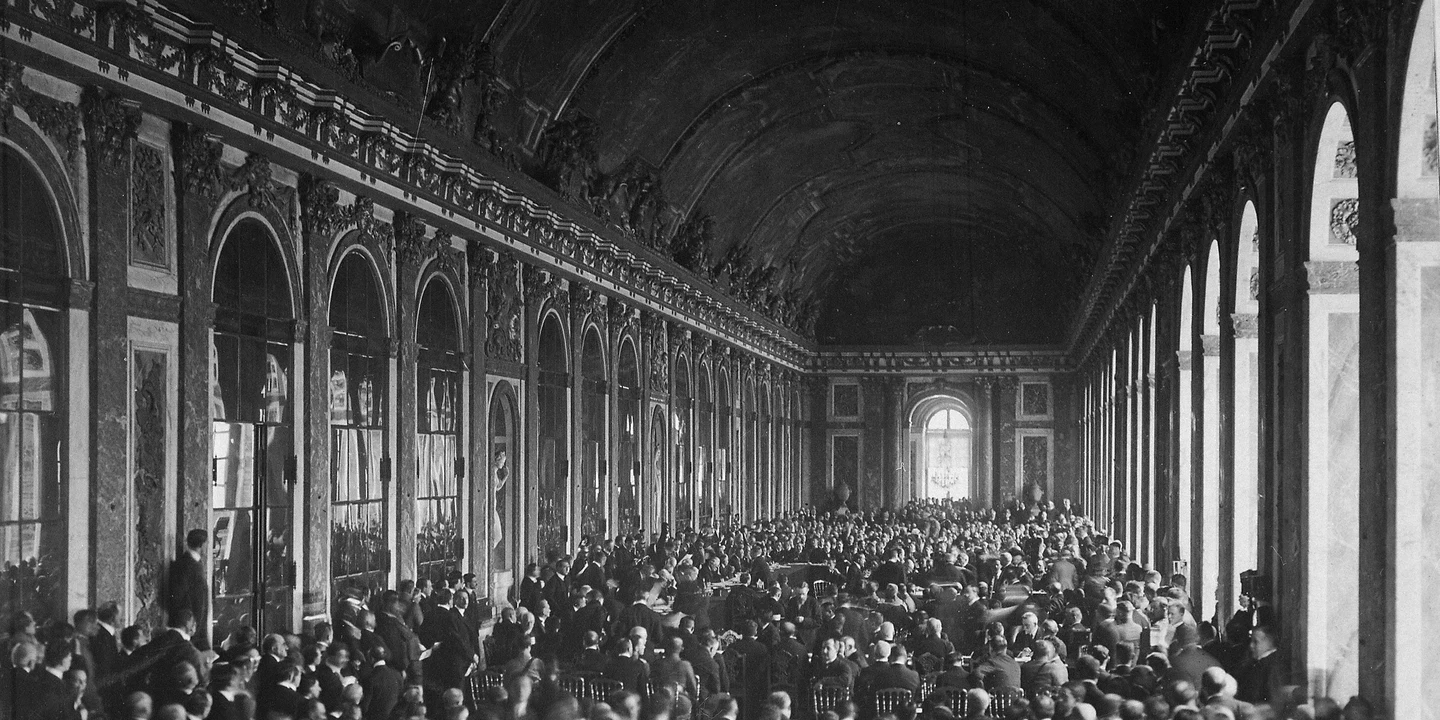
The Treaty of Versailles was a peace settlement signed on 28 June 1919 at the Palace of Versailles near Paris. It aimed to establish lasting peace after four years of devastating global conflict.
The Paris Peace Conference
Negotiations began in January 1919 and were dominated by four leaders known as the Big Four. French Prime Minister Georges Clemenceau wanted to punish Germany and guarantee French security — France had suffered enormous destruction during the war, with much of the fighting on French soil. British Prime Minister David Lloyd George sought a balanced peace but faced public pressure to make Germany pay. US President Woodrow Wilson promoted his idealistic Fourteen Points, including open diplomacy, free trade, and the creation of a League of Nations. Italian Prime Minister Vittorio Orlando focused on territorial gains for Italy.
These competing visions produced a compromise that satisfied none of them fully. Germany was excluded from negotiations entirely, as were Russia and the defeated Central Powers. The resulting treaty reflected the victors' priorities rather than a shared vision for peace.
The League of Nations
One of Wilson's key achievements was the inclusion of the League of Nations in the treaty. This international organisation was designed to resolve disputes through negotiation rather than war. However, its effectiveness was undermined from the start because the United States never joined.
Key terms of the Treaty of Versailles
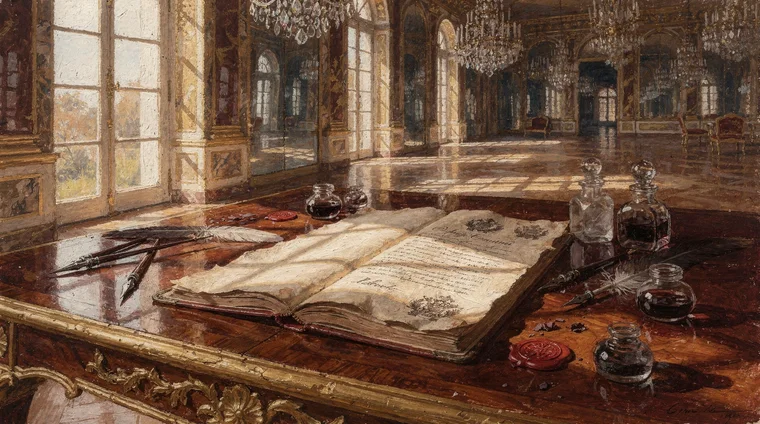
In total, the treaty contained 440 articles covering territorial changes, military restrictions, financial penalties, and the creation of new international institutions. Several provisions proved especially consequential.
War guilt and reparations
Article 231 — the war guilt clause — forced Germany to accept sole responsibility for causing World War 1. Based on this clause, Germany was ordered to pay reparations eventually set at 132 billion gold marks (roughly $33 billion at the time). These payments crippled the German economy throughout the 1920s and fuelled hyperinflation that wiped out the savings of ordinary citizens.
Territorial losses
Germany lost approximately 13 per cent of its territory and 10 per cent of its population. Alsace-Lorraine was returned to France. The Rhineland was demilitarised. The Saar coalfields were placed under international control. Poland received a corridor to the Baltic Sea that split East Prussia from the rest of Germany. All German overseas colonies were redistributed among the Allied powers.
Military restrictions
The German army was limited to 100,000 troops. In addition, conscription was banned. The navy was reduced to a handful of ships, and Germany was forbidden from possessing submarines, military aircraft, or tanks. According to the Imperial War Museum, these restrictions were designed to prevent Germany from ever waging aggressive war again.
How Germany and the world reacted
The treaty provoked immediate outrage in Germany. Many Germans rejected the idea that their country bore sole responsibility for the war. They called the treaty a Diktat — a dictated peace imposed without negotiation.
The stab-in-the-back myth
Nationalist politicians promoted the false narrative that the German army had never been defeated on the battlefield but had been betrayed by civilians, politicians, and revolutionaries at home. This "stab-in-the-back" myth became central to far-right politics in Weimar Germany. It undermined public trust in democracy and gave extremists a powerful propaganda tool. Adolf Hitler used it relentlessly in his rise to power, telling Germans that the treaty was a national humiliation that must be reversed.
International divisions
The treaty also divided the Allies. The United States Senate refused to ratify it, largely because many senators opposed joining the League of Nations and surrendering sovereignty to an international body. Without American participation, the League lacked the authority to enforce its decisions. Britain soon began to view the terms as too harsh, while France considered them too lenient. As the BBC notes, this lack of consensus weakened international cooperation throughout the 1920s and 1930s.
How the Treaty of Versailles contributed to World War 2
Historians widely regard the Treaty of Versailles as a factor in the outbreak of World War 2. Its terms created economic hardship, political instability, and deep resentment in Germany.
Economic collapse and political extremism
As a result, reparation payments drained Germany's economy. Hyperinflation in 1923 destroyed the currency. When the Great Depression struck in 1929, unemployment soared and democratic institutions crumbled. Extremist parties — including the Nazi Party — gained support by promising to tear up the treaty and restore German greatness.
The path to war
Hitler came to power in 1933 and systematically violated the treaty. He rebuilt the military, reoccupied the Rhineland, and annexed Austria and Czechoslovakia. The Allies, reluctant to risk another war, pursued appeasement. When Germany invaded Poland in September 1939, it became clear that the peace settlement of 1919 had failed to prevent the conflict it was designed to make impossible.
The Treaty of Versailles remains one of the most studied documents in modern history. It demonstrates how a peace agreement intended to end all wars can, through its own shortcomings, help cause the next one. For students of history, the treaty raises enduring questions about justice, punishment, and what makes a lasting peace.
Did you know?
-
The Treaty of Versailles required Germany to pay reparations of 132 billion gold marks — equivalent to roughly $33 billion in 1921 — an amount so large that the final payment was not made until 2010.
BBC Bitesize — The Treaty of Versailles -
Article 231, the war guilt clause, forced Germany to accept full responsibility for starting World War 1 — a provision that provoked lasting resentment and was exploited by Adolf Hitler in his rise to power.
Imperial War Museum — Treaty of Versailles -
Germany lost approximately 65,000 square kilometres of territory and 7 million citizens under the Treaty of Versailles, including Alsace-Lorraine to France and large areas to the newly created Poland.
Encyclopaedia Britannica — Treaty of Versailles
Frequently asked questions
- When was the Treaty of Versailles signed?
- The Treaty of Versailles was signed on 28 June 1919, exactly five years after the assassination of Archduke Franz Ferdinand that triggered World War 1. The signing took place in the Hall of Mirrors at the Palace of Versailles near Paris.
- What was the war guilt clause?
- Article 231 of the treaty forced Germany to accept sole responsibility for causing World War 1. This clause justified the reparation payments imposed on Germany and caused deep resentment among the German population.
- Why did the United States reject the Treaty of Versailles?
- The US Senate refused to ratify the treaty mainly because senators opposed joining the League of Nations. They feared it would commit America to international obligations and undermine national sovereignty. Without the US, the League was significantly weakened.
- Did the Treaty of Versailles cause World War 2?
- Many historians argue it was a major contributing factor. The treaty's harsh terms created economic hardship and political resentment in Germany. These conditions helped Adolf Hitler rise to power and pursue the aggressive policies that led to war in 1939.
- Who were the Big Four at the Paris Peace Conference?
- The Big Four were Woodrow Wilson (United States), Georges Clemenceau (France), David Lloyd George (Britain), and Vittorio Orlando (Italy). They dominated the negotiations that produced the Treaty of Versailles in 1919.