What Caused World War 1
World War 1 did not have a single cause. Historians identify several long-term tensions that made a major European war likely — and a single event that ignited it.
Long-term causes
Four factors — often remembered as MAIN — set the stage for World War 1: - Militarism: European powers were in a decades-long arms race, building up massive armies and navies - Alliances: Europe was divided into two armed camps — the Triple Entente (Britain, France, Russia) and the Triple Alliance (Germany, Austria-Hungary, Italy) - Imperialism: competition for colonies in Africa and Asia created tensions between the major powers - Nationalism: ethnic groups across Europe demanded self-determination, destabilising multi-ethnic empires like Austria-Hungary
The spark: Assassination in Sarajevo
On 28 June 1914, Archduke Franz Ferdinand was assassinated in Sarajevo by a Bosnian Serb nationalist. Austria-Hungary blamed Serbia and issued an ultimatum. Within six weeks, the alliance system had pulled all the major powers into the conflict. The causes of World War 2 grew partly from World War 1's unresolved tensions.
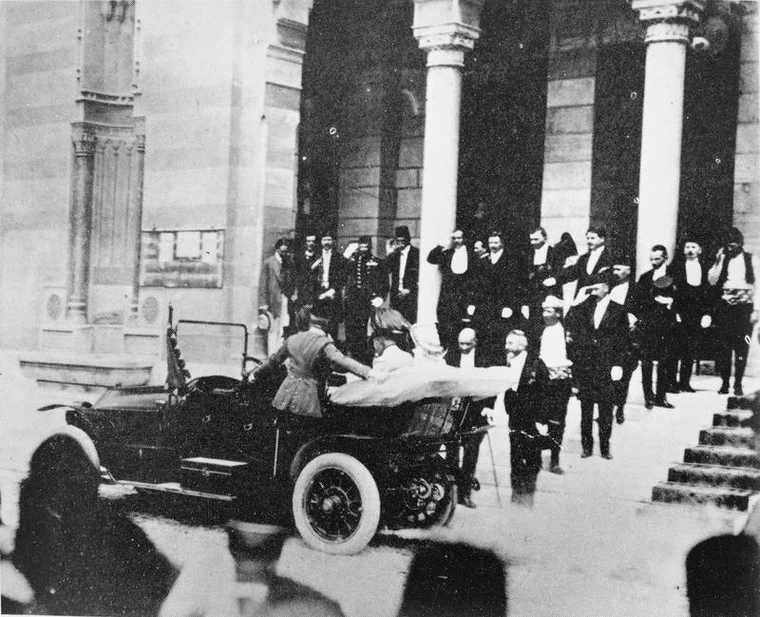
Archduke Franz Ferdinand rides through Sarajevo on 28 June 1914, shortly before his assassination. His killing triggered the alliance system that plunged Europe into war.. Image: Unknown photographer, Imperial War Museums (IWM Q 91848), via Wikimedia Commons (Public domain)
How World War 1 Was Fought
World War 1 introduced new forms of warfare on a catastrophic scale. Industrial technology made the conflict deadlier than any previous war.
The Western Front
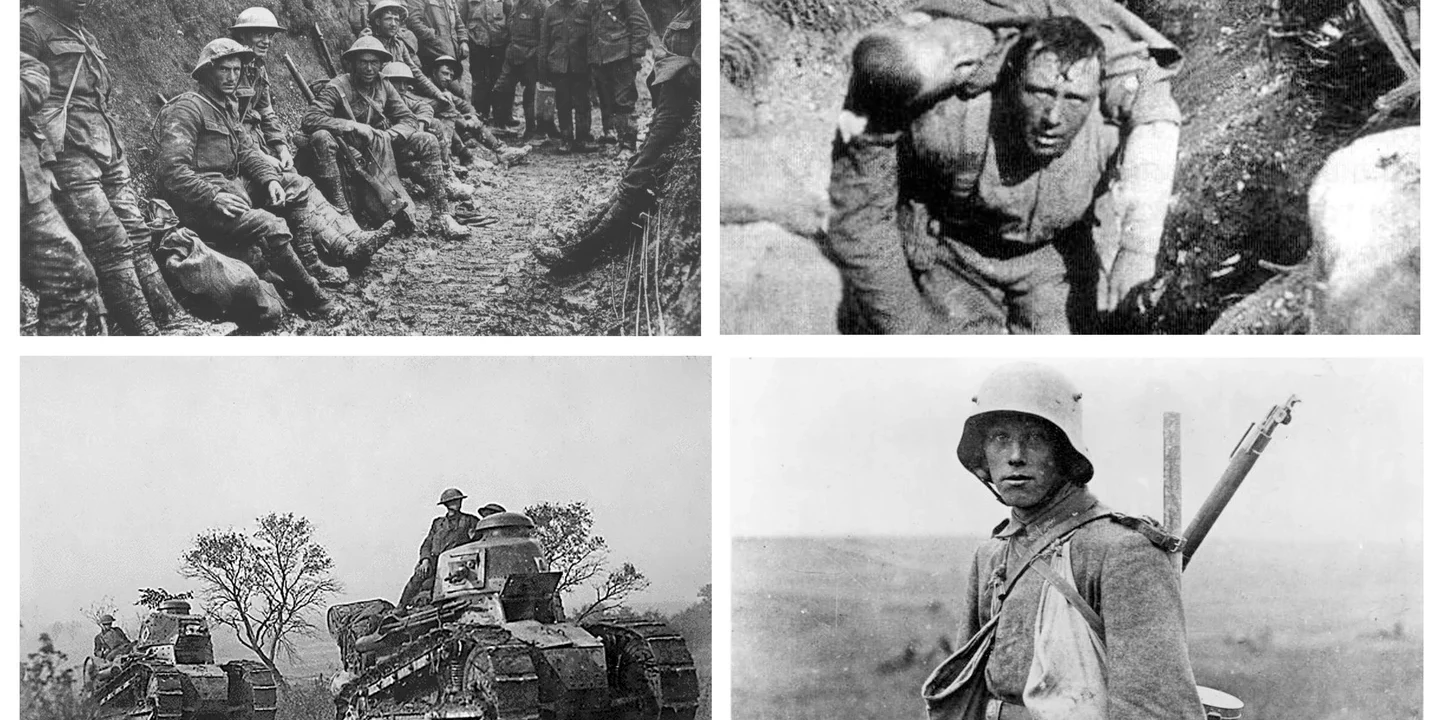
The defining theatre of the Great War was the Western Front — a line of trenches stretching 700 km from Belgium to Switzerland. Soldiers on both sides dug into the ground to shelter from machine guns and artillery. The result was a stalemate that lasted four years. Millions died for territorial gains measured in metres.
New weapons
World War 1 introduced industrial-scale killing: machine guns that could fire 600 rounds per minute, poison gas (first used at Ypres in 1915), tanks (introduced by Britain in 1916), and aircraft used for bombing and reconnaissance. These weapons overwhelmed commanders trained for fast-moving cavalry warfare.
Key battles
The Battle of the Marne (1914) stopped the German advance into France. The Battle of the Somme (1916) saw 57,000 British casualties on its first day — the bloodiest day in British military history. The Battle of Verdun (1916) lasted ten months and cost nearly 700,000 lives. These battles defined a generation.
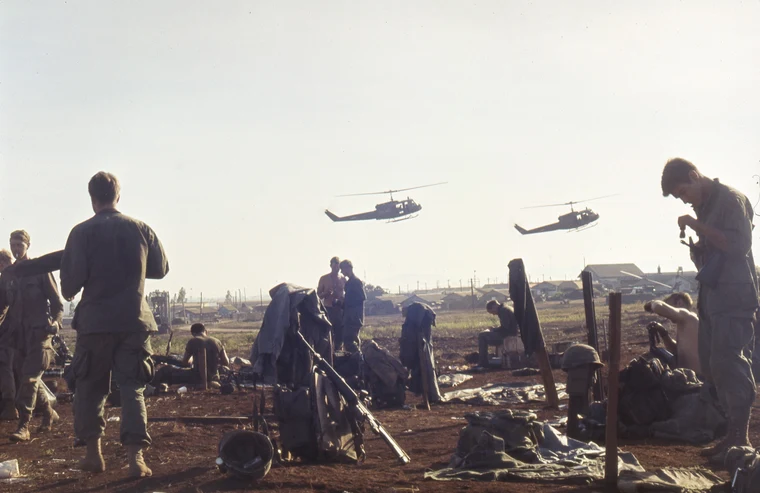
Soldiers wait in a trench before going over the top. Assaults across open ground into machine gun fire resulted in catastrophic casualties on both sides.. Image: National Library of Scotland, via Wikimedia Commons (Public domain)
The End of World War 1 and Its Aftermath
World War 1 ended on 11 November 1918 — the Armistice. Germany signed a ceasefire after its allies collapsed and its home front faced revolution.
The Treaty of Versailles
The Treaty of Versailles (1919) formally ended the conflict. Germany was forced to accept sole responsibility for the war (the 'war guilt' clause), pay enormous reparations, give up territory, and drastically reduce its military. Many historians argue that the Treaty's harsh terms sowed the seeds of the next conflict.
The redrawing of the map
World War 1 destroyed four empires: the German, Austro-Hungarian, Ottoman, and Russian. New nations emerged from their wreckage — Poland, Czechoslovakia, Yugoslavia, and the Baltic states. The Ottoman collapse created the modern Middle East. Britain and France drew borders that still shape conflicts today.
Long-term impact
World War 1 killed roughly 20 million people and wounded 21 million more. The 1918 influenza pandemic — spread partly by wartime movement — killed an estimated 50 million more. The political, economic, and psychological trauma of World War 1 shaped Europe for decades.
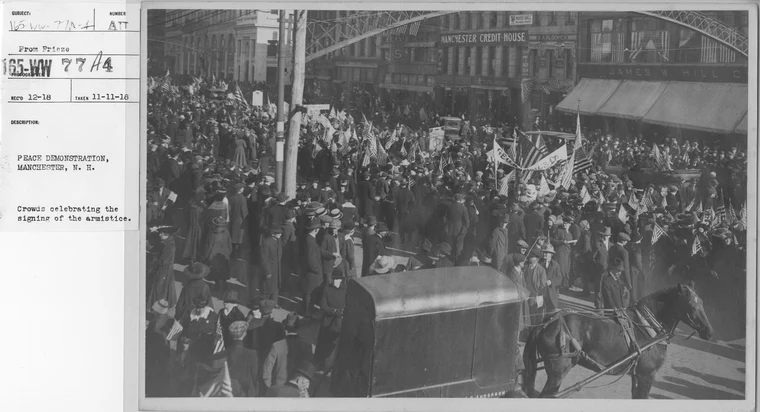
Jubilant crowds fill the streets of Paris on 11 November 1918 to celebrate the Armistice. The war had cost over 20 million lives across four years of fighting.. Image: American official photographer, Imperial War Museums (IWM Q 65857), via Wikimedia Commons (Public domain)
Frequently asked questions
- Why is World War 1 sometimes called the Great War?
- World War 1 was called the Great War because it was the largest and most destructive conflict the world had seen — involving more countries and using more industrial technology than any previous war. The name 'World War 1' became standard only after a second global conflict made it necessary to distinguish between the two.
- Which countries fought in World War 1?
- The main Allied powers in World War 1 were Britain, France, Russia, Italy (from 1915), and the United States (from 1917). The Central Powers were Germany, Austria-Hungary, the Ottoman Empire, and Bulgaria. Many colonies contributed troops to World War 1 — soldiers from India, Australia, Canada, South Africa, and New Zealand fought and died in large numbers.
- Why was World War 1 fought in trenches?
- Trench warfare emerged because industrial weapons — especially machine guns and artillery — made open-field attacks catastrophically expensive. Soldiers dug into the ground for protection. Both sides then found it nearly impossible to advance across the open ground between the trenches, creating a stalemate. World War 1's Western Front became a 700 km line of trenches from 1914 to 1918.
- How did World War 1 lead to World War 2?
- The Treaty of Versailles imposed harsh terms on Germany — reparations, territorial losses, and sole blame for the war. Economic hardship and national humiliation fuelled resentment that helped Adolf Hitler rise to power. His promise to reverse Germany's defeat made the unresolved grievances of 1918 a direct cause of the next global war.