
Understanding Negative Numbers
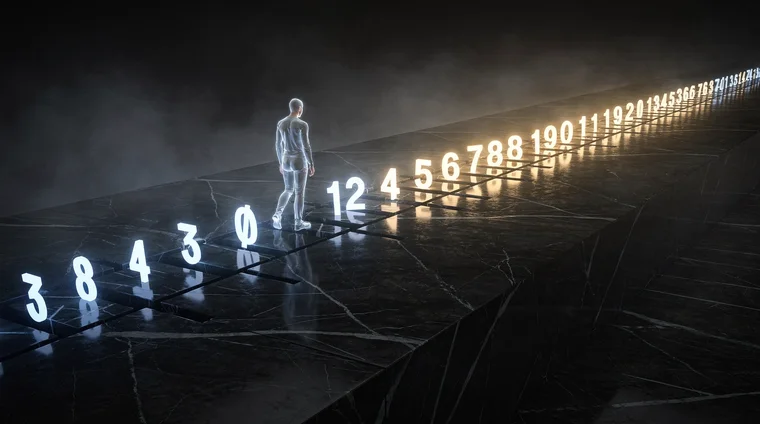
Imagine a number line stretching from left to right. Zero is in the middle. Positive numbers go to the right. Negative numbers go to the left. The further left you go, the smaller the number. So −5 is less than −3, even though 5 is greater than 3.
Negative numbers are written with a minus sign: −4, −12, −100. Every positive number has a negative counterpart — its opposite. The opposite of 7 is −7. When you add a number and its opposite, the result is always zero: 7 + (−7) = 0.
Absolute value
The absolute value of a number is its distance from zero, ignoring direction. The absolute value of −6 is 6. The absolute value of 6 is also 6. Written using vertical bars: |−6| = 6. Absolute value is useful when you care about magnitude rather than direction — for example, when calculating how far you have travelled, not which direction.

Adding, Subtracting, and Multiplying Negative Numbers
Working with negative numbers follows clear rules that make sense once you see the pattern.
Adding negative numbers
Adding a negative number is the same as subtracting. Think of moving left on the number line.
- 5 + (−3) = 5 − 3 = 2
- −4 + (−6) = −10 (moving further left)
- −2 + 7 = 5 (moving right from −2)
Subtracting negative numbers
Subtracting a negative number is the same as adding. Two negatives make a positive direction change.
- 8 − (−3) = 8 + 3 = 11
- −5 − (−2) = −5 + 2 = −3
Multiplying and dividing
The rules for signs are consistent: - Positive × positive = positive - Negative × negative = positive - Positive × negative = negative - Negative × positive = negative
So −4 × −3 = 12, and −4 × 3 = −12. These rules ensure that algebra is internally consistent.
Where Negative Numbers Appear in Everyday Life
Negative numbers are not just abstract — they describe real situations every day.
Temperature
The Celsius scale uses negative numbers for temperatures below freezing. Water freezes at 0°C. The coldest temperature ever recorded on Earth was −89.2°C in Antarctica. The Kelvin scale avoids negative temperatures by starting at absolute zero (−273.15°C = 0 K), but Celsius negative numbers are universal in weather and science.
Finance
Bank balances go negative when you spend more than you have — this is an overdraft. A company's profit and loss statement uses negative numbers for losses. Debt itself is a negative financial quantity. When you repay a debt, you are adding a positive number to a negative balance, moving toward zero.
Altitude and coordinates
Geographers use negative altitudes for depths below sea level. The Dead Sea surface sits at about −430 metres. In coordinate geometry, negative coordinates place points to the left of or below the origin. Negative numbers combine naturally with decimals and fractions to cover every position on the number line.

Frequently asked questions
- Is zero positive or negative?
- Neither. Zero is the boundary between positive and negative numbers, but it belongs to neither category. Zero has no sign. It is greater than any negative number and less than any positive number. In some mathematical contexts, 'non-negative' means zero or greater, and 'non-positive' means zero or less.
- Why is a negative times a negative positive?
- One way to understand it: think of multiplication as repeated addition. 3 × (−4) means add −4 three times: −12. Now, −3 × (−4) should reverse the direction again. If multiplying by −1 reverses sign, then reversing twice returns to positive. Mathematically, the rule ensures that the distributive property holds consistently throughout algebra.
- Who invented negative numbers?
- Negative numbers were used in ancient China and India, where they often represented debts or losses. Chinese mathematicians used red rods for positive and black for negative around 200 BCE. Indian mathematician Brahmagupta formalised rules for negative numbers in 628 CE. European mathematicians resisted them for much longer, calling them 'absurd' as late as the 17th century.
- How do you order negative numbers on a number line?
- On a number line, smaller numbers are always to the left. So −10 is to the left of −3, making −10 the lesser value. This feels counterintuitive because 10 is greater than 3 in everyday counting. Think of temperature: −10°C is colder than −3°C. Numbers further left — further from zero in the negative direction — are always smaller.