The Major Organ Systems
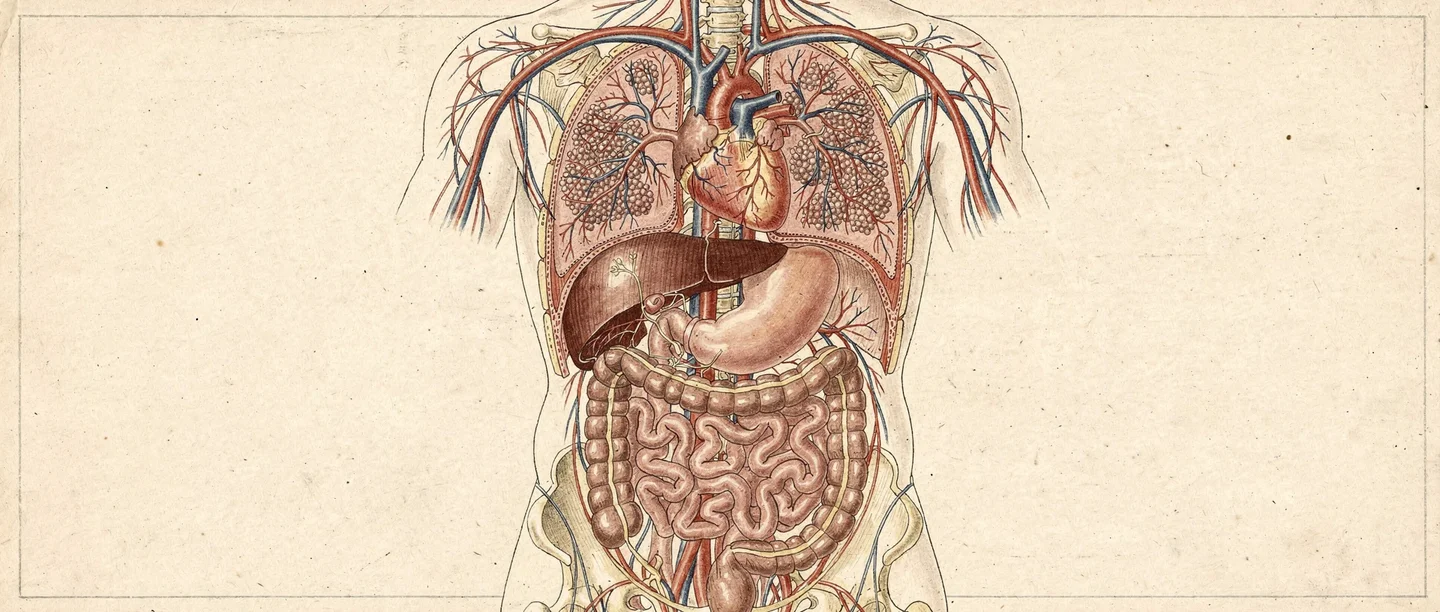
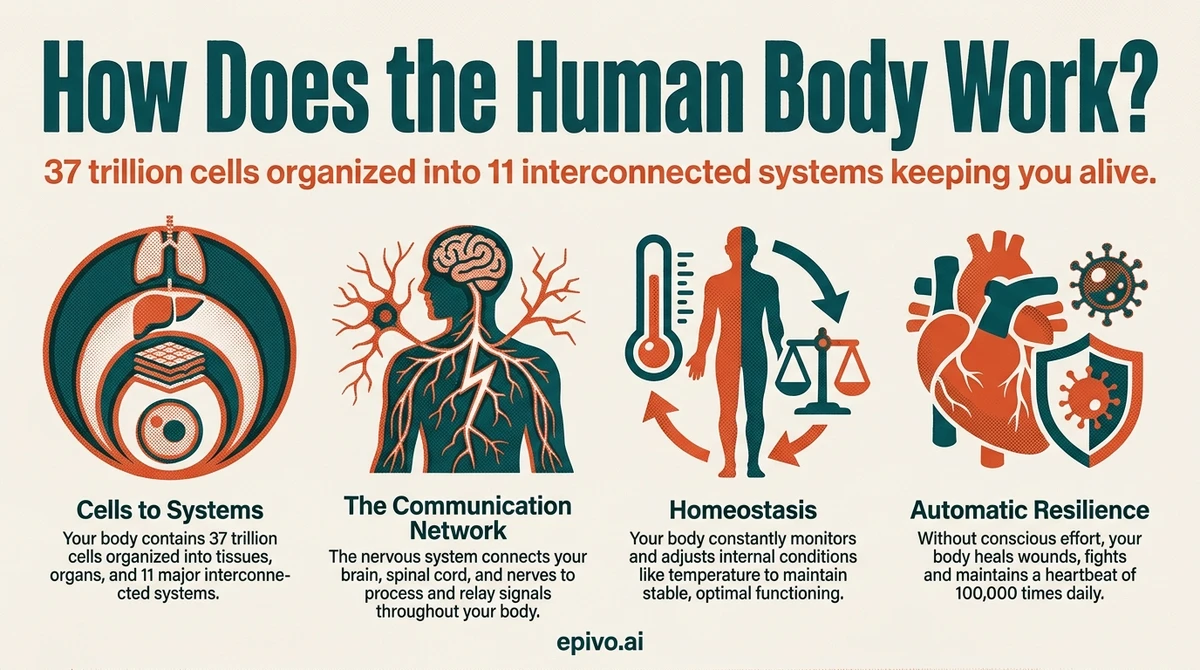
The human body is made of roughly 37 trillion cells. Groups of similar cells form tissues. Tissues form organs. Organs working together form organ systems. There are around 11 major organ systems.
Circulatory system
The heart pumps blood around the body through a network of arteries, veins, and capillaries. Blood carries oxygen and nutrients to every cell. It also removes carbon dioxide and waste products. The heart of an adult beats roughly 70 times per minute at rest — over 2.5 billion beats in a lifetime.
Respiratory system
The lungs take in oxygen from the air and release carbon dioxide — the waste product of energy production. Each breath draws air down the trachea and into smaller and smaller airways, ending in tiny air sacs called alveoli. Oxygen passes through their thin walls into the bloodstream, while carbon dioxide passes the other way.
Digestive system
The digestive system breaks food down into nutrients the body can absorb. Digestion begins in the mouth. Food passes through the oesophagus to the stomach, where acid and enzymes break it down further. The small intestine absorbs most nutrients. The large intestine absorbs water. The liver processes nutrients and detoxifies the blood.
The Brain, Nerves, and Immune System
The nervous system is the body's communication network. The brain processes information and sends instructions. The spinal cord relays signals between the brain and the rest of the body. Nerves carry electrical signals at speeds of up to 120 metres per second.
The brain
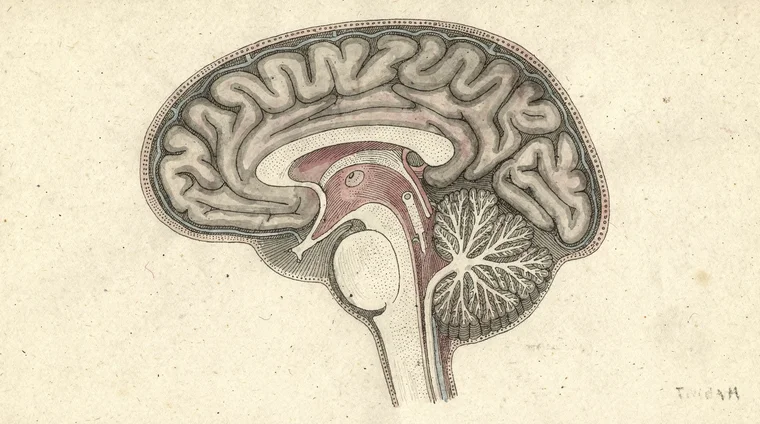
The human brain has about 86 billion neurons. It controls voluntary movement, language, memory, emotion, and thought. Different regions handle different functions. The cerebral cortex — the wrinkled outer layer — handles higher thinking. The cerebellum coordinates movement and balance. The brainstem controls automatic functions like breathing and heart rate.
The immune system
The immune system defends the human body against infection. White blood cells patrol the bloodstream, identifying and destroying pathogens. The immune system also remembers past infections. When it encounters a pathogen it has seen before, it responds faster and stronger. Vaccines work by giving the immune system a preview — a harmless version of the pathogen that trains it without causing disease.
Hormones and the endocrine system
The endocrine system uses hormones — chemical messengers — to regulate long-term processes. Insulin controls blood sugar. Adrenaline prepares the body for action. Growth hormone regulates development. Hormones are produced by glands including the pancreas, thyroid, and adrenal glands.
How the Body Maintains Balance
The human body constantly monitors its own internal state and adjusts to keep conditions stable. This process is called homeostasis.
Temperature regulation
The body maintains a core temperature of around 37°C. When you are too hot, sweat glands release water that evaporates and cools the skin. Blood vessels near the surface dilate to radiate heat. When you are cold, muscles shiver — rapid contractions that generate heat. Blood vessels near the skin constrict to retain warmth.
Bone and muscle
The skeletal system — 206 bones in an adult — provides structure, protects organs, and produces blood cells in the bone marrow. Muscles are attached to bones by tendons. When a muscle contracts, it pulls on its tendon, moving the bone. Most movements require pairs of muscles working in opposition — one contracting while the other relaxes. The chemistry of muscle contraction involves electrical signals and calcium ions.
Frequently asked questions
- How many organs does the human body have?
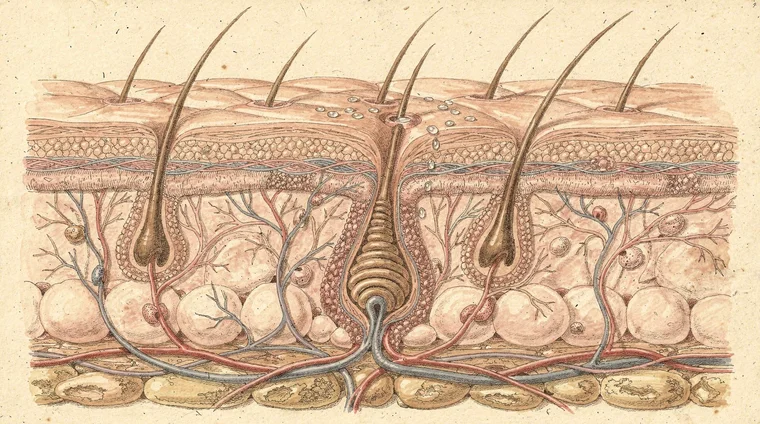
- Estimates vary depending on how 'organ' is defined, but most biologists count 78 organs in the human body. The largest is the skin. The largest internal organ is the liver. The smallest is the stapedius muscle in the ear, measuring about 1 mm. Some organs — like the appendix and tonsils — can be removed without major consequences.
- Why do we need sleep?
- Sleep is essential for the human body to repair itself and consolidate memories. During sleep, the brain clears waste products that build up during the day. Muscles and tissues repair. The immune system becomes more active. Hormones regulating growth and appetite are released. Teenagers need about 8–10 hours per night; sleep deprivation impairs concentration, mood, and health.
- How does the body fight infection?
- The immune system uses multiple lines of defence. Skin and mucous membranes form a physical barrier. If a pathogen gets through, white blood cells called macrophages engulf and destroy it. T-cells and B-cells launch a more targeted attack. B-cells produce antibodies that recognise and neutralise specific pathogens. Memory cells remain long after the infection, enabling a faster response next time.
- How does the body get energy from food?
- Carbohydrates are broken down into glucose in the digestive system. Glucose enters the bloodstream and is transported to cells. Inside cells, glucose is converted to ATP (adenosine triphosphate) through a process called cellular respiration. ATP is the molecule that powers almost every cellular process — muscle contractions, protein synthesis, and active transport across cell membranes.