What Causes Climate Change
The greenhouse effect is natural and essential. Without it, Earth's average temperature would be about −18°C rather than +15°C. Greenhouse gases — mainly water vapour, carbon dioxide, and methane — trap outgoing heat and keep the planet warm enough for life.
Human activity has intensified this effect. Burning coal, oil, and natural gas releases carbon dioxide that was locked underground for millions of years. Deforestation removes trees that would otherwise absorb CO₂. Agriculture and livestock farming release methane. Between 1850 and today, atmospheric CO₂ has risen from roughly 280 parts per million to over 420 ppm — the highest level in at least 800,000 years.
The role of feedback loops
Warming triggers further warming. As Arctic ice melts, dark ocean water is exposed, absorbing more heat than ice reflects. As permafrost thaws, it releases stored methane. These feedback loops mean climate change can accelerate beyond what emissions alone would cause.
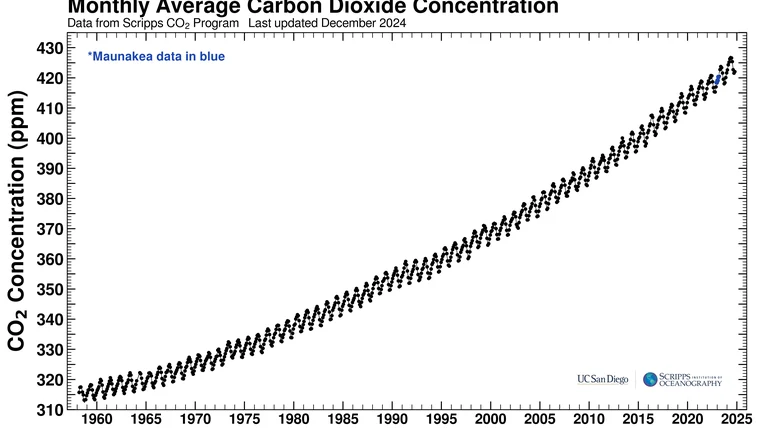
The Keeling Curve, showing the continuous rise in atmospheric carbon dioxide measured at the Mauna Loa Observatory in Hawaii since 1958. The sawtooth pattern reflects seasonal variation, while the overall trend shows a steady increase.. Image: Scripps Institution of Oceanography at UC San Diego, via Wikimedia Commons (CC BY 4.0)
The Effects of Climate Change
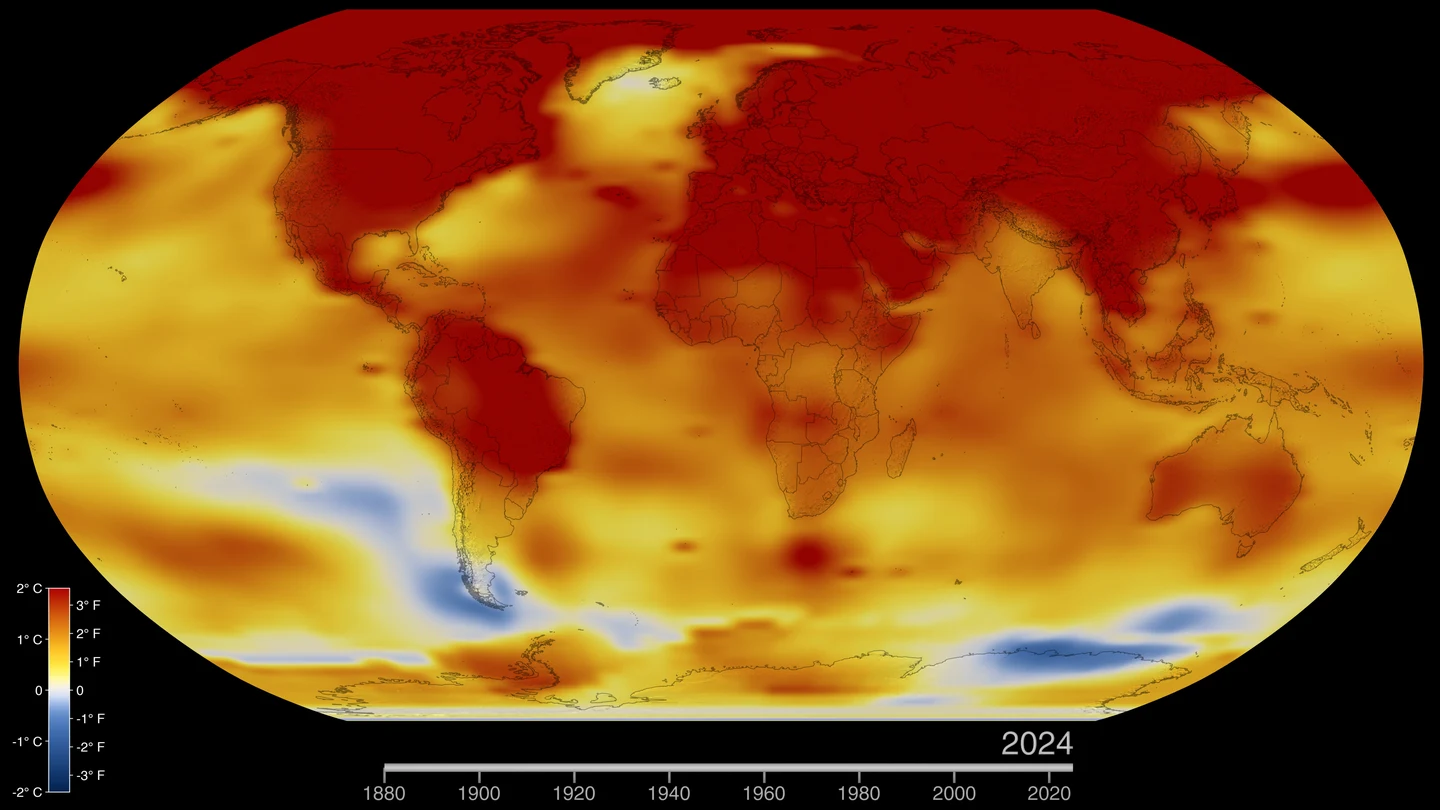
The global average temperature has already risen by about 1.1°C above pre-industrial levels. That may sound small, but small shifts in average temperature produce large changes in weather patterns.
Extreme weather
Climate change makes heatwaves more frequent and intense. It increases the energy available to storms, making hurricanes stronger. It disrupts rainfall patterns — causing droughts in some regions and severe flooding in others. Wildfire seasons are growing longer and more destructive.
Rising seas
Melting ice sheets and glaciers, combined with thermal expansion of warming oceans, are causing sea levels to rise. Coastal cities and island nations face increased flooding. By 2100, sea levels could rise by 0.3 to 1 metre depending on future emissions — displacing hundreds of millions of people.
Ecosystems under pressure
Corals bleach and die when ocean temperatures rise even slightly. Species are shifting their ranges toward the poles. Some are struggling to adapt fast enough. Climate change is now considered one of the biggest drivers of biodiversity loss.
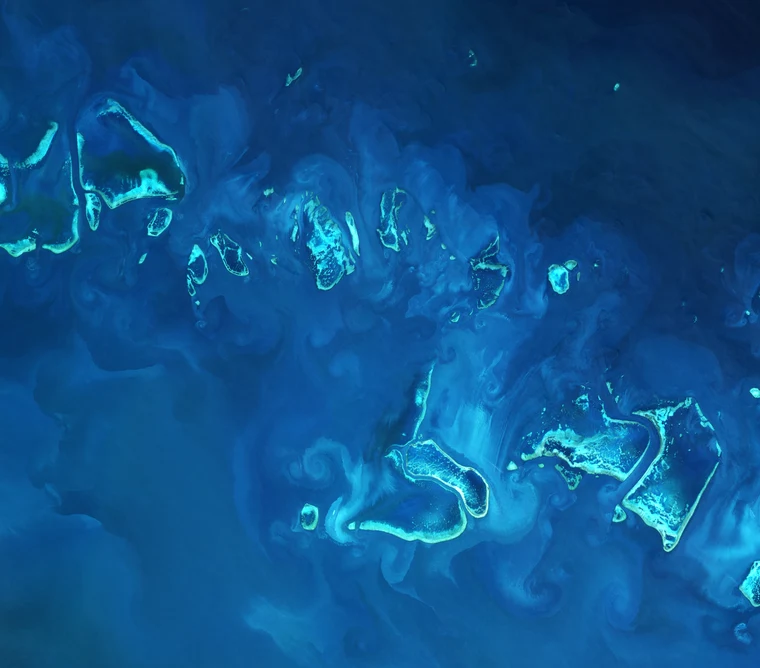
Satellite imagery from Europe's Copernicus Sentinel-2 showing coral bleaching in the Great Barrier Reef. Bleaching occurs when rising ocean temperatures cause corals to expel the algae that give them color and nutrients.. Image: European Union, Copernicus Sentinel-2 imagery, via Wikimedia Commons (Attribution)
What Is Being Done About Climate Change
In 2015, almost every country signed the Paris Agreement, committing to limit warming to 1.5–2°C above pre-industrial levels. This requires cutting global greenhouse gas emissions to near zero by around 2050.
Renewable energy
Solar and wind power are now the cheapest sources of new electricity generation in most of the world. Electric vehicles are replacing petrol and diesel cars. Batteries are storing more energy at lower cost each year. These changes are happening fast — but not yet fast enough.
What individuals can do
Personal choices matter: eating less meat, flying less, and reducing energy use all lower emissions. But large-scale climate change requires systemic action. Governments, businesses, and institutions must change the rules, incentives, and infrastructure that shape how societies use energy. Learn more from NASA's climate science team.
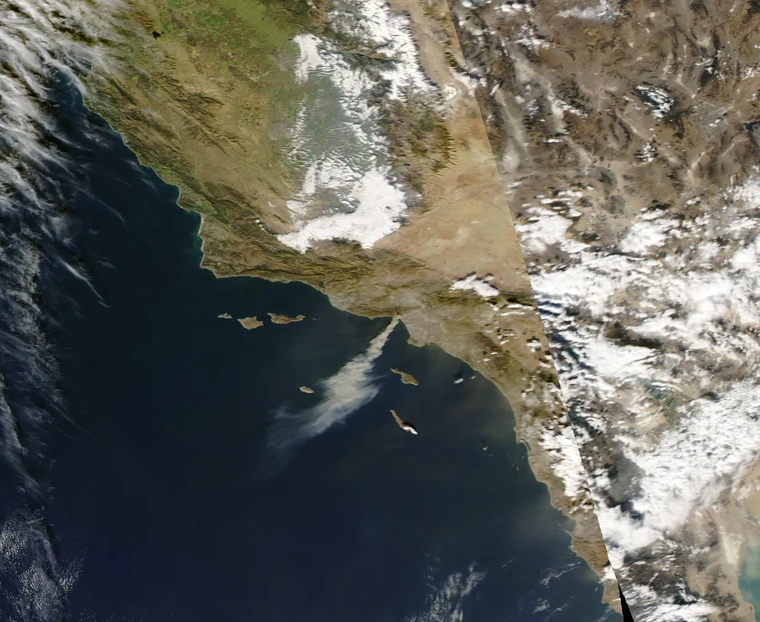
A satellite image captured by NASA's MODIS instrument showing active wildfires burning in California. Longer, more intense wildfire seasons are one of the documented consequences of climate change.. Image: MODIS Land Rapid Response Team, NASA GSFC, via Wikimedia Commons (Public domain)
Frequently asked questions
- Is climate change the same as global warming?
- Global warming refers specifically to the rise in Earth's average temperature. Climate change is the broader term — it includes warming but also covers the shifts in weather patterns, sea levels, ice coverage, and ecosystems that warming causes. Scientists now prefer 'climate change' because the effects are more complex than temperature alone.
- Has the climate changed before without human help?
- Yes — ice ages and warm periods have occurred naturally over millions of years, driven by changes in Earth's orbit, volcanic activity, and solar output. Today's climate change is different because it is happening much faster than natural shifts, and the main cause is human greenhouse gas emissions, not natural cycles.
- How does climate change affect students today?
- Students are already experiencing its effects: more school closures due to heatwaves, flooding affecting communities, and changing seasons disrupting outdoor activities. Climate change is also shaping career paths — clean energy, climate science, and sustainable design are among the fastest-growing fields for the next generation.
- What is the difference between weather and climate?
- Weather is what happens in the atmosphere on a given day — sunny, rainy, hot, or cold. Climate is the long-term pattern of weather in a region over decades. A heatwave is weather. The fact that heatwaves are becoming more frequent and severe is climate change.