What stress is and why it happens
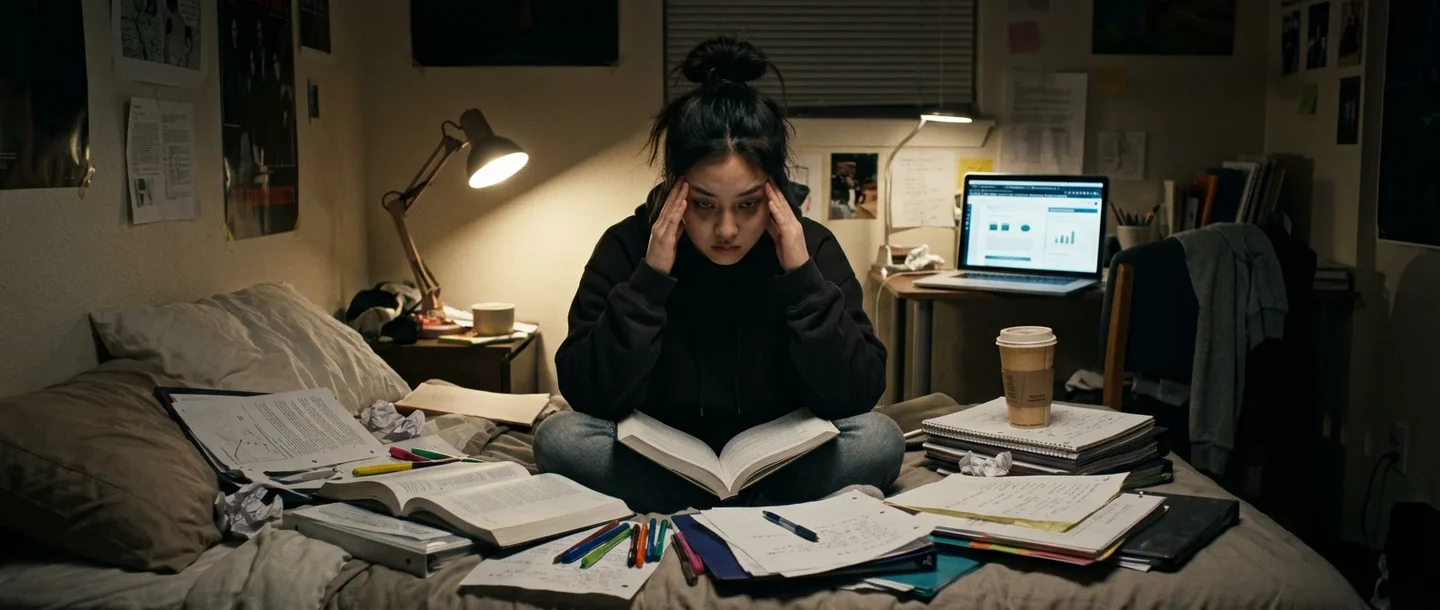
Understanding how to manage stress for students starts with knowing what stress actually is. Stress is your body's natural response to pressure or challenge. When you feel stressed, your heart beats faster, your breathing quickens, and your muscles tighten. This reaction is called the stress response — and in small doses, it is actually useful. It sharpens your focus and gives you energy to act.
When stress becomes a problem
However, when stress is too intense or lasts too long, it becomes harmful. The main stress hormone, cortisol, stays elevated and disrupts sleep, memory, and concentration. Common causes of stress for students include exams, friendship problems, and family worries. Crucially, stress is not a sign of weakness — it is a normal physical response that everyone experiences.
The adolescent brain and stress
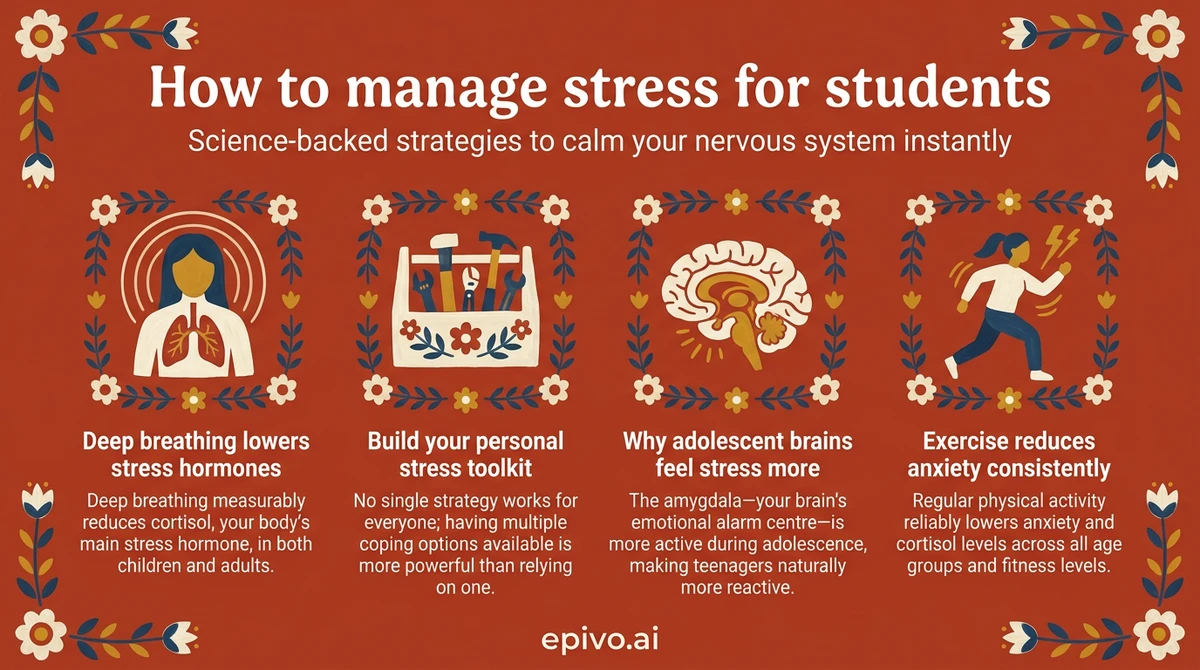
According to the National Institute of Mental Health, the amygdala — the brain's emotional alarm centre — is especially active during adolescence. As a result, pressures that may seem small to adults can feel enormous to a teenager. Understanding this helps students and parents respond with compassion rather than frustration.
Evidence-based strategies for managing stress
The most effective strategies for managing stress are simple, free, and backed by research. Furthermore, they work immediately — you do not need weeks of practice to feel a difference.
Deep breathing
Deep breathing is one of the most effective immediate tools for stress. Try breathing in for four counts, holding for four, and breathing out for four. This technique slows your heart rate and signals to your nervous system that you are safe. Research cited by the World Health Organization confirms that controlled breathing measurably lowers cortisol in both children and adults.
Physical activity
Physical exercise releases mood-lifting chemicals in the brain — including endorphins and serotonin. Even a brisk 20-minute walk can reduce stress noticeably. Additionally, regular exercise builds resilience against future stress by strengthening the body's recovery systems.
Talking to someone
Talking to a trusted person — a friend, teacher, or parent — reduces the burden of carrying worry alone. It also provides perspective. Sharing a problem out loud often makes it feel smaller and more manageable.
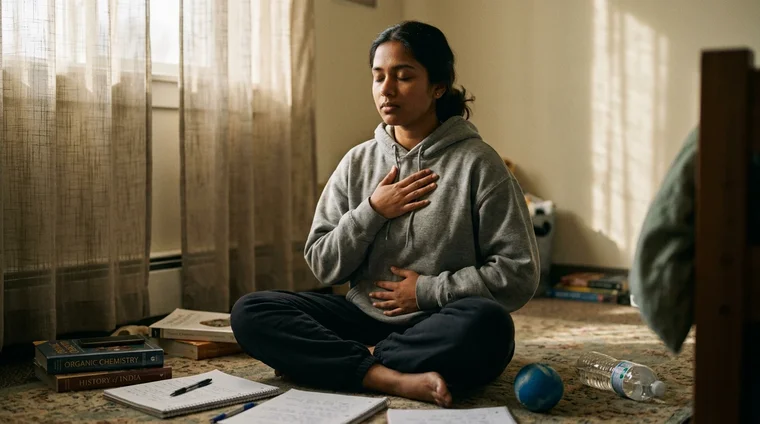
Image: Generated with AI (Epivo)
Building a personal stress toolkit
No single strategy works for everyone — therefore, the goal is to build a personal toolkit. For students who want to manage stress effectively, having several options available is more powerful than relying on one. Breaking a large problem into smaller steps removes the feeling of being overwhelmed. Creative activities like drawing, listening to music, or writing in a journal shift your attention away from the source of stress and give your nervous system time to recover.
For students who want structured support, Epivo's wellbeing curriculum teaches students how to manage stress as part of the Grade 5 to 9 programme — giving students a framework for understanding their emotions and choosing the right tool for each situation.
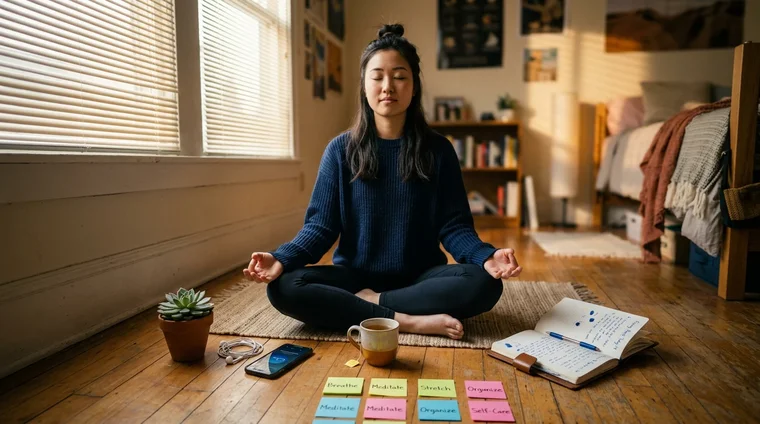
Image: Generated with AI (Epivo)
Did you know?
-
Deep breathing has been shown to lower cortisol — the body's main stress hormone — measurably in both children and adults, often within minutes.
NHS: Tips to Reduce Stress -
The amygdala — the brain's emotional alarm centre — is more active during adolescence, which is why everyday pressures can feel disproportionately intense to teenagers.
National Institute of Mental Health: The Teen Brain — 7 Things to Know -
Regular physical exercise consistently reduces anxiety and cortisol. Studies show that people who exercise regularly report significantly better emotional wellbeing.
World Health Organization: Mental Health — Strengthening Our Response
How parents can help students manage stress at home
Parents play a vital role in helping young people learn to manage stress. First, take stress seriously — do not dismiss a child's worries as unimportant. Second, ask questions rather than offering immediate solutions: What is worrying you most? What have you already tried? Third, model healthy stress management yourself. Children who see adults use breathing exercises, take breaks, and talk openly about their feelings are far more likely to use these strategies themselves.
For parents seeking more structured support, the Epivo wellbeing programme guides students through the science of stress and practical coping strategies in personalised sessions with an AI tutor.
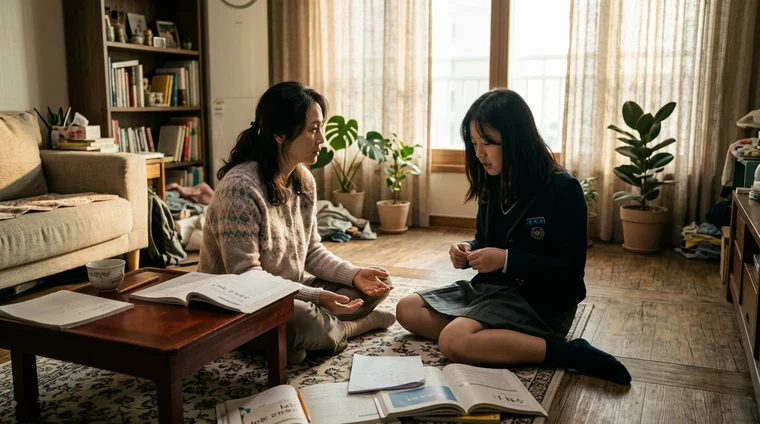
Image: Generated with AI (Epivo)
Frequently asked questions
- How to manage stress for students quickly?
- The fastest techniques are deep breathing (four counts in, hold, four counts out) and brief physical movement. Both work by activating the parasympathetic nervous system — the body's natural calm response. Even five minutes of walking can lower cortisol and shift your mental state noticeably.
- What are the most common causes of stress for students?
- The most common causes are exams and academic pressure, friendship and relationship problems, family difficulties, and uncertainty about the future. Physical changes during puberty also trigger stress for many students. Understanding that these causes are normal helps reduce the shame that often makes stress worse.
- Is stress normal for teenagers?
- Yes. Stress is a universal human experience, and teenagers experience it more intensely because the adolescent brain is especially sensitive to perceived threats. The goal is not to eliminate stress entirely — some stress sharpens focus and performance. The goal is to prevent stress from becoming chronic.
- When should a student seek help for stress?
- Seek help when stress is affecting sleep, appetite, concentration, or relationships for more than two weeks. This is a sign that everyday coping strategies are not sufficient. A trusted adult, school counsellor, or GP can help identify the right support.
- Can mindfulness help students manage stress?
- Yes. Mindfulness — paying attention to the present moment without judging your thoughts — is one of the most researched stress reduction techniques. Even short daily sessions of five to ten minutes reduce anxiety over time. Epivo's wellbeing curriculum introduces mindfulness as part of its stress coping strategies module.