What mindfulness for kids actually means
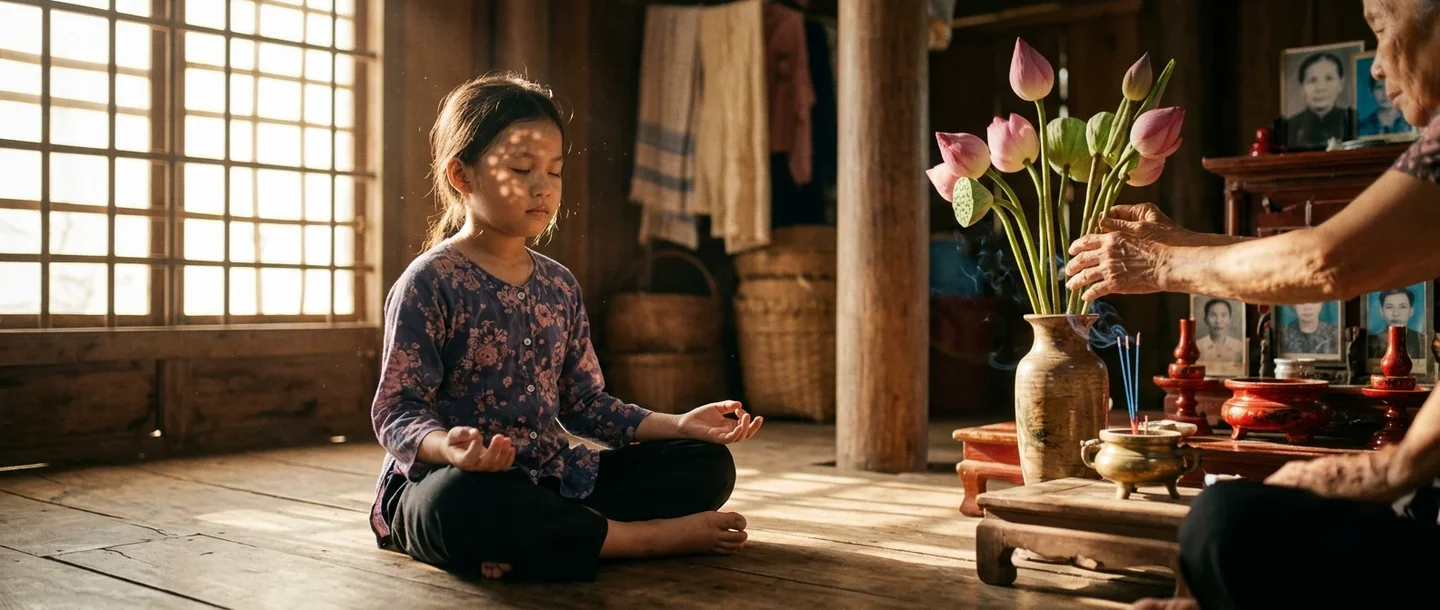
Mindfulness means paying attention to the present moment — what you see, hear, and feel right now — without judging your thoughts as good or bad. For children, it is essentially a way to slow down the mental noise and reconnect with what is actually happening. It does not require sitting still for long periods or meditating in a specific way.
Where mindfulness fits in wellbeing
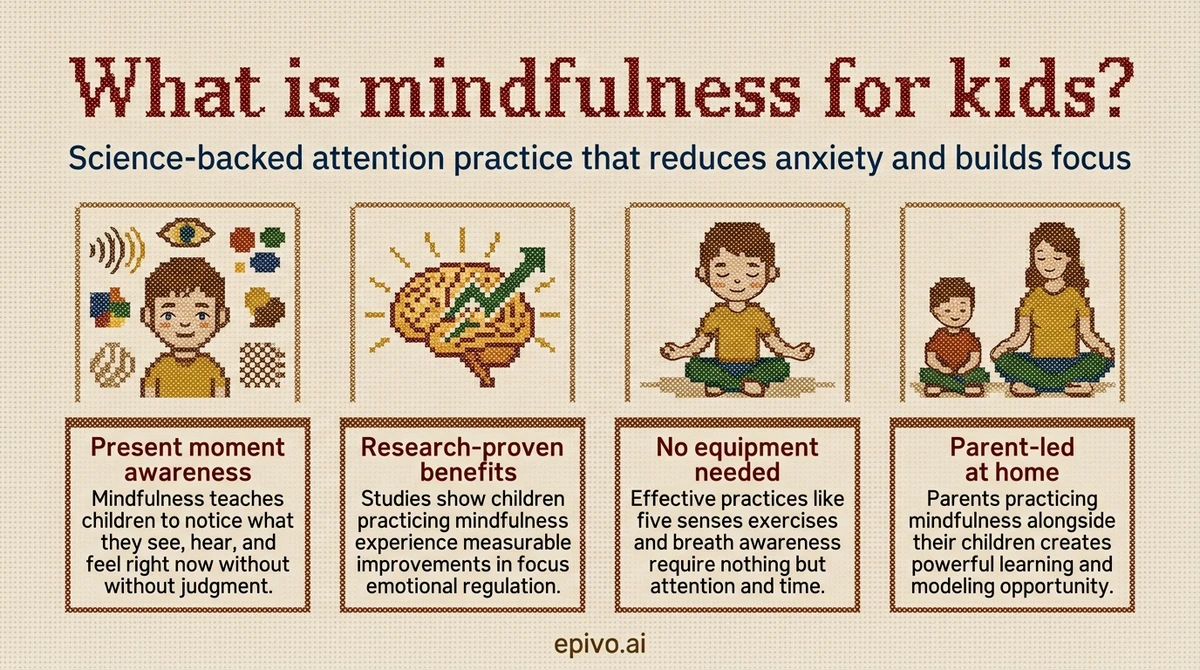
The NHS Five Steps to Mental Wellbeing identifies mindfulness as one of five evidence-based pillars supporting good mental health — alongside connection, physical activity, learning, and giving. Research consistently shows that children who practise mindfulness regularly report lower anxiety, better focus, and improved emotional regulation.
What it is not
Mindfulness is not about clearing your mind or thinking nothing. Instead, it is about noticing your thoughts and feelings without getting swept away by them. When a worried thought appears, a mindful child learns to observe it — and then let it pass — rather than following it into a spiral.
What the evidence shows about mindfulness for children
Mindfulness for kids is not just a wellness trend — it is backed by a growing body of research. Studies show that children who practise mindfulness even briefly show measurable improvements in focus, emotional regulation, and resilience.
The emotions diary finding
A study published by the Mental Health Foundation found that keeping an emotions diary for just two weeks significantly increased self-awareness and reduced reactive behaviour in adolescents. This finding matters because self-awareness is the foundation of mindfulness — you cannot manage your emotions if you cannot identify them.
Connection, activity, learning, giving, and mindfulness
The NHS framework highlights that building strength across all five wellbeing pillars produces a more stable and resilient sense of wellbeing than focusing on any single area. Mindfulness is therefore most effective when it is part of a broader wellbeing routine — not a standalone fix. Epivo's wellbeing curriculum weaves all five pillars into its programme across Grades 4 to 8.
Simple mindfulness practices children can use today
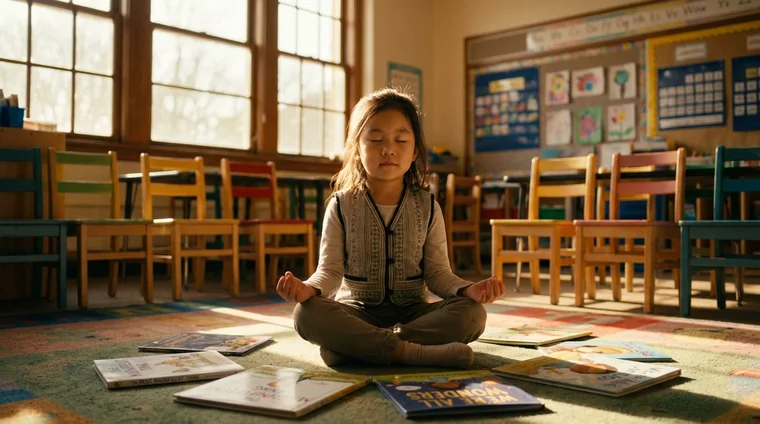
The most effective mindfulness practices for kids are short, concrete, and easy to repeat. Furthermore, they require no special equipment or environment.
The five senses exercise is a good starting point. Ask your child to name five things they can see, four they can hear, three they can touch, two they can smell, and one they can taste. This exercise pulls attention firmly into the present moment and breaks the cycle of anxious thinking within minutes.
Breath awareness is equally simple. Breathe in for four counts, hold for four, and breathe out for four. Focusing on the breath gives the mind an anchor when thoughts feel overwhelming. For older students, a short daily journal noting one thing they felt and one thing they noticed works well for building the self-awareness that underpins mindfulness.
Did you know?
-
Keeping an emotions diary for just two weeks has been shown to significantly increase self-awareness and reduce reactive behaviour in adolescents.
Mental Health Foundation: Emotions and Mental Health -
The NHS Five Steps to Mental Wellbeing — connect, be active, keep learning, give, and take notice (mindfulness) — are each supported by strong evidence from clinical research.
NHS: Five Steps to Mental Wellbeing
How parents can introduce mindfulness for kids at home
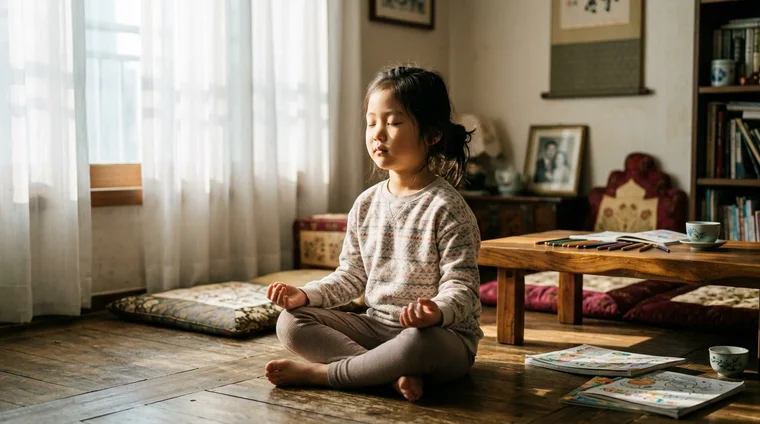
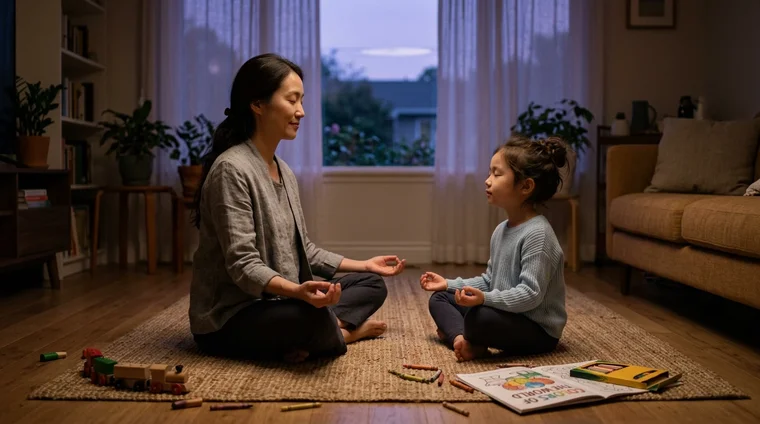
Parents do not need to be mindfulness experts to introduce mindfulness for kids at home. In fact, the most powerful thing is to practise alongside them.
Start small — even one minute of breath awareness before bed is a meaningful beginning. Over time, build up to five or ten minutes. Avoid framing mindfulness as something children do only when they are anxious, because this creates a negative association. Instead, build mindfulness for kids into calm moments — after school, before homework, or during a quiet car journey.
For families looking to go deeper, Epivo's wellbeing programme includes mindfulness exercises as part of its structured wellbeing curriculum — with an AI tutor guiding students through age-appropriate practices in each session.
Frequently asked questions
- What is mindfulness for kids in simple terms?
- Mindfulness for kids means paying attention to what is happening right now — what you see, hear, and feel in this moment — without judging those experiences as good or bad. It helps children slow down anxious thinking and develop better emotional regulation. It does not require long sessions or special equipment.
- What age can children start practising mindfulness?
- Children as young as four or five can benefit from simple mindfulness exercises like the five senses activity or brief breath awareness. Formal mindfulness practices — such as body scans or guided meditation — are generally more suitable from around age eight, when children can sustain focused attention for longer periods.
- Does mindfulness help children with anxiety?
- Yes. Research consistently shows that regular mindfulness practice reduces anxiety symptoms in children and teenagers. It works by teaching young people to observe anxious thoughts without being carried away by them. Even brief daily practice — five to ten minutes — produces measurable improvements over four to eight weeks.
- How long should kids practise mindfulness each day?
- Even one to five minutes daily produces benefits — consistency matters more than duration. Younger children (age 4 to 7) do best with one to two minutes. Older children and teenagers can work up to ten to fifteen minutes. The key is making it a regular habit rather than doing long sessions occasionally.
- What is the easiest mindfulness exercise for kids?
- The five senses exercise is the most accessible: name five things you see, four you hear, three you can touch, two you smell, and one you taste. It takes about two minutes and immediately anchors attention to the present moment. Deep breathing — four counts in, hold four, four counts out — is equally effective.