Medieval philosophy course: When a careful argument and a holy book seemed to disagree, which one should give way?
Work it out in conversation with your own AI tutor in the Epivo app.

Free · No card · Android app
Start learning freeFree · No card · Opens Google Play (Android)
Get an email when the iPhone app is ready.

- 30 minutes a day with your tutor, on the free plan
- Remembers where you left off and what you've told your tutor about yourself
- Certificate included anyone can check it online
Why Epivo
Learn through engaging dialogue. Not through lectures.
Gain deeper understanding and stay capable in a changing world.
Free · No card · Android app
Start learning freeHow it works
- Your tutor tells the story of an idea, a piece at a time, then hands you one small puzzle to think about.
- You think it through, out loud or by typing. You don't need to know the answer: your tutor helps you along and tells you when you're close.
- Step by step, it adds up. Your tutor remembers your past sessions and picks up where you left off.


What you'll understand
- Greek to Arabic to LatinHow Greek philosophy reached medieval Europe: kept in Alexandria, translated into Arabic in Baghdad, then into Latin in Toledo
- Can reason prove God?What Muslim philosophers answered, and how Christian thinkers built on their answers
- Al-GhazaliWhy al-Ghazali asked whether fire really burns cotton, or whether we only ever see one follow the other
- MaimonidesWhy Maimonides thought our words fall short whenever we try to describe God
- OckhamOckham's razor: why Ockham insisted on never assuming more than you need
You don't need to know anything first. See every course in Western philosophy →
Hear how a medieval philosophy lesson starts
Let's start in Alexandria. Greek philosophy is already centuries old, and its books exist only as handwritten copies. So here's my first question for you. If a book could vanish whenever its last copy wore out, what would it take to keep it alive? Tell me what you think, and we'll see where it leads.
What it costs
Free
- 30 minutes a day with your tutor
- No card needed.
- Your first hour uses the Premium voice (once, not every day). After that your tutor speaks with the free voice, which runs on your phone. The lessons, the questions and your progress stay exactly the same.
- Certificates included.
- Want more time? Paid plans add more tutoring time and more Premium voice time. See plans and prices →
Finish with a certificate
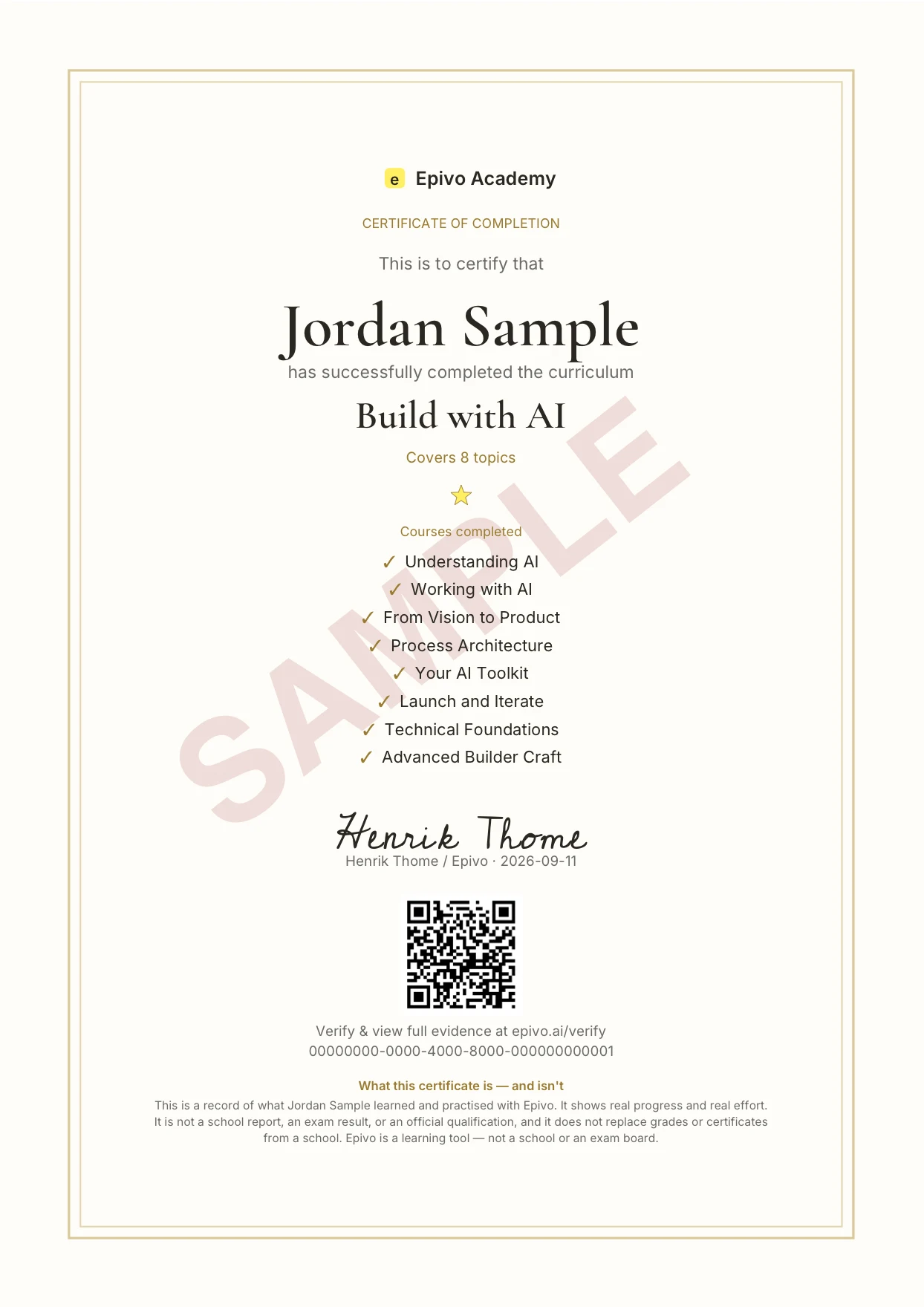
Finish all the Western philosophy courses and earn a certificate anyone can check online. See a sample →
Questions
Is it really free?
Yes. Thirty minutes a day with your tutor, and no card. Paid plans add more time if you ever want it.
Is my tutor a real person?
No. Your tutor is an AI that talks with you, follows a planned course and remembers your past sessions.
How do I know the lessons are accurate?
Before written lesson material reaches you, an AI checks its key facts against independent published sources, and a second AI re-checks anything flagged. Your tutor is instructed to teach from that material and to tell you when unsure: an instruction, not a guarantee. And you can check for yourself: tap Sources in the lesson menu and pick a session to see what it drew on, including links to the original sources.
How is this different from asking ChatGPT?
ChatGPT answers what you ask. Your tutor leads the way: a planned route through medieval philosophy, one question at a time, picking up where you left off.
Why are Muslim and Jewish thinkers in a medieval philosophy course?
Because they were part of the same conversation. Much of Greek philosophy reached Western Europe through Arabic, and these lessons follow Avicenna, Averroes and Maimonides alongside Augustine, Anselm and Aquinas, including how later thinkers read and answered earlier ones across all three traditions.
Can I start with medieval philosophy?
Yes, just ask. Your tutor teaches all of Western philosophy, from ancient Greece on. Once you've started, ask to skip ahead to the Islamic and Jewish thinkers, the first of the two medieval courses, and you'll start with a quick recap of where the Greek philosophers left off. The Christian medieval thinkers come next.
Is it on iPhone?
Not yet. Epivo runs on Android today. Open this page on an iPhone and you can leave your email; we'll tell you when the iPhone app is ready.
Pick up the story after the Greeks. Uncover the rest together.
Want the Middle Ages first? Ask your tutor to skip ahead to the Islamic and Jewish thinkers, after a quick recap of the Greeks.
Free · No card · Android app
Start learning freeFree · No card
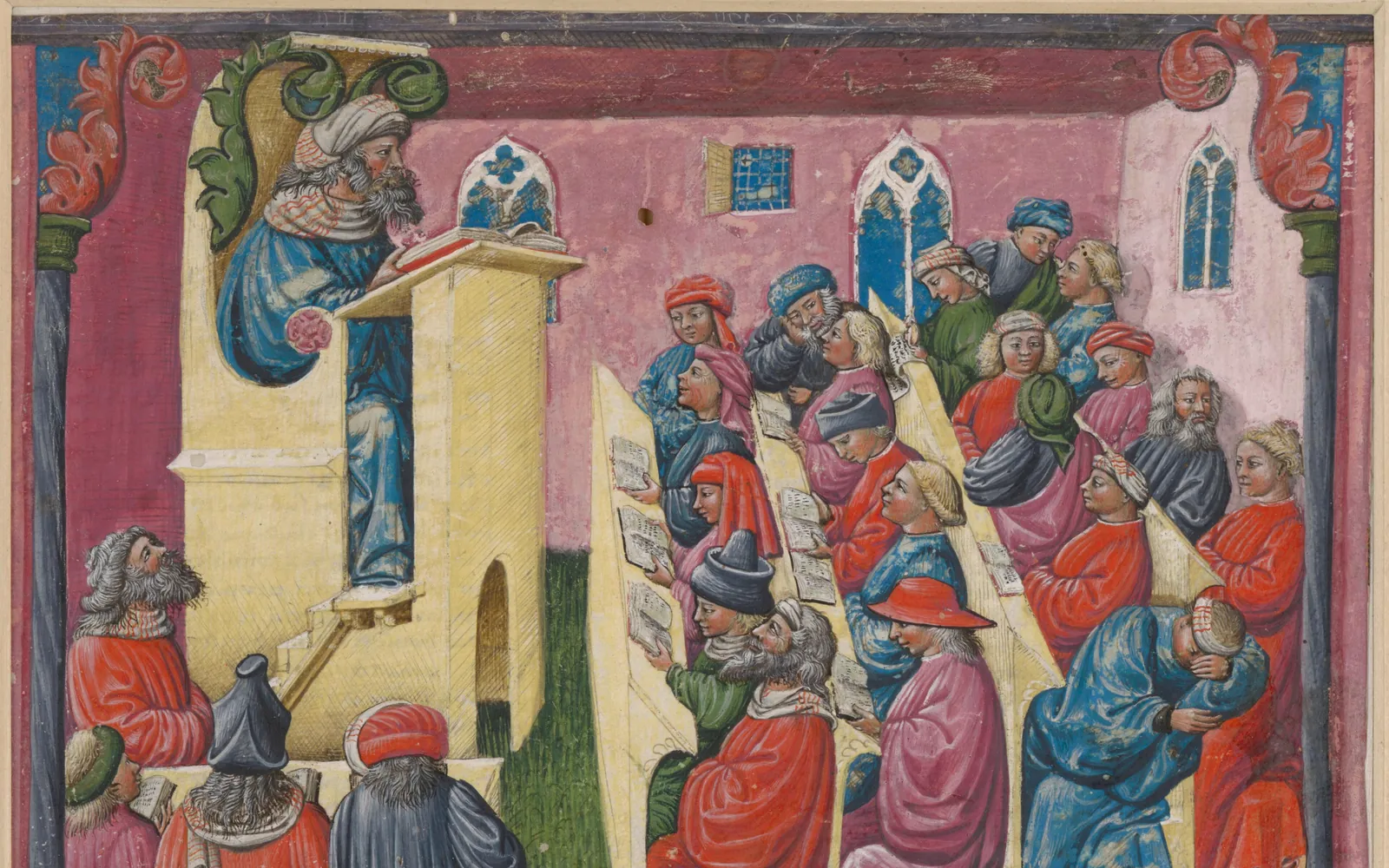
Photo credits. The Alhambra, Granada, at dusk: photographer not named, via Wikimedia Commons, CC0 1.0 (public domain dedication). A lecture to students, from Henry of Germany's Liber ethicorum, 14th-century miniature: Laurentius de Voltolina; Kupferstichkabinett, Staatliche Museen zu Berlin (public domain), cropped.
