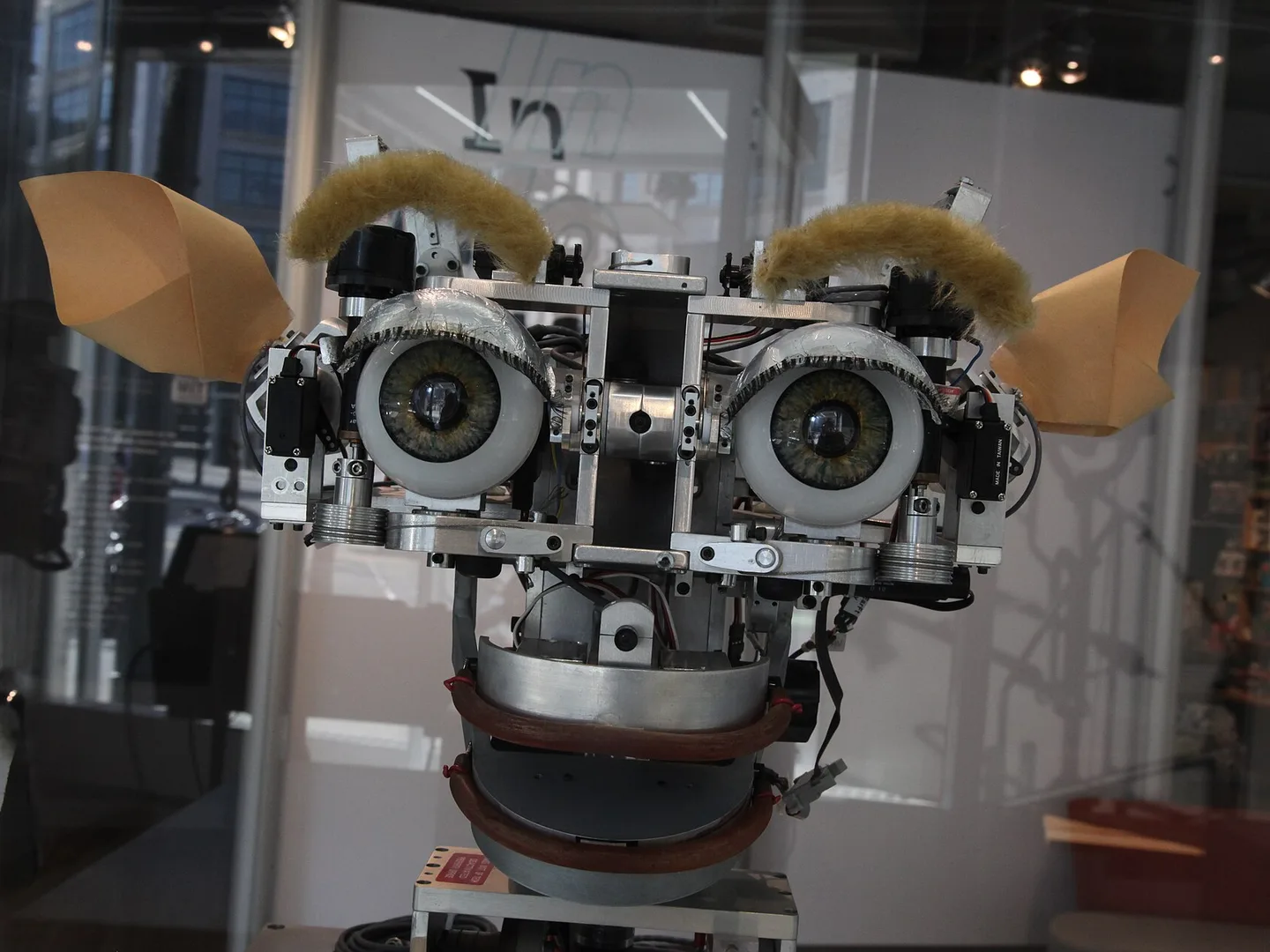
Kismet, a robot head built at MIT in the late 1990s to read and show emotions. Photo: Rama, via Wikimedia Commons (CC BY-SA 3.0 FR), cropped.
Artificial intelligence course
Can a machine understand anything, or does it only look as if it does?
Work it out in conversation with your own AI tutor in the Epivo app.
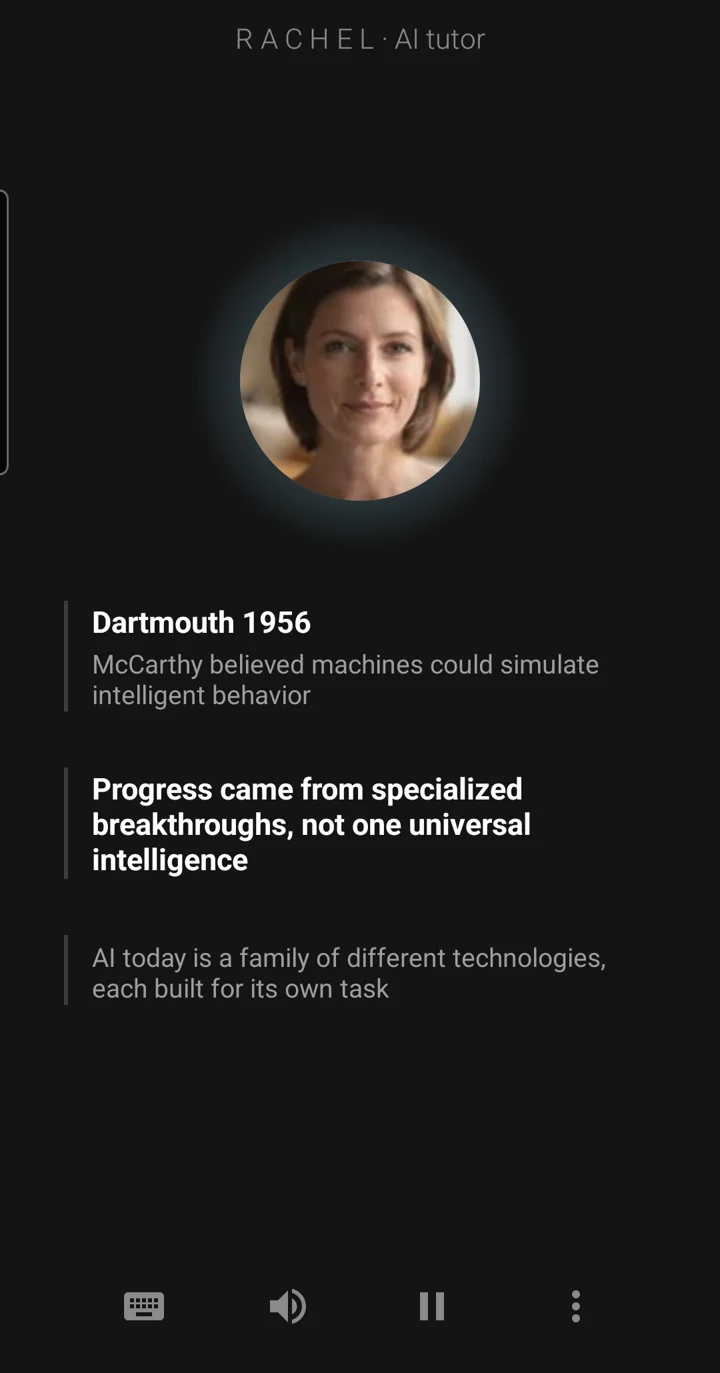
Let's start with a phrase you hear every day: artificial intelligence. Your phone has it, and your bank uses it. So here's my first question for you. What would a machine have to do before you'd call it intelligent? Tell me what you think, and we'll see where it leads.

Free · No card · Android app
Start learning freeFree · No card · Opens Google Play (Android)
How it works
- Your tutor introduces an idea, a piece at a time, then hands you one small puzzle about how it works, often from tools you already use.
- You think it through, out loud or by typing. You don't need to know the answer: your tutor helps you along and tells you when you're close.
- Step by step, it adds up. Your tutor remembers your past sessions and what you've shared, and picks up where you left off.
What you'll understand
-
What artificial intelligence really is, and where you already meet it every day
-
Why a chatbot can sound completely sure and still be wrong
-
How to get better answers from AI tools, and when to double-check them
-
How unfairness gets built into AI systems, and the cases where it has hurt real people
-
What working alongside AI could mean for your own work
You don't need to know anything first. The course begins with a simple question: what makes something intelligent? See the full course →
Finish with a certificate
Complete the course and earn a certificate anyone can check online, ready for your CV or LinkedIn. See a sample →
When you start, tell your tutor you want our Artificial Intelligence course, and your first lesson begins with what artificial intelligence actually means.
Free · No card · Android app
Start learning freeMeet your tutors
Tap a face to hear how they sound. You can choose your tutor from the Teachers menu in the app.
What it costs
Free
- 30 minutes a day with your tutor
- No card needed.
- Your first hour uses the Premium voice (once, not every day), our most natural-sounding one. After that your tutor speaks with the free voice, which runs on your phone. The lessons, the questions and your progress stay exactly the same.
- Certificates included when you complete the course.
Questions
Is it really free?
Yes. Thirty minutes a day with your tutor, and no card. Paid plans add more time if you ever want it.
Is my tutor a real person?
No. Your tutor is an AI that talks with you, follows a planned course and remembers your past sessions.
How do I know the lessons are accurate?
Written lessons are fact-checked against independent published sources before they're taught. Your tutor follows a planned route through the course, and the app's Sources menu lists what each session drew on, including links to the original sources.
How is this different from asking ChatGPT?
ChatGPT answers what you ask. Your tutor leads the way: a planned route through artificial intelligence, one question at a time, picking up where you left off.
Do I need maths or coding?
No. This course is about understanding AI and using it well: what it is, how it learns, where it goes wrong and what it means for your life and work. If you'd rather build software with AI, try our Build with AI course instead.
Will it help me use AI tools better?
Yes. A whole part of the course is practical: how to ask clearly, refine an answer instead of starting over, spot an answer that has been made up, and decide when not to use AI at all.
Is it on iPhone?
Not yet. Epivo runs on Android today. Open this page on an iPhone and you can leave your email; we'll tell you when the iPhone app is ready.
Start with one question about AI. Work out the rest together.
Free · No card · Android app
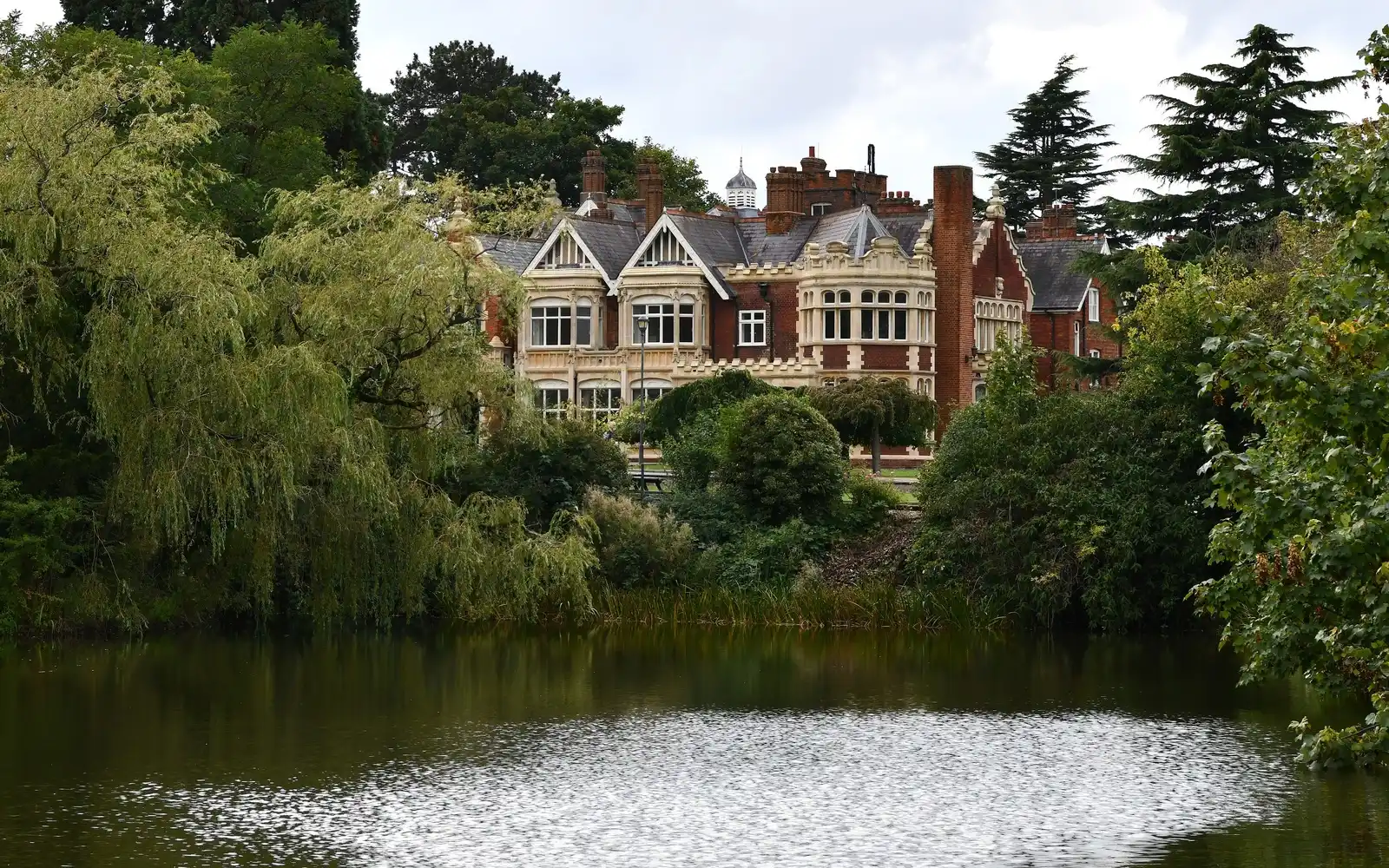
Start learning freeThe mansion at Bletchley Park, the codebreaking centre where Alan Turing worked. Michael Garlick, Geograph, via Wikimedia Commons (CC BY-SA 2.0), cropped.
Photo credits (via Wikimedia Commons). Kismet, a robot head built at MIT: Rama, CC BY-SA 3.0 FR, cropped. The mansion at Bletchley Park, the codebreaking centre where Alan Turing worked: Michael Garlick, Geograph, CC BY-SA 2.0, cropped.

