What is coding and how does it work?
Coding — also called programming — is the process of writing instructions that a computer can follow. Computers do not think for themselves. Instead, they execute precisely the instructions a programmer gives them, step by step. Coding is the language we use to give those instructions.
A set of instructions written to solve a problem is called an algorithm. For example, an algorithm for making a cup of tea might say: boil water, place a teabag in a mug, pour water, wait three minutes, remove the bag, add milk if desired. Computers follow the same kind of logic — a precise sequence of steps with decisions built in.
Coding uses specific programming languages. In the early years of school, students typically learn through visual tools like Scratch, where colourful blocks snap together to form a program. This makes coding for kids accessible without needing to type complex text. As students progress, they move to text-based languages such as Python — one of the most widely used coding languages in the world today.
Both types involve the same core concepts. Sequences are instructions followed in order. Loops are instructions repeated multiple times — for example, "repeat this ten times". Conditions (also called if-then statements) let a program make decisions: if this is true, do this; otherwise, do that. Understanding these three building blocks is the foundation of coding.
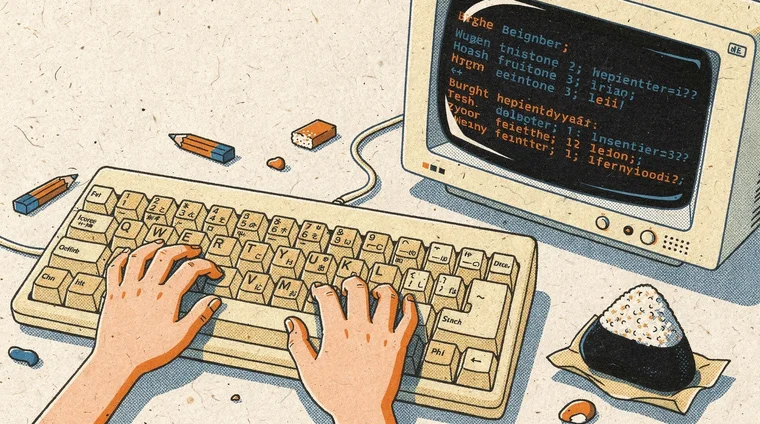
Image: Generated with AI (Epivo)
How coding is taught in school — from blocks to text code
Coding education typically progresses in stages. In primary school, students use visual coding environments such as Scratch or code.org's block-based tools. These platforms let young learners build simple games, animations, and stories by dragging and connecting instruction blocks — making coding for kids creative and immediately rewarding.
By middle school, students begin to move into text-based coding languages. In Epivo's computing curriculum for grades 7 to 9, students write and debug programs using a text-based language, working with variables, loops, and conditional statements. A variable is like a labelled box that stores information — for example, a score counter in a game that increases each time the player earns a point.
Debugging — finding and fixing errors in code — is an equally important part of coding education. Professional programmers spend a significant portion of their time debugging. Learning to identify mistakes and correct them systematically develops patience, logical reasoning, and problem-solving skills that extend well beyond computing.
In addition to writing code, students learn to design algorithms before they write a single line of program. This planning step — often done using flowcharts or pseudocode (plain language descriptions of what the code will do) — teaches students to think through a problem step by step before translating their solution into a programming language.
For parents interested in supporting coding at home, code.org offers free coding courses for all ages, and BBC Bitesize Computing provides clear explanations and exercises aligned with school curricula.
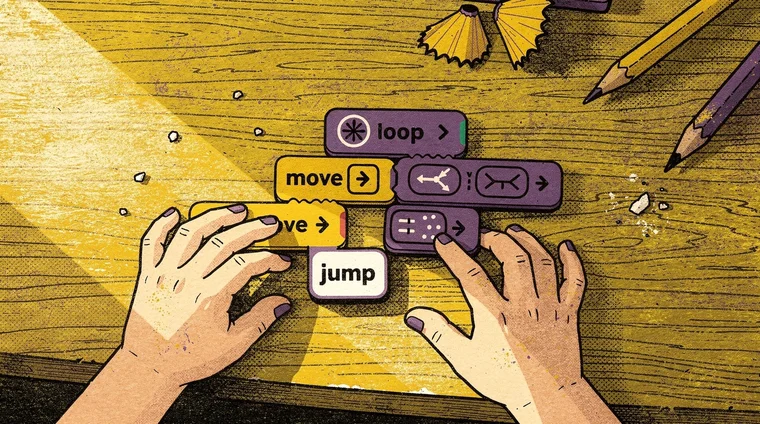
Image: Generated with AI (Epivo)
Did you know?
-
Python, one of the most popular text-based coding languages taught in schools, is also used by companies such as Google, NASA, and Netflix for real-world applications.
Code.org — About Computer Science Education -
Scratch, the visual coding language developed by MIT, has more than 100 million registered users worldwide and is used in schools in over 150 countries.
Scratch Foundation -
Computing and coding skills are increasingly expected across many professions — not just technology roles. Jobs in healthcare, finance, media, and science all benefit from an understanding of how programs and data work.
BBC Bitesize Computing
Why learning to code matters for kids
Learning to code teaches far more than programming syntax. Coding develops logical thinking — the ability to break a complex problem into smaller, manageable steps. It also builds persistence: a program rarely works perfectly the first time, and students learn to investigate errors methodically and try again.
These skills transfer directly to other subjects. The step-by-step reasoning used in coding is closely connected to mathematical thinking. The ability to plan, test, and refine connects to scientific method. Furthermore, coding builds creativity — students design their own projects, make aesthetic choices, and solve open-ended problems with no single right answer.
Coding also encourages collaboration. Many real-world coding projects involve teams working on different parts of the same program. Students who learn coding practise writing clear, organised code that others can read and build on — a skill highly valued in professional settings. They also develop the habit of giving and receiving feedback constructively, since improving a program often depends on a fresh pair of eyes noticing what the original author missed. In this sense, coding is as much a communication skill as a technical one.
Epivo's International Curriculum covers coding and computing from grades 1 to 12, with each year building on the last. By grade 9, students are writing and debugging programs in a text-based language, designing algorithms for real problems, and understanding how networks and data storage work. These foundations prepare students not only for further study in computing, but for any field where technology plays a role.
For students who have already begun exploring how computers are connected, our guide to how the internet works explains the next layer — how the network that runs beneath all coding actually functions. Understanding both what code does and the infrastructure it runs on gives students a complete picture of modern computing.
Image: Generated with AI (Epivo)
Frequently asked questions
- What is coding in simple terms?
- Coding is writing instructions that a computer can follow. Just as a recipe tells you how to cook a meal step by step, a computer program tells a computer exactly what to do — in a language it can understand, such as Python or Scratch.
- What age should kids start learning to code?
- Most schools introduce coding concepts from age 5 or 6 using visual block-based tools. By ages 11–13, students typically begin text-based coding languages. However, children can start exploring coding tools like Scratch from as young as age 6 at home.
- What are the best coding languages for kids?
- Scratch is the most popular visual coding language for ages 8–12. Python is the most widely taught text-based language for beginners aged 12 and above. Both are free, well-supported, and used in schools worldwide.
- What is the difference between coding and programming?
- Coding and programming are often used interchangeably. Strictly speaking, coding refers to writing the actual instructions in a programming language, while programming includes the broader process of designing, writing, testing, and debugging a complete software solution.
- Do kids need to learn coding to get a good job?
- Not every job requires coding, but digital and computational thinking skills are increasingly valued across many careers. Even in non-technical roles, understanding how software works helps people collaborate with developers, interpret data, and adapt as technology changes.