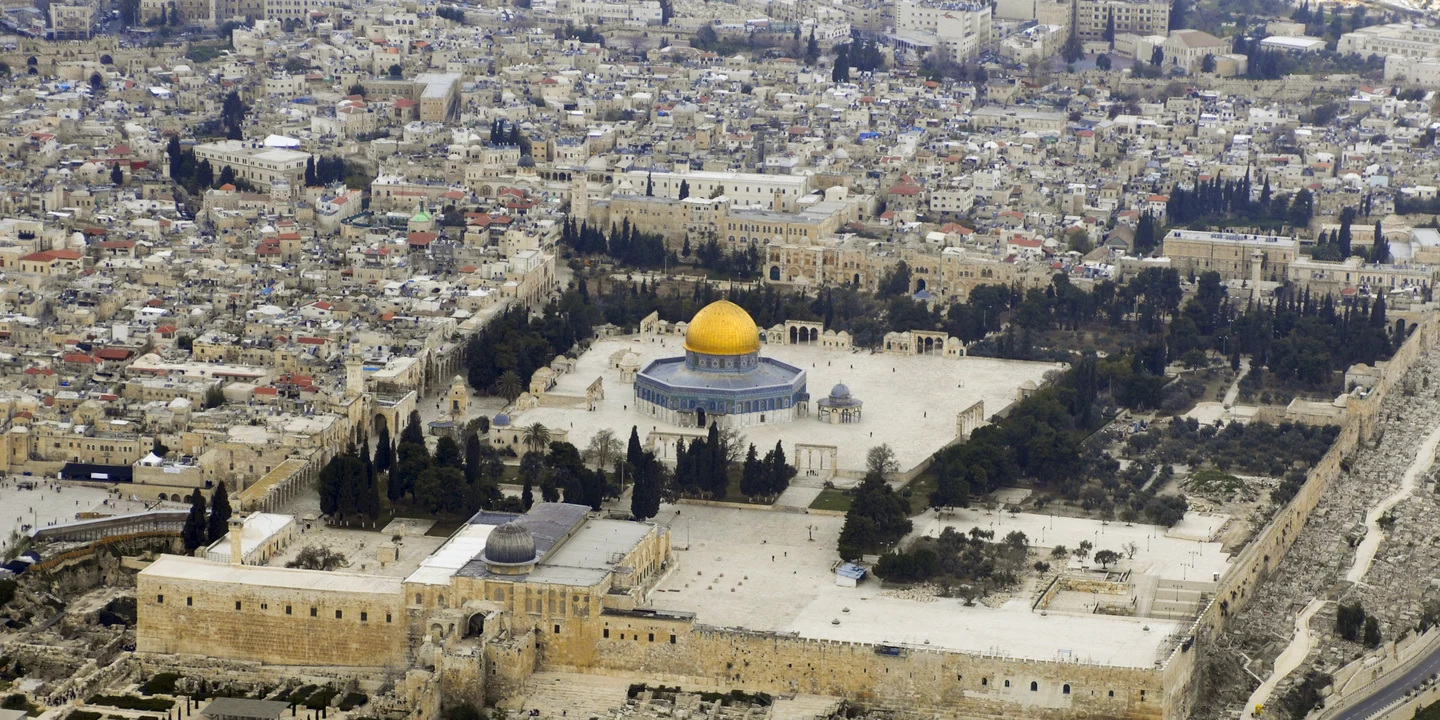
What is the two-state solution and where did the idea originate?
The two-state solution is a proposed resolution to the Israeli-Palestinian conflict. Under this framework, an independent Palestinian state would exist alongside Israel, each with recognised borders and sovereignty. The concept rests on the principle that both peoples have legitimate national aspirations that can only be met through separate statehood.
The idea first took formal shape in November 1947, when the United Nations General Assembly passed Resolution 181. This plan proposed dividing British Mandatory Palestine into two states — one Jewish and one Arab — with Jerusalem under international administration. Jewish leaders accepted the partition plan; Arab leaders rejected it, arguing that it gave a minority immigrant population a disproportionate share of land.
When Britain withdrew in May 1948, war broke out. The resulting armistice left Israel in control of approximately 78% of Mandatory Palestine, with Jordan holding the West Bank and Egypt holding the Gaza Strip. No Palestinian state was created. The 1967 Six-Day War then brought both territories under Israeli military occupation, where they remain today.
Since the late 1960s, international consensus has centred on a two-state solution based on the 1967 borders. These borders — sometimes called the Green Line — would place East Jerusalem as the capital of a future Palestinian state. For more on the history of Palestine, see our detailed overview.
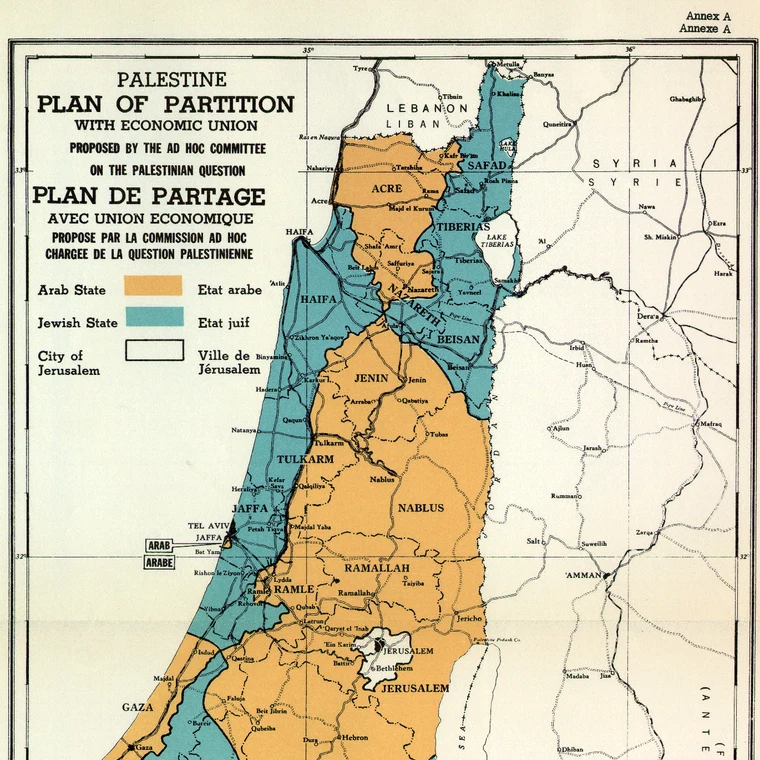
Image: United Nations, via Wikimedia Commons (Public domain)
The Oslo Accords and the two-state framework
The Oslo Accords of 1993 represent the closest the two-state solution has come to implementation. In secret negotiations brokered by Norway, the Palestine Liberation Organisation (PLO) and Israel reached a historic agreement. The PLO recognised Israel's right to exist, and Israel recognised the PLO as the representative of the Palestinian people.
The accords established the Palestinian Authority to govern parts of the West Bank and Gaza Strip. However, they deferred the most contentious issues to future negotiations. These so-called 'final-status issues' included borders, the status of Jerusalem, Israeli settlements, and the right of return for Palestinian refugees displaced in 1948.
Subsequent peace attempts
Several major attempts followed Oslo. The Camp David Summit in 2000, mediated by US President Bill Clinton, collapsed without agreement. Each side blamed the other for the failure. The Clinton Parameters later that year proposed compromises on borders and Jerusalem, but neither side formally accepted them. In 2007, the Annapolis Conference also ended without a deal.
The Oslo Accords created an interim framework that was meant to last five years. More than three decades later, final-status negotiations have not been concluded. The interim arrangements remain in effect. The division of the West Bank into Areas A, B, and C creates a fragmented landscape that complicates any future Palestinian state. For additional context, see our article on the Israel Palestine conflict explained.
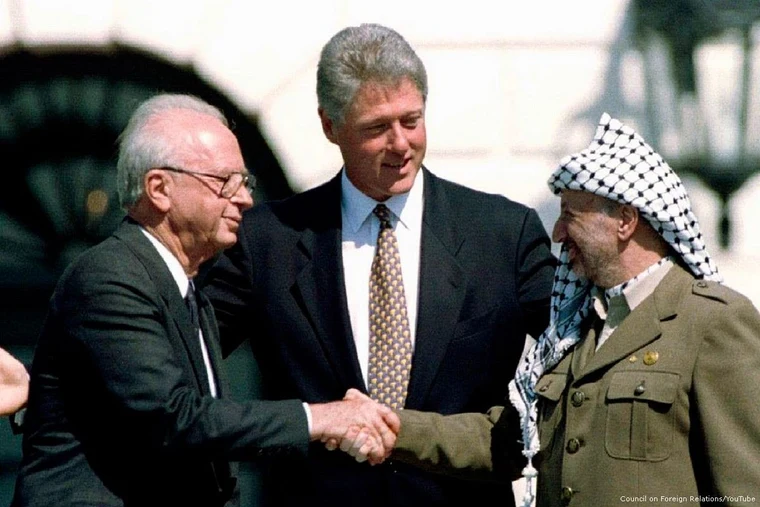
Image: Vince Musi / The White House, via Wikimedia Commons (Public domain)
Why the two-state solution has not been achieved
Despite broad international endorsement, several interconnected obstacles have prevented agreement on a two-state solution.
Israeli settlements
Since 1967, Israel has built more than 150 settlements in the West Bank, now housing approximately 700,000 settlers. UN Security Council Resolution 2334 (2016) declared these settlements a 'flagrant violation of international law.' Israel disputes this characterisation. The settlements fragment Palestinian territory, making a contiguous state increasingly difficult to achieve in practice.
Jerusalem
Both sides claim Jerusalem as their capital. Israel annexed East Jerusalem after 1967, a move not recognised by most of the international community. Palestinians insist that East Jerusalem must serve as the capital of a future state. The city's religious significance to Judaism, Islam, and Christianity intensifies the dispute.
Palestinian refugees
Approximately 5.9 million Palestinian refugees are registered with UNRWA, descended from those displaced during the 1948 war known as the Nakba. Palestinians demand the right of return, citing UN Resolution 194. Israel argues that mass return would alter its demographic character as a Jewish-majority state. This issue remains among the deepest divides between the two sides.
Political fragmentation
The Palestinian leadership is divided between the Palestinian Authority, which governs parts of the West Bank, and Hamas, which controls the Gaza Strip. Hamas does not accept the two-state framework. This internal division weakens the Palestinian negotiating position and complicates any comprehensive agreement.
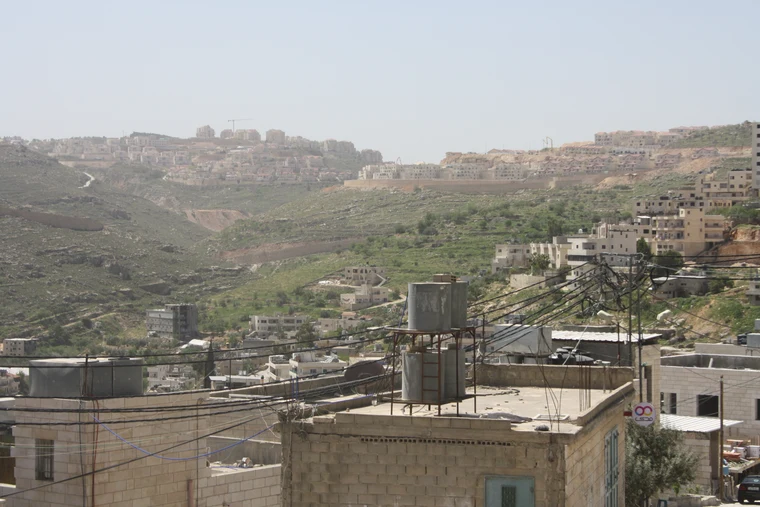
Image: Unknown photographer, via Wikimedia Commons (CC BY-SA 4.0)
Did you know?
-
UN General Assembly Resolution 181 (1947) first proposed partitioning Mandatory Palestine into separate Arab and Jewish states, with Jerusalem under international administration. Jewish leaders accepted; Arab leaders rejected it. No Palestinian state was created.
UN Resolution 181 — UNISPAL -
The Oslo Accords (1993) established mutual recognition between Israel and the PLO and created the Palestinian Authority. Final-status issues — borders, Jerusalem, settlements, and refugees — were deferred and remain unresolved after more than 30 years.
Oslo Accords — UN Peacemaker -
The International Court of Justice issued an advisory opinion in July 2024 declaring that Israel’s prolonged occupation of the Palestinian territories is unlawful and should be brought to an end as rapidly as possible.
ICJ Advisory Opinion on Israeli Occupation
The current status of the two-state solution
The two-state solution remains the official policy of the United Nations, the European Union, the United States, and the Arab League. In practice, however, progress toward implementation has stalled.
Direct negotiations between Israel and the Palestinian Authority have been largely frozen since 2014. Meanwhile, settlement expansion in the West Bank has continued, and the humanitarian situation in Gaza has deteriorated significantly. The International Court of Justice issued an advisory opinion in 2024 declaring that Israel's prolonged occupation of Palestinian territories is unlawful under international law.
Some analysts and activists have proposed alternative frameworks. A binational democratic state, in which Israelis and Palestinians would hold equal citizenship within a single state, has gained support in academic circles. However, it faces strong opposition. Some argue it would end Israel's character as a Jewish state. Others believe it would not deliver meaningful Palestinian self-determination.
Other proposals include various forms of confederation, in which two states would share certain institutions while maintaining separate sovereignty. As of 2026, none of these alternatives has displaced the two-state solution as the dominant framework in international diplomacy.
What is the two-state solution ultimately about? It is a proposal built on the premise that both Israelis and Palestinians deserve security, sovereignty, and self-determination. Neither people's rights should come at the expense of the other. Whether this vision can be realised remains one of the defining questions of contemporary international affairs.
For more background, see our overview of the history of Palestine or visit For parents for information on how Epivo approaches complex historical topics.
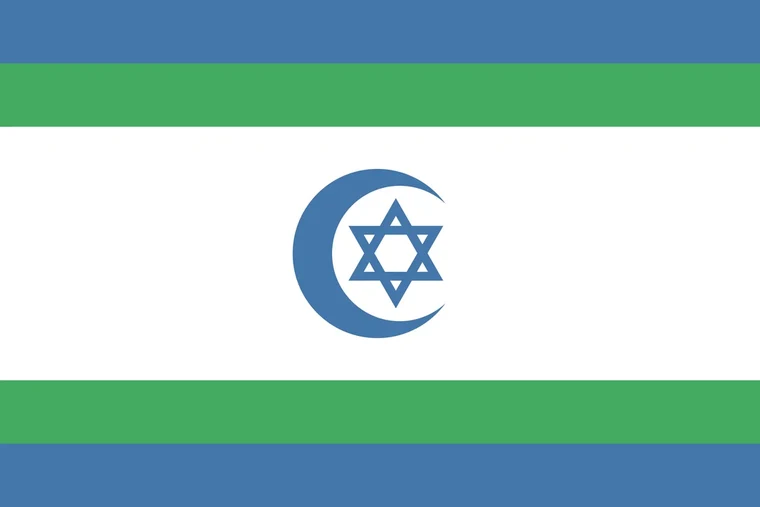
A peace flag merging elements of the Israeli and Palestinian flags — symbolising the vision of two states coexisting side by side.. Image: Hesjansen, via Wikimedia Commons (CC BY-SA 4.0)
Frequently asked questions
- What is the two-state solution in simple terms?
- The two-state solution proposes creating an independent Palestinian state alongside Israel, each with recognised borders and sovereignty. The Palestinian state would comprise the West Bank and Gaza Strip, with East Jerusalem as its capital. Most of the international community supports this framework.
- When was the two-state solution first proposed?
- The concept dates to the 1947 UN Partition Plan (Resolution 181), which proposed dividing Mandatory Palestine into separate Arab and Jewish states. The idea gained renewed momentum after the 1967 war and became the basis of the Oslo Accords in 1993.
- Why has the two-state solution not been achieved?
- Key obstacles include Israeli settlement expansion in the West Bank, disagreement over the status of Jerusalem, the Palestinian refugee question, political division between the Palestinian Authority and Hamas, and the absence of sustained political will on both sides to make the compromises required.
- Do most countries support the two-state solution?
- Yes. The two-state solution is endorsed by the United Nations, the European Union, the United States, the Arab League, and the majority of UN member states. It remains the dominant framework in international diplomacy, despite the lack of progress toward implementation.
- What are the alternatives to the two-state solution?
- Proposed alternatives include a binational democratic state with equal citizenship for Israelis and Palestinians, and various confederation models sharing institutions across two sovereign entities. None of these alternatives has gained the same level of international support as the two-state framework.