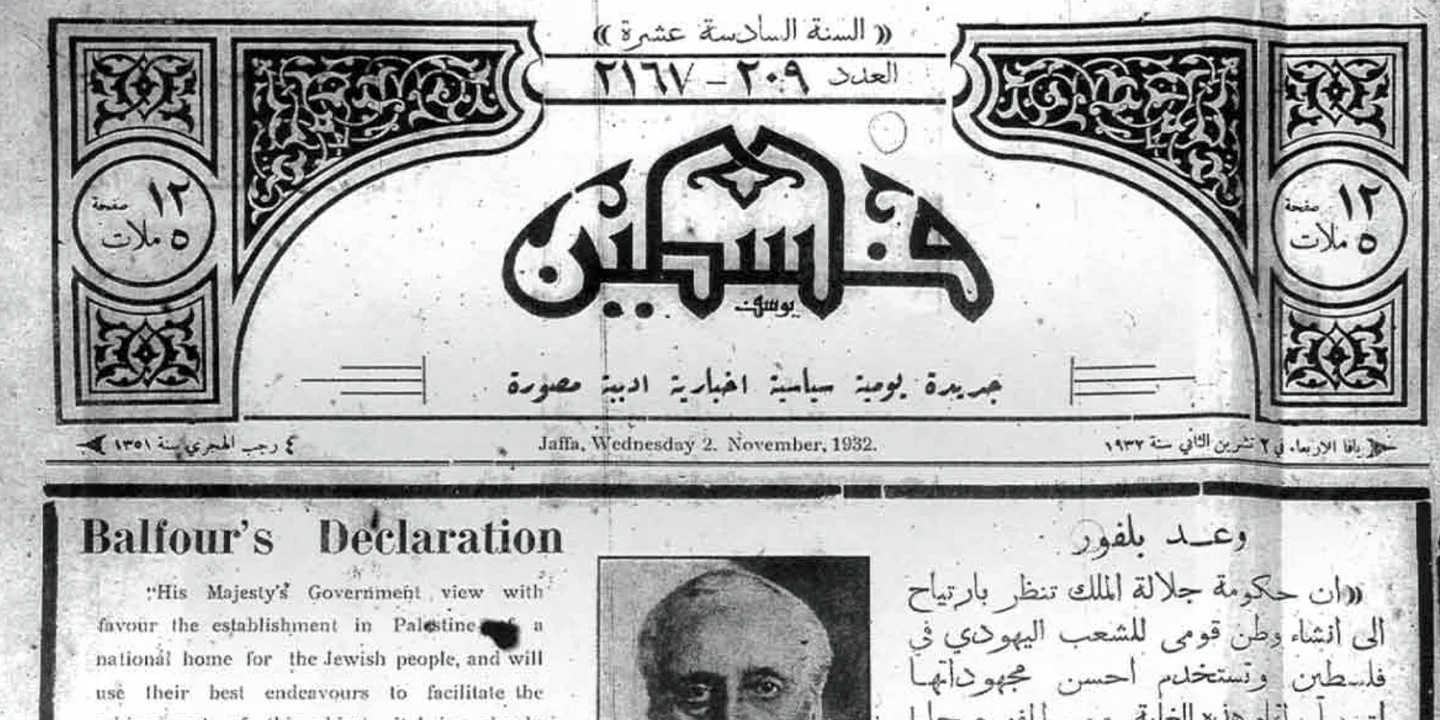
What was the Balfour Declaration and what did it say?
The Balfour Declaration was a brief letter issued on 2 November 1917. Its key passage was just 67 words long. In it, British Foreign Secretary Arthur James Balfour wrote to Baron Walter Rothschild, a leader of the British Jewish community. The letter stated that the British government viewed 'with favour the establishment in Palestine of a national home for the Jewish people.' It also pledged to 'use their best endeavours to facilitate the achievement of this object.'
However, the declaration also included an important condition. It specified that 'nothing shall be done which may prejudice the civil and religious rights of existing non-Jewish communities in Palestine.' At the time, Arabs made up roughly 90 percent of Palestine's population. As a result, this dual commitment proved impossible to fulfil. In practice, large-scale Jewish immigration inevitably altered a demographic balance that had existed for centuries.
The declaration was not a treaty or a law. Instead, it was a policy statement by one government, made without consulting the people who lived there. Nevertheless, it carried enormous political weight because Britain was on the verge of conquering Palestine from the Ottoman Empire. According to the UK National Archives, the letter therefore shaped the region's political future for the next century.
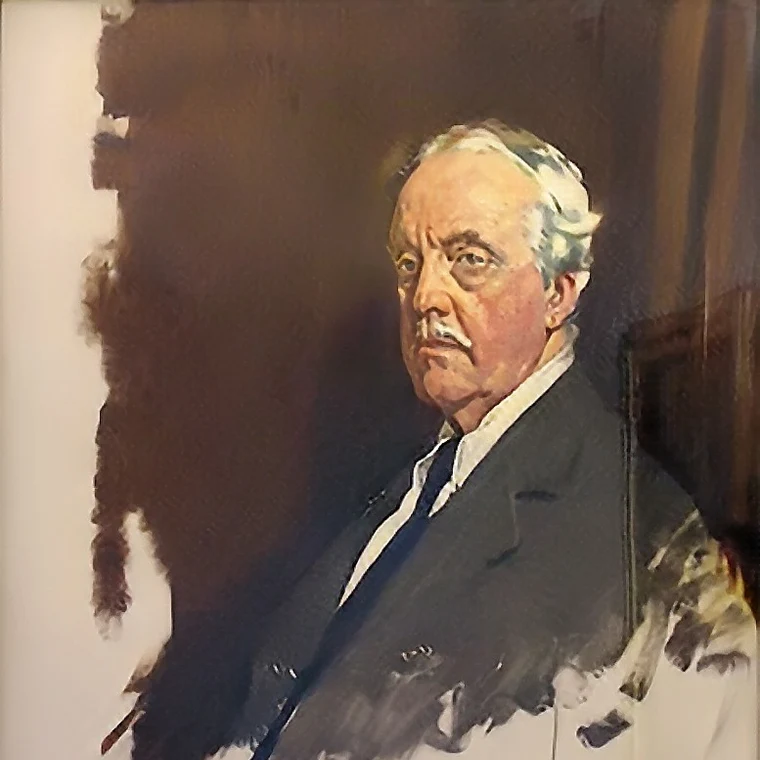
Arthur James Balfour, painted by William Orpen — as Foreign Secretary, he authored the 1917 declaration that promised a Jewish homeland in Palestine.. Image: William Orpen, via Wikimedia Commons (Public domain)
Why did Britain make this promise?
Britain issued the Balfour Declaration during World War One, when strategy shaped every diplomatic move. Several factors converged to produce this commitment.
Wartime strategy
By 1917, the war had reached a critical stage. Britain wanted support from Jewish communities in the United States and Russia, because both were vital to the Allied war effort. British officials also believed that Jewish leaders held significant influence in those countries. This assumption was often incorrect, but it nevertheless shaped policy. In addition, Britain wanted to prevent France from gaining sole influence over Palestine. Both powers saw the territory as strategically important due to its location near the Suez Canal.
The Zionist movement
Theodor Herzl founded the political Zionist movement in the 1890s. It lobbied European governments for support for a Jewish homeland. Chaim Weizmann, a prominent Zionist leader and chemist, also contributed to the British war effort. Furthermore, he had direct access to senior politicians. His personal relationship with Balfour and Prime Minister David Lloyd George consequently helped secure the declaration. According to Encyclopaedia Britannica, Weizmann's lobbying was one of the war's most effective diplomatic campaigns.
Conflicting promises
Critically, the Balfour Declaration contradicted other commitments Britain had already made. In the 1915-1916 Hussein-McMahon Correspondence, Britain promised Sharif Hussein of Mecca that Arab lands freed from Ottoman rule would gain independence. Meanwhile, the 1916 Sykes-Picot Agreement had secretly divided Ottoman territories between Britain and France. As a result, Palestine was subject to three overlapping and incompatible sets of promises.

Chaim Weizmann — chemist, Zionist leader, and future first President of Israel — whose personal connections with British officials were key to securing the declaration.. Image: Avi1111 dr. avishai teicher, via Wikimedia Commons (CC BY-SA 4.0)
How the Balfour Declaration shaped the British Mandate
After World War One ended in 1918, Britain took control of Palestine. The Balfour Declaration was then incorporated into the British Mandate for Palestine. The League of Nations formally approved this arrangement in 1922. As a result, the declaration gained legal authority it had previously lacked.
The Mandate required Britain to facilitate Jewish immigration while also safeguarding the existing population's rights. However, these goals conflicted sharply in practice. Jewish immigration grew during the 1920s and accelerated further in the 1930s because Jews fled persecution in Europe, particularly after the Nazis came to power in Germany.
Arab Palestinians consequently viewed the growing immigration with alarm. They had not been consulted about the declaration. Furthermore, they rejected the idea that an external power could promise their homeland to another people. Tensions therefore escalated throughout the Mandate period. Violence erupted during the 1920 Nebi Musa riots, the 1929 Palestine riots, and the Arab Revolt of 1936-1939.
Finally, by the late 1930s, Britain tried to limit Jewish immigration through the 1939 White Paper. This effectively reversed the Balfour Declaration's commitments and pleased neither side. The trajectory from the declaration through the Mandate led directly to the events of 1948 and the modern conflict.
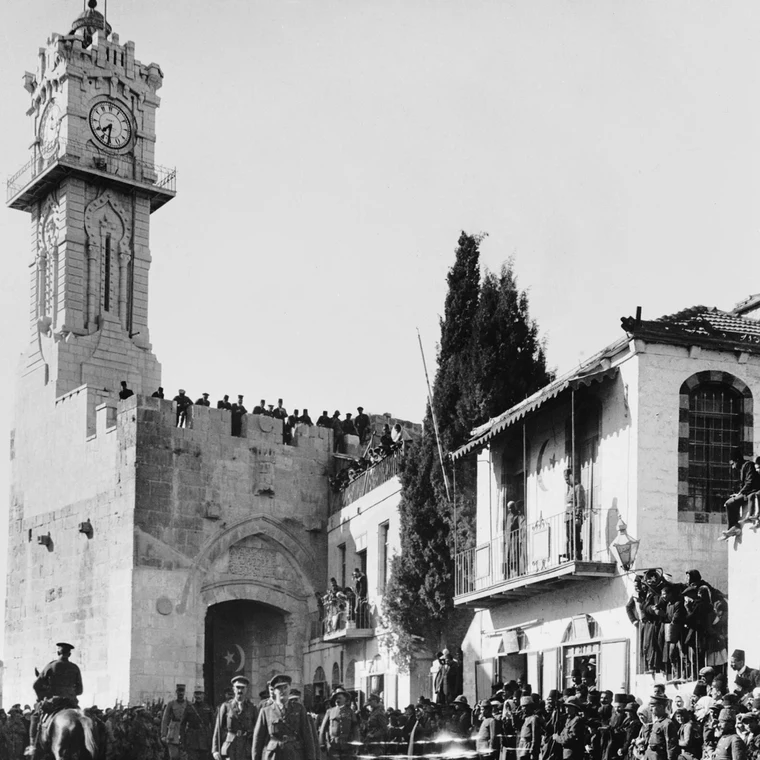
General Edmund Allenby enters Jerusalem on foot on 11 December 1917, just weeks after the Balfour Declaration was issued. Britain's military conquest of Palestine gave practical force to the political commitments made in the declaration.. Image: American Colony Photo Department, Library of Congress, via Wikimedia Commons (Public domain)
Did you know?
-
The key passage of the Balfour Declaration was only 67 words long, yet it shaped the political future of Palestine for over a century. The letter was addressed to Baron Walter Rothschild for transmission to the Zionist Federation of Great Britain and Ireland.
Balfour Declaration — UK National Archives -
When the Balfour Declaration was issued in 1917, the population of Palestine was approximately 700,000, of whom roughly 90 percent were Arab Muslims and Christians. The Jewish population numbered around 56,000.
Encyclopaedia Britannica — Balfour Declaration -
The declaration contradicted at least two other British commitments: the 1915-1916 Hussein-McMahon Correspondence, which promised Arab independence, and the 1916 Sykes-Picot Agreement, which secretly divided Ottoman territories between Britain and France.
UN ISPAL — History of the Question of Palestine
Contested legacy and modern significance
The Balfour Declaration remains one of the most debated documents in modern history. Different communities interpret it in fundamentally different ways. Therefore, understanding these perspectives is essential to understanding the conflict that followed.
For many Israelis and supporters of Israel, the declaration was the first major-power recognition of a Jewish right to a national homeland. It acknowledged the historical connection between the Jewish people and Palestine. It also provided a foundation for the international legitimacy that led to the State of Israel in 1948.
In contrast, for Palestinians and much of the Arab world, the declaration was an act of colonial imposition. Britain promised a land that was not its own without consulting the people who lived there. In the Palestinian view, no government had the right to dispose of another people's homeland. Consequently, in 2017, Palestinian Authority President Mahmoud Abbas called on Britain to apologise. The British government nevertheless declined.
Historians also debate the motivations behind the declaration. Was it driven by strategic calculation, genuine sympathy for Zionism, or antisemitic assumptions about Jewish influence? Most scholars agree that all three factors played a role. The United Nations Information System on the Question of Palestine documents how the consequences unfolded.
What is not contested, however, is the declaration's impact. The 67-word letter set in motion a chain of events that continues to shape the history of Palestine and the wider Middle East. Immigration, resistance, partition, war, and displacement all followed from this single document.
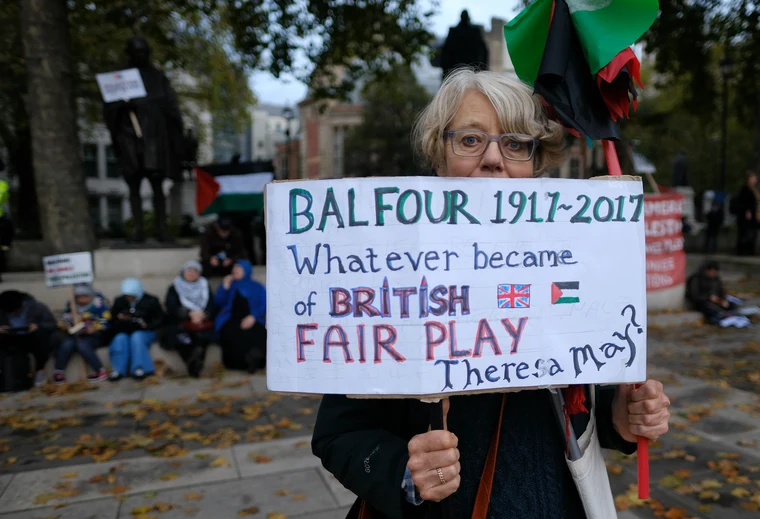
Protesters in London in 2017 mark the 100th anniversary of the Balfour Declaration. The centenary prompted renewed debate about Britain's responsibility for the consequences of the 1917 commitment.. Image: Alisdare Hickson, via Wikimedia Commons (CC BY-SA 2.0)
Frequently asked questions
- What did the Balfour Declaration actually say?
- The declaration stated that the British government viewed 'with favour the establishment in Palestine of a national home for the Jewish people' and would facilitate this goal, provided that 'nothing shall be done which may prejudice the civil and religious rights of existing non-Jewish communities in Palestine.'
- Why was the Balfour Declaration issued during World War One?
- Britain sought to win support from Jewish communities in the United States and Russia, both important to the Allied war effort. Britain also wanted to secure influence over Palestine as a strategic territory near the Suez Canal, and Zionist leader Chaim Weizmann had direct access to senior British politicians.
- Did the Balfour Declaration contradict promises to the Arabs?
- Yes. The 1915-1916 Hussein-McMahon Correspondence had promised Arab independence over lands freed from Ottoman rule. The 1916 Sykes-Picot Agreement had secretly divided these territories between Britain and France. The Balfour Declaration added a third, conflicting commitment regarding Palestine.
- How did the Balfour Declaration affect Palestinians?
- Palestinians were not consulted when the declaration was issued. It facilitated Jewish immigration to Palestine, which altered the demographic balance and created tensions that escalated throughout the British Mandate period. Palestinians view the declaration as a colonial act that disposed of their homeland without their consent.
- Is the Balfour Declaration still relevant today?
- Yes. The declaration set in motion the political dynamics that led to the creation of Israel in 1948, the displacement of Palestinians, and the ongoing conflict. Both sides continue to reference it when discussing the legitimacy of their respective claims to the land.