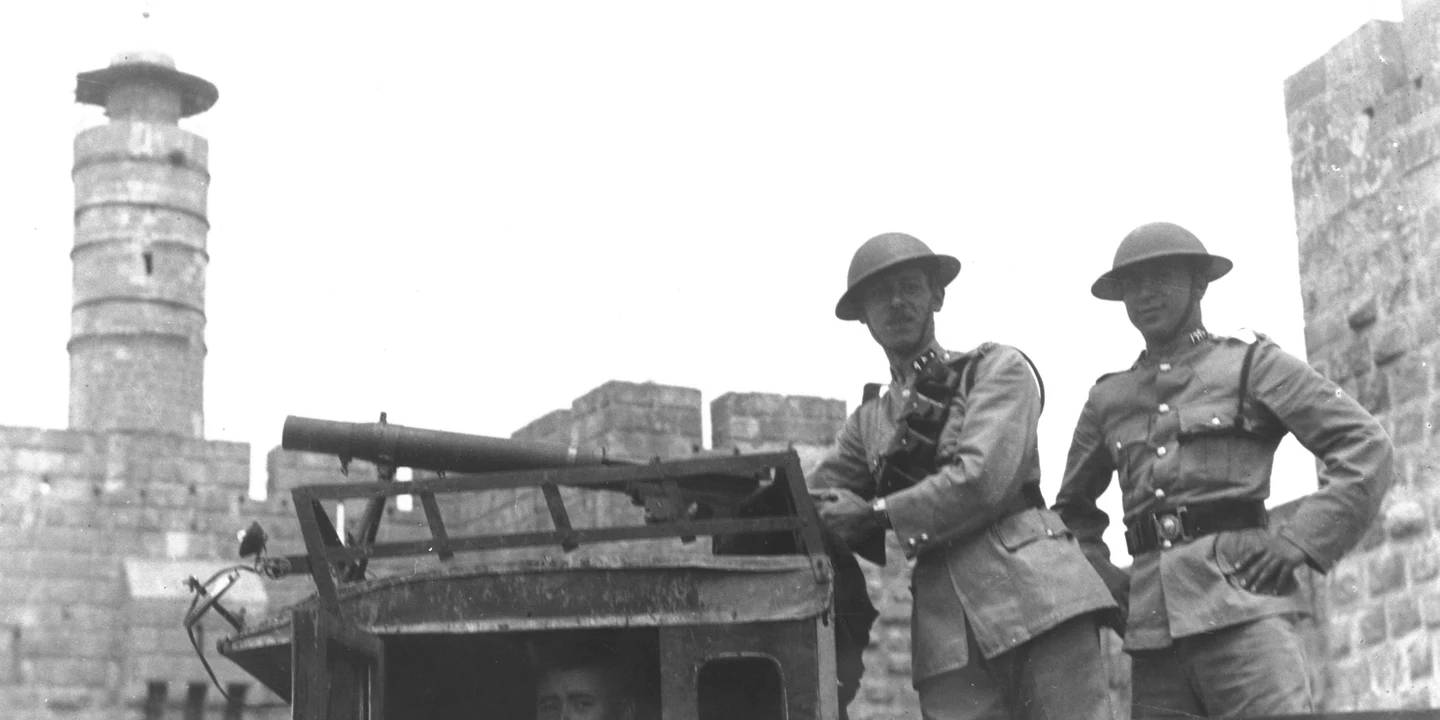
How the British Mandate for Palestine began
The British Mandate for Palestine began in the aftermath of World War One. When the Ottoman Empire collapsed in 1918, Britain occupied the territory that had been Ottoman Palestine. In 1920, the Allied powers at the San Remo Conference assigned Britain the mandate to administer the region. The League of Nations formally approved this arrangement in 1922.
The terms of the Mandate incorporated the Balfour Declaration. That 1917 letter had expressed British support for 'a national home for the Jewish people' in Palestine. At the same time, the Mandate stated that 'nothing should be done which might prejudice the civil and religious rights of existing non-Jewish communities.' These two commitments would prove impossible to fulfil simultaneously.
Britain's administration began under High Commissioner Herbert Samuel, who arrived in Jerusalem in July 1920. According to Encyclopaedia Britannica, the Mandate gave Britain responsibility for facilitating Jewish immigration and encouraging Jewish settlement on the land. Britain was also required to develop self-governing institutions and safeguard the rights of the Arab majority, who made up approximately 90 percent of the population.
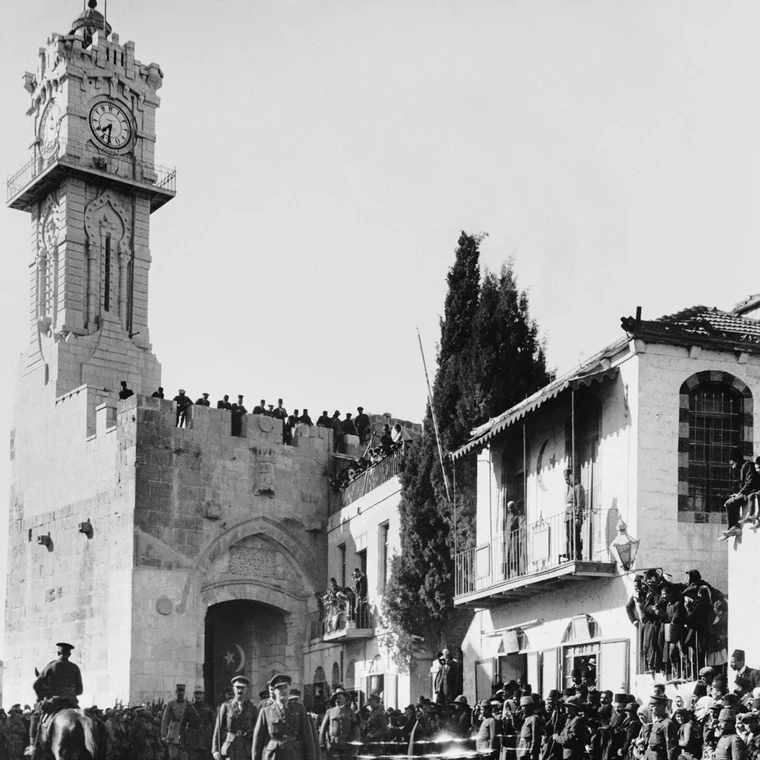
General Allenby enters Jerusalem through the Jaffa Gate on 11 December 1917 — he walked rather than rode, out of respect for the Holy City.. Image: Underwood & Underwood, via Wikimedia Commons (Public domain)
Jewish immigration and Arab opposition under the Mandate
Jewish immigration to Palestine increased steadily during the 1920s and then accelerated sharply in the 1930s as Jews fled persecution in Europe. Between 1922 and 1939, the Jewish population of Palestine grew from approximately 84,000 to over 445,000, rising from around 11 percent to roughly 30 percent of the total population.
This growth alarmed the Arab population. Land purchases by Jewish organisations displaced Arab tenant farmers. Additionally, the economic transformation that accompanied immigration altered the social structure of the country. Arab leaders petitioned the British authorities to halt immigration and land sales. They argued that the Mandate was being implemented at the expense of the indigenous majority.
The 1929 disturbances
Tensions erupted into violence repeatedly. In August 1929, clashes in Jerusalem over access to the Western Wall spread across the country. In Hebron, 67 Jewish residents were killed by Arab rioters; in Safed, 18 more died. British forces also killed over 100 Arabs during the suppression of the violence. The 1929 disturbances prompted a series of British commissions of inquiry. Each commission acknowledged that Arab grievances about immigration and land loss were legitimate. Yet none fundamentally altered British policy.
For a broader view of the region's earlier history, see the article on the history of Palestine.
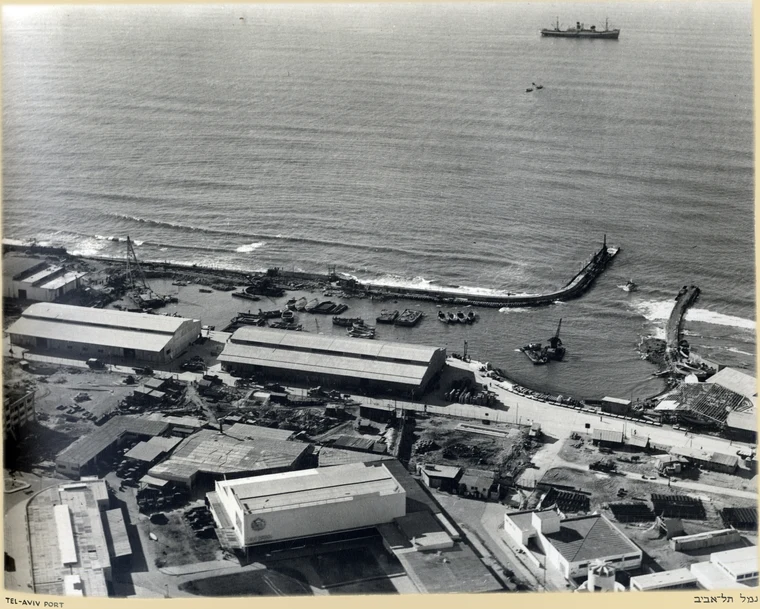
Tel Aviv port during the Mandate period — Jewish immigration transformed the coastal city into a major urban centre by the 1930s.. Image: Zoltan Kluger, via Wikimedia Commons (Public domain)
The Arab Revolt and the White Paper
The Arab Revolt of 1936 to 1939 was the most significant uprising against British rule during the Mandate. It began with a general strike in April 1936 and escalated into a full armed rebellion against both the British administration and the Jewish community.
The revolt had multiple causes. Arab leaders demanded an end to Jewish immigration, a ban on land transfers to Jewish buyers, and a representative government. Given the Arab majority, such a government would have produced an Arab-led state. Britain responded with force. According to the United Nations, approximately 5,000 Arabs were killed during the suppression of the revolt, and thousands more were detained. The British also demolished parts of the Old City of Jaffa and imposed collective punishments on villages suspected of harbouring rebels.
The Peel Commission
In 1937, the Peel Commission recommended for the first time the partition of Palestine into separate Arab and Jewish states. Arab leaders rejected partition outright. The Jewish leadership accepted the principle but disputed the proposed boundaries.
The 1939 White Paper
As World War Two approached, Britain issued the White Paper of 1939. This document limited Jewish immigration to 75,000 over the next five years and restricted Jewish land purchases. It also promised the creation of an independent Palestinian state within ten years.
The White Paper reversed much of the pro-Zionist policy of the previous two decades. Jewish leaders condemned it as a betrayal, particularly as the persecution of Jews in Europe was intensifying. Arab leaders also rejected it, viewing the proposed immigration quota as still too generous.
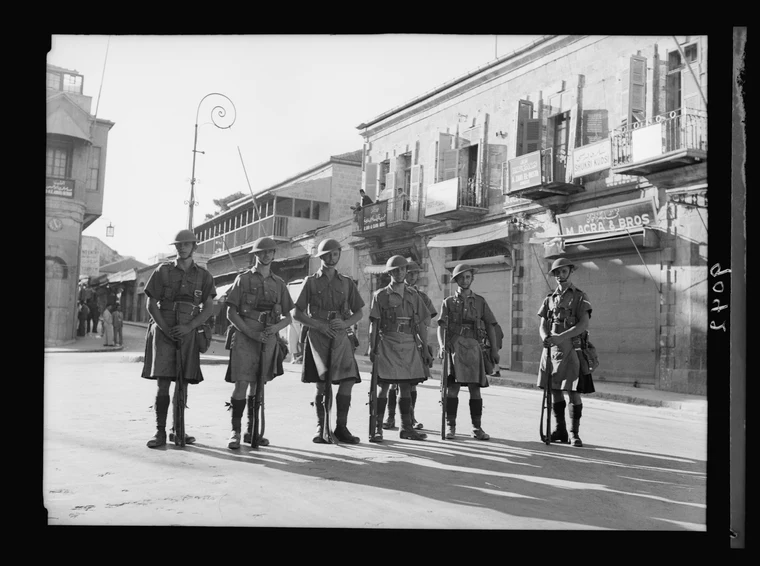
British soldiers near the Jaffa Gate during the 1936 Arab Revolt — Britain deployed 20,000 troops to suppress the three-year uprising.. Image: Library of Congress / Matson Collection, via Wikimedia Commons (Public domain)
Did you know?
-
The British Mandate for Palestine lasted from 1920 to 1948 — nearly three decades during which Britain attempted to govern a territory whose Arab and Jewish populations held fundamentally incompatible political aspirations.
Encyclopaedia Britannica — Palestine -
During the Arab Revolt of 1936-1939, approximately 5,000 Arabs were killed by British forces. Britain also demolished homes, imposed collective punishments, and detained thousands of suspected rebels.
UN ISPAL — History of the Question of Palestine -
Between 1922 and 1939, the Jewish population of Mandate Palestine grew from approximately 84,000 (11% of the total) to over 445,000 (roughly 30%), driven largely by immigration from Europe.
Encyclopaedia Britannica — Palestine
The end of the British Mandate for Palestine
World War Two and the Holocaust transformed the politics of Palestine. The murder of approximately six million European Jews created enormous international pressure to allow Jewish refugees to settle in Palestine. However, the 1939 White Paper remained in force, and Britain turned back ships carrying Holocaust survivors. Most notoriously, the Exodus arrived in 1947 with 4,500 passengers who were forcibly returned to displaced persons camps in Germany.
Jewish paramilitary organisations — the Haganah, the Irgun, and the Lehi — launched an armed campaign against British rule. Attacks included the bombing of the King David Hotel in Jerusalem in July 1946, which killed 91 people. Britain was exhausted by the war and unable to satisfy either community. In February 1947, it referred the question of Palestine to the newly formed United Nations.
In November 1947, the UN General Assembly passed Resolution 181. It proposed dividing Palestine into an Arab state, a Jewish state, and an international zone for Jerusalem. Jewish leaders accepted the plan. Arab leaders rejected it. Violence between the two communities escalated immediately.
Britain withdrew from Palestine on 14 May 1948. That same day, the Jewish leadership declared the establishment of the State of Israel. Armies from Egypt, Jordan, Syria, Iraq, and Lebanon invaded. The resulting war produced the displacement of approximately 700,000 Palestinians — an event known as the Nakba. Britain's Mandate had ended, but the conflict it had failed to resolve only intensified.
For structured learning about this period and its consequences, explore Epivo's International curriculum or visit For parents.
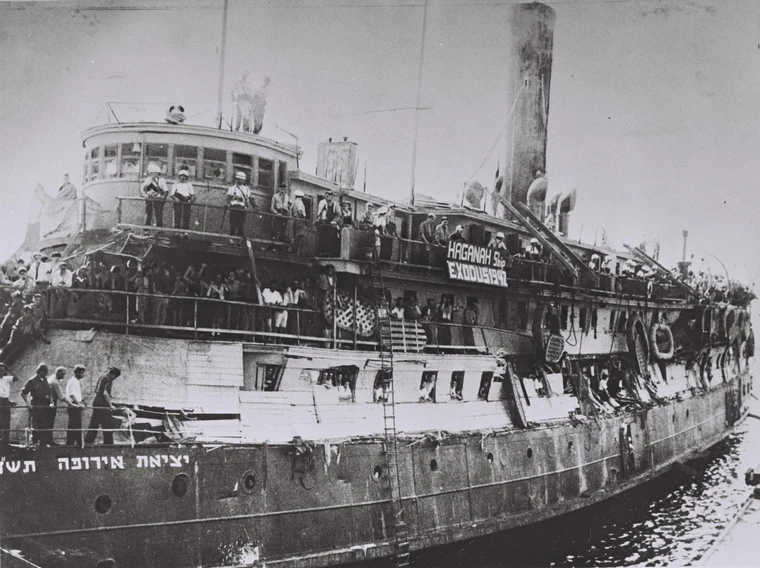
The Exodus 1947 after British boarding — the ship carried 4,500 Holocaust survivors who were turned back to displaced persons camps in Germany.. Image: Frank Scherschel / LIFE Magazine, via Wikimedia Commons (Public domain)
Frequently asked questions
- When did the British Mandate for Palestine begin and end?
- The British Mandate for Palestine began with British military administration in 1920 and received formal League of Nations approval in 1922. It ended on 14 May 1948, when Britain withdrew from Palestine and the State of Israel was declared.
- Why did Britain receive the Mandate for Palestine?
- Britain received the Mandate because it had conquered the territory from the Ottoman Empire during World War One. The Allied powers at the San Remo Conference in 1920 assigned Britain responsibility for administering the region, and the League of Nations formalised this arrangement in 1922.
- What was the Arab Revolt of 1936?
- The Arab Revolt of 1936 to 1939 was an uprising by Palestinian Arabs against British rule and Jewish immigration. It began with a general strike, escalated into armed rebellion, and was suppressed by British forces. Approximately 5,000 Arabs were killed during the revolt.
- What was the White Paper of 1939?
- The White Paper of 1939 was a British policy document that limited Jewish immigration to Palestine to 75,000 over five years and restricted Jewish land purchases. It promised the creation of an independent Palestinian state within ten years. Both Jewish and Arab leaders rejected it.
- Why did Britain leave Palestine in 1948?
- Britain left Palestine because it could not resolve the conflict between Arab and Jewish communities. Exhausted by World War Two, facing armed resistance from Jewish paramilitary groups, and unable to satisfy either side, Britain referred the issue to the United Nations and withdrew in May 1948.