Rome at its height
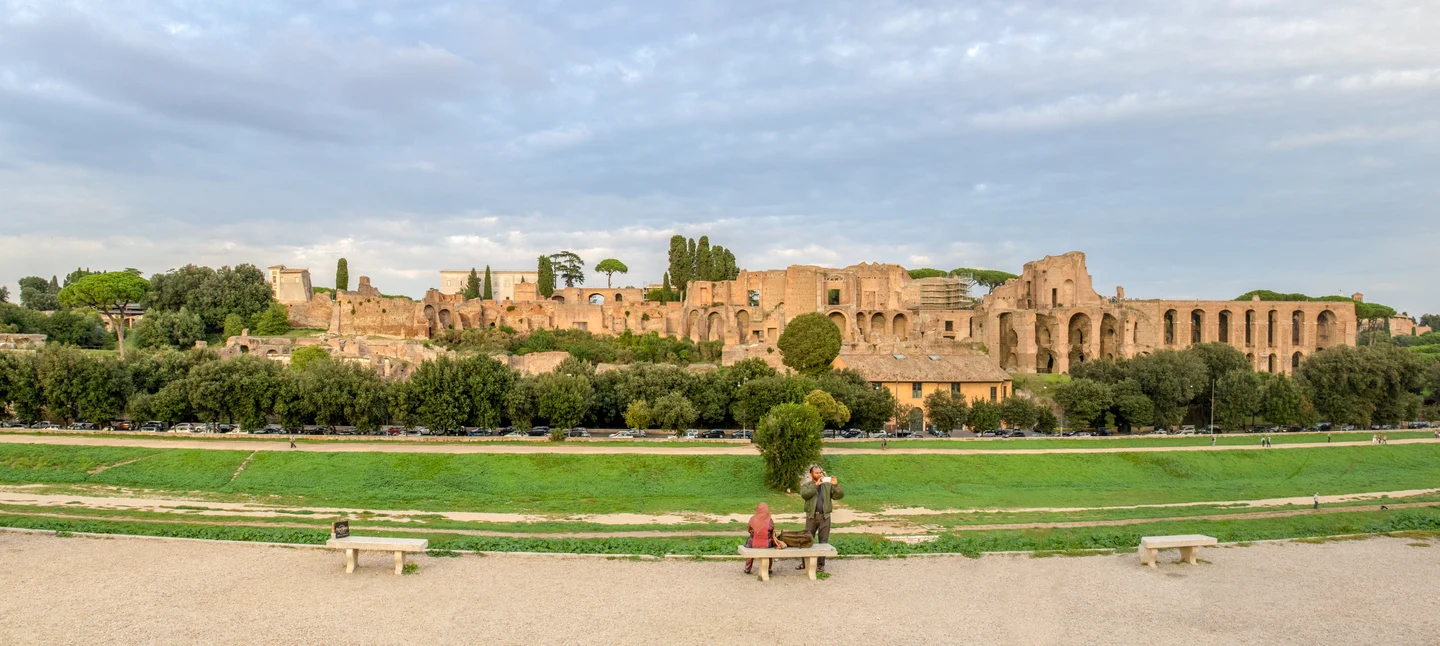
At its peak in the 2nd century CE, the Roman Empire controlled territory stretching from Britain in the north to Egypt in the south, and from Portugal in the west to Mesopotamia in the east. It governed around 60 million people — roughly one quarter of the world's total population at the time.
Roman power rested on several foundations. Its professional army was the most disciplined and well-equipped in the ancient world. Its road network — over 80,000 kilometres — allowed troops and goods to move efficiently across vast distances. Roman law provided a shared framework for governing diverse peoples. And Roman engineering built cities, aqueducts, and amphitheatres that still stand today.
However, even at its peak, the Roman Empire faced deep structural problems. The territory was simply enormous — difficult and expensive to defend. The empire had no clear rules for succession, leading to repeated civil wars when emperors died. Tax burdens were high, and inequality between wealthy landowners and poor farmers was growing. These internal weaknesses made Rome vulnerable long before external threats became overwhelming.
Political crisis and military pressure
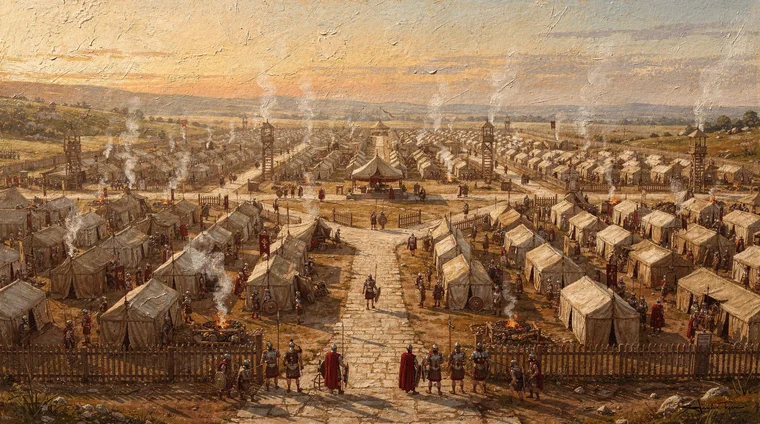
The 3rd century CE is often called the Crisis of the Third Century (235–284 CE). In just fifty years, the Roman Empire had over fifty different emperors — most of them killed by their own soldiers. Central authority collapsed in many provinces, and the empire briefly split into three separate states.
The emperor Diocletian (284–305 CE) stabilised the empire by dividing it administratively into eastern and western halves, each with its own emperor. Constantine later reunited the empire and moved the capital to Constantinople (modern Istanbul) in 330 CE. However, this move concentrated resources in the east, leaving the western empire weaker.
Meanwhile, pressure on the borders intensified. Germanic peoples — the Visigoths, Vandals, Ostrogoths, and others — pressed against the Rhine and Danube frontiers. Rather than defeating these groups militarily, Rome increasingly allowed them to settle inside its borders and serve as soldiers in the Roman army. Over time, these communities became hard to control.
In 410 CE, Visigoth forces under Alaric sacked Rome itself — the first time the city had fallen to an enemy in 800 years. According to History.com, the psychological impact was enormous. Many Romans believed their empire was indestructible; the sack shattered that belief entirely.
Economic decline and the fall of the Western Empire
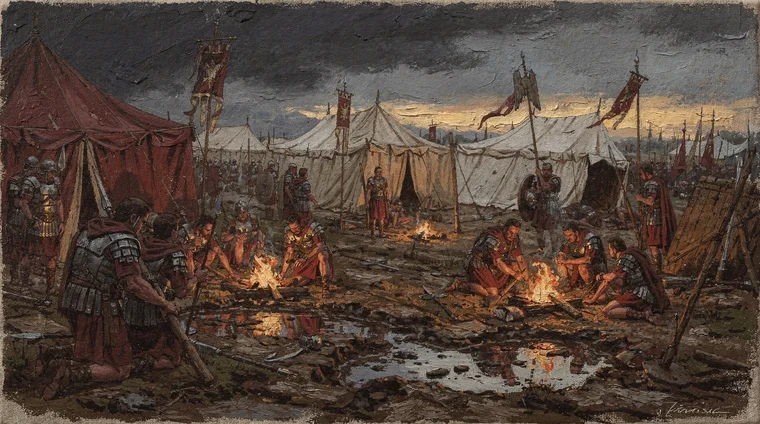
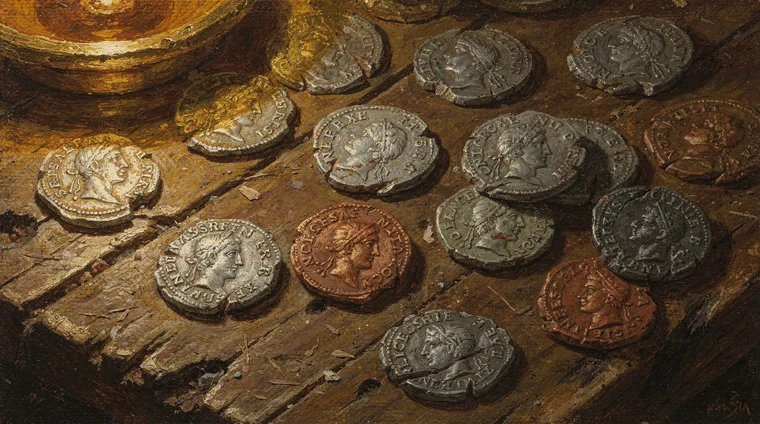
Economic problems made Rome's difficulties worse. Centuries of expansion had brought enormous wealth, but by the 3rd and 4th centuries CE the empire was spending more on its military than it could raise in taxes. Emperors debased the currency — reducing the silver content of coins — causing inflation. Trade declined as instability made roads and sea routes dangerous.
The plague also played a role. A series of devastating epidemics, particularly the Antonine Plague (165–180 CE) and the Plague of Cyprian (249–262 CE), killed millions and disrupted agricultural production across the empire.
The final collapse of the Western Roman Empire came in 476 CE, when the Germanic leader Odoacer deposed the last Roman emperor, Romulus Augustulus, and sent the imperial regalia to Constantinople. There was no final dramatic battle — the Western Empire simply faded out of existence, as local strongmen replaced Roman governors and Latin-speaking cities shrank into rural settlements.
The Eastern Roman Empire, known as the Byzantine Empire, continued for another thousand years until Constantinople fell to the Ottoman Turks in 1453 CE.
Did you know?
-
At its height in the 2nd century CE, the Roman Empire governed approximately 60 million people — roughly one quarter of the world's entire population.
History.com — 8 Reasons Why Rome Fell -
In the Crisis of the Third Century (235–284 CE), the Roman Empire had more than fifty different emperors in fifty years — most killed by their own soldiers.
BBC History — The Fall of Rome -
The Eastern Roman Empire (Byzantine Empire) survived the fall of the Western Empire in 476 CE and continued for almost another thousand years, finally falling to the Ottoman Empire in 1453 CE.
History.com — 8 Reasons Why Rome Fell
The legacy of Rome and why its fall matters
The fall of the Western Roman Empire marks one of the great turning points in world history. It brought an end to the unified political order of the ancient Mediterranean world and ushered in the period known as the Early Middle Ages in Western Europe.
However, Rome did not simply disappear. Its language, Latin, evolved into French, Spanish, Italian, Portuguese, and Romanian. Roman law formed the basis for legal systems across Europe. The Roman Catholic Church preserved Roman administrative structures and Latin learning through the medieval period. Roman roads, aqueducts, and city plans continued to shape European settlement for centuries.
According to the BBC, the fall of Rome demonstrates how even the most powerful civilisations can be undermined by a combination of internal weaknesses and external pressures — a lesson that remains relevant for understanding the rise and fall of great powers today.
For students exploring ancient history through Epivo's International Curriculum, Rome's fall connects to broader themes including the origins of democracy, the development of human rights traditions, and the long history of civilisations covered in grades 4 to 9. Understanding how ancient Rome worked — and why it collapsed — provides essential context for understanding the modern world.

Frequently asked questions
- When did the Roman Empire fall?
- The Western Roman Empire officially fell in 476 CE, when the Germanic leader Odoacer deposed the last emperor, Romulus Augustulus. The Eastern Roman Empire (Byzantium) survived until 1453 CE.
- Why did the Roman Empire fall?
- Historians cite several causes: political instability and repeated civil wars, military pressure from Germanic peoples on the borders, economic decline and inflation, heavy taxation, and a series of devastating plagues that reduced the population.
- Who defeated Rome?
- There was no single defeat. In 410 CE, the Visigoths under Alaric sacked Rome. In 476 CE, the Germanic leader Odoacer deposed the last western emperor. However, the empire had been weakening for centuries before either event.
- Did Rome fall because of barbarian invasions?
- Barbarian invasions were a major factor, but historians today emphasise that internal problems — political instability, economic decline, and overextension — made Rome vulnerable. The invasions were as much a symptom of weakness as a cause of collapse.
- What replaced the Roman Empire after it fell?
- In Western Europe, Germanic kingdoms replaced Roman provinces — the Franks in France, the Visigoths in Spain, the Ostrogoths in Italy. The Roman Catholic Church provided cultural continuity. The Eastern Roman Empire (Byzantine Empire) continued until 1453 CE.